New Faces
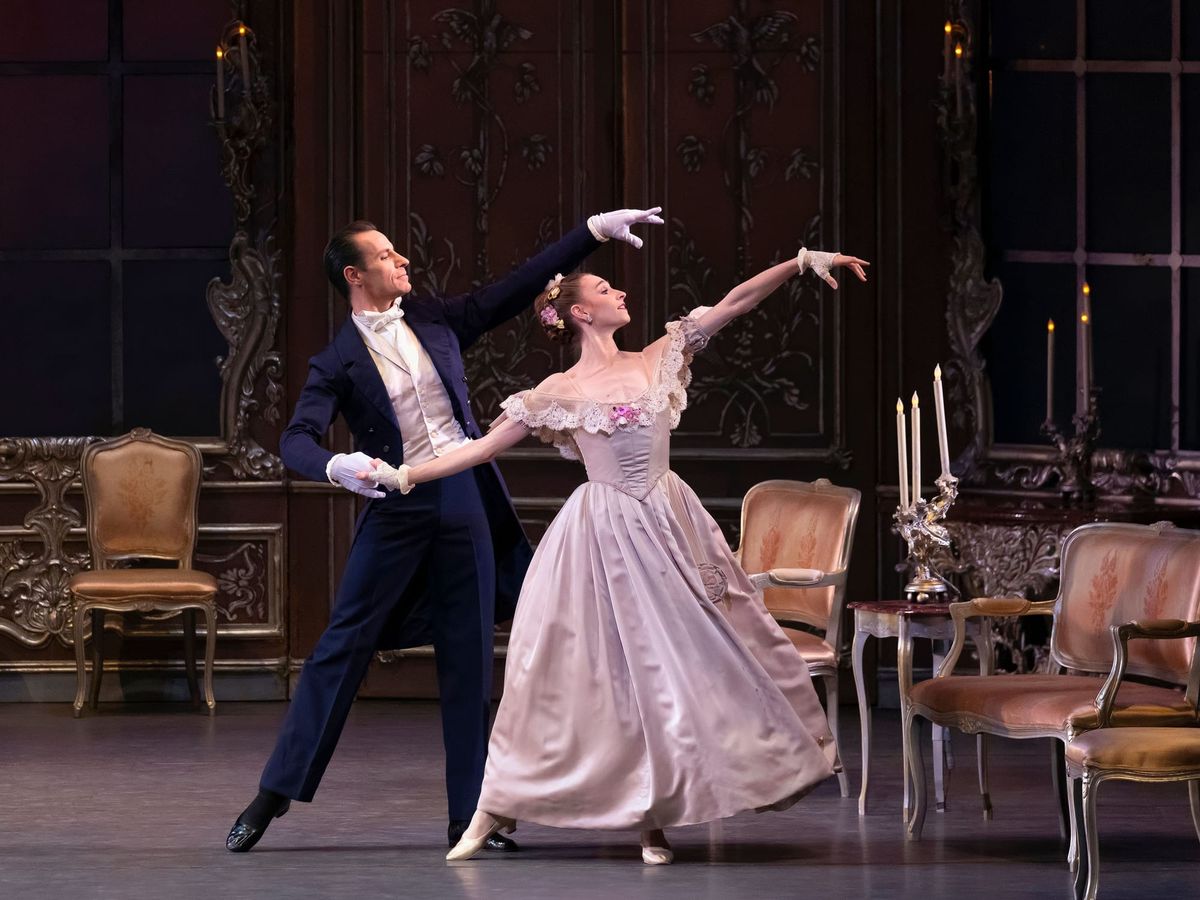
"The Four Temperaments", "Liebeslieder Walzer"
New York City Ballet
David H. Koch Theater
Lincoln Center
New York, New York
February 16, 2024
This program, made up of two of Balanchine’s finest ballets, had several important debuts; the company’s lower ranks are full of fine and interesting dancers and it’s encouraging that so many are getting opportunities. These ballets, though, need not only fine dancers, but dancers with style, imagination, and depth, characteristics that usually need time to develop, so it’s not surprising that some debuts were more successful than others.
The three themes of “The Four Temperaments” seemed a bit underrehearsed, as there were some uncharacteristic bobbles. Nieve Corrigan and Andres Zuniga (a debut) had a fine fierce attack in the second theme, but Meaghan Dutton-O’Hara, dancing with Alex Knight, overacted a bit, with some exaggerated accents and too many smiles. These themes don’t need acting, the dancers are expressions of the music, warm but impassive.
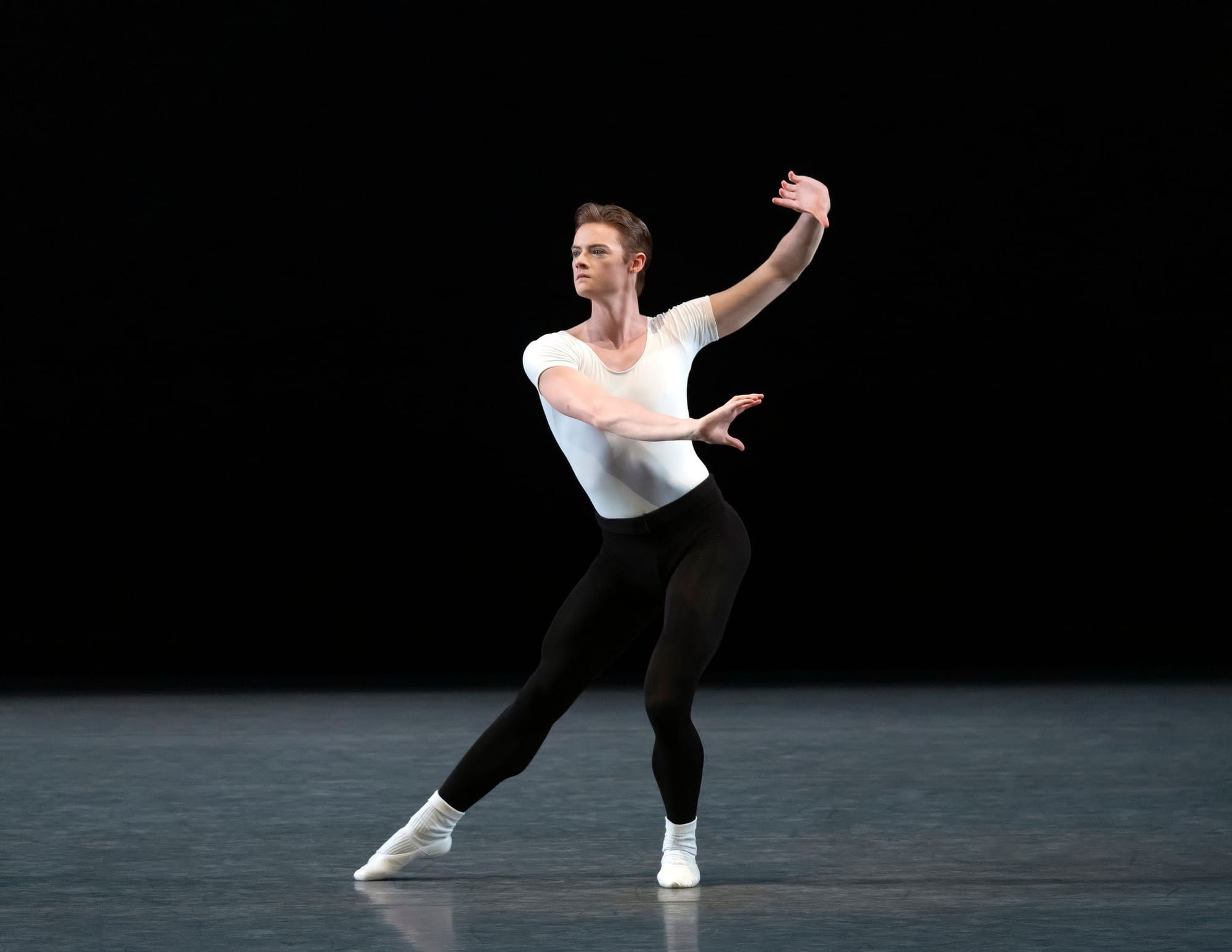
Melancholic does not need acting either, though it’s not impassive. Jules Mabie, in his debut, danced with a loose grace, negotiating the steps clearly. His falls were impressive as he hit the floor with a thud, but as yet he was showing the steps, not revealing his despair. The feeling does not come from the falls, the lunges, and the backbends (impressive though these were), the movement should look like it emerges from the feeling. It was a fine performance but not yet a complete emotional journey.
Phlegmatic does not have an especially fraught emotional journey, but Davide Riccardo (in his debut) made the most of it. Though he didn’t quite have the ability to lift his foot up and set it down with complete sang-froid, he gave his Phlegmatic a casual improvisational feel, as if he were pushing the air away to see what would happen. His dancing had an infectious freedom as he swung his legs too and fro (he has effortlessly high extensions) which he combined this with an elegant carriage. His dancing was loose and free, but with an underlying nobility. It was a memorable performance.
Sanguinic and Choleric were slightly more experienced dancers, and Ashley Hod, with Peter Walker, was sharp and clear in Sanguinic, and Walker an elegant partner, with especially fine beats. Mira Nadon was a triumphant Choleric; she didn’t come in with all guns blazing, she jumped on as if she knew she was the boss and had nothing to prove. There appeared to be a slight gleam in her eye, as if she were enjoying every minute; even her hands seemed witty. Nadon, still in her mid-twenties, is an exceptional dancer with both technique and style to spare; she moves as if she were wearing long white gloves.
“Liebeslieder Walzer” certainly needs both technique and style; it is firmly set in an elegant nineteenth century mansion, showing a musical evening for four couples whose close friendship, refined and elegant manners quietly and subtly hint at their stories in the first half while the more expressive second half lets their emotions flow. The four couples this evening, Isabella LaFreniere (her debut) with Tyler Angle, Ashley Laracey with Andrew Veyette (his debut), Sara Mearns with Chun Wai Chan (his debut), and Indiana Woodward (her debut) with Preston Chamblee (his debut), sometimes tended to look as if they rehearsed separately and came up with their own interpretations and at times it looks like a somewhat unconnected series of beautiful dances, not a group of friends sharing an evening.
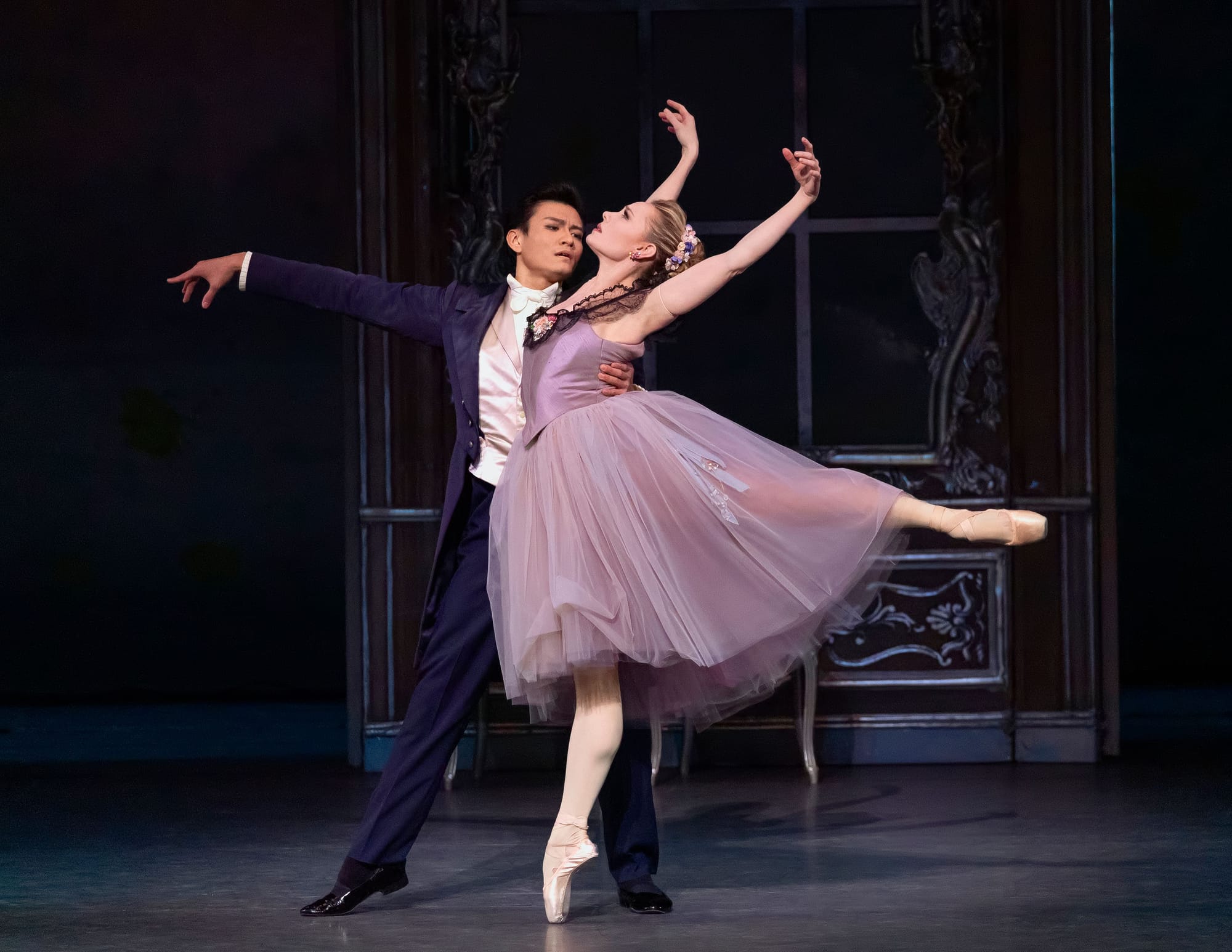
Not surprisingly, Sara Mearns was especially vivid in the Diana Adams role, partnered by Chan. This is usually danced as a young couple in the first excitement of young love, but Mearns seemed to have “A Doll’s House” in mind, as she rushed back and forth in bursts of frantic energy, frequently avoiding Chan’s eyes. She looked like she was one arabesque away from running out the door and slamming it behind her. Mearns’ choices was always intriguing but her more modern take didn’t mesh with the serene ending as the dancers returned to their seats in that solid and secure atmosphere.
LaFreniere danced the Verdy role with Tyler Angle. The haunted woman with hints of an early death (the heart stopping moment in the first scene where she is lifted horizontally with her hands crossed on her breast makes this fairly explicit) was a youthful, eager, happy flirt in the first scene and a rather earthbound dancer in the second. Though her arms and upper body were lovely, I missed the light, floating quality most dancers give the role. She is a bit tall for Angle, and he could not make the lifts look effortless.
Ashley Laracey did float effortlessly through the Jillana role, supported by Andrew Veyette in his debut. She really did seem like she belonged in that elegant world and her gentle and slightly fey sweetness gave her dancing in the second scene an opalescent glow. Indiana Woodward danced the Melissa Hayden role with Preston Chamblee; she has a beautiful, creamy upper body and a quiet confidence that makes her such a joy to watch, but again she gave her scene one dances an unusual spin, almost seeming to quarrel with Chamblee at one point, as she ran from side to side—ladies would not be so revealing at a party. The final pas de deux, where she was supported by Chamblee gently pushing her forward and lowering her repeatedly had some beautiful moments, as she lifted her chest so proudly. It may have been the size difference (Chamblee is much taller than Woodward) but he didn’t completely lower her to the ground, and her foot, which usually circles the floor with such glowing confidence, just waved around in mid air.
“Liebeslieder Walzer” does need careful casting (and better singers) but its quiet, mysterious beauty and rich emotions are a valuable challenge for the young and powerful dancers NYCB has available, and it is always welcome.
© 2024 Mary Cargill



