Musical Variations
Musical Variations
“Concerto Barocco”, “Kammermusik No. 2”, “Raymonda Variations”
New York City Ballet
David H. Koch Theater
Lincoln Center
New York, New York
April 20, 2023
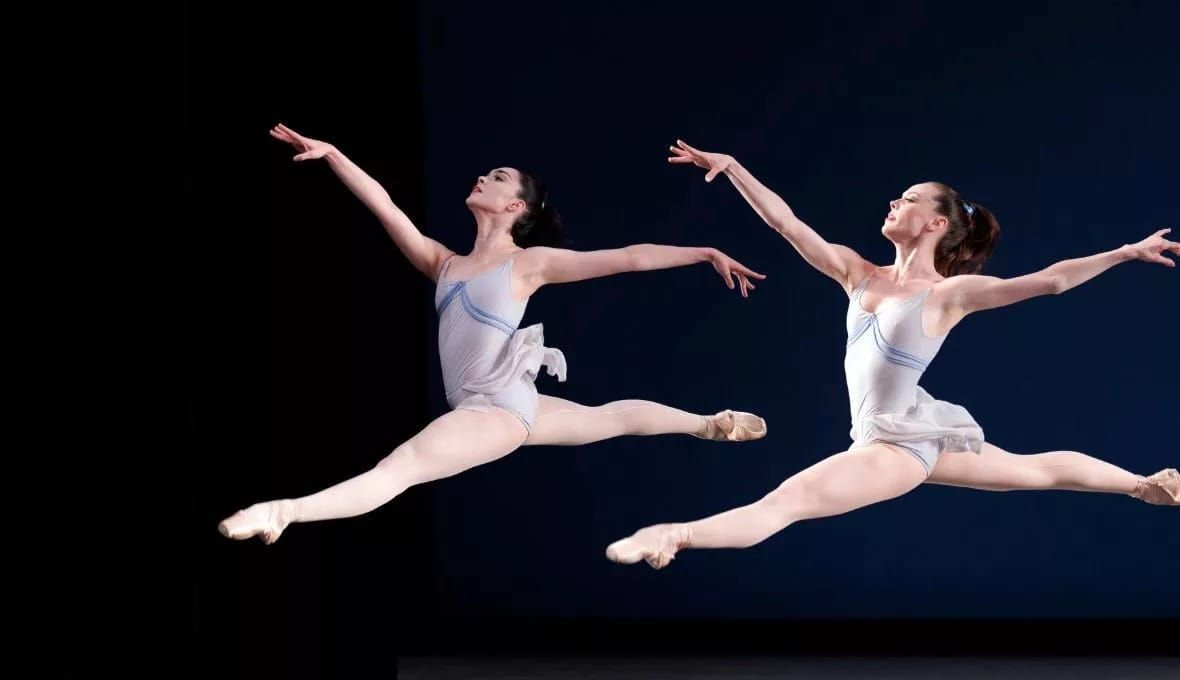
The three ballets on this all-Balanchine program were all abstract responses to music with energetic corps and intense pas de deux, yet each ballet had its own distinctive character. “Concerto Barocco”, from 1941, is one of Balanchine’s greatest works, a jazzy take on Bach, celebrating female dancing (the lone male turns up briefly to partner one of the ballerinas and then disappears), the spiky “Kammermusik No. 2”, one of Balanchine’s last ballets (it premiered in 1978), an inversion of sorts of “Concerto Barocco”, with its eight male corps members mirroring the earlier ballet’s eight female corps, and “Raymonda Variations” (from 1961), a spun sugar salute to Petipa.
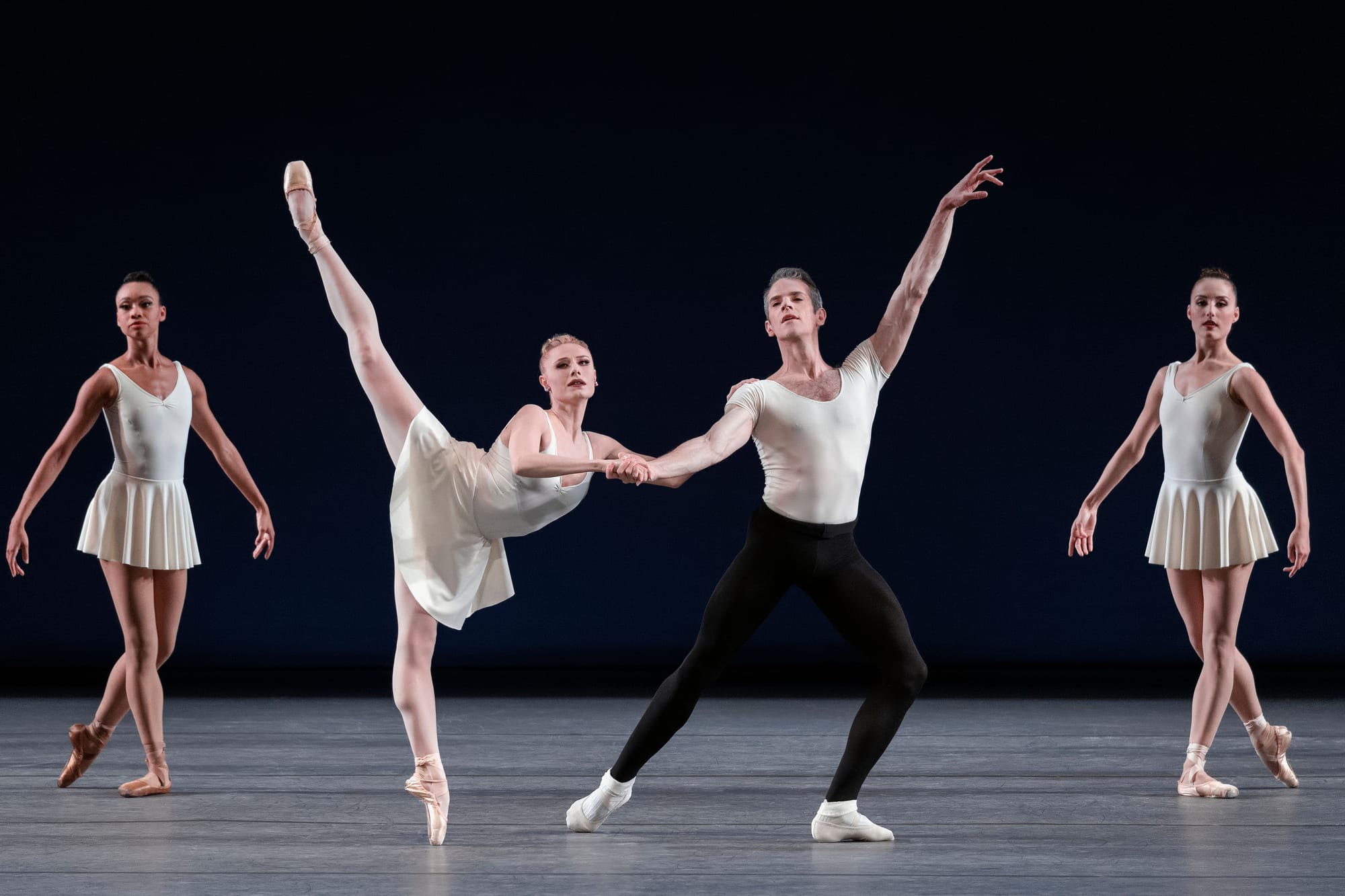
Sara Mearns celebrated her return to NYCB (she has been out with an injury for several months) with a debut as the first violin in “Concerto Barocco”—she has danced the second violin many times. Her first appearance was greeted with spontaneous applause, which brought a small, fourth-wall breaking, smile of acknowledgment from her, a warmhearted, wonderful moment. Then she seemed to vanish into the music, and danced the pas de deux with a dramatic yet private intensity that made the stage disappear. Mearns gave her dancing a lyrical, musical flow (there are few who can make raising and lowering a leg so moving). Her attack did not have the sharpness or crystalline precision that some give the role, but her performance of the pas de deux went straight to the heart in one long, seamless breath. Russell Janzen partnered her with a dignified reticence, and his au naturel graying hair provided an extra layer of gravitas.
Isabella LaFreniere also debuted as the second violin, and danced with a thrilling abandon, crisp point work, and explosive jumps, pushing the off-center moves with daring and control. She and Mearns seemed at times to be sharing a private conversation. This conversation didn’t always include the corps members, who danced carefully (though there was a minor collision) and politely through the knotted garlands without creating their own world.
The corps of “Kammermusik No. 2” were also on the neat and precise side, rolling through the odd shapes with good humor. I remember a discussion with one of the original corps members who said that Balanchine stressed that the dancing should be rough and strong—“Don’t be pretty”, he remembered the choreographer saying. The dancing has become a bit on the pretty side, and the energy seemed to stop at the end of their fingers, rather than hurling towards the audience as it had in earlier years. But the piece now has a quirky charm (those bouncing ponytails!) and the non-stop movement leaves the audience breathless.
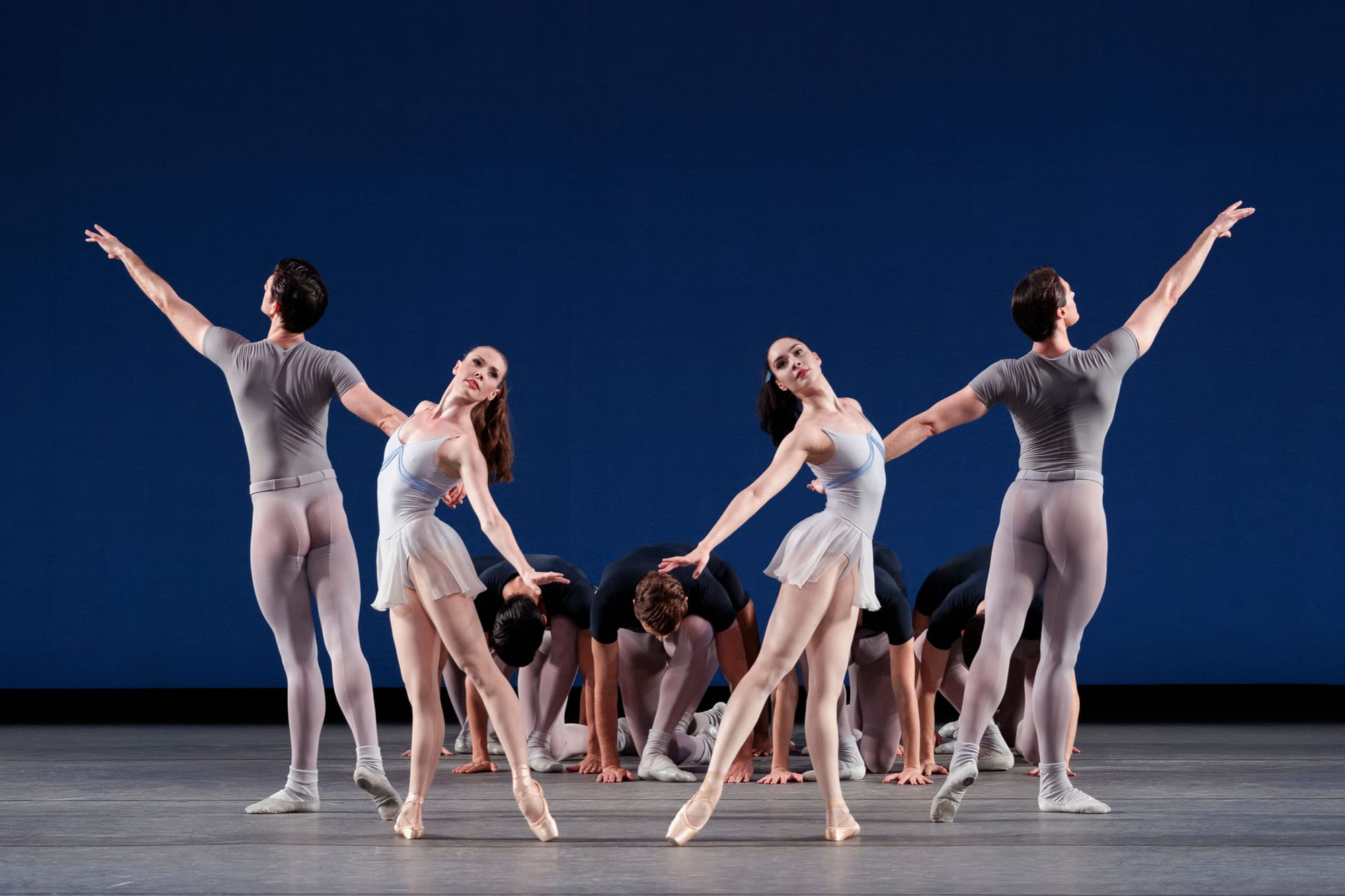
Emilie Gerrity and Mira Nadon got to swish the ponytails, supported by Peter Walker (with Gerrity) and Aaron Sanz (with Nadon). Each couple has a pas de deux, both odd and slightly cool, dancing near but not always with each other. The women and the men each have their own duets; apparently the men and women don’t necessarily need each other. Gerrity and Nadon were both stunning, legs flashing with fearless abandon. Walker and Sanz were quieter and more fluid and both were wonderfully secure partners. “Kammermusik No. 2” will probably never be as beloved as its Bach predecessor, with its sometimes harsh rhythms and cool emotions, but it can be a refreshing jolt.
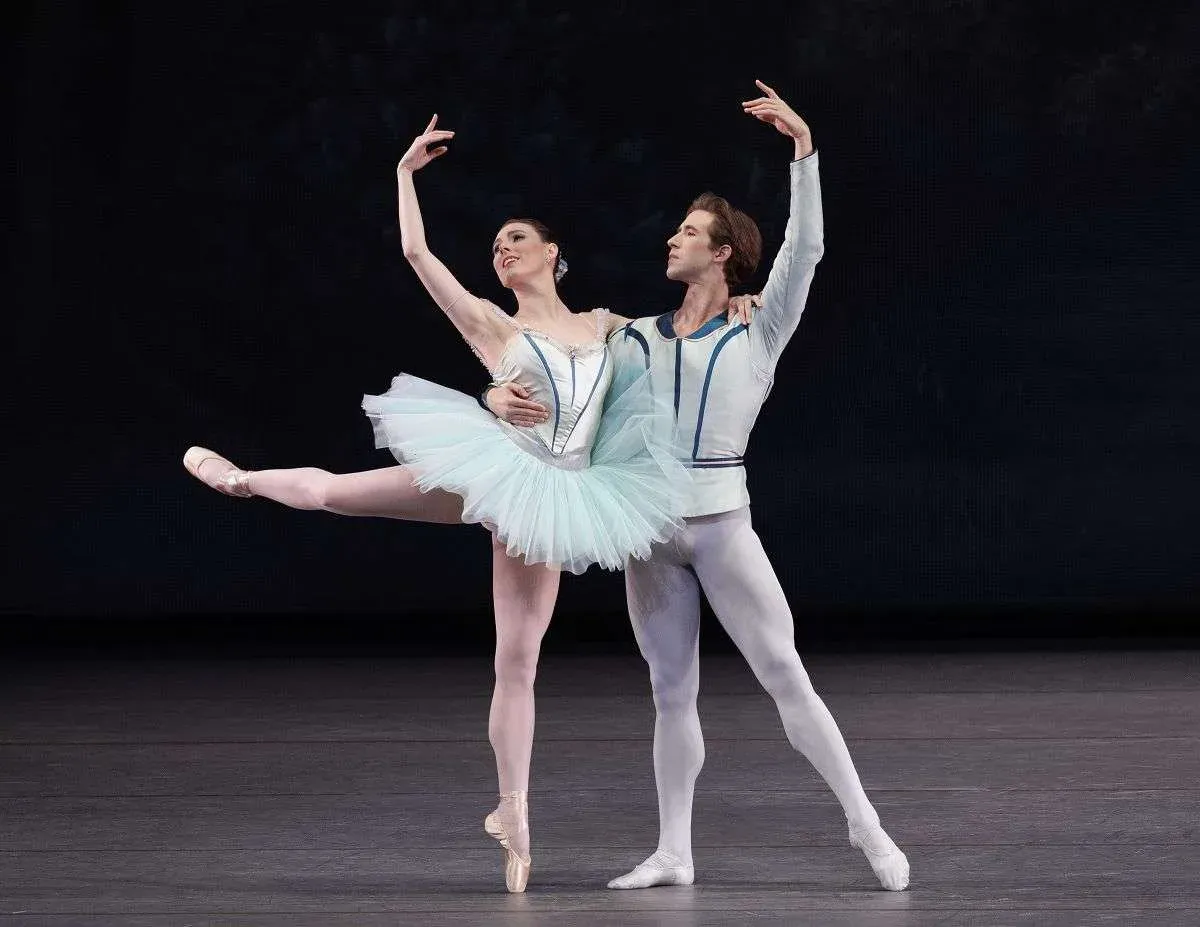
“Raymonda Variations” is all lush rhythms and romance. The Glazounov music is some of the most danceable ever written; Glazounov’s music doesn’t have the drama of Tchaikovsky’s scores, but listening to “Raymonda”, with its cream and spun sugar melodies, is like being wrapped in velvet. The original ballet had a complicated story which Balanchine by and large ignored; there are hints of Hungary in some of the ballerina’s arms movements and the man’s solos certainly belong in a palace but for the most part Raymonda and Jean de Brienne have vanished. What remains is Balanchine’s reworkings of Petipa’s solos which pour out in glorious abundance.
Tiler Peck made her debut as the anonymous princess, with Joseph Gordon as her partner. Dramatically, their first pas de deux is a bit rushed—we barely get introduced to them before they are off to the romantic adagio, but logic isn’t the point, beautiful dancing is. And it was spectacularly beautiful, with Peck luxuriating in her arabesques and controlled turns, dancing with a generous and gracious authority.
Peck’s two solos were magnificently varied, the first with shimmering points as she floated backwards, as if she were tiptoeing into perfect happiness and the second more gloriously confident, with the hints of Hungarian swagger in her folded elbows and swinging torso. Peck’s control and confident musicality are a perfect fit for this salute to feminine beauty, and it was a triumphant debut. Gordon also got two solos, each full of non-stop petite batterie, which he tossed off with ease elegance. His multiple turns to full stops in his second solo (Balanchine’s riff on the male pas de quatre from the original ballet) were especially elegant, and looked deceptively easy.
The five female soloists also have extremely difficult solos which must look not only easy but radiant. Olivia MacKinnon in the first one started well, with elegant, light footwork, but the final diagonal hops on point didn’t travel far off home plate. Christina Clark, in her debut in the fifth variation had a marvelous control, floating in to her attitudes with a commanding grace. Mary Thomas MacKinnon also had a fine debut in the sprightly sixth variation, so full of graceful little jumps. A diet of cream and sugar may not be substantial, but it does make a perfect ending.
© 2023 Mary Cargill



