Murphy's Law
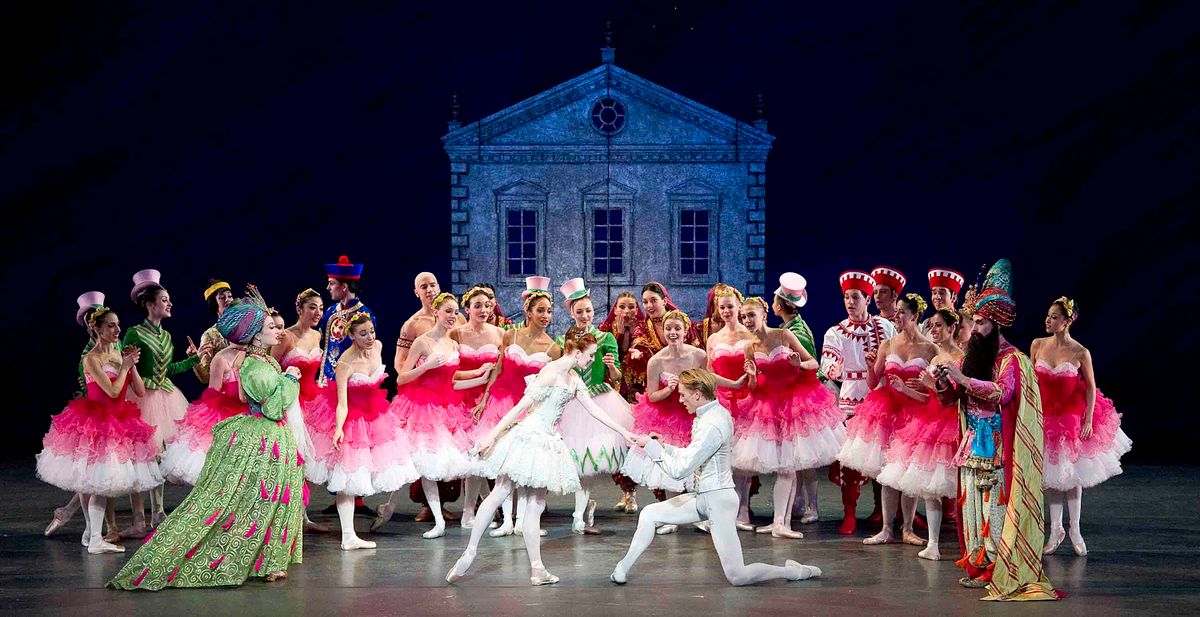
"The Nutcracker"
American Ballet Theatre
Brooklyn Academy of Music
Brooklyn, New York
December 23, 2010
Alexei Ratmansky's new "Nutcracker" for ABT has many delights, and unfortunately, some disappointments. But the heart of the ballet, the choreography for the main characters, (in this case, Gillian Murphy and David Hallberg as the grown-up vision of Clara and the Nutcracker) shimmers. Murphy has always been a strong and thrilling dancer, but does have a tendency to hide behind choreography and present a slightly guarded, opaque presence. Her Clara, though, was warm, radiant, and glorious, as she negotiated the filigreed steps (which seemed to owe something to both Ashton and Petipa). Hallberg, too, was both warm and classical; they both gave the impression of dancing only for each other while including the audience.
The choreography, however, showed both the strengths and the weaknesses of Ratmansky's version; the musical intelligence and imagination is combined with a tendency to low comedy, as Murphy left the stage briefly during the Sugar Plum variation, and poked her head out of the wings, playing peek-a-boo with the audience. I supposed it was intended to show that in every grown-up there is still a playful little girl, but it was mawkish and jarring.
Ratmansky's version is closer to the Soviet take on the ballet than to Balanchine's version (Balanchine had danced in the original Ivanov production) of unalloyed innocence; the Soviets put a psychological gloss on the story by tying the first and second acts together to show Clara growing up and falling in love with the Nutcracker. The psychological take has to come to terms with the Drosselmeyer character, and in many of the so-called adult Nutcrackers, he can come across as a creepy guy. Ratmansky seems not to have quite decided on who he is, and he ranges from a slightly leering uncle to the Lilac Fairy in plaid pants. He makes his entrance in the kitchen, so presumably he is the hired help and not an honored guest, and seems to crash the party (wearing a black sequined cloak, like some Biedermeyer von Rothbart) as all the guests look askance at him. Then he turns into a loveable old coot, giving gifts to the kiddies. Once Clara and the Nutcracker take off for Sugar Plum land, he turns into their guardian angel, as the snowflakes attack the pair like a group of snow-bound wilis, until Drosselmeyer conjures up the sun to melt invaders. But in the final scene, he peers rather frighteningly through the window and Clara cuddles the toy nutcracker in her bed, quite high on the ick factor.
The humor factor was dialed unnecessarily high in some of the set dances, though when Ratmansky played it straight, as in the Spanish dance, the results were stylish and vivid. But for some reason, he undercut the haunting, luminous, and melancholy music of the Arabian dance and showed us four flirts fighting over Mr. Clean, and presented a Russian version of the Three Stooges, bumping into each other all through the infectious music. But the most disappointing choreography is the Waltz of the Flowers, where Ratmansky's fine architecture is joked up by four men dressed as bees, complete with bobbling antennae and googly eyes.
Fortunately, Ratmansky did use children for the younger Clara and the toy Nutcracker, and the younger Clara, Catherine Hurlin, had great stage presence. The boy Nutcracker, Tyler Maloney, had a graceful and elegant air, and it was perfectly believable that he could grow up to be David Hallberg. The children were older that NYCB's, and showed an unfortunate tendency to throw tantrams; though they were dressed in elegant 1840 duds, they behaved as if they were wearing baggy jeans and backward caps, another unfortunate attempt, perhaps, to appeal to the modern age.
But Murphy and Hallberg's performances gave the evening a timeless quality, and transcended all the other goings on; they danced for the ages.
copyright © 2010 by Mary Cargill



