Mr. ABT
"Giselle"
American Ballet Theatre
Metropolitan Opera House
New York, New York
May 30, 2017
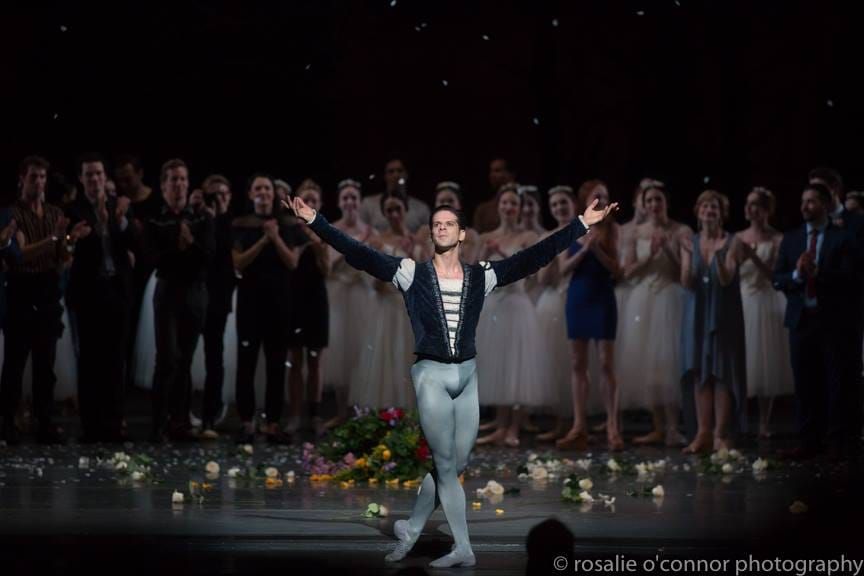
ABT has produced some outstanding "Giselles" this season, but the Wednesday night performance celebrating Marcelo Gomes' twenty years at ABT was extra-special, culminating in emotional curtain calls where the audience and the company thanked Gomes for so many years of committed, generous, dramatic, as well as comic, performances. Though he has given up some roles (I especially miss his noble but flawed Solor and his open-hearted Basilio) this was a celebration, not a farewell. The company, including an injured Gillian Murphy, who had been scheduled to dance Myrta, Alexei Ratmansky, and Kevin McKenzie presented him with wreaths of flowers, hugs, and some tears. Gomes seemed at times overwhelmed, bowing to the company, to the orchestra, and to the audience, trying to share the applause with his Giselle (Stella Abrera), but it was his night and the audience knew it.
Though Gomes can out-Prince most dancers, his more complex characters and their moral dilemmas are especially memorable. His Albrecht was passionate, impulsive, and callow; "What is really wrong?" he seemed to ask Wilfred, with an almost sullen determination to get his way. Yet he was clearly in love with Giselle, kind and gentle when she felt faint, and luxuriating in his escape from the court. I especially enjoyed his awkward peasant dance, as he tried to be one of the group.
But he never forgot his rank and believed he could bluff his way out of Hilarion's accusation – what could a peasant really do to hurt an aristocrat? He seemed resigned after the horn sounded, dropping his sword with a hint of a shoulder shrug, as if he were giving up, and greeting the Duke eagerly, thinking, apparently, "stuff happens and life will go on". Of course, Giselle's life didn't go on, and Gomes backed away in helpless shock and horror, then tried passionately to shake her back to life before rushing off stage broken with grief and guilt.
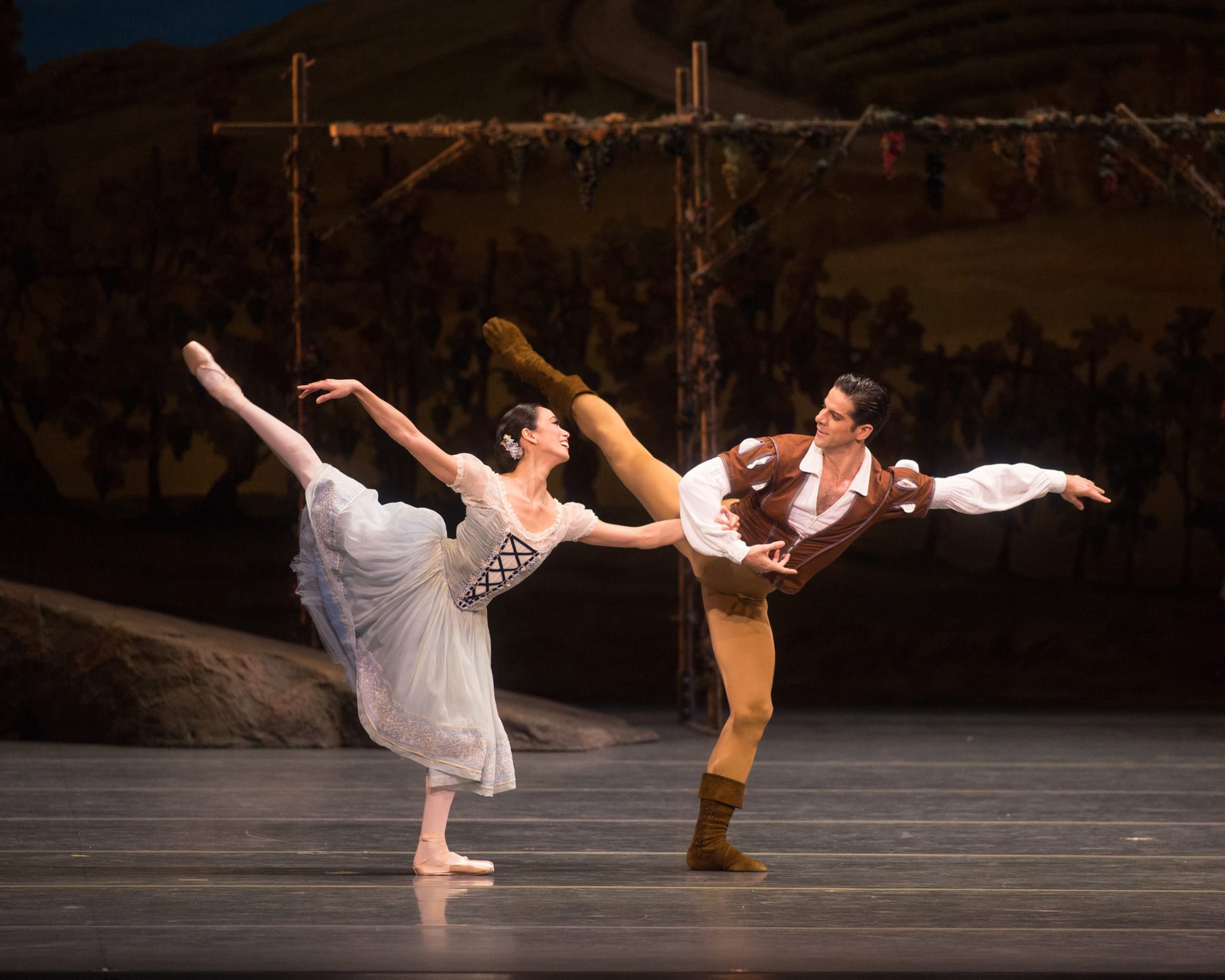
Abrera was a traditional sweet, frail Act I Giselle, detailed and believable but not especially individualized. She did have some technical issues, coming briefly off point during the hops, and only making it halfway off stage. Her mad scene, with her white, pinched face, was effective, but for me a bit routine. It is possile of course that my memory is clouded by the afterglow of her staggering Act II. A clear-eyed observer would have seen that her Act II turns were not as fast nor her footwork as sharp as they could have been, but my eyes were too misty to notice, and only saw the poetry of her long, floating arms and the extraordinary beauty of her dancing.
The grave had transformed her and there was no trace of the carefree girl of Act I. She danced the second act as an elegiac poem, as a woman who could save Albrecht's life but could not give him happiness. Her ghost was the woman she might have become had she not been betrayed, a woman of generous understanding and sympathy, and Abrera flavored the act with a mournful, poignant regret. She faced Myrta (a fierce, fine Christine Shevchenko) with a resigned stubbornness but without defiance. There was no triumph or relief when the clock chimed, she just rocked Albrecht in her arms to comfort his and her raised arm seemed to signify, not only forgiveness but sorrow; "How I could have loved you", it seemed to say.
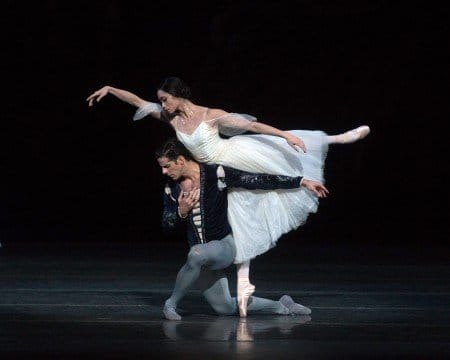
Gomes was a shattered Albrecht, backing away from the grave and ending on his knees, almost sobbing. Some Albrechts can leave the forest sadder but wiser men (and of course the original Giselle handed him back to Bathilde) but after all the cheers and hugs and confetti, somewhere in Balletland, this Albrecht is mourning his Giselle still.
Copyright © 2017 by Mary Cargill



