Moves, Like Words, Becoming Stories
“Woolf Works”
American Ballet Theatre
Metropolitan Opera House
New York, NY
June 17, 2025
In a full lineup of classics or classical-feeling story ballets, Wayne McGregor’s “Woolf Works” to Max Richter’s music stood as American Ballet Theatre’s one edgy and daring offering this season. Rooted in literary works by Virginia Woolf and wholly embedded in McGregor’s signature pliant style, this ballet showcased the company at its versatile best, with deeper and more seasoned interpretation from how it was presented last year.
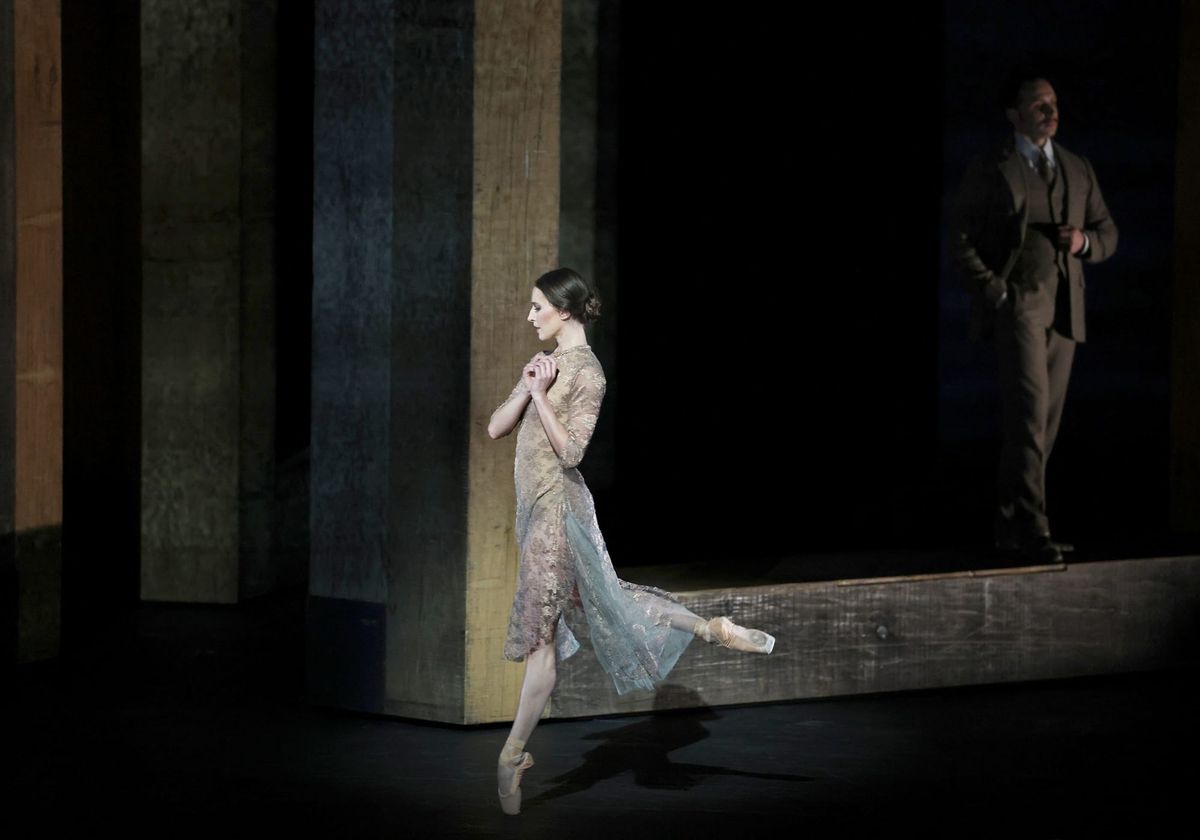
The opening and closing sections of the triptych based on Woolf’s novels “Mrs. Dalloway,” “Orlando” and “The Waves” contain homages to the author, and the role of Woolf possesses significant opportunity for dramatic exploration. On opening night, Devon Teuscher took advantage of every expressive passage in the role, and of all the casts I have seen tackle this ballet thus far she has developed the most depth dancing the author. Her first choreographic monologue of the “Mrs. Dalloway”-inspired first act (“I now, I then”), with its tacit steps that flourish into grander, fuller phrases, felt both experimental and full of meaning. The reaches, with ports de bras and steps, felt like reach-backs into the past, eager to tell the story both of Clarissa Dalloway (which she dances alongside and sometimes seemingly simultaneously with that of Woolf) and Woolf herself. Later, as the narrative proceeded, Teuscher’s portrayal of the emotional disintegration that is central to her role was slow but unequivocal. In the dance with Daniel Camargo’s Septimus, the ballerina showed a story of a passionate author eager to pour her all into her character as she was losing strength.
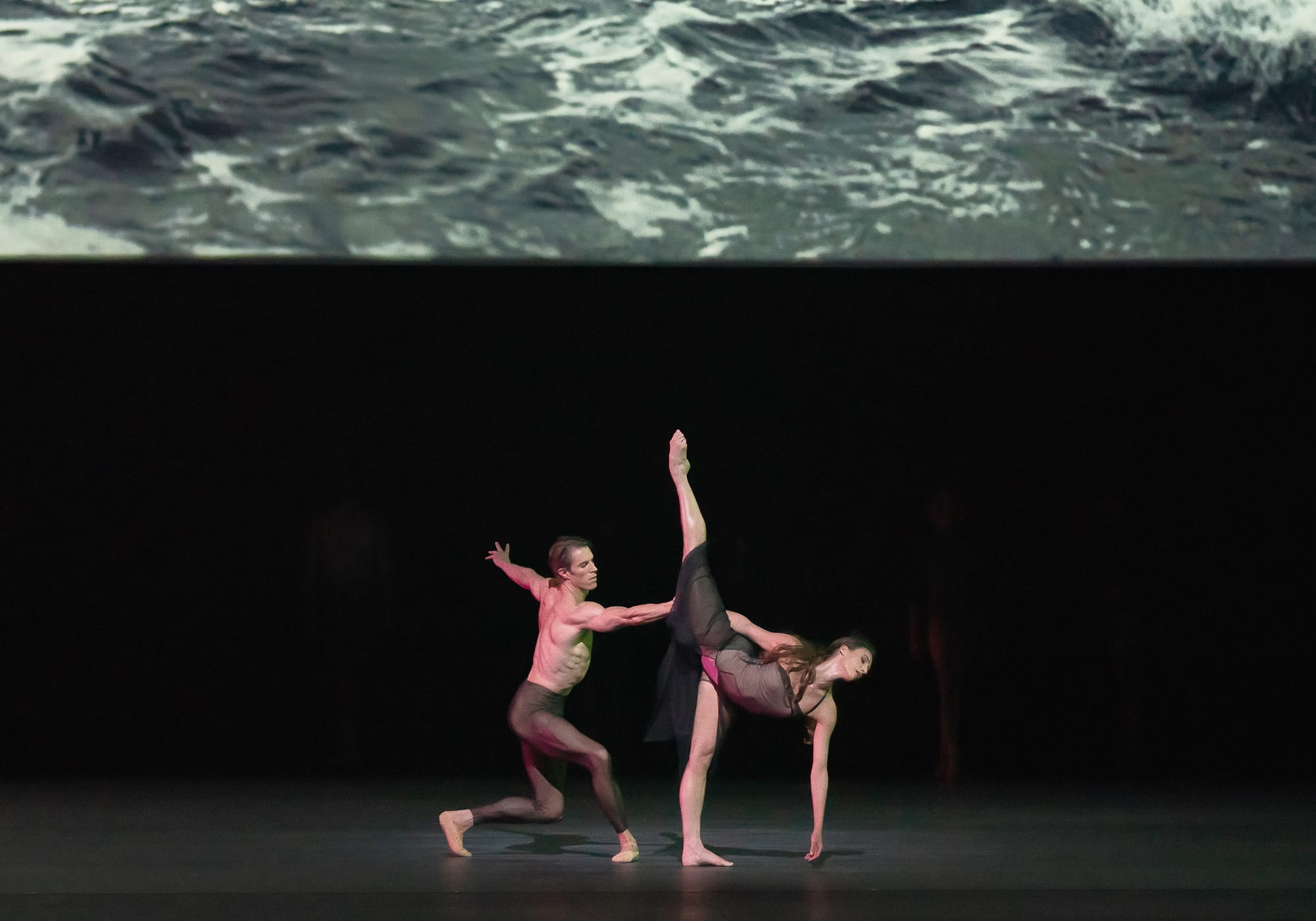
Next to her, Léa Fleytoux, as the Young Clarissa, was a youthful breeze in an otherwise somber narrative tapestry. Her expansive and playful movements were joy itself, but there was also playfulness and budding sensuality in her, like in the moment when dancing with James Whiteside’s Peter she would twist her hip coquettishly and then hold the curve for a moment. Other standouts in this context-rich act included the duet between Camargo’s Septimus and the character’s deceased friend Evans, danced by Jake Roxander. The heaviness of the music’s beats, the weight with which the dancers laced their tombés, and the richness with which they told the story of a war-scarred soldier’s psychological torment were an inflection point in the ballet’s emotional arc, if not its highlight. The only miss in the entire act came from Skyler Brandt, whose overenthusiastic Sally was overpowering Fleytoux’s energy in all interactions. The style clashed with the elegance of Fleytoux’s protagonist, and so the attraction between the women made no sense; so much so that when their duet culminated in a kiss, it seemed unwelcome.
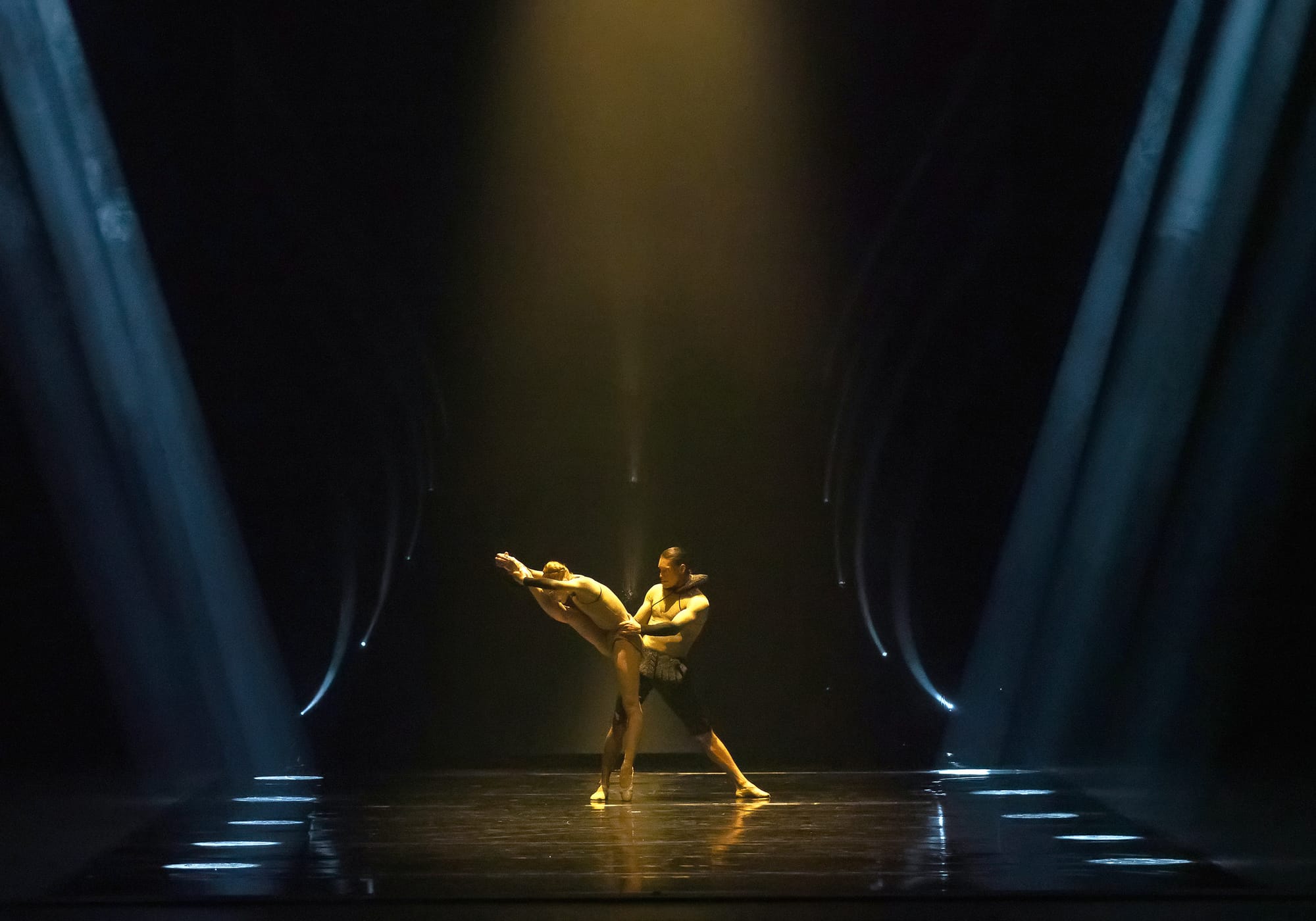
The second act, titled “Becomings” and based on Woolf’s “Orlando,” was a predictable crowd-pleaser with its abstract storytelling, vivid physicality and engaging, fourth-wall-breaking lighting design by Lucy Carter. While the entire cast danced well, on this night it was Catherine Hurlin’s show from the beginning. Her legs accented the beat and slowed to showcase a line, alternating styles while echoing Max Richter’s synth-laced music, then in the marquee duet with Camargo she transformed into an otherworldly, cold creature suspended in acrobatic lifts. To see a written work in dance, replacing imaginations of narrative with physical expressions of beauty of the written tale, is a special treat, and “Becomings” is some of the best of that both in its solos and rich ensemble sections.
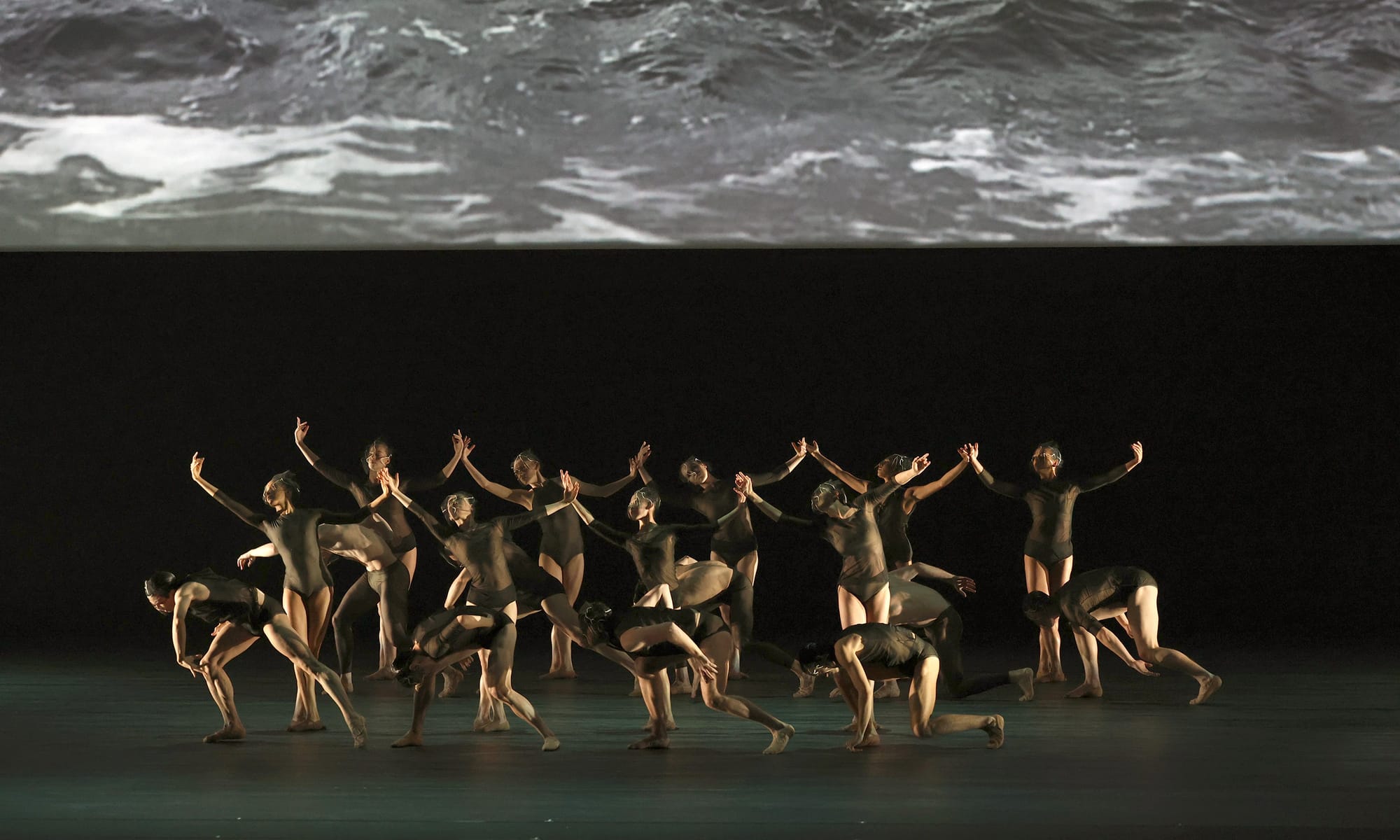
The last act, “Tuesday,” slowed things down to a somber mood again with its themes of life’s cycle and Woolf’s suicide, and showed more of the great character work by Teuscher. Dancing what was a goodbye duet with Whiteside as Woolf’s husband this time, the interaction was a relationship in motion, unstoppably moving toward its end, and a memoriam to a fleeting life. In the many lifts Teuscher looked like she wanted to float away, despite Whiteside providing firm and steady support, and trying to anchor her in life and love. As he spun her and then embraced, he seemed to not want the moment to end, before letting her go and letting her start her journey amid the sea of dancers representing water. Amid the corps dancers who crisply evoked swirls and crashing waves, Teuscher’s dancing looked like she at once was one with water and being slowly carried away, until she disappeared among them completely to end the work.
copyright © 2025 by Marianne Adams



