Moods and Shapes
"What Counts", "This, and My Heart Beside...", "Trio Sonatas", "Undercurrent"
Lydia Johnson Dance
The Ailey Citigroup Theater
New York, New York
June 7, 2018
Lydia Johnson's chamber ballet troupe presented one premiere ("Under- current") and three recent works in its New York season. She has a great respect for music, shown by the detailed credits; unlike many programs, hers included both the composer and the title of the work, as well as the specific recording which was used, so it was not surprising that the dancers were musically nuanced. They also had a clear emotional undercurrent, though, unlike some of her older works, the drama was more oblique. It was an evening of hints and suggestions rather than straightforward narrative. Her dancers are ballet trained, with a clear and articulate line, but without the recent X-treme ballet exaggerations – there were no nose whacking extensions or feel used as weapons and she blends ballet's positions harmoniously with a soft, natural carriage and everyday gestures.
Johnson choreographed "What Counts" (from 2015) to music by the modern jazz trio Bad Plus. She responded to its combination of jazzy beats and rock rhythms with interesting little moves as the dancers seemed to absorb the music. The heart of the work was a somewhat ambiguous duet for Chazz Fenner-McBride and MinSeon Kim, both powerful and intense dancers. Kim pushed Fenner-McBride away, while he seemed consumed with loneliness; they eventually seemed to reach a compromise. The moves were gravely stylized, with hints of passion without melodrama.
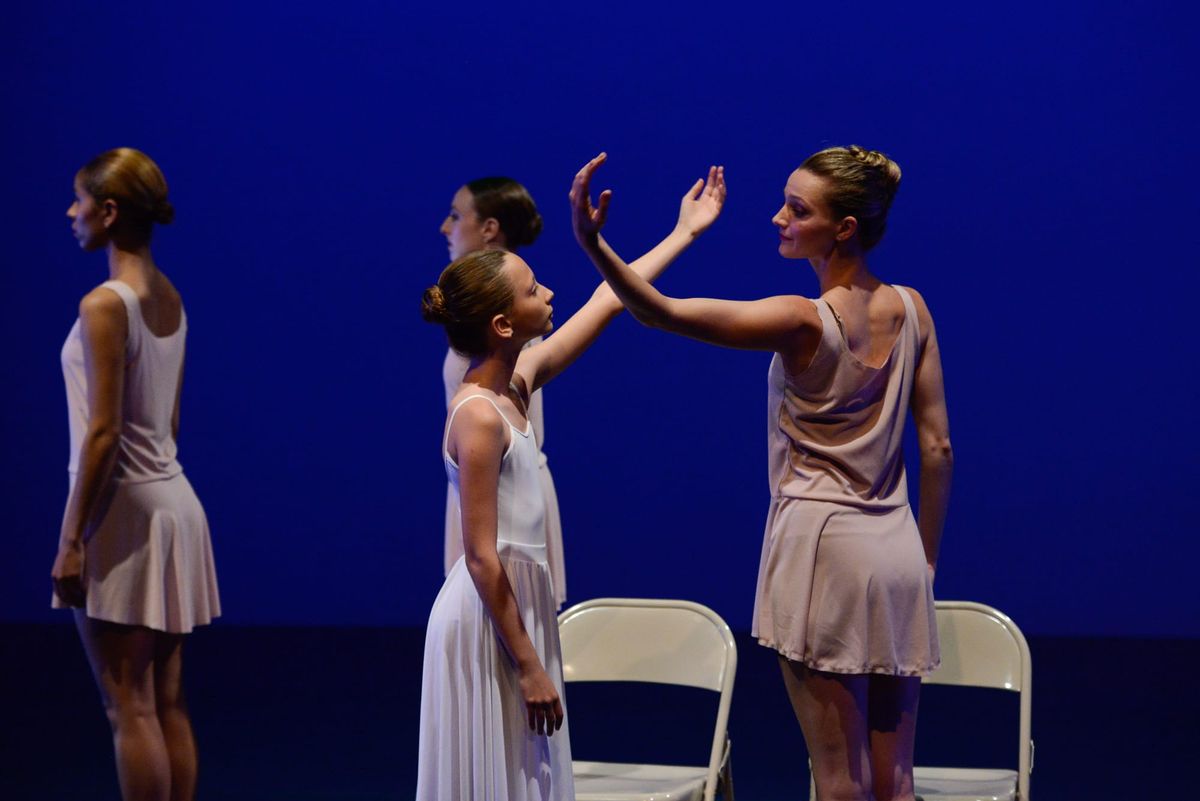
"This, and My Heart Besides...", from 2017 was more overtly dramatic, though again, there was a certain ambiguity. The title was taken from one of Emily Dickinson's less familiar and rather sentimental poems and the music was by the minimalist composers Marc Mellits and Philip Glass, both in a comparatively expressive mood. The first part did seem to have a narrative as Katie Martin-Lohiya said goodbye to a serious young dancer, the luminous Sara Spangler. A couple, Kim and Fenner-McBride, had a fraught dance, as he tried to comfort her, and they joined the child, with a group of women forming a Greek chorus; to me it seemed to imply a single mother giving up her daughter to a childless couple and was danced with a stark simplicity which avoided sentimentality.
The second half, though, muddied that mental image, as several couples who occasionally shifted partners danced various duets, with images of yearning, searching, and longing. Guest star Stephen Hanna (formerly with New York City Ballet) was particularly vivid. The young girl, with a strikingly calm and erect back, was eventually carried on by two men; she eventually went back to Martin-Lohiya in a somewhat irresolute ending. The work was seamless, as the couples formed and reformed and was certainly gripping, if a bit puzzling.
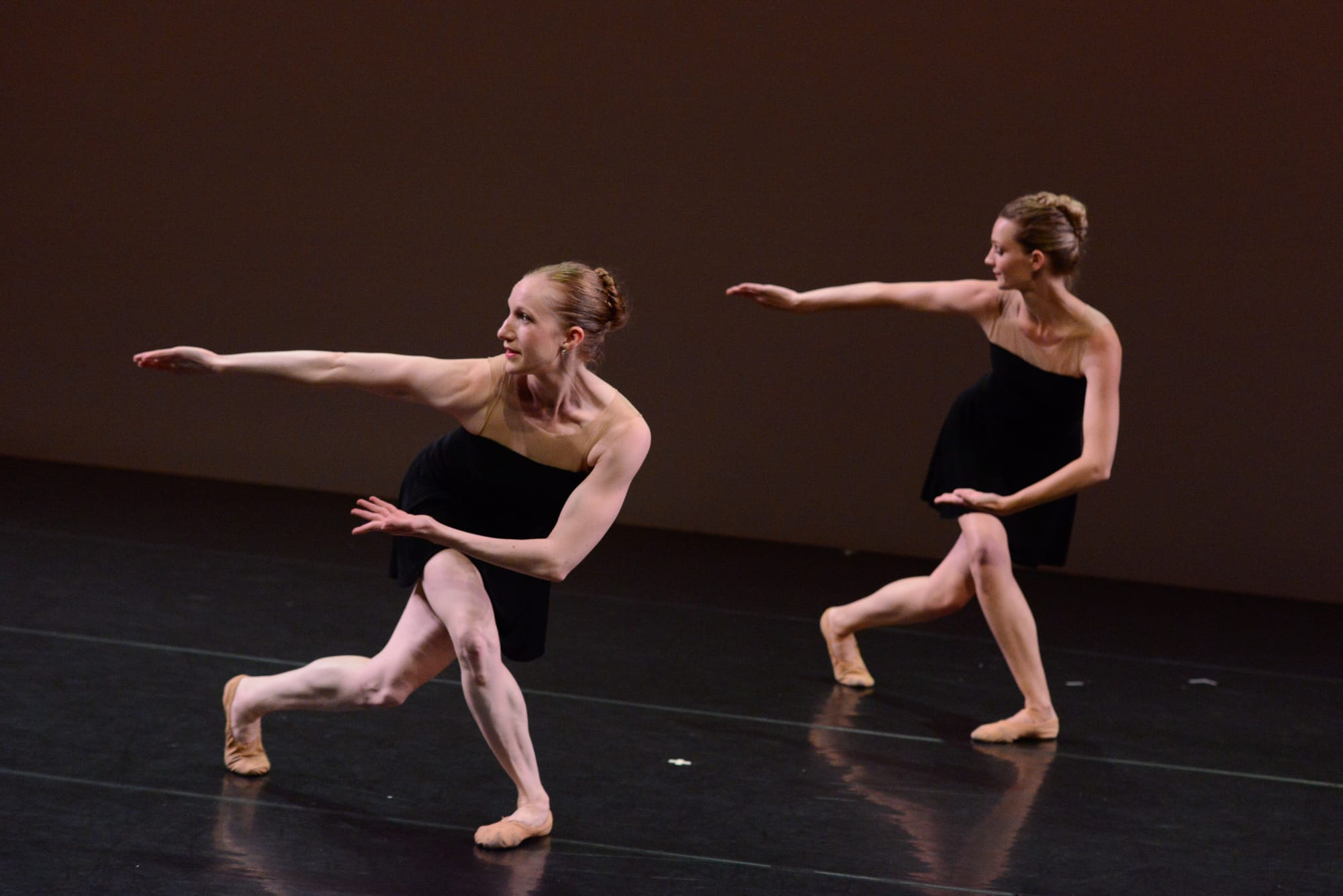
"Trio Sonatas", also from 2017, choreo- graphed to Handel, was an upbeat exploration of shapes, somewhat reminiscent of Paul Taylor's joyous Baroque dances. Johnson used hints of classical forms and the soft, curving arms were elegantly subverted by sudden falls and sharper shapes. There was a stately addition with one man (Fenner-McBride) dancing with three women (Kim, Martin-Lohiya, and Laura Di Orio) which seemed to nod delicately to Balanchine's "Apollo" without imitating it. The sprightly finale brought all eight dancers on, rushing in to dance their variations before forming couples and moving on.
The premiere, "Undercurrent", was set to Henryk Górecki's "Three Dances", and was another musical exploration, as Johnson responded to the three different moods and rhythms of the composer. The first was bleak and uneasy, as three dancers (Danny Pigliavento, Peter Cheng, and Fenner-McBride), in bright red shirts with black shorts, rushed, crouched, and spun with emphatic torsos and a tense wariness which echoed the music without mimicking it.
The second movement had an air of eerie calm, with slow, deliberate, and controlled duets for three couples, which flowed together in overlapping stories. Johnson's ability to mix ballet and humdrum moves gave Dona Wiley's solo an impressively fractured feel, as she combined a powerful and stately arabesque with limp, dangling arms, and odd and memorable juxtaposition, as those arm movements seemed to continue the music.
There was no unease in the third movement, as Górecki's infectious Eastern European folk melodies inspired an explosion of a mass of red swirling skirts, including those worn by Johnson's ballet students as they joined hands in a sinuous folk style dance. That movement seemed to be a salute to community and continuity, as the younger dancers worked their way off stage while the older dancers took their place. A circle can be a moving statement when blended with powerful music.Copyright © 2018 by Mary Cargill



