Midsummer Madness
"A Midsummer Night's Dream"
New York City Ballet
David H. Koch Theater
Lincoln Center
New York, New York
May 26, 2017
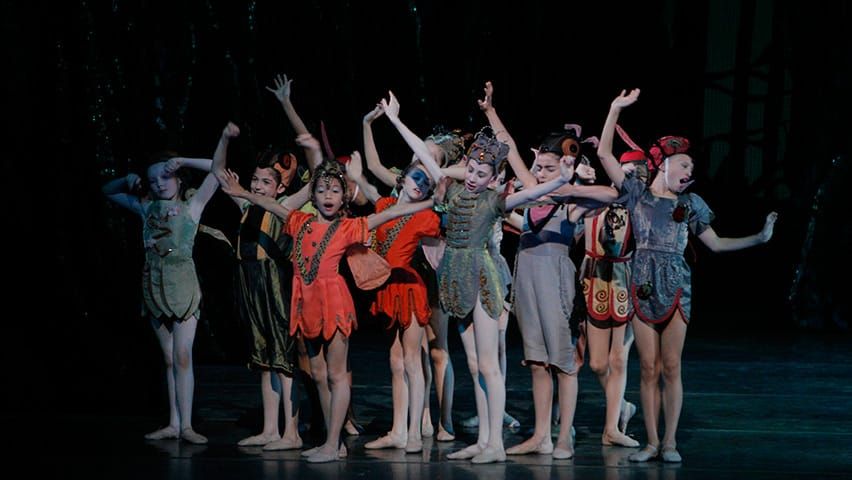
After the month-long Here/Now blowout (43 ballets by 22 choreographers) New York City Ballet settled down to a week of Balanchine's "A Midsummer Night's Dream". Understandably the corps seemed a bit winded and the energy came in fits and starts, though the children were exceptionally well-drilled. There were few major debuts --no new Titanias, Oberons, or Pucks, though Emily Kitka made her debut as Hippolyta. She is a natural Amazon, tall and grand, and she dove into the role with a fearless and irresistible abandon. She attacked the tricky fouettés with her bow held high and made them both secure and musical. She also gave her brief appearance in the second act a real warmth; it was clearly her wedding too.
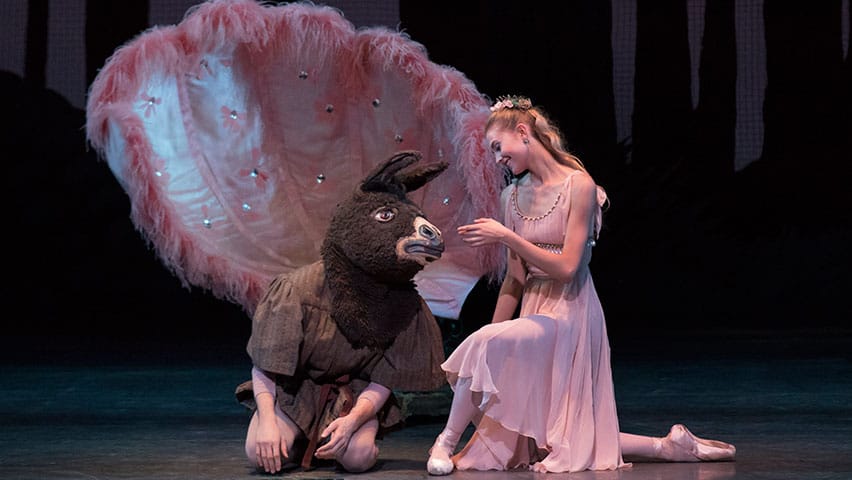
Miriam Miller, who made a splash two years ago when she danced Titania as an apprentice, was the Fairy Queen. She is a tall, leggy blond who was quite effective as a cool, serene presence in the "Agon" pas de deux when she debuted a year ago, but Titania is neither cool nor serene and at times Miller seemed to be just doing the steps as elegantly and precisely as she could. Her pas de deux with the unnamed partner (a noble and engaged Zachary Catanzaro – I loved the way he watched over the Changeling) was a somewhat unconnected series of shapes. She was playful and sweet-natured with Bottom, but missed much of the comedy of Titania's helpless and sensuous infatuation, in part because she had not been fierce enough in her opening mime to make her love-sick blindness a contrast to her regal powers.
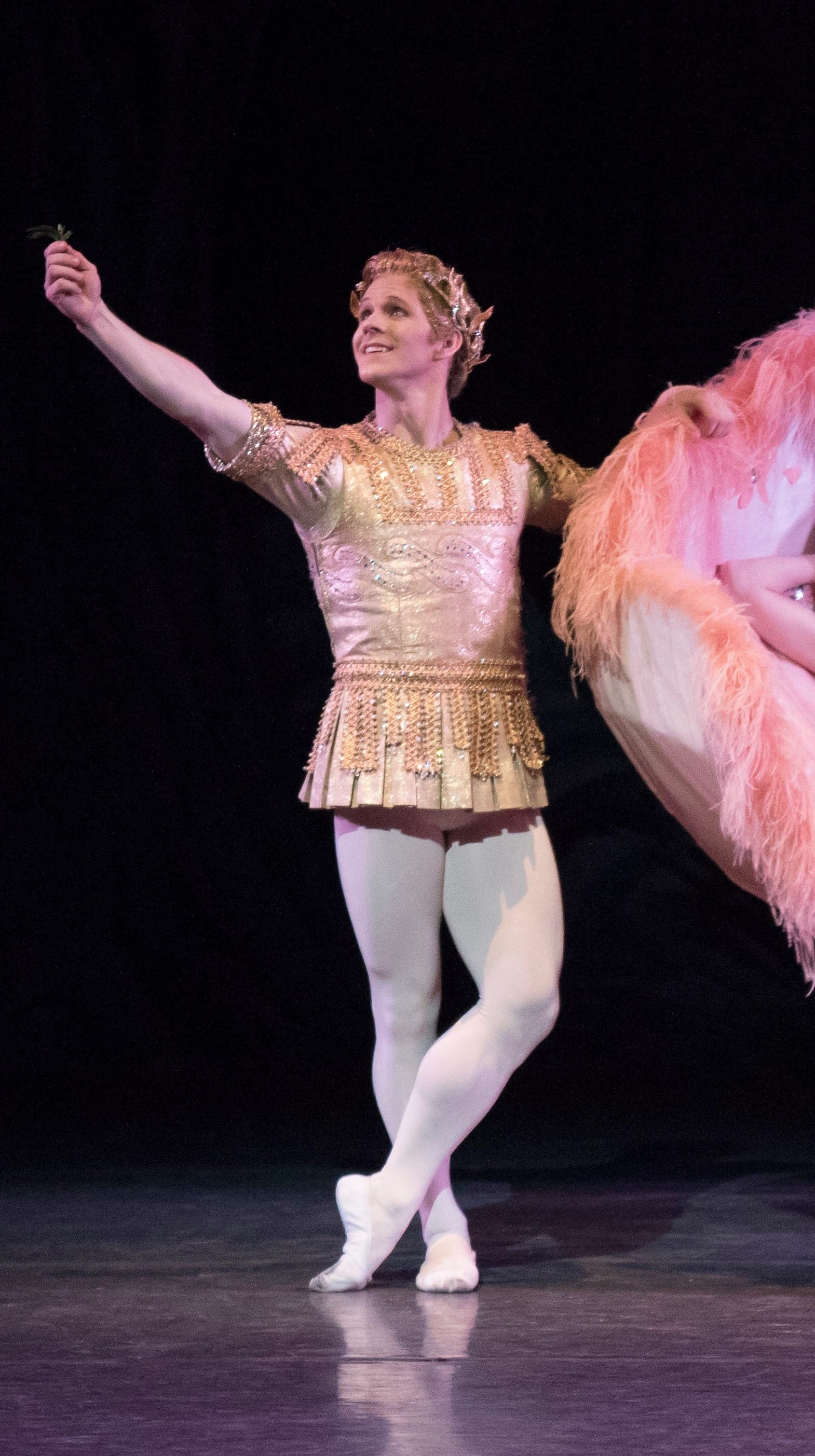
Daniel Ulbricht's Oberon had power to spare which he paired with a noble and commanding demeanor; I loved the calm forcefulness with which he ordered the little bugs into formation. His dancing, which is usually enthusiastically exuberant (as more than one shattered tambourine can attest to) was light and controlled. His jumps were high but his preparations were invisible and his upper body still, which made it seem as if he really were flying. He opted for style over force.
His cohort, Butterfly (Indiana Woodward), was equally impressive, with boneless arms that seemed to blur into wings, a creamy, three-dimensional upper body and an easy jump. She is a dancer who can light up the stage.
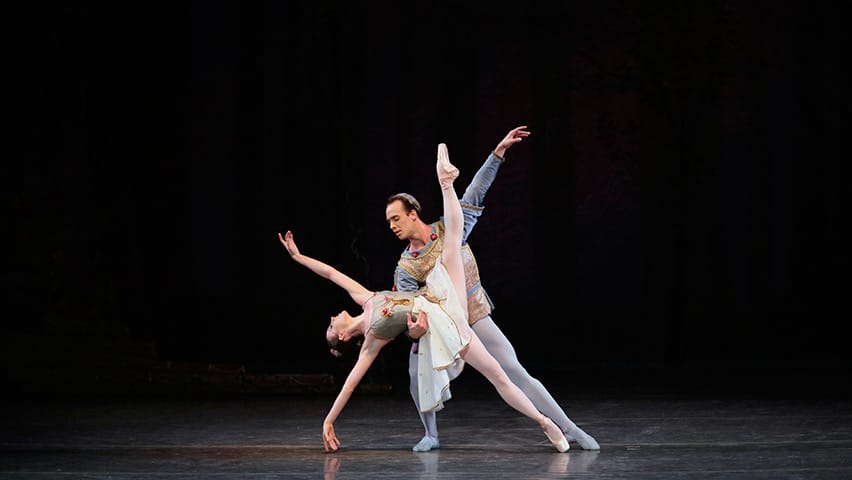
So too is Tiler Peck, who, with Jared Angle, danced the transcendent Act II pas de deux. Peck has astounding technical control, which she used to make her movements seamless and she, supported by Angle, moved with a hushed, alabaster flow. She is, though, a dancer who is anchored to the present tense and she didn't give the role the timeless, otherworldly quality it can have. She is a dancer of matchless beauty and radiant musicality, but one of few secrets.
Sean Suozzi was a high-flying Puck who played down the slap-stick elements that have been creeping into the role, and he didn't insist on sharing the jokes with the audience. Rebecca Krohn was a droopy Helena, who, like Suozzi, played it straight. The moment when she walks by and takes the leaf from the unseen creatures was truly magical. The other lovers (Abi Stafford as Hermia, Jared Angle and Lysander, and Ask la Cour as Demetrius) gave their characters a clear individuality, but their one-punchline joke does go on. Bottom, too, is a one-joke role, but Cameron Dieck gave him a hint of pathos, and his diffident and confused yearning for another bite of grass was oddly touching. Aaron Sanz made Theseus, who often just stands around in funny clothes, a true personality, exasperated by the quarreling lovers in the first act and noble in the second act. He clearly deserved his majestic Hippolyta.
Copyright © 2017 by Mary Cargill



