Miami City Ballet’s Program I: Balanchine, Taylor and Another America
“Concerto Barocco,” “Company B” and “Tschaikovsky Piano Concerto No. 2”
Miami City Ballet
Adrienne Arsht Center for the Performing Arts
Miami, Florida
October 19th and 21st, 2018
Miami City Ballet Artistic Director Lourdes Lopez addressed the audience before the start of MCBs 33rd season on Friday, October 19th at the Adrienne Arsht Center and dedicated the performance of “Company B” to choreographer Paul Taylor, who died in August.
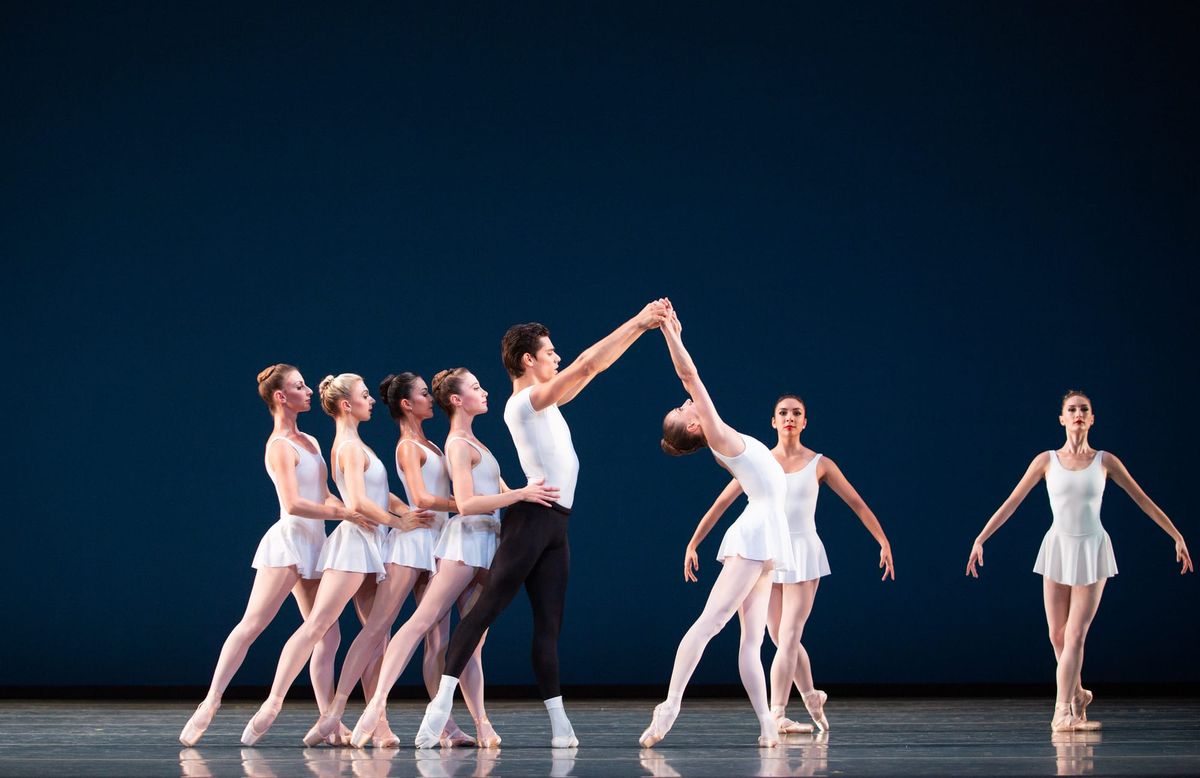
With that, Program I opened to “Concerto Barocco”, danced to Bach’s Concerto in D Minor for Two Violins. This piece debuted on tour in 1941 as part of the State Department’s initiative to cultivate support during the war among South American allies.
I viewed both the Friday and Sunday performances of the piece, which differed notably. The Friday night performance was headlined by Simone Messmer, Ashley Knox and Jovani Furlan, and for all three a role debut. Knox was competent but her dancing lacked the musical sensitivity that Messmer brought to the score in the first movement. Messmer and Furlan, so consistently strong together last season, struggled in the second movement during their pas de deux. Emily Bromberg, Adrienne Carter, Julia Cinquemani, Mayumi Enokibara, Samantha Hope Galler, Ellen Grocki, Alyssa Schroeder and Nicole Stalker were consistently solid throughout both Friday and Sunday performances, their bodies exuberantly materializing Bach’s complex orchestration.
Sunday afternoon I saw Katia Carranza, Jennifer Lauren and Reyneris Reyes in the principal roles. Joyous and infectious, Carranza and Lauren synced nicely with one another and with the gorgeously performed duet by violinists Mei Mei Luo and Dina Kostic. On Friday night the second movement pas de deux had difficulties, but the effect on Sunday was hypnotic when Reyes lifted Carranza through a series of seven flawless slow motion jetés.
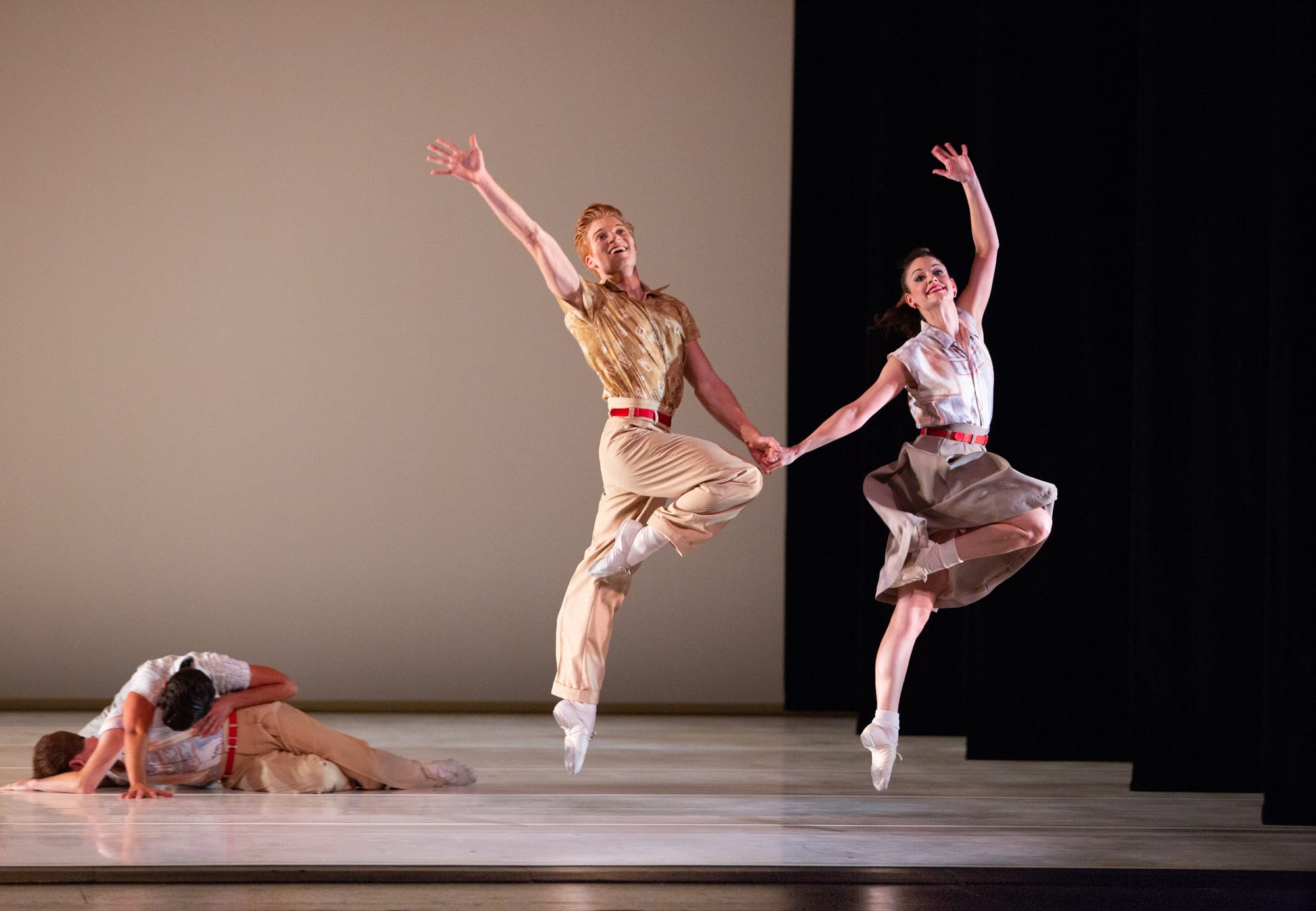
Program I continued with Paul Taylor’s “Company B”, set to the Andrews Sisters, one of very few ballets for which the adjective, “Chomsky-esque”, fits. Taylor choreographed the piece during the first Gulf War that then premiered with the Houston Ballet right after its conclusion. The same cast performed the piece on both Friday and Sunday and, with few reservations, the dancers’ interpretation of their roles energetically supported the invitation the piece extends to the audience to reflect uncomfortably on the realities of armed conflict. For instance, during “Pennsylvania Polka” the dances of Jennifer Lauren and Alexander Peters delightfully sampled from Swing and Lindy Hop, but the same sequences – so playful at first – assumed an eerie vibe as the background crowded with silhouettes of soldiers contorting in death.
“Tico-Tico” also shows the hard disjunct between home and war front. Kleber Rebello’s dancing alternated between carefree to awesome as when he punctuated his performance with gravity-defying jetés. Still at different moments something like a corporeal panic attack ran convulsively down his body. This feature seemed out of place unless the audience connected “Tico” to the slang term used by GIs to refer to battle fatigue.
During “Rum and Coca Cola” Tricia Albertson was anything but the girl next door, revealing the bright red hem of her skirt to fire up the seven GIs on leave as the line “Both mother and daughter singin’ for the Yankee dollar” made a clear reference to prostitution. On the other hand, Chase Swatosh was the boy next door with his crème-yellow chinos, cinch belt and button up shirt during “Boogle Woogie Bugle Boy”. Swatosh was so bubbly through sequences that freely quoted from Swing, Jive and Lindy Hop that he made us forget the context of the song until on exiting he was sent to the floor by impacts from gun shots. Also memorable was Renan Cerdeiro for his whip-like pirouettes and comic timing in "Oh Johnny, Oh!" and Christina Spigner for her inspired sense of rhythm and theatricality in "Oh Johnny, Oh!" and "Joseph! Joseph!".
Program I closed with Balanchine’s, “Tschaikovsky’s Piano Concerto No 2 in G”, known until 1973 as “Ballet Imperial”. Conceived the same year as “Concerto Barocco”, it also received its premiere during the American Ballet Caravan’s good will tour of South America in 1941 and shows clear indebtedness to Petipa’s version of “Giselle” and his “Sleeping Beauty”.
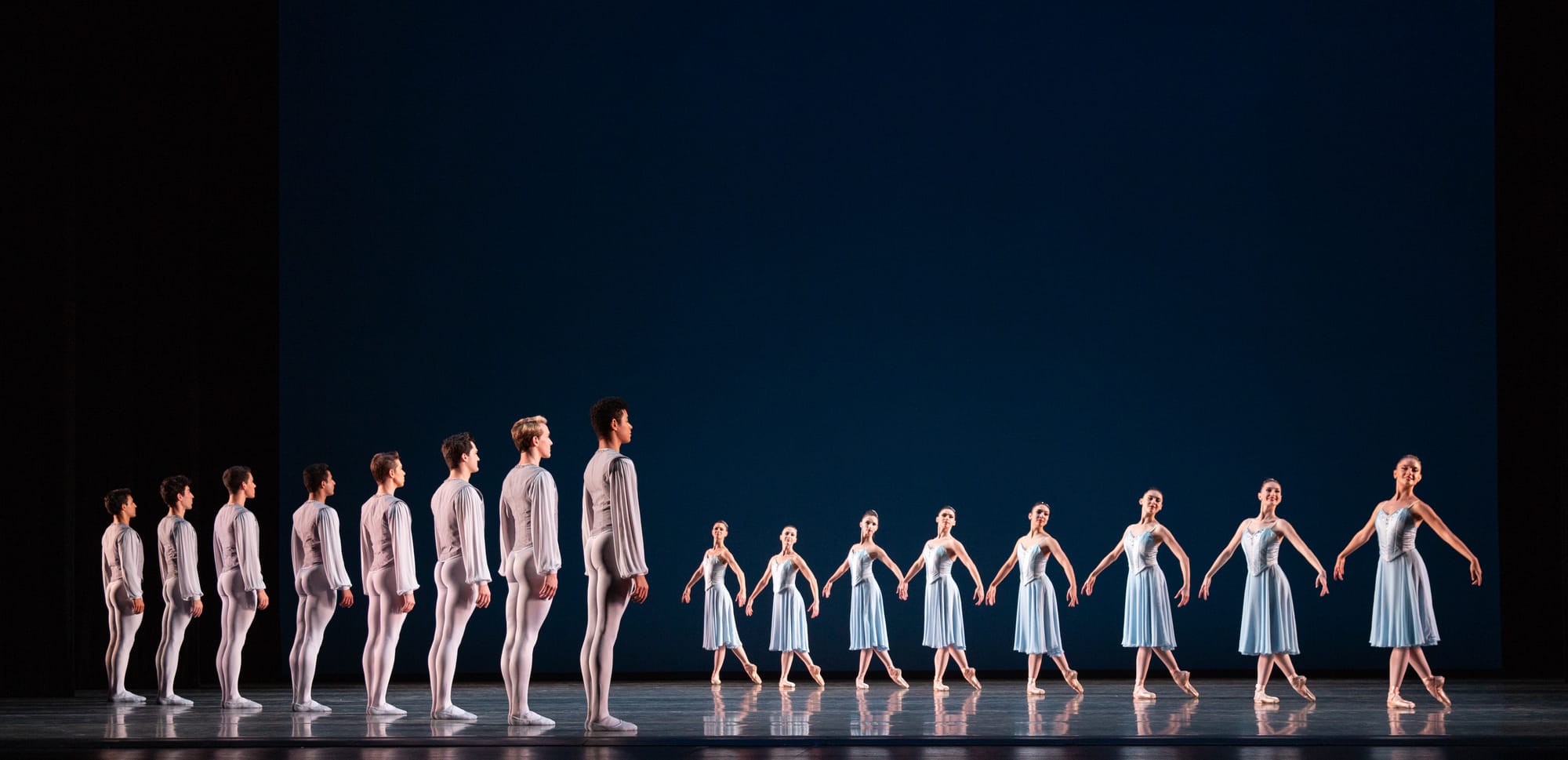
During the Friday night performance the piece had difficulties with awkward holds, bobbles and rough endings to off-balance pirouettes. By the Sunday performance these issues had disappeared. Consistent throughout both performances was the superlative playing of the Opus I Orchestra under Gary Sheldon that showcased an ebullient Francisco Rennó on solo piano. Nathalia Arja was lovely in the first movement, sets of entrechat six tightly coordinated with repetitions in the piano as she transitioned into pirouettes en dehors that progressively roped in the corps dancers until the entire stage shared in one ecastic motion.
Absent last season, principal Jeanette Delgado animated the stage with lush, natural musicality. She showcased her power eating up the floor in a circle of coupé grand jetés or, partnered by Penteado, hopping back in arabesque, the movement precisely timed to sharp staccatos in the piano. Penteado was a show-stealer in the second movement, legs snapping in double cabriole followed by a series of assemblé six showing good elevation and definition of the feet only then to alternate between lifts of Delgado and a double tour of his own. It was a furious sequence that Penteado executed with pacing and magisterial control.
copyright © 2018 by Sean Erwin



