Man Alone
"Opus 19/The Dreamer", "Solitude", "Symphony in Three Movements"
New York City Ballet
David H. Koch Theater
Lincoln Center
New York, New York
February 15, 2024
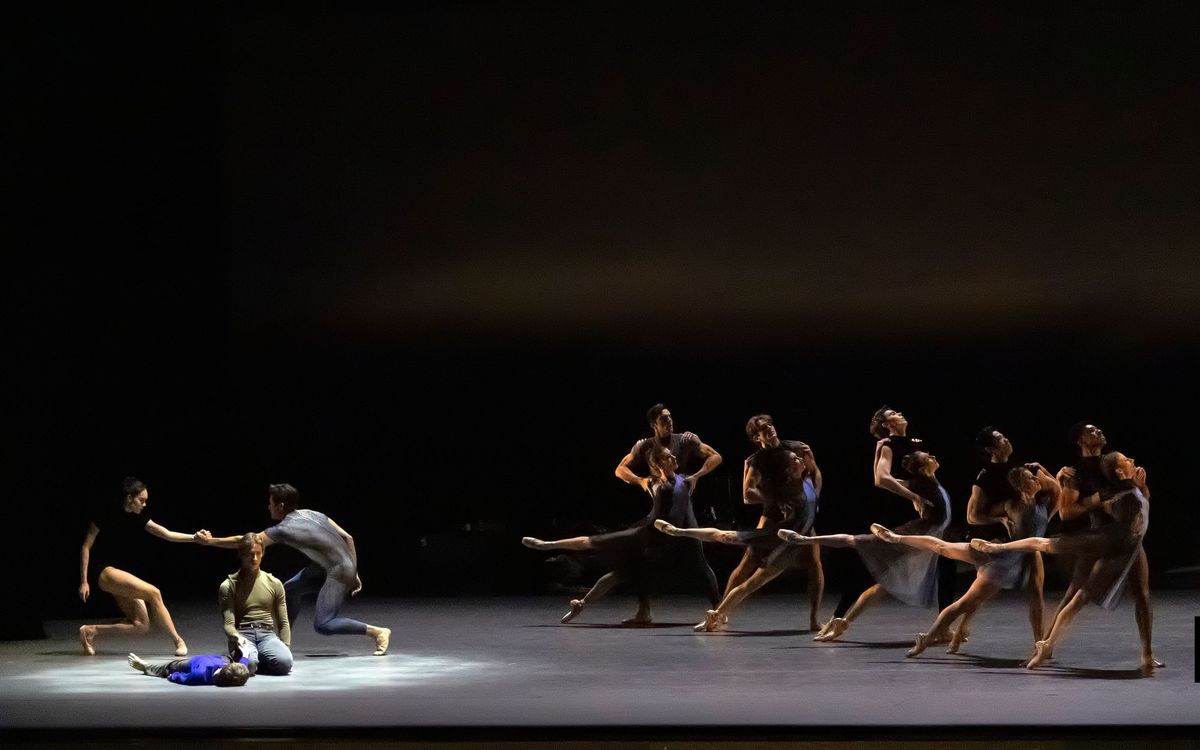
“Solitude”, the first ballet Alexei Ratmansky has choreographed since becoming New York City Ballet’s Artist in Residence, is dedicated “to the children of Ukraine, victims of the war”; Marina Harss, writing in the New York Times about the creation of the work, explained that the inspiration came from a photograph of a father sitting by his son, killed by Russian bombs. (https://www.nytimes.com/2024/02/10/arts/dance/alexei-ratmansky-new-york-city-ballet-ukraine.html). It is both personal and universal, allusive and shattering. Ratmansky used Gustav Mahler’s Funeral March from the First Symphony and the “adagietto” from the Fifth; the two parts, mournful yet agitated and serene, combine in a lamentation for the lost, too horrific even for anger.
Joseph Gordon, in casual clothes, sat by a young boy, clearly his son (Theo Rochios from the School of American Ballet) throughout the first section, barely aware of the rest of the cast, who entered in darkness, formed into pairs, and seemed to turn into moving statues, carved from the music. At one time, four couples lined up in a diagonal row, getting smaller as they seemed to stretch into the distance, each dancing their own steps, echoing the music perfectly, each perhaps mourning in their own way. These shapes twisted and turned, at times lying in a row, at times forming groups, hints, perhaps of families. They could have been the man’s shard of memories as he sat mourning his son. Mira Nadon, in a black velvet leotard, was especially vivid, with her long, sharp legs, KJ Takahashi, also in a black leotard, had a magnificent martial solo, full of stiff-legged jumps, and Sara Mearns was a powerful, calming presence.
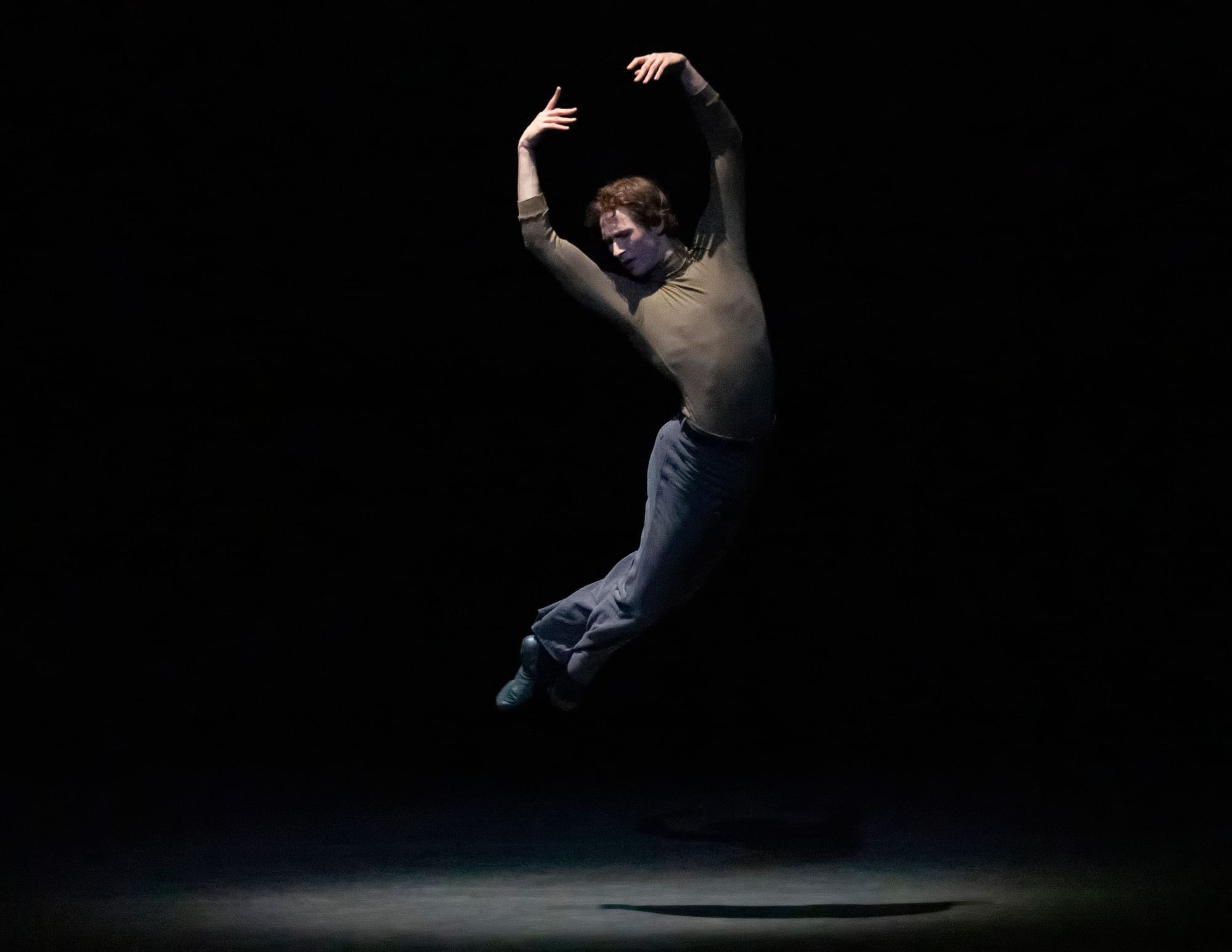
Gordon slowly got up at the beginning of the second, adagietto section, moving as if in a dream. He danced a long solo, full of yearning arabesques alternating with quick, agitated jumps and bends, matching the soaring music. It was like watching someone’s thoughts and Gordon danced with a powerful concentration, quietly, without any melodramatic histrionics. As he returned to his son, the rest of the company came back, memories, perhaps, drawn back by his sorrow. He and the boy danced together, doing a few simple steps; a father and son just talking about everyday things, and then Gordon quietly took his son’s hand as if in his dream he finally had a chance to say goodbye. This simple gesture, so much more powerful than any agonized flailing or dramatic hug, brought me, and I suspect others, to tears. Then, in a flash of light the stage emptied and it ended as it began, with Gordon kneeling beside the dead boy. It is a powerful and profoundly moving work, dominated by Gordon and those sculptural shapes, timeless symbols of loss.
It was an unfortunate scheduling coincidence that the opening ballet, Jerome Robbins’ “Opus 19/The Dreamer”, also featured a man alone (Taylor Stanley) dreaming, this time about a woman (Unity Phelan). Robbins set his work to Sergei Prokofiev’s “Violin Concerto No. 1 (presumably the work is Robbins’ 19th ballet), a moody, piercing work, admirably played by Kurt Nikkanen. Stanley had several long, moody, piercing solos, full of reaching arms, flowing shapes, and extended arabesques, and Phelan alternated angular, commanding shapes with some elegant floating. Both danced very well, but the work does go on in one lugubrious moan, and they gave it more than it gave them.
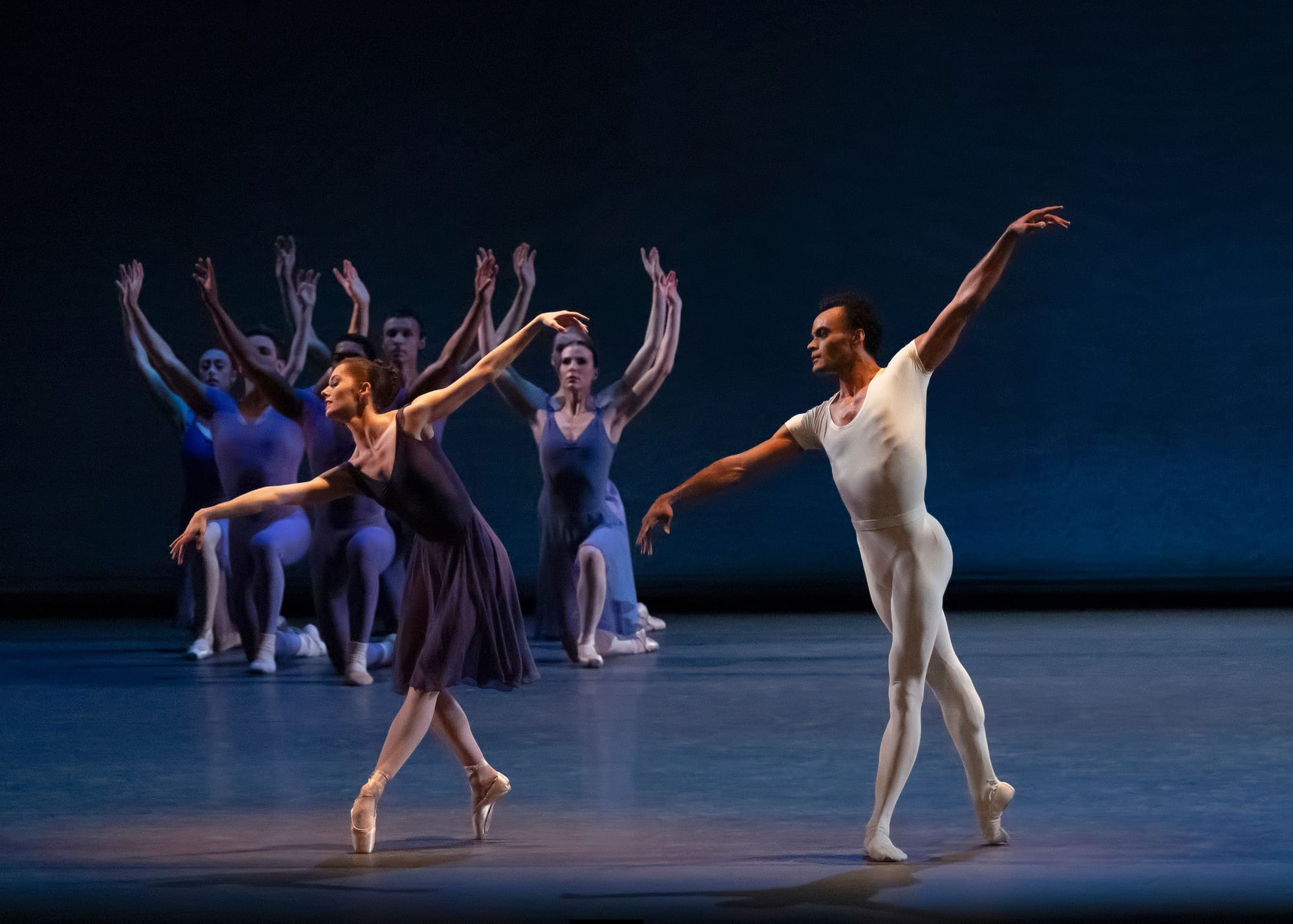
The corps, slightly ominous figures in the Dreamer’s mind, wound around the couple, sometimes separating them, sometimes dancing stylized folk dances, but unlike Ratmansky, Robbins’ wasn’t able to sculpt interesting shapes, and the corps were generally just in vertical or horizontal groups, moving to and fro.
There is no moaning and a lot of geometric shapes in Balanchine’s “Symphony in Three Movements”, which opens with a vibrant diagonal line of Amazons in white leotards and ponytails. The Stravinsky music has a sharp clarity that Balanchine echoed in his vertical lines—there are many sharp, straight arms, and the many prancing moves match the bright, energetic sound.
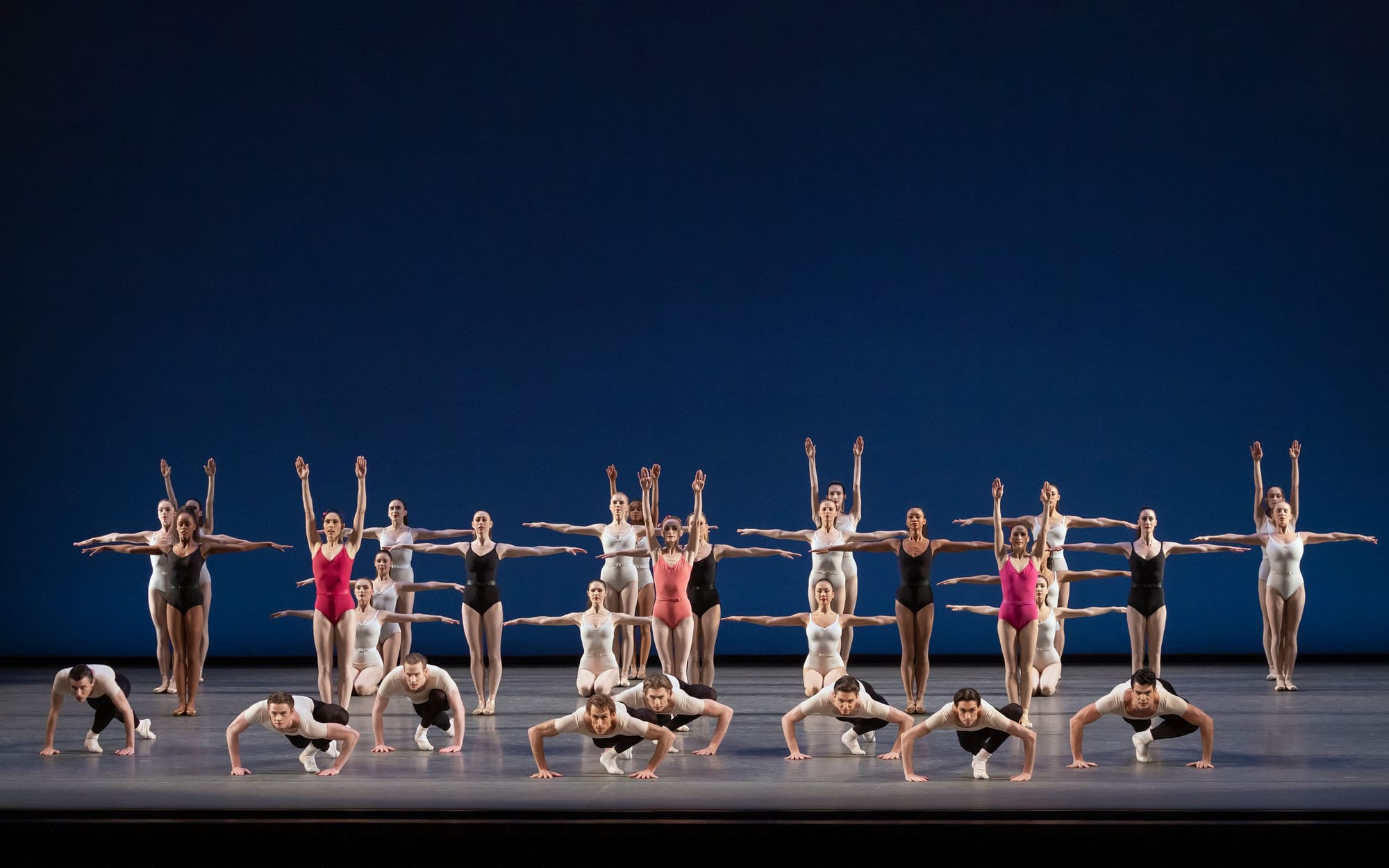
There are three couples (one, presumably for each movement, though they frequently danced together). Erica Pereira with David Gabriel (in his debut) were the first couple; their dancing, though clear, was a bit muted. Isabella LaFreniere which Jules Mabie (both debuts) danced the second couple, bursting through the choreography like it was the most fun thing in the world to dance. Mabie tossed off his fast footwork and LaFreniere, loose and free, tossed her ponytail and played with her timing, chugging away happily. Ashley Laracey, a last-minute substitute for Tiler Peck, with Adrian Danchig-Waring, danced the slinky, quirky pas de deux. Laracey has an otherworldly air, as if she were dancing somewhere we can see but can’t reach, and she gave the undulating, curling dance, full of flexed feet and odd angles an opaque glow. She used her long arms like tendrils to fascinate her partner, who is no slouch in the tendril department himself, as he bent into the odd Oriental flavor of the dance. The controlled chaos of the finale promised order after all the fun. No one is alone in this dance paradise.
© 2024 Mary Cargil



