Looking Through the Roots
“Scotch Symphony,” “Valse-Fantaisie,” “Sonatine,” “Stravinsky Violin Concerto”
New York City Ballet
David H. Koch Theater
New York, NY
May 8, 2019
With its “All Balanchine” program, New York City Ballet turned to the older works of its founding master – George Balanchine’s “Scotch Symphony,” “Valse-Fantasie,” “Sonatine,” and “Stravinsky Violin Concerto.” This particular evening had many debuts, allowing for a fresh look at the company through the older works, and also proving that the company’s classics are alive and well in the hands of NYCB’s debutants and veterans alike.
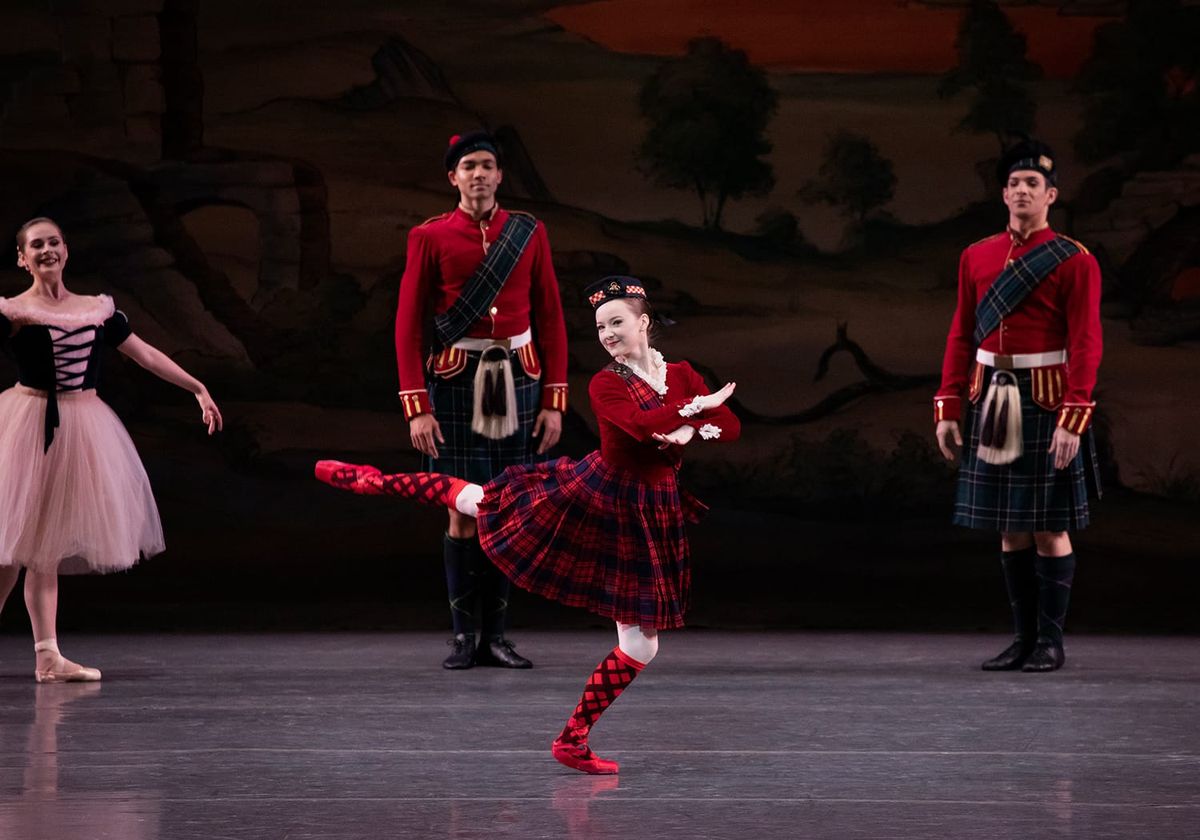
"Scotch Symphony" probably had the most successful new cast. Alston Macgill as the Scotch Girl was vibrant and precise, perfectly timing her cabrioles with fellow debutants Ralph Illpolito and Lars Nelson. All three looked in their element with the Scottish folk flair and their confident dancing was a good counterpoint to the lyricism drawn out in the sylph pas de deux by the other first-timers, Sterling Hyltin and Anthony Huxley. The couple had many tender interactions in the adagio, and the effect no doubt was helped by the innate fragility Hyltin was able to embody. They had some trouble with partnering, most noticeably when Hyltin wavered and had her hands almost miss Huxley's support where a turn transitions the pirouettes into a supported attitude, but no matter. Both made up for the subtle misses later in the dance with some very impressive moments. For Huxley, it was his impressive solo, particularly the razor sharp way in which he was able to hit every corner and perfectly and musically stop his turns into arabesques facing the different directions. Hyltin, in turn, more than made-up for the earlier slight shortcomings with her manège, which was as fast as it was light, and very becoming of a sylph.
It helped the overall effect of the ballet that the leads were well-supported and perfectly in sync with the corps, which was not the case in the “Valse-Fantaisie.” Here, another debutant couple of Indiana Woodward and Harrison Ball did their best, but everything from the timing of the steps, to the energy levels, and even body types, was mismatched with the corps dancers. As a result, Woodward physically looked too heavy and her steps too aggressive and modern next to the women of the corps, and Ball’s precision in his solos was left to salvage the piece.
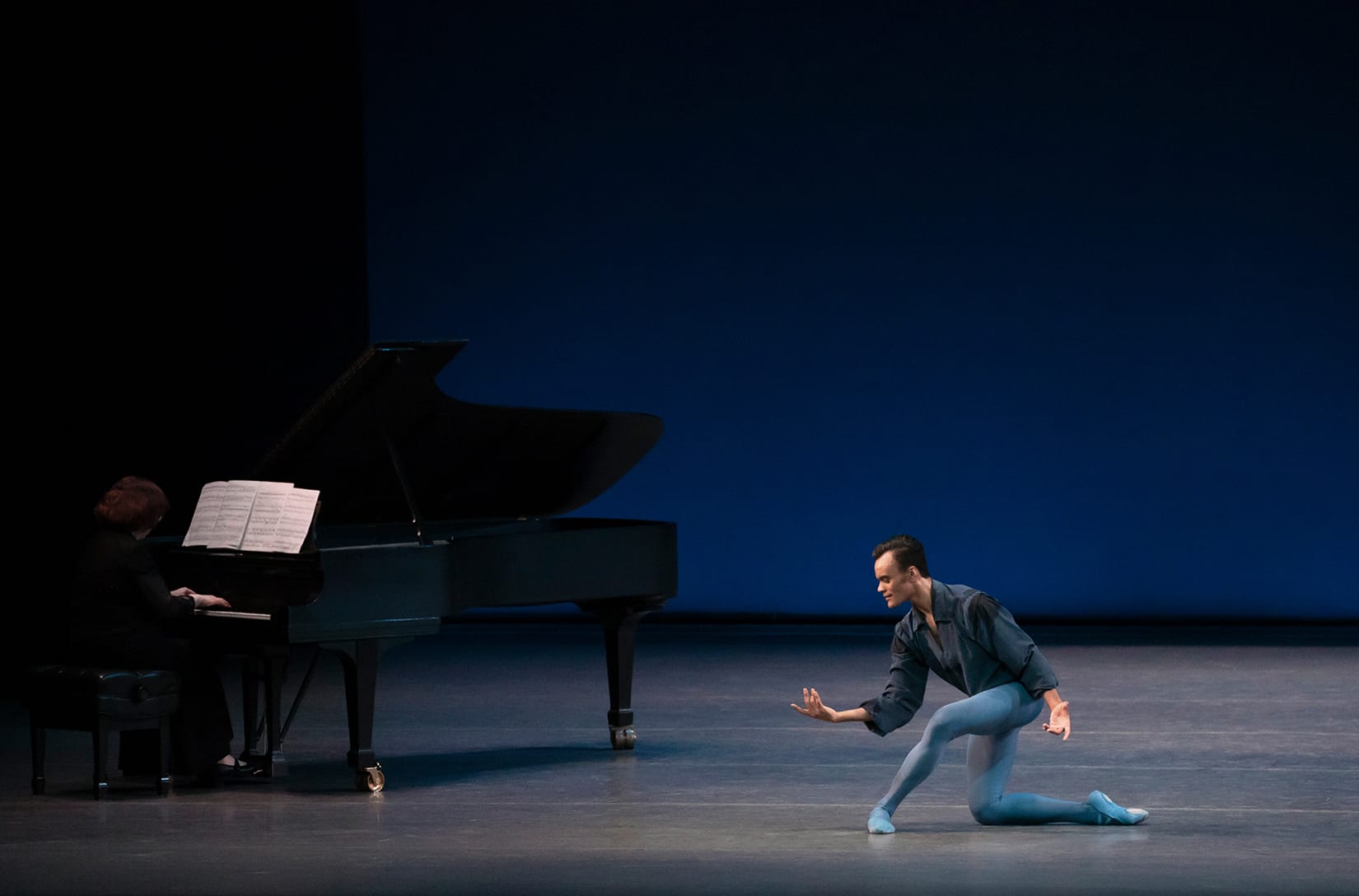
The tides shifted with another short work, “Sonatine,” which was danced by Megan Fairchild and Taylor Stanley, and very much gushed about by the audience during the intermission. The dancing was indeed something to talk about. Fairchild, who recently returned from maternity leave, danced with what seemed like newfound maturity. While her steps still looked appropriately light and at times carefree (as is called for by the work), it was clear that she thought about her approach to each section of the dance and the accompanying Maurice Ravel score. My favorite detail was her use of her arms, particularly in one solo with almost aqua-esque music thanks to the way the piano keys hit like drops, where she gently touched the air during turns as if touching the surface of water. Stanley also was exceptional, and gave the largely subordinate male role here a lot of poetry by really extending his movements. It’s wonderful to see this already excellent dancer continue to grow as an artist.
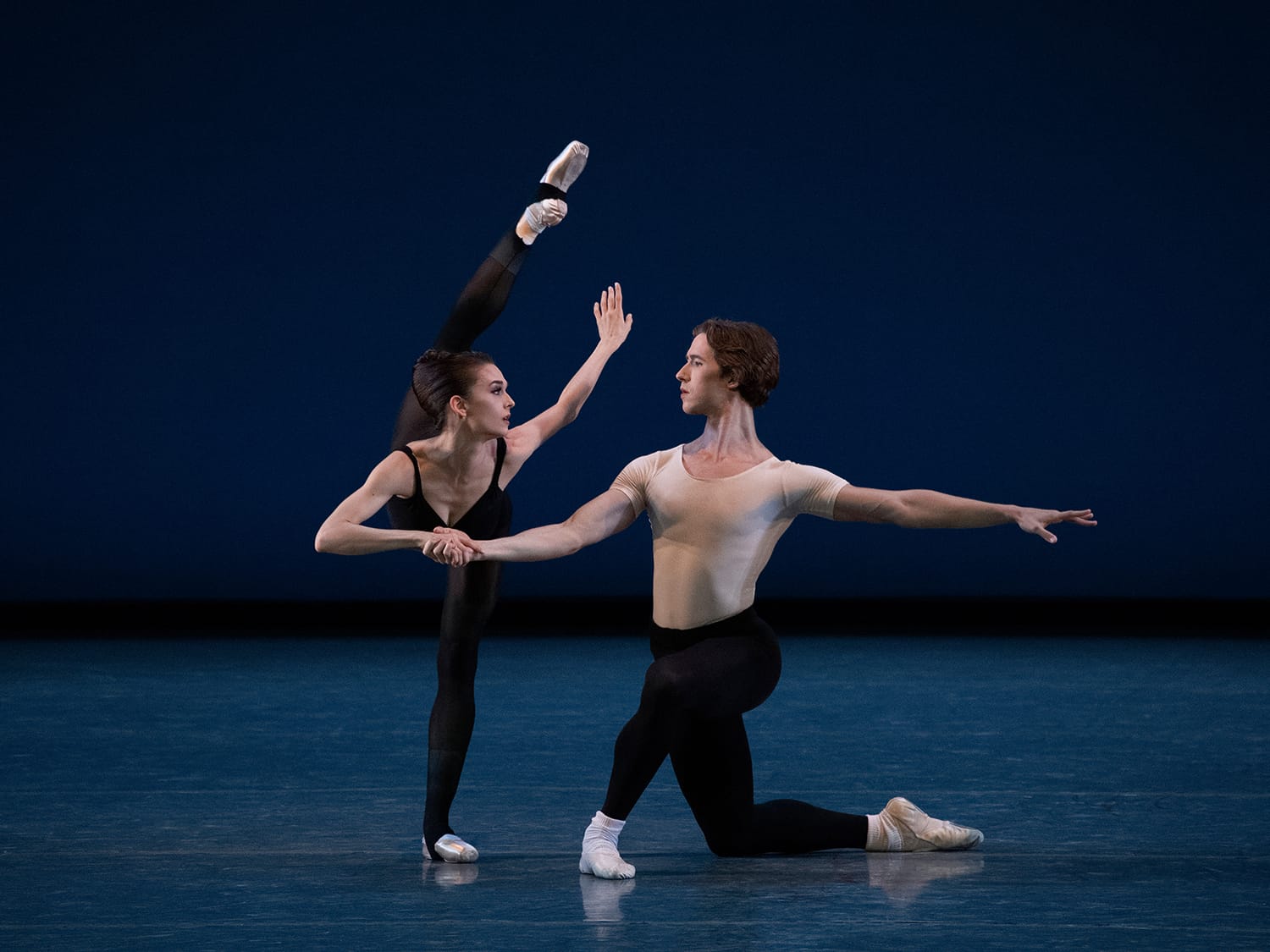
Following an intermission, “Stravinsky Violin Concerto” very much changed this pace. The veterans Lauren Lovette and Sara Mearns presented two different interpretations of the concerto, with Lovette taking up the whimsical side of the music, and Mearns looking to fill it all up. The leading men were new to the ballet, but also did not shy away from exploring. Joseph Gordon made a commanding entrance, and despite partnering Lovette at first seemed to have taken a page from Mearns’ book. Fortunately by the pas de deux his energy shifted to match his partner, whether by accident or design, and the duet was appropriately tender, particularly in moments like the one where he wrapped his arm around her and then opened it to the audience as if to say “the world is yours.” It was a contrast to Aaron Sanz’s debut and his dancing with Mearns, where he kept up with his ballerina’s layering of accents and free approach to the dance. In some spots, their duet showed what could be perceived as the genesis of the asymmetric style of William Forsythe’s choreography, and the progeny of that style. With that, the performance of the work was not only enjoyable, but also thought provoking.
copyright © 2019 by Marianne Adams



