Looking for a Hero
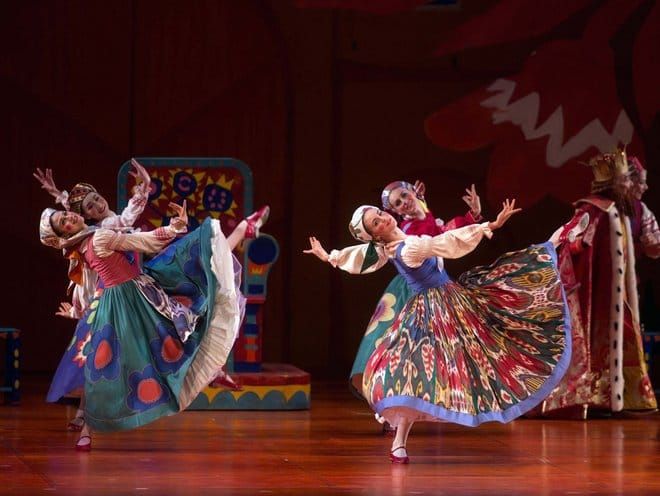
"The Golden Cockerel"
American Ballet Theatre
Metropolitan Opera House
New York, NY
June 8, 2016, matinee and June 9, 2016
Ballets inspired by the 1905 Russo-Japanese War are rare, but the ignominious and humiliating defeat of Russia by the here-to-fore unheralded Japanese was a profound shock to the Western powers. Rimsky-Korsakov reacted by composing an opera based on a Pushkin poem which was an adaptation of a Washington Irving story inspired by studying Moorish Spain--multiculturalism in action. Pushkin Russianized the Irving story and the lazy, greedy, incompetent Tsar Dodon who breaks his word and suffers for it at the hands of the Astrologer and his golden cockerel, is probably an indirect reference to Tsar Nicholas I, who Pushkin felt had betrayed him. Certainly Rimsky-Korsakov meant his Tsar to represent Nicholas II, with the fictional Tsar Dodon's vainglorious General Polkan frustrated by the feckless Boyars, his incompetent sons killed by friendly fire, and a mysterious and heartless seducer from the East. Not surprisingly this pointed and vicious satire didn't go over well at the Court and the opera was banned for a few years.
Diaghilev produced a version in Paris in 1914, with a ballet by Michel Fokine on center stage and the singers on the sides. (Rimsky-Korsakov had died by then but his son protested the arrangement vehemently -- I can imagine what he would say about the current arrangement which substitutes the orchestra for the singers.) 1914 was not a propitious year for artistic endeavors, though its message about incompetent leaders and pointless wars does seem tragically relevant. The exuberant folk-inspired designs by Natalia Goncharova resurfaced in 1937 when Fokine rechoreographed the ballet (shorn of singers) as a one-act work for de Basil's Ballets Russes; there is some film of this production which Alexei Ratmansky used as a springboard for his new version.
The choreography is stylized and the characters distinctive; this is a true company ballet and the dancers, from the heavy, lumpish Boyars to the four skomorokhs (based on the traditional Russian itinerant jesters), reveled in the variety and the variety of types of movement is one of the glories of this production. Only the mechanical cockerel and the heartless Queen of Shemakhan have pointe work. The Tsar's sons use classical steps but most of the main characters use a colloquial mime. (Fokine was opposed to the formal, old-fashioned mine of the Imperial ballet and used a more natural, silent-film style; for me, both, when done well, are equally effective.)
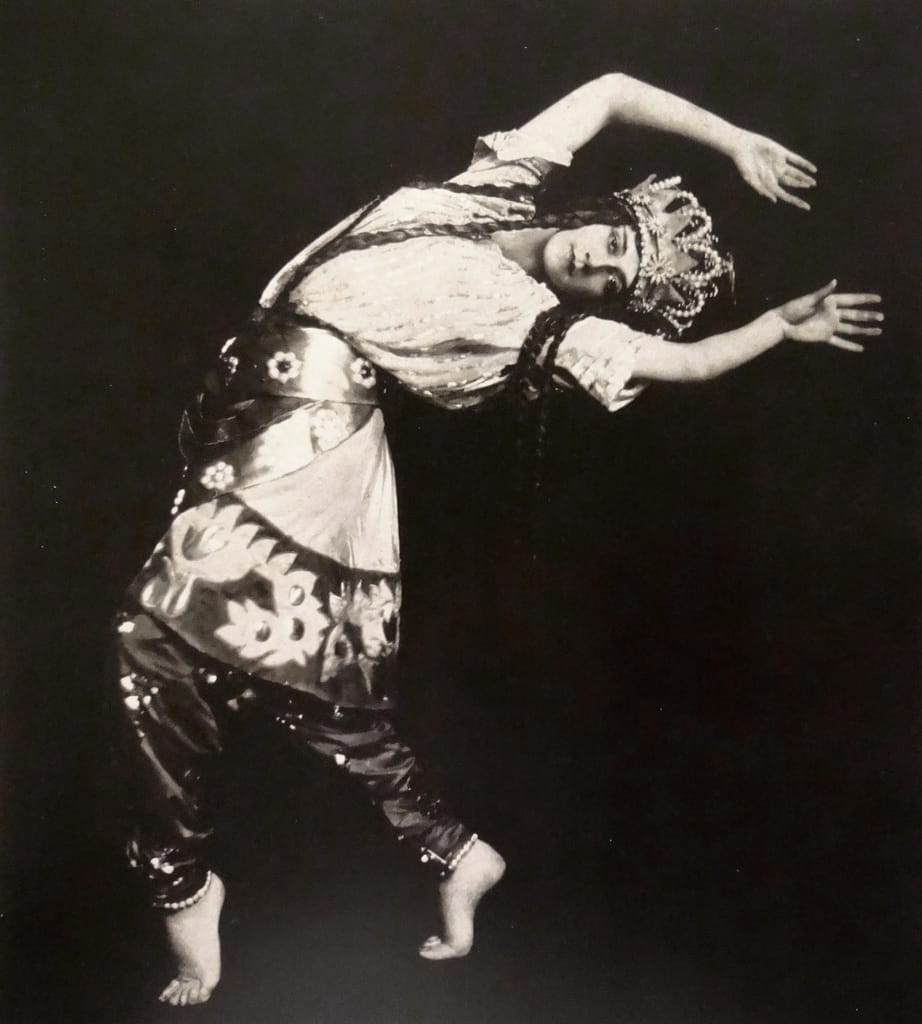
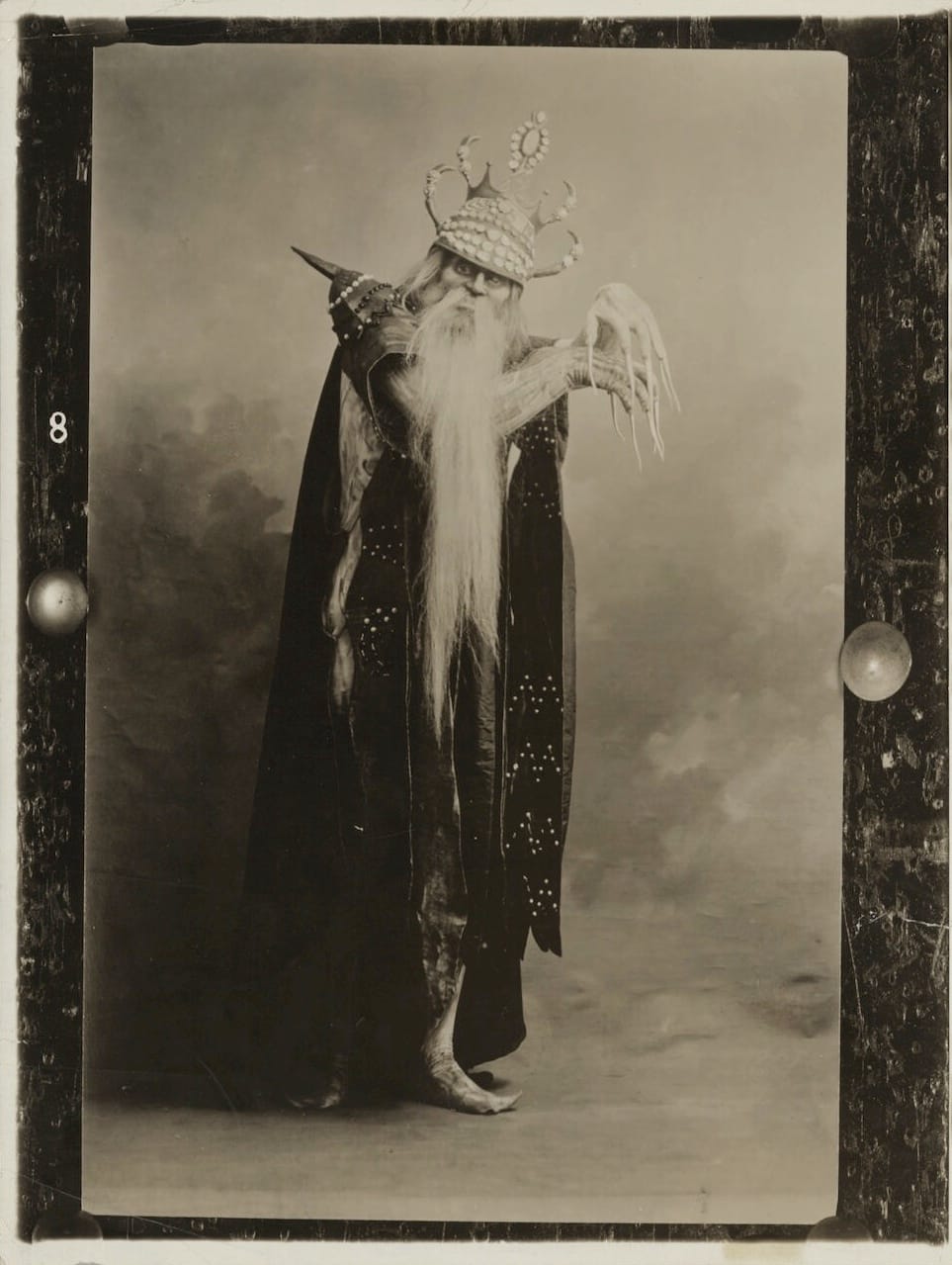
Ratmansky's dancers were certainly effective and watching the ballet took enormous concentration, since everyone on stage was talking and reacting at one. This work is filled with life. It is also filled with color, as the Goncharova-inspired sets and costumes (by Richard Hudson) swirl with a peasant naiveté which illuminates the shabby and all too human characters. The only two problematic costumes, for me, are those for the Queen and the Astrologer, both of which use a very un-Diaghilev glitter. Photographs of earlier Queens show her wearing a gloriously detailed costume with a crown, but Hudson has her in a feather headdress, Folies Bergère style, and purple sequins, which reduces the timeless, otherworldly feeling. (The muted orchestration of the "Hymn to the Sun" also lacks the piercing exoticism of the soprano voice.) The Astrologer's glittery cape also strikes a Halloween note, so different from the sinister original. But even a mountain of sparkle couldn't diminish Cory Stearns' Astrologer, creeping around and waving his fingers like a malevolent spider. James Whiteside was more powerfully flamboyant, using his cloak like a matador's cape.
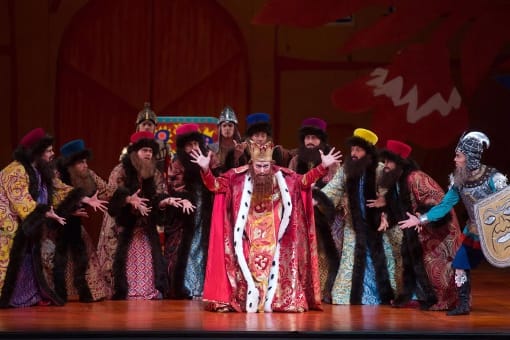
Gary Chryst, one of the Joffrey Ballet's most powerful performers, was towering as the lazy Tsar too incompetent to climb on his horse and his genuine sorrow for his sons made his short-lived grief which vanished at the sight of a beautiful woman all the more shocking. Roman Zhurbin (who was also a fine puddle of weakness as the Tsar) was a blustering General Polkan, raging ineffectively at the Boyars and eager to send soldiers off to a war he would rather sit out. Craig Salstein made the General an irritating meddler, eager to tell everyone what to do--a consummate mid-level bureaucrat.
The Tsar's two sons, who would rather flirt with the servant girls than defend their homeland, got the most significant classical choreography which they (Jeffrey Cirio and Joseph Gorak in one cast and Arron Scott and Alexandre Hammoudi in another) performed elegantly, with a large streak of yellow running through it, their nobility an ironic counterpoint to their cowards, laziness, and stupidity.
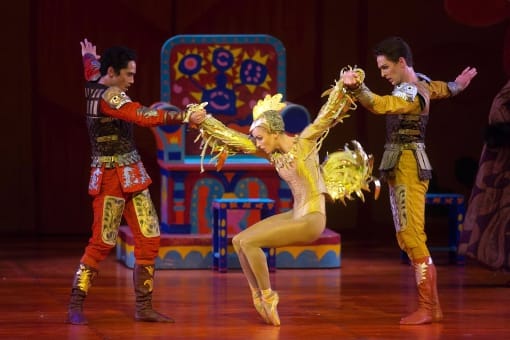
Veronika Part and Hee Seo cut beautiful figures as the seductive Queen of Shemakhan. Ratmansky made her a playful kitten, rather than the dangerous tiger the earlier photographs imply, but both versions have claws. I saw Skylar Brandt and Sarah Lane as the mechanical bird. The sharp, jerky choreography, with its twists and bends, is stunning and both were very good. Brandt was a bit brassier while Lane was a bit more three-dimensional but each had a dangerous and implacable inevitability as she destroyed the duplicitous Tsar. The political satire, still so relevant, is not forced but the bitter little story is not softened or romanticized. Greed, cowardice, lust, and deadly foolishness, wrapped in Goncharova's blazing sets and surrounded by Rimsky-Korsakov's lush music, remain unredeemed in this haunting, multi-layered and very adult work. There may be no heroes in the work, but the company put on a heroic performance.
copyright © 2016 by Mary Cargill



