Looking Back, While Facing Forward
“At the Wrong Time,” “Dust Duet,” “Dare to Wreck,” “Lazarus” (Act II)
Fall For Dance Festival - Program 3
The Mariinsky Ballet, English National Ballet, Skånes Dansteater, Alvin Ailey American Dance Theater
New York City Center
New York, NY
October 6, 2019
The third program of this year’s Fall For Dance Festival followed what is now an expected formula: there was a range of dance styles on display, at least one work on pointe, and at least one crowd rouser. And so the “something for everyone” menu of four choreographies, all less than a decade old, predictably had enough to please most viewers, even as the tone stayed somber, and the theme progressive.
The Mariinsky Ballet showed the only pointe-shoe ballet of the program with the U.S. premiere of Alexander Sergeev’s 2019 mix of three duets called “At the Wrong Time.” Sergeev is a soloist with the company, and the work was his product for the 2019 Creative Workshop of Young Choreographers at the Mariinsky, his first high profile piece of choreography. The ballet was playful and mildly dramatic, echoing in some ways Jerome Robbins’s “In the Night” by giving the audience three couples in three distinct relationships. That’s about as far as the Robbins comparison can go, however, as the choreography itself was short-ranged, and the romance was tame in its emotions and expression. Though not billed anywhere as such, the dances echoed 1970s-era Soviet short films: the couples were coy, conservative, by-the-rules flirtatious. The very first duet between Xander Parish and Anastasia Nuikina, ending in his rejected attempt to kiss her, even had the miming that suggested the kiss would be inappropriate. The costuming, too, called back that time – knee-length, simple dresses for women, grey and uniform looks for the men.
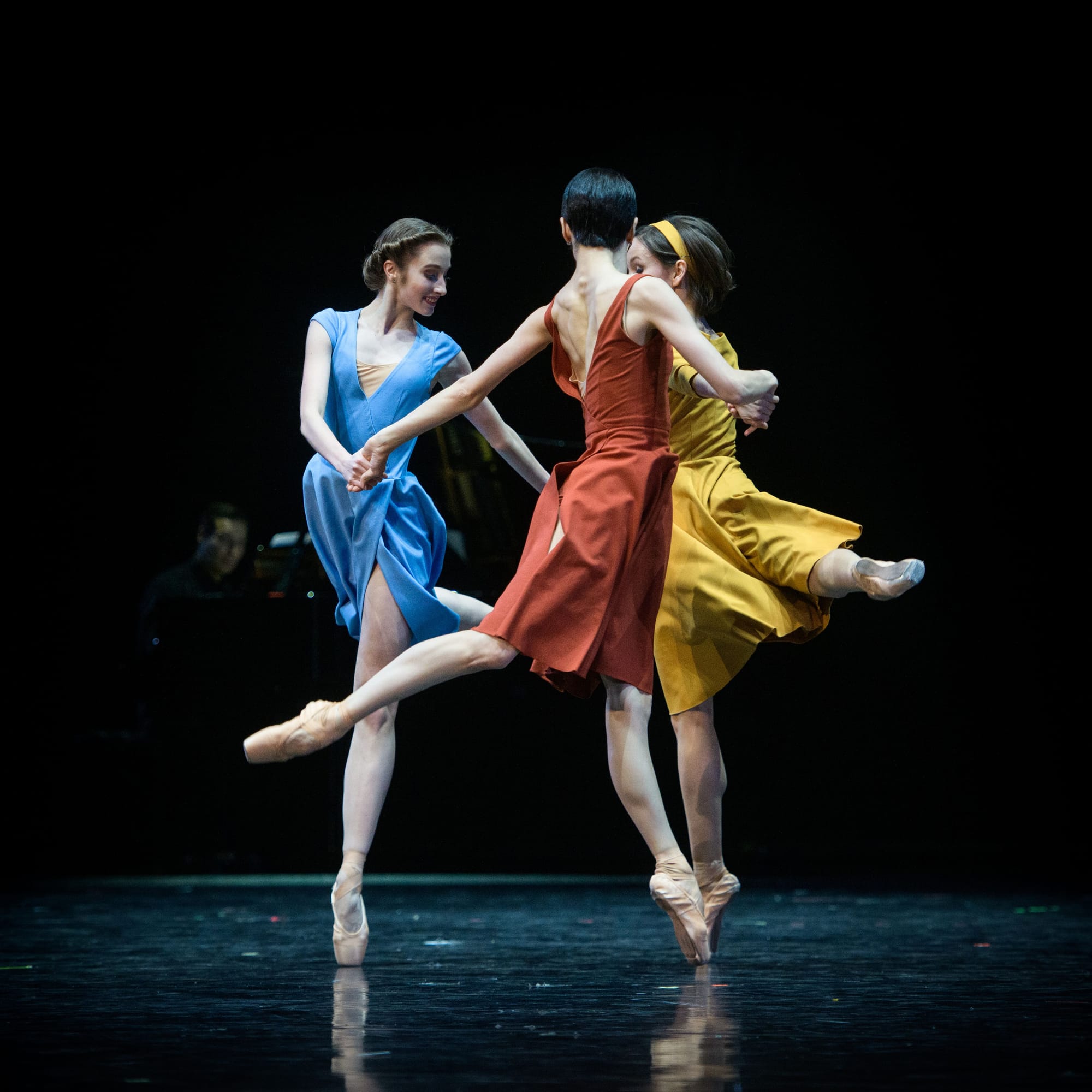
But the holes left by the choreography were filled by the dancing, and the cast excelled at elevating the material they were given. Nadezhda Batoeva, for one, managed to transcend the work’s apparent context. Her hair in a short black bob, she looked commanding and self-assured, constantly redirecting the spotlight from her partner Konstantin Zverev, and remarkably musical – even her fingers moved to reflect the notes of the Heitor Villa-Lobos score played on the piano by Vladimir Rumyanstev. Maria Shirinkina and Alexei Tomofeyev distracted from the repetitive steps by playing up the work’s humor. And then there was the purely aesthetic side: with amazing arches, long extensions and textbook technique, are there better bodies in classical ballet than at the Mariinsky?
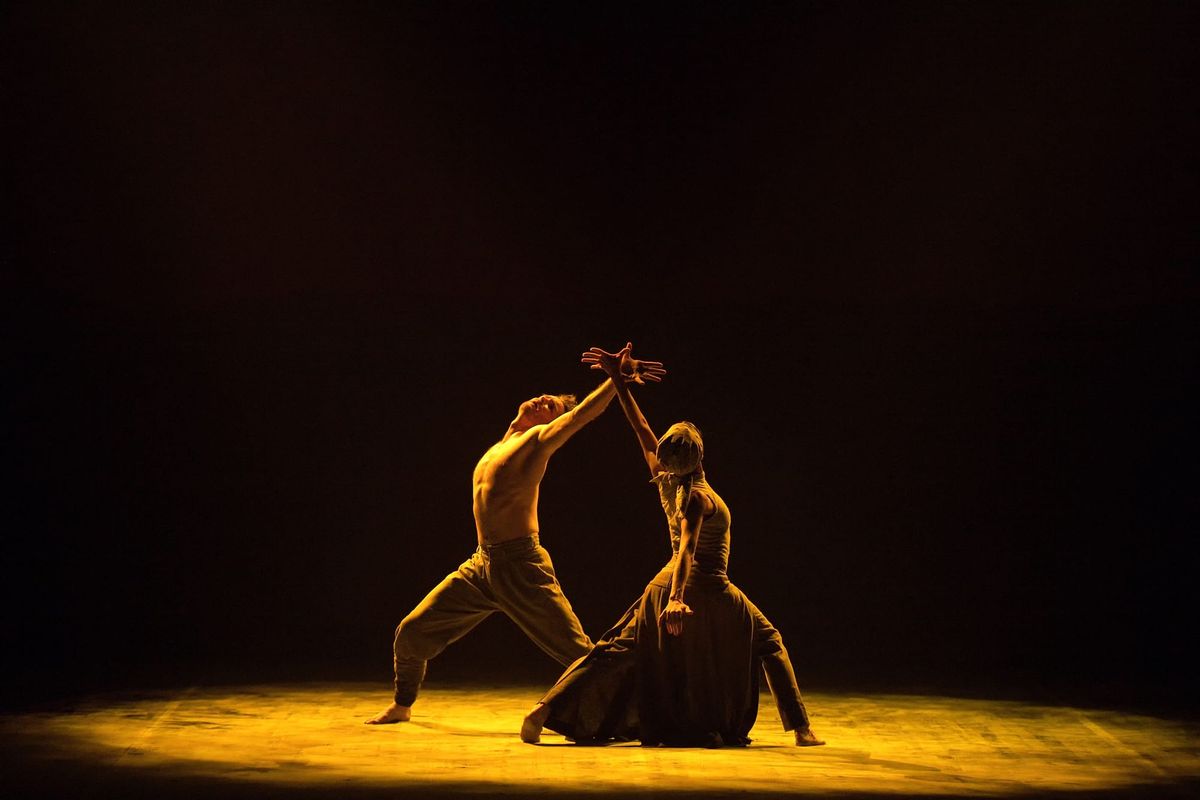
Regardless of the answer, it was irrelevant for the compellingly somber work that followed. The arrival of the duet from Akram Khan’s 2014 ballet “Dust” was overdue on this side of the Atlantic, and its U.S. premiere left little doubt why it’s been referred to as a modern masterpiece in Europe. The duet is part of a broader Khan ballet about the experiences of World War I, and particularly women’s experiences, and there was little whitewashing of that suffering. The roles were originated by Tamara Rojo and James Streeter, but Rojo here was replaced by Erina Takahashi, who no doubt was a worthy substitute for the compelling display of agony and disconnectedness, but also enduring resilience. Khan’s emotional palette was focused almost entirely on the female, with the male role being more of an anchor, and really, mostly in the physical sense. He was there for the many supported lifts, with Takahashi spending the majority of the work off the ground, but when it came to character fortitude, Khan’s woman had to dig deep for that in her own roots. Of course, there is generally little glorifying in portrayals of the war’s experience regardless of the medium, but dance is a unique tool for focusing on the emotional, and Khan used it expertly.
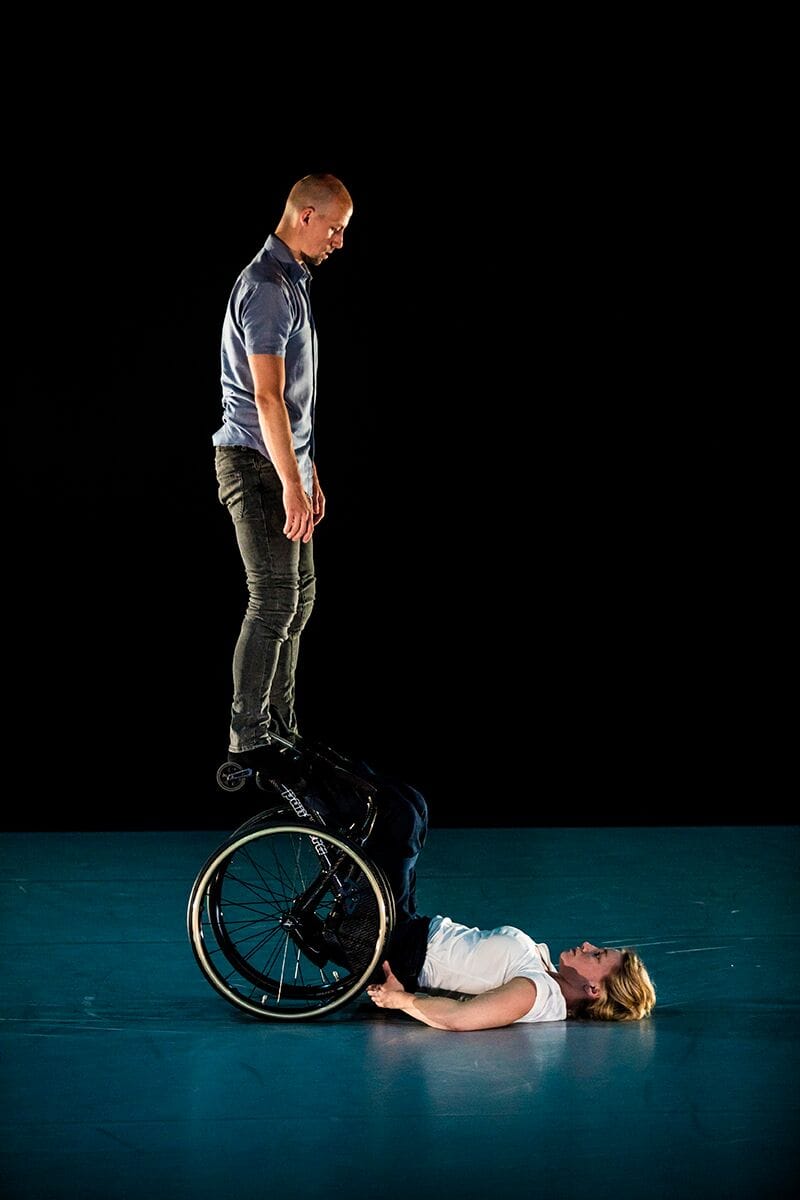
But then there was also “Dare to Wreck,” a U.S. premiere of a 2017 work by Madeleine Månsson and Peder Nilsson, who also performed the piece, to music by Gert Ostergaard. It was designed to be a “dynamic and emotional exploration of a relationship” and “aspects of allowing yourself to meet someone, while also having the courage to leave.” The work certainly set out to do a lot, and there could have been some skepticism in its ability to deliver as Månsson first appeared on the stage in a dancer’s wheelchair. As soon as the music started playing, whatever limitations may have been in place physically only yielded the stage to a powerful tension between the characters, and the piercing emotional scales of their interactions. Though Nilsson stood tall, it was Månsson who had the power, and each conflict and reconciliation rippled in multicolored waves throughout the work. With traditional physicality all but stripped away, it was speed, power of movement, and dramatic expression that came into focus and told the story. To me, it read even more powerfully than the preceding work.
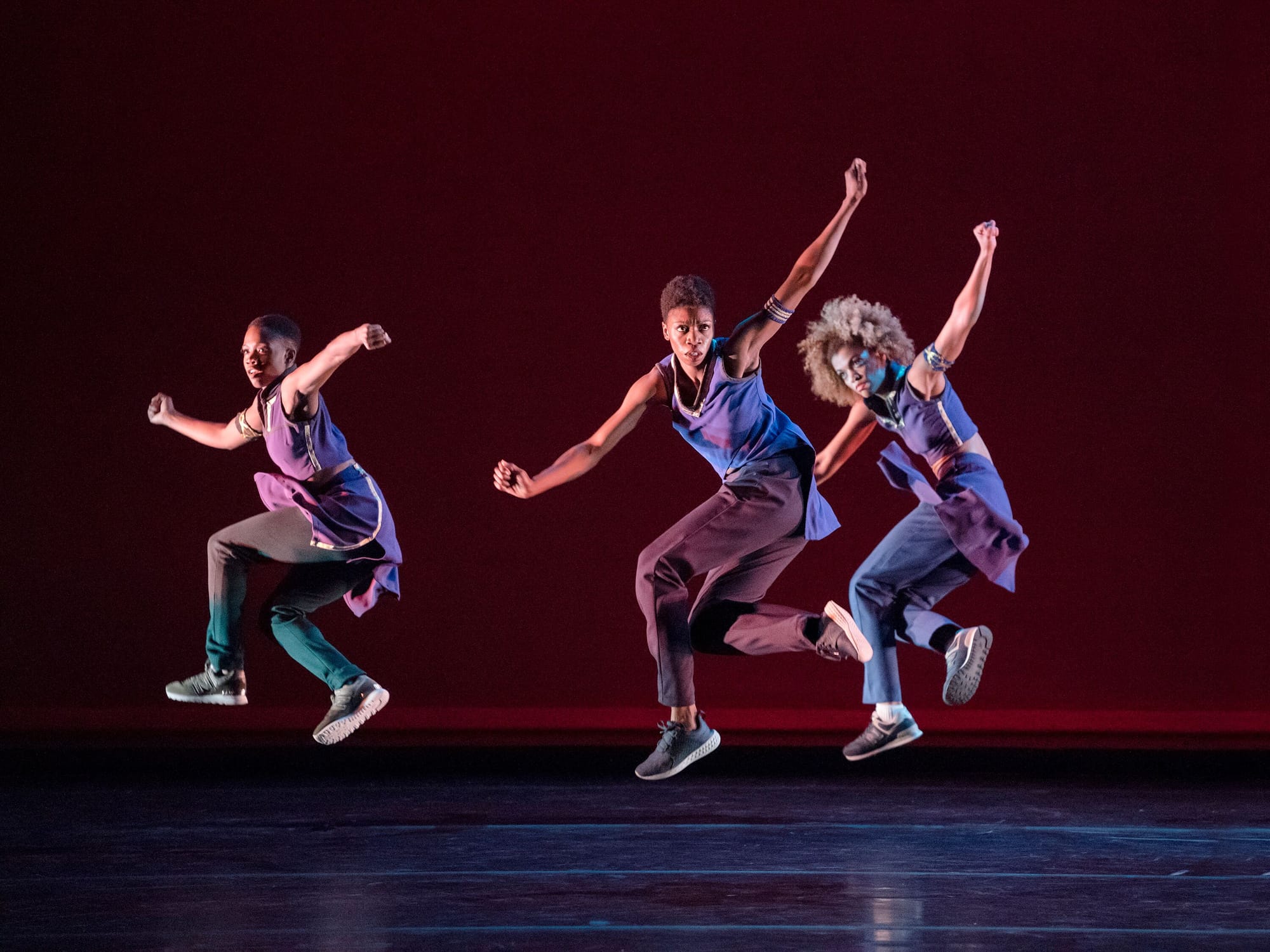
Ending the program, with a welcome change of energy, was the second act of Rennie Harris’s “Lazarus” performed by the Alvin Ailey American Dance Theater. The ballet as a whole, to music by Darrin Ross with excerpts of spoken text, is inspired by the work of Alvin Ailey and seeks to address the racial inequalities of our country, but the dancing, particularly in the second act that was presented, was also all predictably contagious and high-charging Harris. That juxtaposition of energetic hip-hop with the theme of a large and enduring social flaw, colored the work with a hope for a forward-looking optimism, and ended the program as a whole on a positive note.
copyright © 2019 by Marianne Adams



