Levels
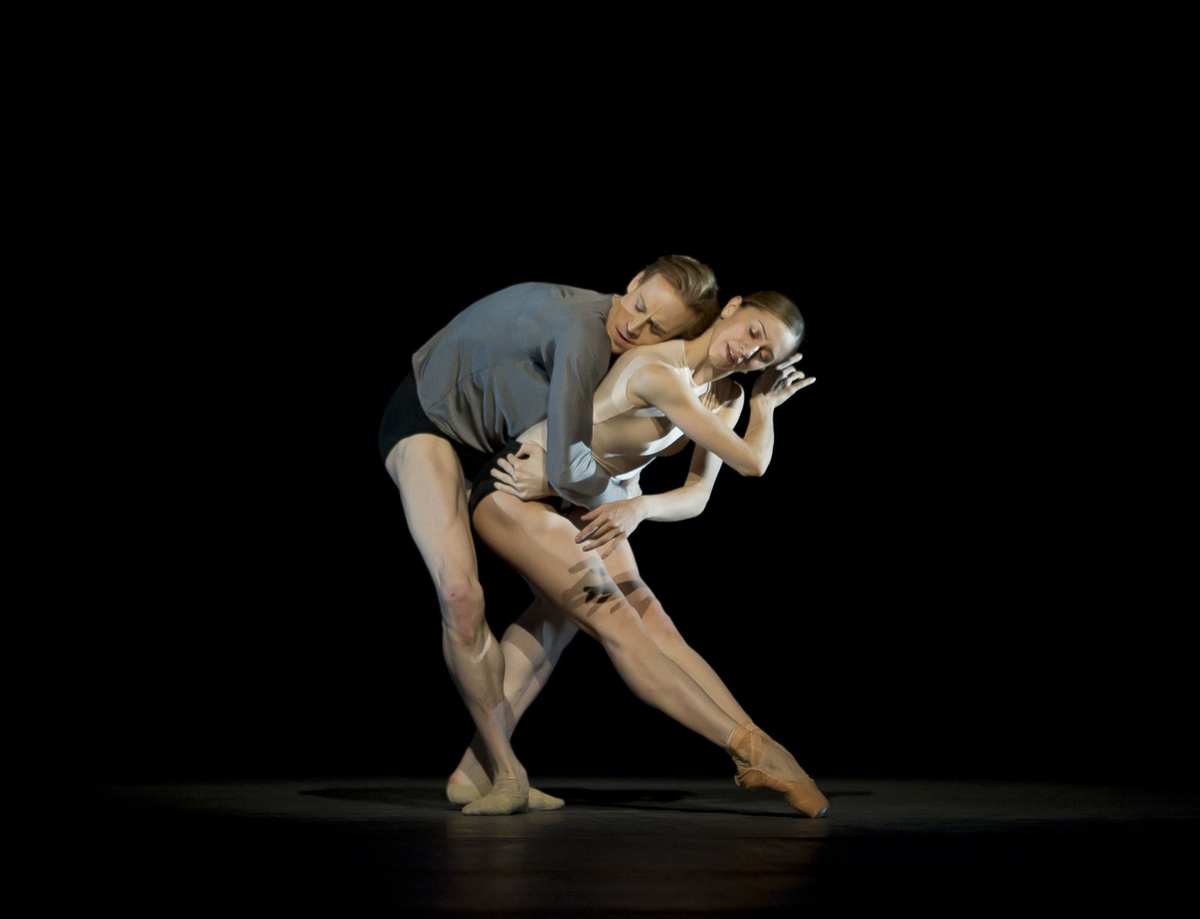
“Infra,” Divertissements, “Age of Anxiety”
The Royal Ballet
David H. Koch Theater
New York, NY
June 28, 2015 (matinee)
Mixed bill programs, particularly when brought by a company on tour, are usually a great vehicle for showing a company’s range. But if the Royal Ballet said enough about the impressive roster of British choreographers in its repertory with just the first cast, the second cast indicated that the depth of its performers’ bench, and their ability to excel in the British works, was less striking and more varied.
The lead-off ballet, Wayne McGregor’s 2008 “Infra,” with its all-permeating rebellion against gravity and perceived limitations of the human body, twists, visual innovation and psychological undertones, has always been my favorite of McGregor’s creations, but the second cast proved that the ballet’s merits go only as far as the dancers are willing and able to take them. This lot, made up mostly of the company’s mid-ranked artists, certainly had the work’s delectably entropic style down, but dancer after dancer they appeared lacking in something, be it amplitude, identity or ability to make the ballet their own.
While for some the problems were physical, with not quite sharp enough arrival at an off-balance pose here, or not quite limber or confident enough extension of the leg there, others appeared not pliant enough on the emotional scale. McGregor’s layers of psychological points about the psyches of people in a big city under the eerie scroll of LCD-screen pedestrians above the stage can certainly be tricky, since the ballet’s expressions of conflicts, tensions, connections and discords (presumably underpinning those robotic-looking pedestrians) need to be conveyed through complete emotional detachments in some parts and careful expression of feelings during quasi-acrobatic movements in others by the dancers, but therein lies the work’s challenge. Alas the cast by and large seemed to take the easy road and go with detachment throughout.
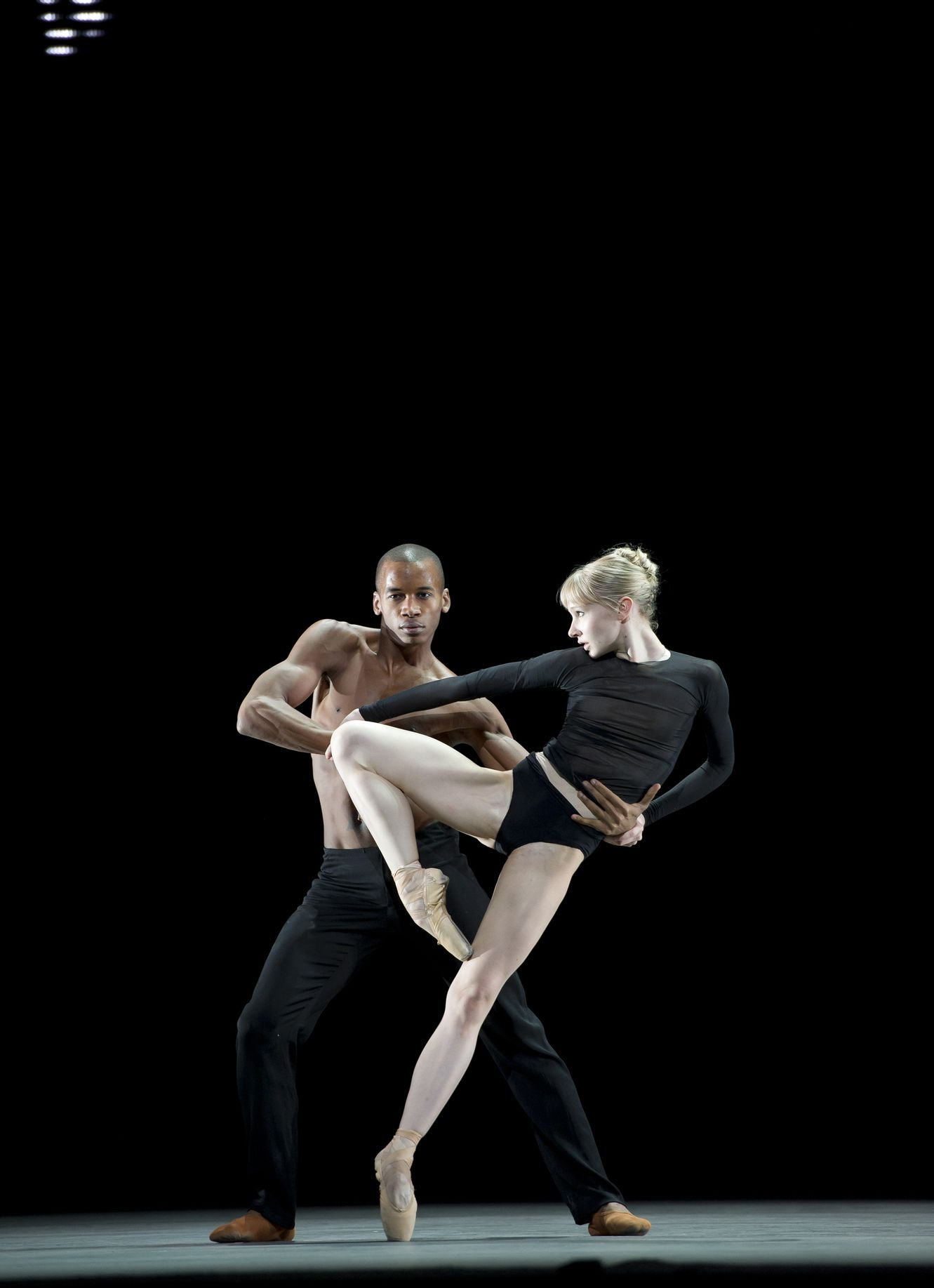
Most disappointing in that regard was principal dancer Sarah Lamb, a ballerina seasoned in the company’s and McGregor’s repertory, who in the part of the woman psychologically collapsing in the middle of the indifferent crowd on stage decided to forego any big dramatic episodes that usually happen at this point (particularly from the role’s originator and evening cast’s performer Lauren Cuthbertson) and opted instead for a simple silent scream after which she sat down and stared blankly into the audience from amid the crowd. This and other shortfalls aside, the ballet overall still worked, but its highpoints, such as the section with six simultaneous similar but different duets, where as a last minute replacement Natalia Osipova made a statement in the modern choreography with her ability to look like a capsule of trapped brewing emotion behind an indifferent face, only highlighted the main take-away that the work really depends on its performers.
The act of short divertissements that bridged “Infra” to Liam Scarlett’s nearly year-old “The Age of Anxiety” at the end of the program was also uneven, with just one stand-out performance in each set of the three duets and three male solos.
The highlight of the duets and the act as a whole was by far the lively and very funny ‘If I Loved You’ pas de deux from Kenneth MacMillan's "Carousel," which Lauren Cuthbertson danced opposite Matthew Golding. Her frustration at failing to slap Golding after he grabbed her, and then being left alone on stage when he left her, were light comedy gold, and the dancers' artistic and physical partnership left nothing to be desired. It was a good offset to the laboriousness of the other two duets, Frederick Ashton’s “Voices of Spring” and Christopher Wheeldon’s “Aeternum," both of which showed dancers preoccupied with execution and showcasing, but not complete presentation. At least Akane Takada and Valentino Zucchetti remembered toward the end of their waltzing that Ashton’s piece should be playful and fun, so for a moment it was. With Claire Calvert and Ryoichi Hirano in Wheeldon’s work the audience wasn’t so lucky, and the dancers never stopped using Wheeldon's otherworldly choreography as a vehicle for demonstrating their physiques, even if it meant making the complex lifts look meaningless and tangled (and having Calvert’s chiffon skirt – which is absent in the main cast’s costumes – tangle along with them).
Of the solos, the very young and relatively new to the company Matthew Ball (he joined the troupe in 2013) captivated in Calvin Richardson’s version of “The Dying Swan” to Saint-Saëns music, looking elegant, proud and highly stylized in the robotic shifts of his arms and poses reminiscent of Matthew Bourne’s take on swan movements. Luca Acri and James Hay also had their high points in Alastair Marriott’s “Borrowed Light” and Bronislava Nijinska’s Le Beau Gosse solo from “Le Train bleu” respectively, but if at first Acri’s wandering around the stage when he wasn’t executing beautifully shaped jumps looked promising, it became difficult to understand as he neither looked beholden to the light nor in need of it. In Hay’s dancing the tentative start that ultimately built up to more composed dancing detracted from the showy feel of the overall work.
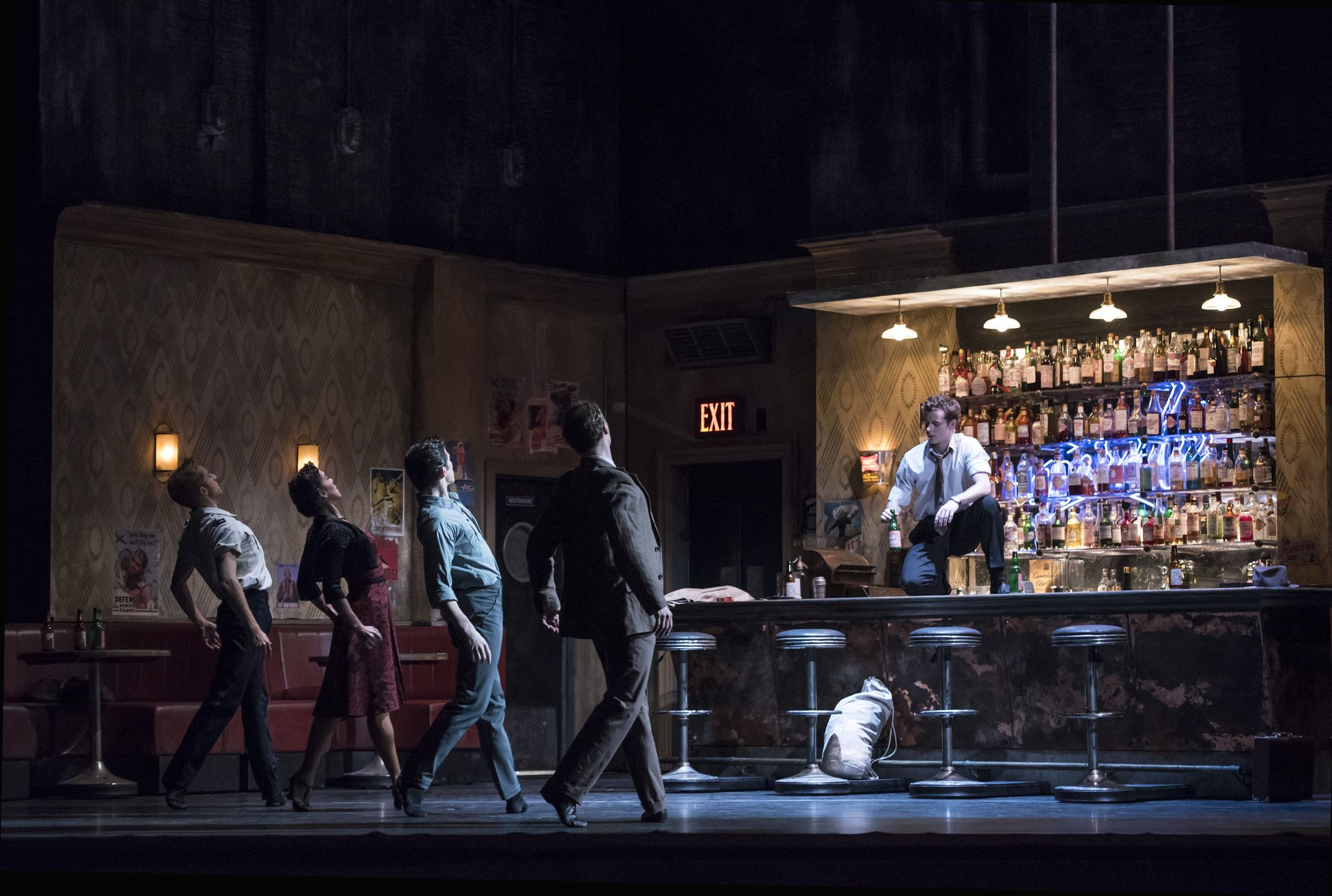
And then came “The Age of Anxiety,” which in the second cast’s hands was as easy to get through as the W. H. Auden’s book-length poem on a hot summer day. Sure, the substance was there, somewhere, but as in “Infra,” the trouble was the cast’s weakened presence in their roles. Instead of having their own individual identities and life stories, the characters blended together, and as the drinks were poured by David Donnelly as the very assertive Bartender, the scene where he controls his clientele with a snap of his fingers – making them walk toward him in a daze, filling their drinks, and taking their money – summed up the mostly hazy first part of the ballet.
It was regrettable, as the characters’ individuality is precisely the best part of this Scarlett work. Instead, and unlike the original cast, here Federico Bonelli’s Malin and Alexander Campbell’s Emble in the first section frequently resembled each other, giving cause to wonder if their similar nature was the reason for their mutual attraction (doubtfully the intended reading). Johannes Stepanek’s Quant was more interesting, and managed to at least look wearier than the rest of the group -- of the world, the place he was in, and the characters that surrounded him. Sarah Lamb’s Rosetta was a bit too polished to be caught alone with such an odd bunch of men in the dingy bar of the first scene, and it was almost surprising that a woman exhibiting so much sophistication and so little interest in the men around her did not leave the bar quickly. Fortunately the straight-laced approach worked better later on and gave a certain glamour and opportunism to the scene in her fancy-looking apartment with a great city view – she seemed above the men she brought with her and ready to take advantage of them, even if she ultimately failed.
The cast did end on a high note, with Bonelli flourishing in the last scene with believable hope for a better day to the rising sun over New York's skyline after his character’s interesting but not so fruitful night. The same hope remains for this cast.
copyright © 2015 by Marianne Adams



