Let There Be Light
"Aureole, Vive La Loïe" "Recess", "Funny Papers"
Paul Taylor Dance Company
David H. Koch Theater
New York, New York
November 8, 2024
There was a lot of light and cheer in the evening’s dances, including the premiere of Jody Sperling’s homage to Loïe Fuller, an early modern dancer whose voluminous costumes and imaginative lighting inspired thousands of Art Nouveau lamps. It opened with Paul Taylor’s “Aureole”, his light-filled vision of a world full of Handel and white dresses and closed with his “Funny Papers”, a cockeyed look at some playfully silly popular songs. Another premiere, “Recess”, by the resident choreographer Lauren Lovette, was also slightly cockeyed, featuring grownups bouncing through some well-known childhood games.
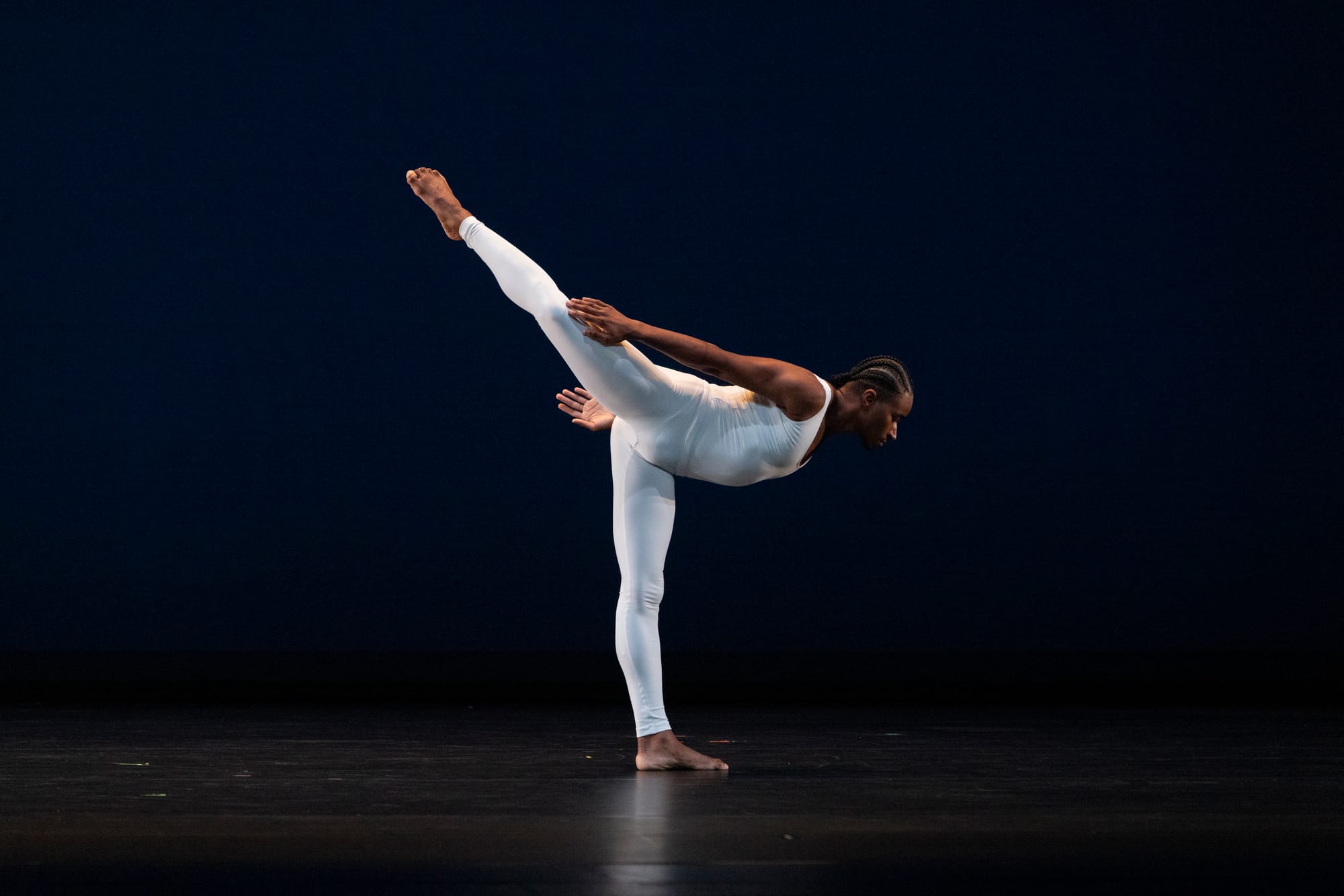
“Aureole”, from 1962, was Taylor’s first major success and its popularity caused a break with the more avant-garde modern dancers, who were shocked by its lyricism, its formalism, and its use of Baroque music. However, its pure white beauty and lilting choreography has lasted long after its critics. The five dancers (Maria Ambrose, Devon Louis, Madelyn Ho, Alex Clayton, and Kristin Draucker) looked like they were a group of friends somewhere in Elysium with all the time and all the joy in the world. Louis danced the haunting male solo, originally performed by Taylor himself. Louis, like Taylor, has long, expressive arms, and his balance and control gave the slow, elegant movements a beautiful resonance. His demeanor, though, seemed somewhat guarded and I missed the feelings of isolation and vulnerability that the solo can have. The beauty shone but the incandescent individuality was muted. His pas de deux with Ambrose, though, had a lovely gentle secure quality, as he cradled her in his arms, seeming to shelter her.
Alex Clayton danced the more athletic part, full of demanding froggy jumps and quick sideways leaps, with a lyrical and musical joy; his back even seemed to ripple as the music moved through his body and his feet seemed to treat the floor as a mattress to bounce on. Ho was especially incisive as she and the radiant Draucker wove in and out with bouncy little jumps and flowing stag leaps; it is a beautiful and uplifting work, and it got a beautiful and uplifting performance.
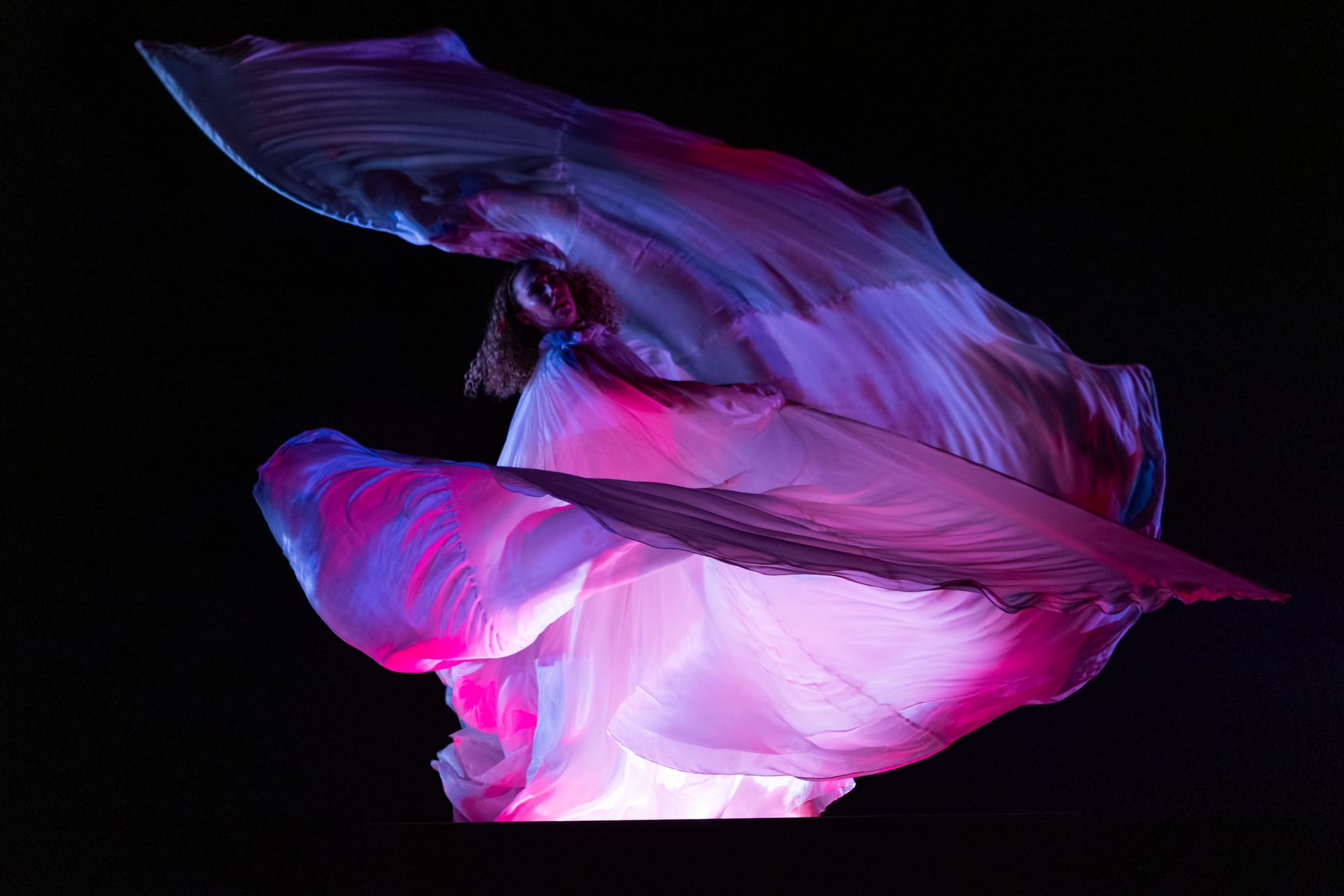
Loïe Fuller was also interested in beauty, especially in the magic of lights (electricity was a new phenomenon when she was performing), and the premiere of Jody Sperling’s homage to her, “Vive La Loïe!” was warmly applauded. Jessica Ferretti, swathed in yards of white silk (Sperling also designed the costume) stood majestically on a platform moving to Max Richter’s recomposition of Vivaldi’s "The Four Seasons." Well, she didn’t actually move much, her arms did most of the work, holding sticks which manipulated the fabric as the wonderful lighting (by David Ferri) transformed her shape into flowers, waterfalls, sheets of mother of pearl, buttreflies, the Winged Victory, flames and many other dynamic shapes. The pure beauty of that flowing fabric, so wedded to the music, removed any hint of kitsch, and it was a generous nod to an often unacknowledged forbearer of modern dance.
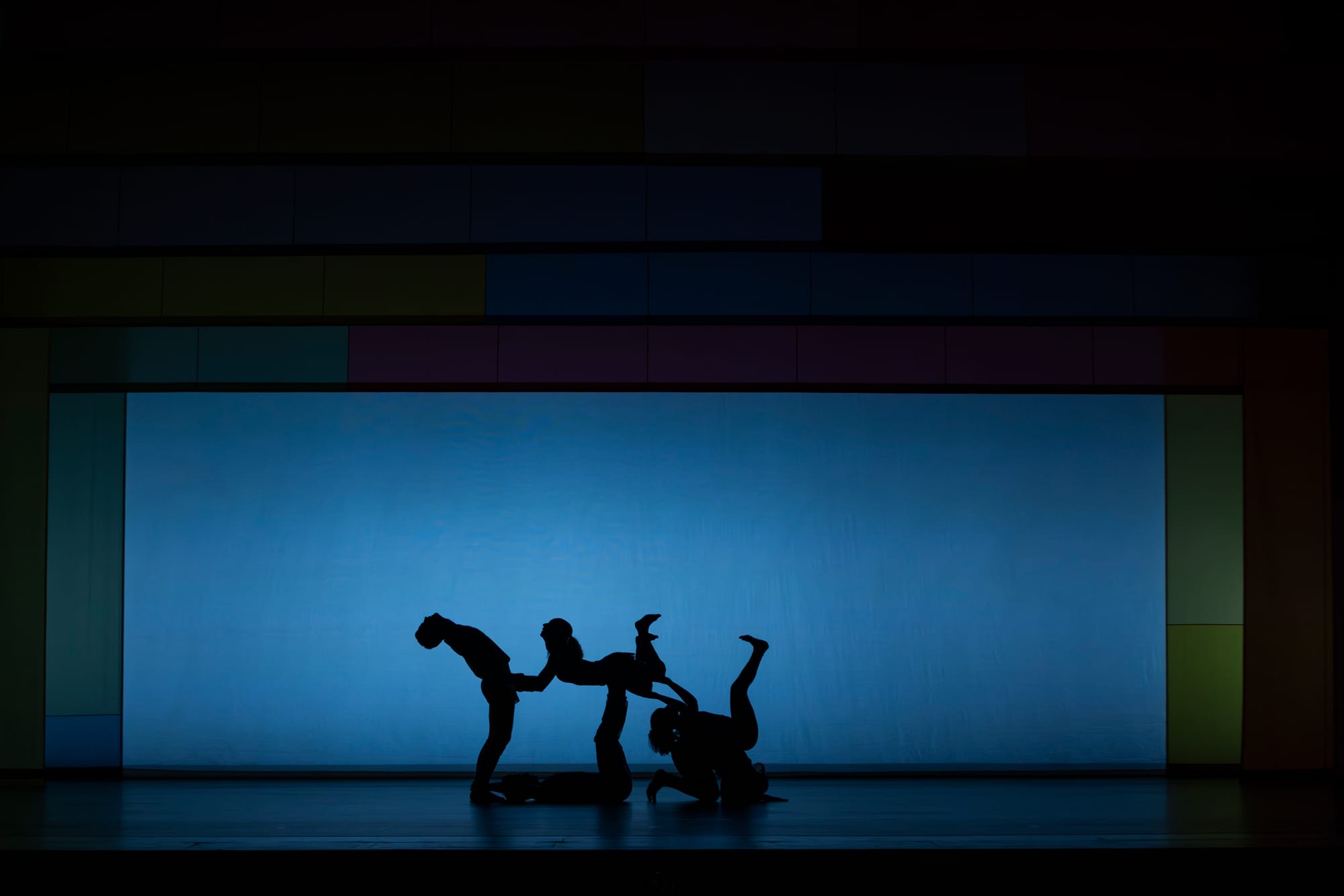
Ferretti also appeared in the other premiere, Lauren Lovette’s “Recess”, set to music by the modern composer Errollyn Wallen. It opened and closed in darkness, with the dancers in silhouetted shapes; this was dramatic but seemed more of a gimmick than a mood, since there was nothing dark or mysterious about the dancing. The lighting revealed sheer colored hangings of a lovely pastel shades (Libby Stadstag was the designer), colors which were echoed in the costumes by Mark Eric. As the title implied, the dancers (Jada Pearman, Ferretti, Lee Duveneck, Alex Clayton, and Austin Kelly) were enjoying recess and playing children’s games—hopscotch, tag, patty cake—in a friendly competition. Pearman and Clayton, though, did have a bluesy pas de deux with some suggestive hip rolling and strutting, which made them appear a bit precocious.
The fun was rather forced, with a few too many cutesy grins and aw shucks moves (the tall and powerfully smooth Duveneck is not really convincing as an awkward child). The choreography, while clear, came in fits and starts, and the movement was often came in sporadic bursts, with little phrasing. It was a cheerful interlude, but I was glad when the bell rang and they went back inside.
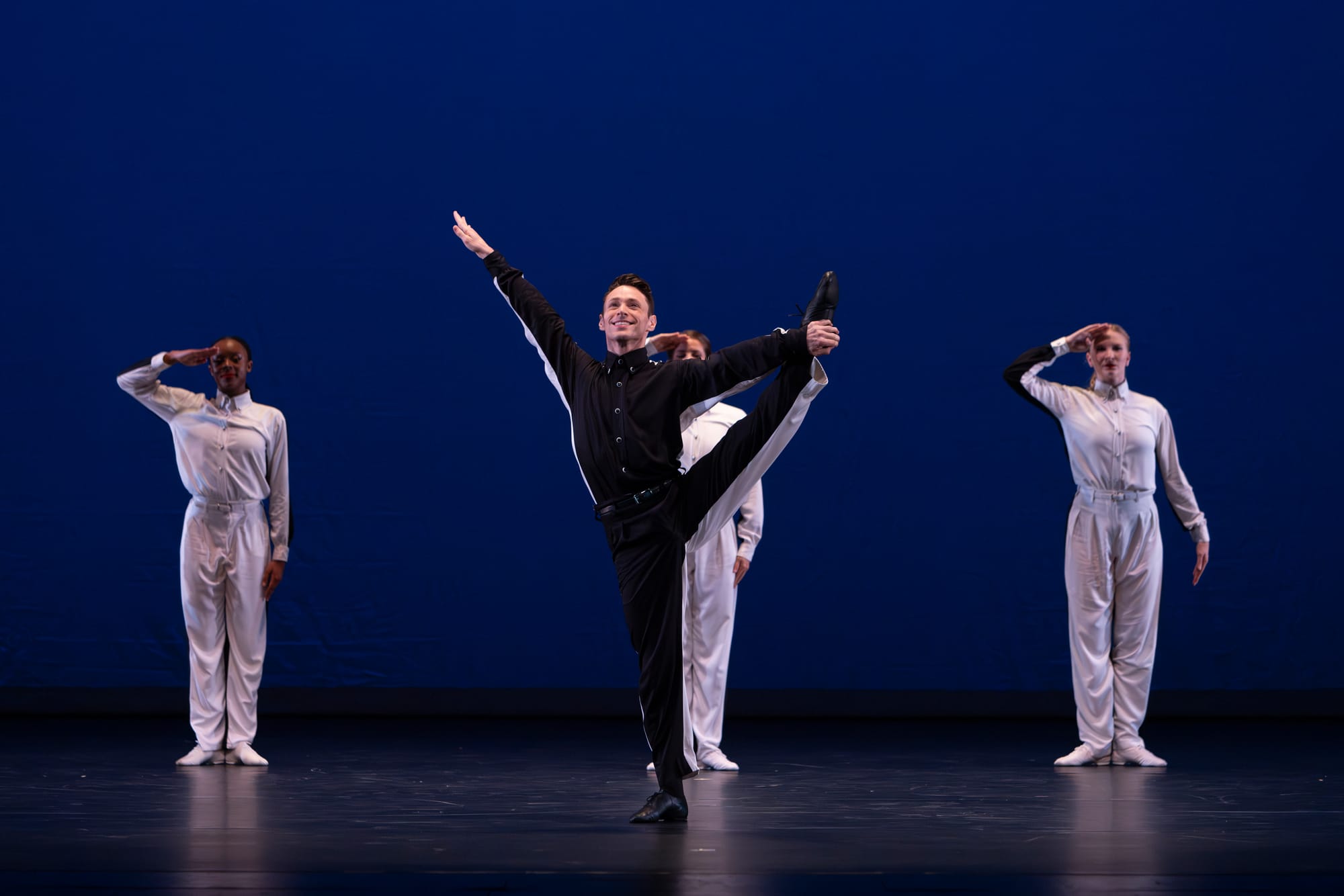
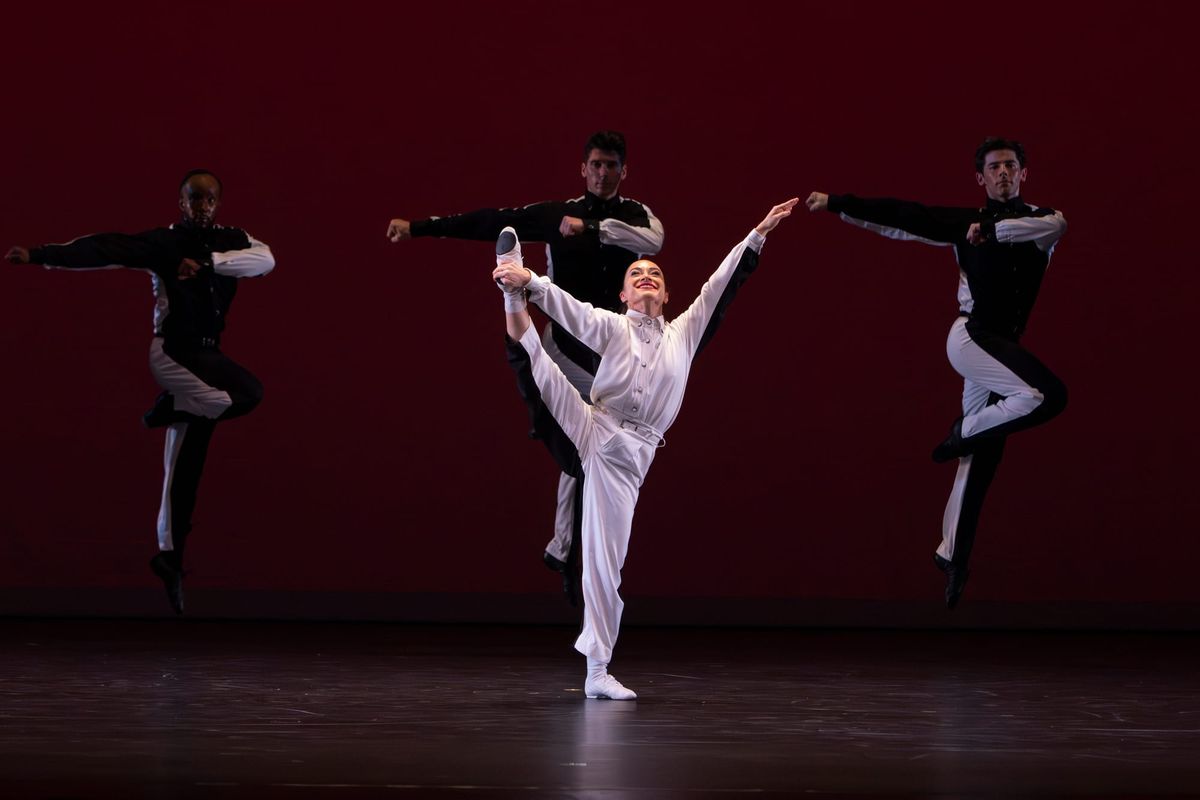
“Funny Papers” premiered in 1994, with contributions by several of Taylor’s dancers “amended and combined”, according to the program, by Paul Taylor. This was during a period when the company had to rely on taped music, and Taylor sometimes used recordings as part of the atmosphere—the Andrews Sisters for “Company B” and Depression era songs for “Black Tuesday”, for example. “Funny Papers”, which Taylor dedicated to “all those who, before reading the front page news, turn to the funnies first”, uses seven of what are called novelty songs, though silly and ridiculous could describe them as well. It is breathtakingly funny nonsense, danced to the hilt with impeccable timing and deadpan insouciance by the large cast.
Duveneck was a lumbering caveman in Alley-Oop, dragging Gabrielle Barnes around until she turned the tables and carted him off; the audience, many of whom probably had no idea who Alley-Oop was, were energized by the dynamism of the choreography, so perfectly matched to the music’s rhythm. “I Am Woman, Hear Me Roar”, sung in a scratchy, slightly off-key version, was another battle of the sexes, with Lisa Borres Casey strutting around, followed by an overconfident Jake Vincent trying the same steps with much less success. Alex Clayton and Austin Kelly were especially fine as the loose-limbed hoofers in “I like Bananas Because They Have No Bones”, but the whole cast was terrific in this lighthearted salute to fun.
Copyright © 2024 by Mary Cargill



