Let Them Eat Cake
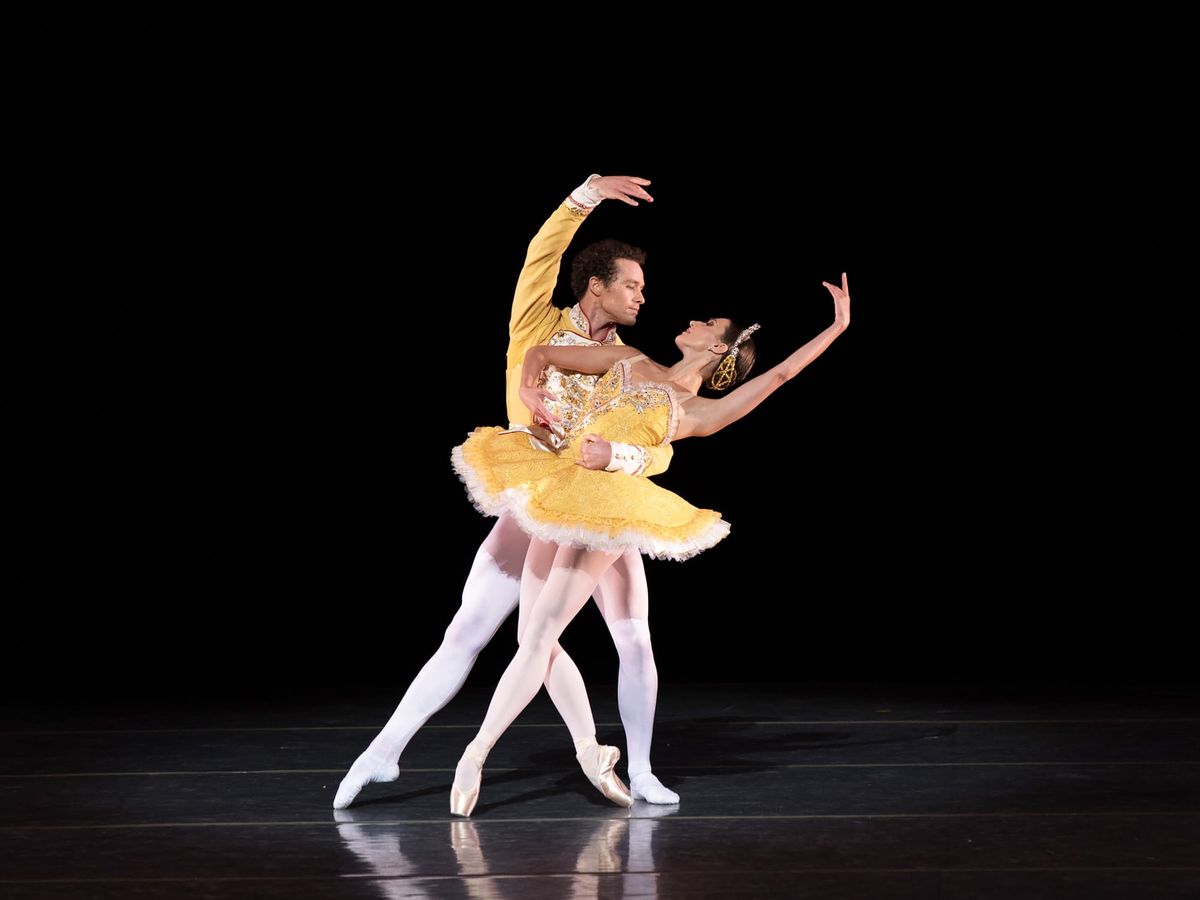
"Theme and Variations", "Let Me Sing Forevermore", "A Gathering of Ghosts"
American Ballet Theatre
David H. Koch Theater
Lincoln Center
New York, New York
October 16, 2019
ABT's Fall gala abandoned the usual trappings – not a fouetté in sight – though there were some extended speeches, especially the one from Lisa Lutoff-Perlo, the president of Celebrity Cruises, in which she quoted statistics showing the small number of current female choreographers and touting the fact that the ABT gala featured works by two of them. Unfortunately, though enthusiastically danced, both were completely overshadowed by Balanchine's "Theme and Variations".
Devon Teuscher, in her debut, and Cory Stearns danced Balanchine's formal, multifaceted jewel with a controlled and iridescent radiance, focusing on each other while generously including the cast (Teuscher's little nods to her court during the brief vision scene had a warm, heart tugging delicacy) and the audience. Teuscher danced with a musical sophistication, holding her balances for a fraction before moving on, playing with but never distorting the music. Stearns, though the solo has been danced more sharply (his double tours did wander a bit) was a noble cavalier and their pas de deux had a rich emotional arc, beginning gently, as Teuscher seemed to pull away, and then exploding with the music. The corps and the soloists looked very well rehearsed and it was a glorious opening.
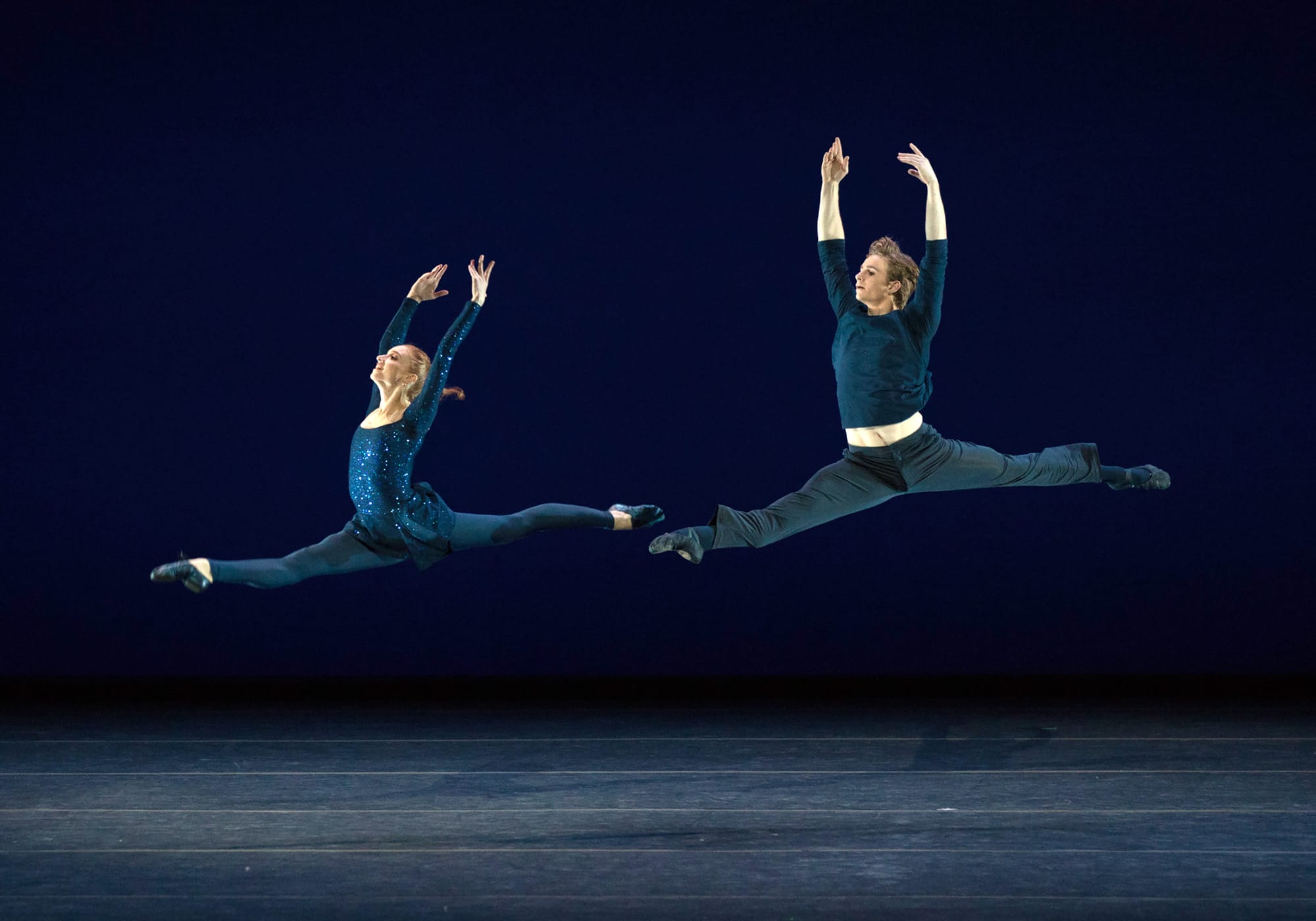
Jessica Lang's New York premiere "Let Me Sing Forevermore" was choreo- graphed in 2019 for the Erik Bruhn Competition, and is set to four Tony Bennett songs. (Mr. Bennett was in the audience and got a warm burst of applause during the curtain calls.) Soloists Catherine Hurlin and Aran Bell, the original dancers, breezed through the snappy, jazzy choreography and Bell's vulnerability set off Hurlin's energetic spunk. It was a gracious salute to two of ABT's most promising young dancers. The choreography, though had some sparkling phrases, was a bit vapid, with too many ice dancing lifts to signify passion, and the music evoked cocktail lounges and worldly sophistication, not sock hops and teenagers.
Brahms' "String Quintet in G Major" does not evoke a sock hop either, though that might be one of the descriptions of Twyla Tharp's new "A Gathering of Ghosts". This is her first new work for ABT in ten years and is a celebration of Herman Cornejo's twenty years with ABT, and Tharp's choreography for him uses his many gifts – his elegance, his generosity, his technique, and his warmth. Unfortunately, the rest of the ballet is a confused mess.
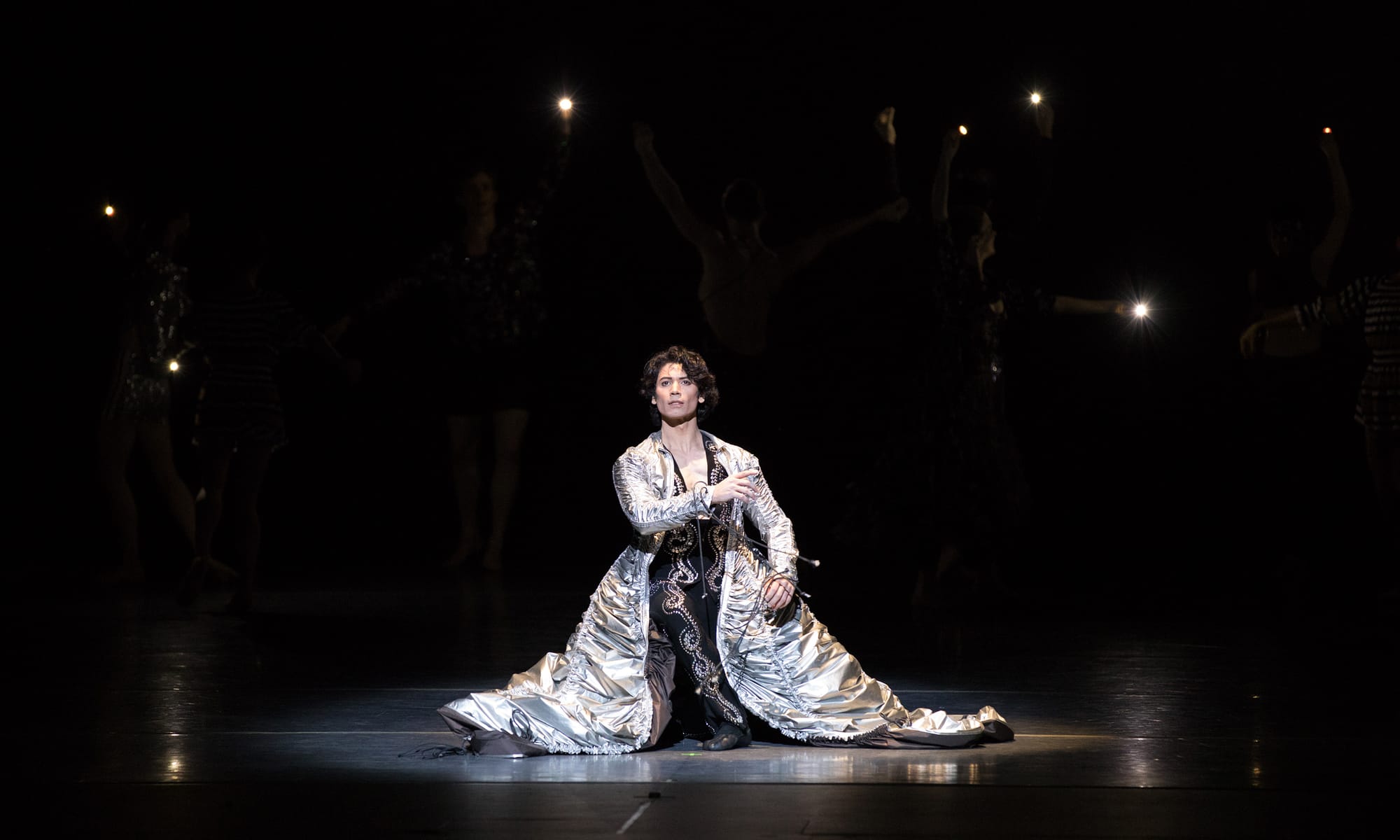
Though Cornejo is called the "Host", the ghosts he wanders through have specific names. Some are historical (Louis XIV, Marie Antoinette, Mme. De Staël, Proust) one is allegorical (Greased Lightening) and others are rather pretentiously obscure literary figures (Murasaki, from "The Tale of the Genji, and the North Wind and Irene, characters from works by the nineteenth century writer George MacDonald -- Tharp choreographed MacDonald's "The Princess and the Goblin" in 2012).
These characters wore Norma Kamali's flashy but nondescript costumes (poor Blaine Hoven as Louis XIV had to spend the evening in a long sequined skirt and tank top, and Aran Bell as Mme. De Staël wore bike shorts). This mishmash wasn't played for laughs (though there was one embarrassing joke when Cornejo asked Louis XIV to dance), and the ghosts paired up incongruously and danced generic, swooning dances while Cornejo moved elegantly but casually through the crowd, with no hint as to why these people might be important to him, or to anyone else for that matter.
Cornejo did get to react to the four consorts (Skylar Brandt, Zimmi Coker, Luciana Paris, and Cassandra Trenary, wearing striped beach outfits). These impressive dancers were given no hint of individuality, so, while presumably they represented four earlier relationships, it was a wonder that Cornejo could tell them apart. When the ballet finally ended (with Cornejo putting on a silver Austrian shade while the ghosts in the background lit up flashlights) the audience, along with Marie Antoinette, were more than ready for their cake.
Copyright © 2019 by Mary Cargill



