Les Neiges d'Antin
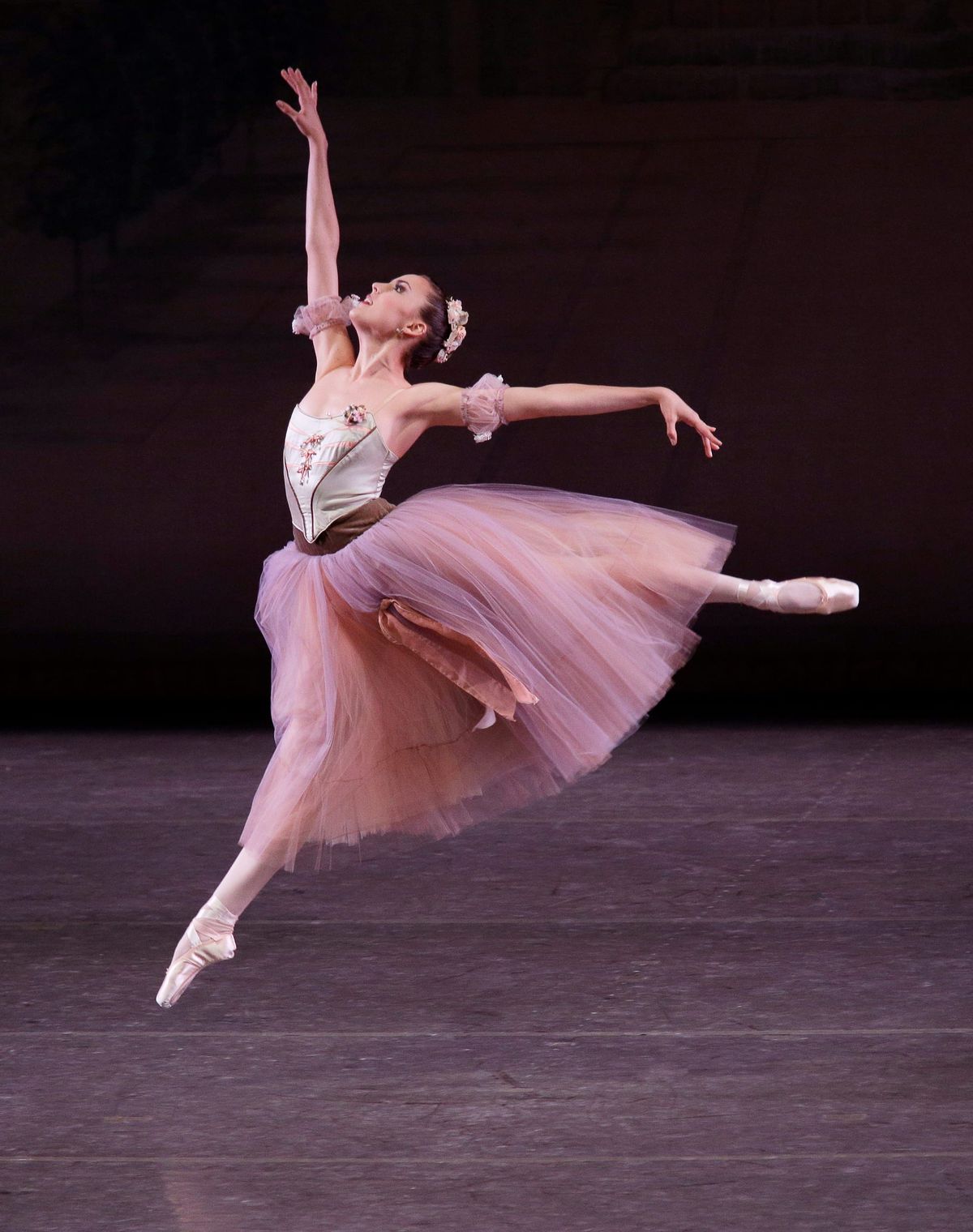
“Brahms-Schoenberg Quartet,” “Tschaikovsky Suite No. 3”
New York City Ballet
David H. Koch Theater
New York, New York
May 15, 2019
The return of “Brahms-Schoenberg” to the stage was a highlight of the still unfinished season at New York City Ballet this week. The ensemble ballet of all ensemble ballets, the first work Balanchine made for at Lincoln Center after the company moved from City Center, showed Balanchine reveling in the space afforded by the larger stage with gorgeously elaborate blocking for the corps de ballet, soloists and principals over four flowing romantic movements. With Karinska’s beautiful tulle costumes and David Mitchell’s drops providing period detail and mood, the orchestra and dancers delivered an immersive experience in the twilight borderland where music and dance combine.
The tall and expressive Emily Kikta, as the first movement soloist leading a corps de ballet of four men and eight women, went deeply through her back in repeated piqués to arabesque, balances and then extensions to allongé as well as a series of backbends on her knee. Russell Janzen and Ashley Bouder then danced a series of elegantly correct duets and solo entrances. The choreography here is classical and simple, and grounded in the 19th century romantic ballet. Meantime, in a ballet where backbends by the women are a leitmotiv, Balanchine’s choreography began to construct the layering of images of women in tulle entering this way and that, to form star patterns and lines against the flowing score, Arnold Schoenberg’s harmonious orchestration of a Brahms piano quintet.
Sterling Hyltin and Jared Angle danced the second movement’s circularly patterned intermezzo pas de deux, where a motif of the cavalier lifting his partner to place her down again in a deep backbend embrace, alternates with a series of promenades that have the ballerina consistently off balance. In a ballet where the steps in the first three movements are generally very classical, the off balance partnering here is a salient complex modern element, but incorporates gracefully with the score’s unusual fluidity.
The third movement “Andante” then featured the most elaborate corps de ballet work of all. The cast of fifteen supporting women in tulle, their hair in buns, in the ballroom set, seemed Proustian – a bouquet of jeunes filles en fleur – first deployed in a oblique diagonal line crossing the stage to face the audience straightway to a slow march; then, as the tempo picked up, quickly arranging themselves into a pair of diagonals to one side and afterwards the other, with every other woman on her knees in deep backbends alternately facing each other. Erica Periera and Anthony Huxley danced with romantic modesty and restraint in this setting, with Pereira especially expressive in her upper body gestures through the back and arms. The repeated pose that ends the section – straight out of “La Sylphide” – where the ballerina demurely stands in front of her partner with arms carefully folded to her chest and her wrists upraised, with both dancers looking down – reduced the dynamics to a hush. Although earlier Huxley danced his bravura solo with great elevation and freedom.
The casting of the principals here was a little smaller than usual but the two dancers are very well matched and their interpretation fit well with the ballet’s intention over all three movements. So harmonious was the experience that one had no impulse to pick apart anything in this performance. Sometimes the best thing that can happen at the ballet is for the mind to shut down.
Where the dynamic work ends with its rousing fourth movement, “Rondo alla Zingarese,” Sara Mearns and Tyler Angle provided the perfect conclusion. Dancing Suzanne Farrell’s role all out, Mearns was on fire, and a welcome fire it was in a dancer who has sometimes looked almost angry in certain performances earlier in the season. Angle had just beautiful elevation, articulation and dramatic staginess to match her, besides being the best partner in New York right now for any ballerina.
It was lovely to experience this ballet again, a unique, romantic and slightly haunted work, relating strangely in Balanchine’s opus to “La Valse” (both in the costumes, décor and ambience) and shot through with a nostalgia that echoes the basic element in Brahms’ score that Schoenberg emphasized in his orchestration.
The company’s rendition of “Suite No. 3” that ended the evening, concluding of course with “Theme and Variations,” largely repeated the cast that danced this ballet at the company gala except for the substitution of Mearns and Ask La Cour in the first movement “Élegie” and that of Georgina Pazcoguin and Harrison Ball (in a debut) in the “Scherzo.” Mearns was still burning brightly after her gypsy rondo in the prior ballet and indeed this entire review could have been entitled “Sara Mearns on Fire.” Ball in the scherzo showed a wonderful combination of facility and weight. Of mid size, he’s a strong male with the sort of Danish physique (square in the shoulders, waist neatly bisecting the stature) that Peter Martins used to love.
In “Theme” Megan Fairchild danced one of the best performances of this ballet in her career, showing a mature relaxation through her entire interpretation. She and Gonzalo Garcia, better rehearsed than at the gala, flowed through their adagio with tasteful restraint. All was well until conductor Andrew Litton lost control of the tempi during the final polonaise and let the orchestra accelerate like an out of control merry go round, leading to a certain amount of confusion in the final dancing as the ensemble fought bravely to keep up.
copyright © 2019 by Michael Popkin



