La Belle aux Bois Mourant
“Sleeping Beauty”
New York City Ballet
David H. Koch Theater
New York, New York
February 13, 2019
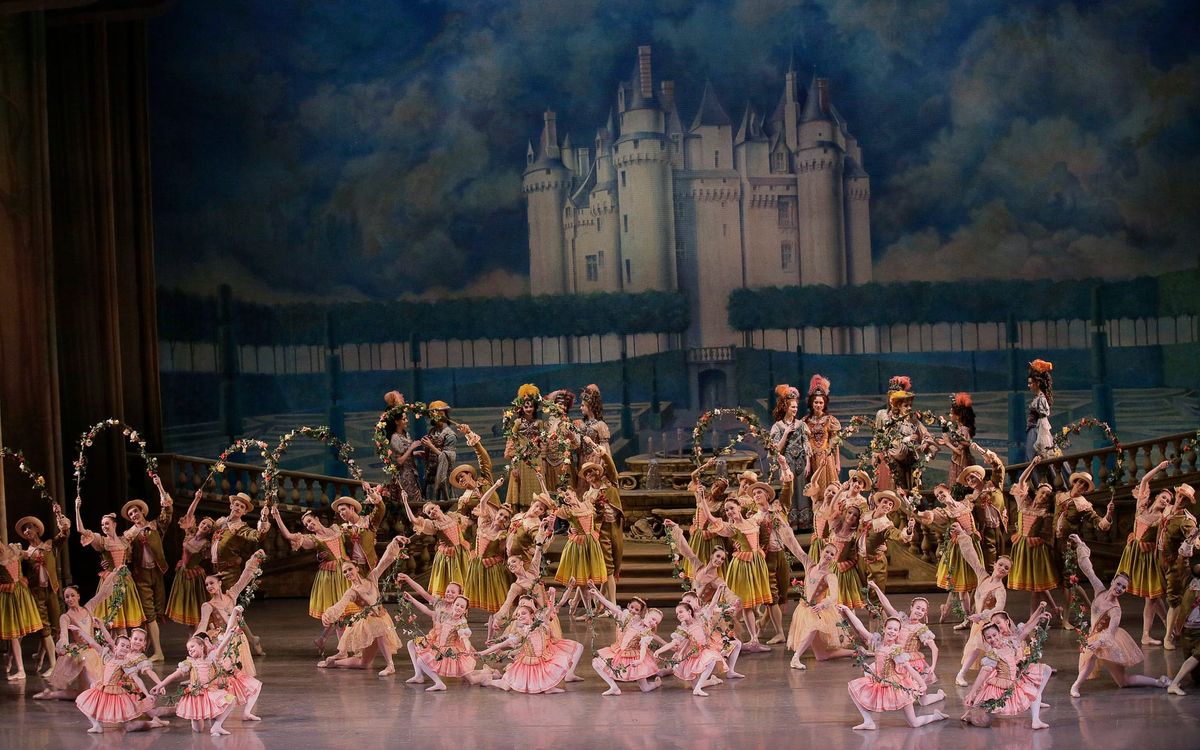
Nearly 15 months after Peter Martins’ resignation from New York City Ballet, where an interim artistic team continues to run things during the search for his successor, his elaborate production of “The Sleeping Beauty” went back on stage Wednesday night for the first of fourteen performances. Yet with a full house and Martins himself in the audience, the opening night was anything but a success. As a spectacle, the staging looked dated. Its contraction of the story from four acts to two with a single intermission, by means of making the action continuous and using scenic projections to cover the changes of era, combined with certain Walt Disneyesque elements in the décor and costuming to make the ballet feel closer to a Broadway musical like “Cats” or “The Lion King” than the ravishing Margot Fonteyn-Royal Ballet experiences of yesteryear.
Meanwhile, the challenges of dancing the production’s classical Marius Petipa-derived choreography proved more than the company as a whole could handle. Dancing wise, NYCB was a proverbial mess.
The impression that one was not dealing with a classical ballet company but instead a Broadway troupe began in the first act’s christening scene where the ensemble of courtiers, soloists and principal dancers did not know how to walk or to carry themselves with the dignity and aplomb that would suggest a Seventeenth Century court. From Adrian Danchig-Waring and Gretchen Smith as the King and Queen to the lowliest valet, the dancers milled about with slumping postures, excited, but comporting themselves as if it were a junior prom costume party at a Texas high school. But the structural problems went much deeper once the dancing started, as principal dancers, soloists and corps de ballet - with a few notable exceptions (about which more below) - danced with compromised classical placement and technique.
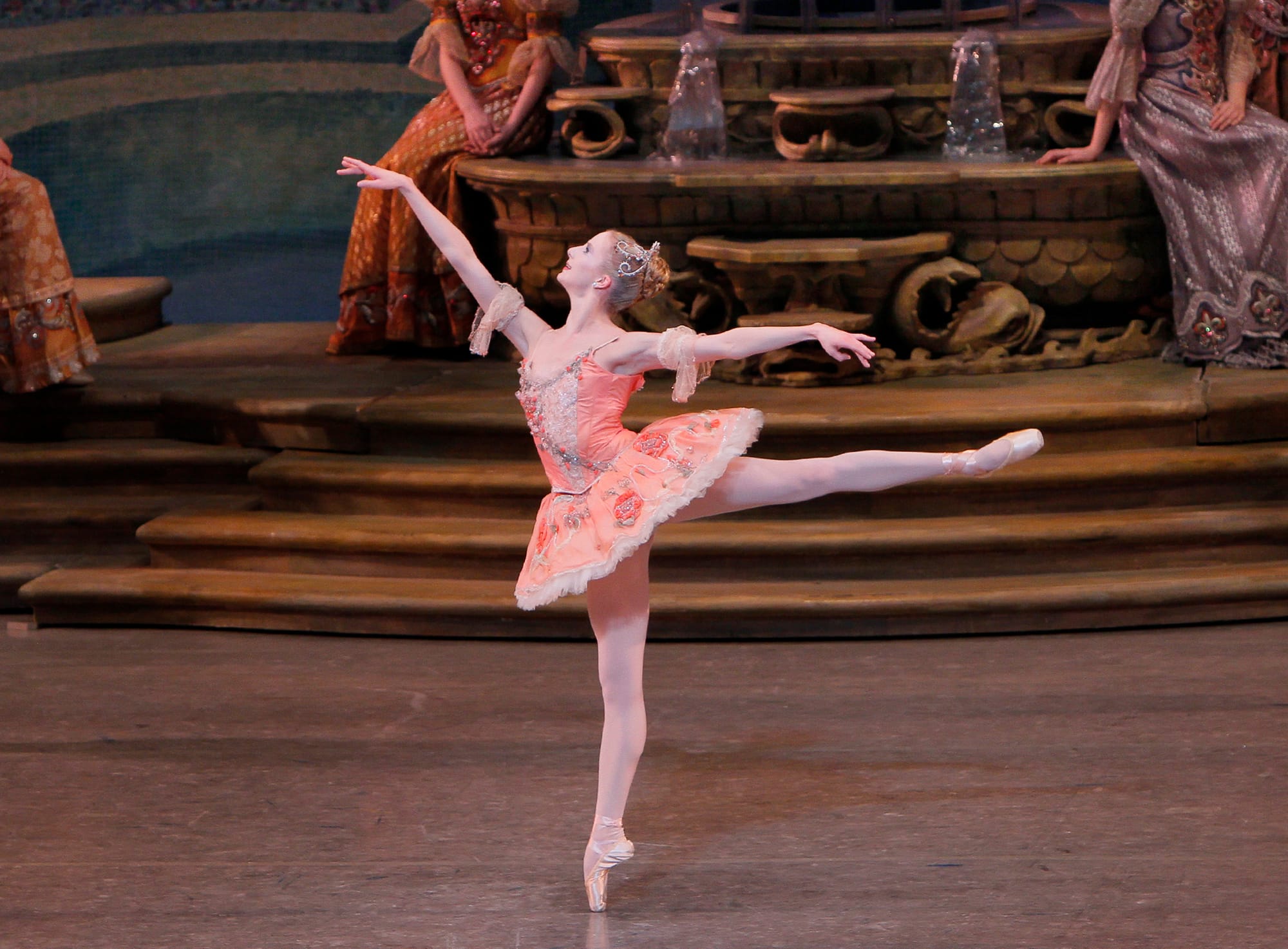
Sterling Hyltin with Russell Janzen (making an important debut) were the leading couple but proved ill assorted in dramatic personae. Where she continues to appear the sunny ingénue of her youth and young for her chronological age (she joined the company in 2003), the taller and more sanguine Janzen, with his hair combed straight back in a widow’s peak, was a very dark character indeed. The vision scene thus felt a bit frightening, as if a character out of Edgar Allen Poe was encountering a gauzy and innocent child in the moonlight. But while Janzen had the merit of dancing his material for the rest of the evening with strength and polish, the entire performance was very difficult for Hyltin technically.
To her technical problems, Hyltin added a thin layer of nervousness throughout, dancing with such insecurity in the Rose Adagio that you in the audience couldn’t relax while watching. (She made it through all the same with only a series of wobbles off plumb line). A lack of expansiveness marred the vision scene and act three’s grand pas de deux.
If basic problems of classical schooling had been restricted to the leading couple, the performance as a whole could have been passed off as a bad night for the principals. But the lack of execution and presentation extended down through the ranks, compounded by bad casting decisions by the interim directors. Thus in the third act Jewel variations, the very short Anthony Huxley looked like a child dressed in his father’s clothing when he appeared in a gold vest that extended well below his waist, and was then set to partner the much taller Megan LeCrone, while Brittany Pollack as the Emerald danced with an extraordinarily choppy technique.
If possible, it was even more concerning that the musicality and hunger for space basic to Balanchine training are generally absent from the company as a whole. The act one fairies (Emilie Gerrity, Sara Adams, Claire Kretzschmar, Kristen Segin and Unity Phelan) were uncertain in their phrasing, tentative in their musical responses and none of them could get off the floor when jumping.
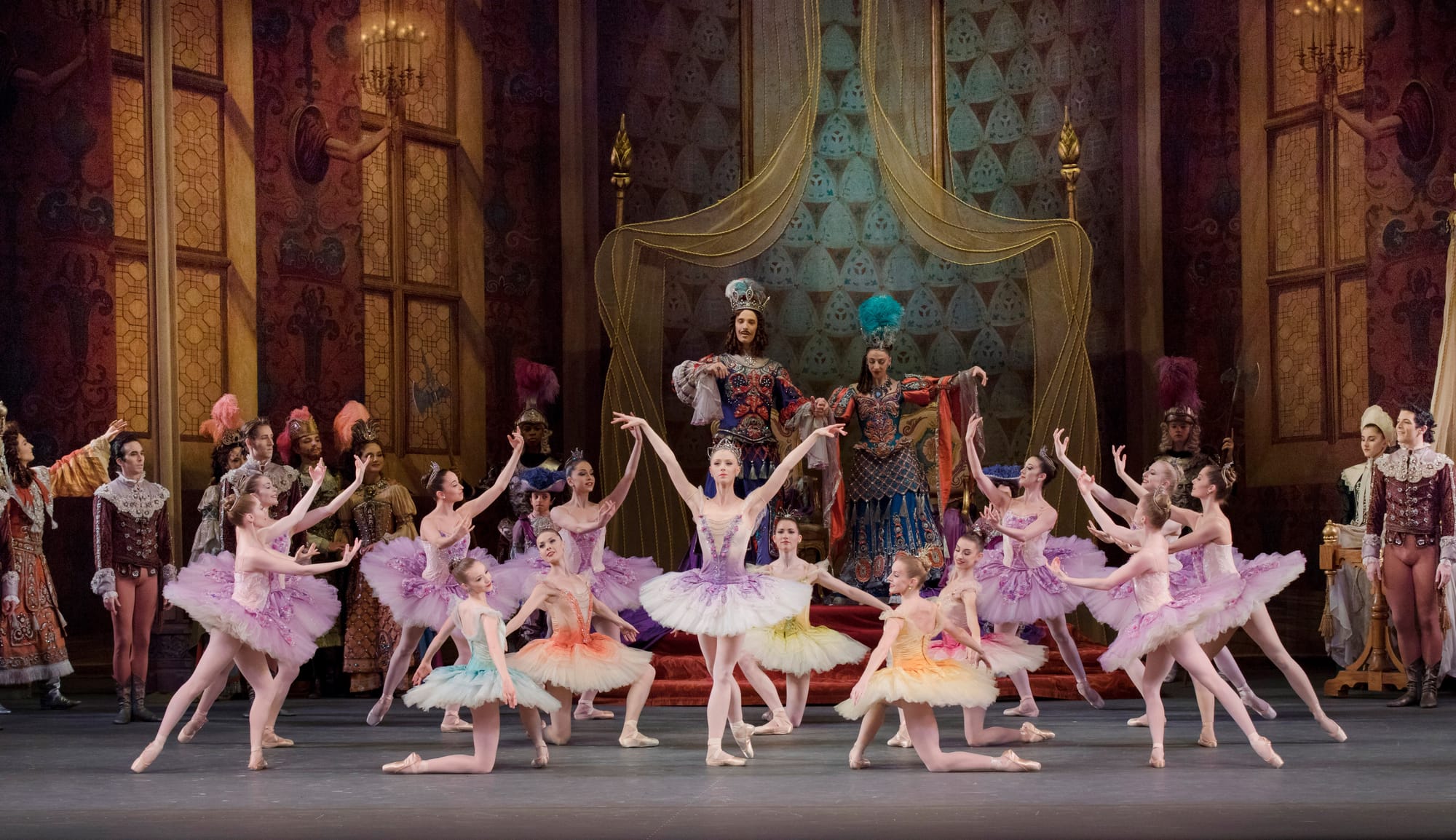
There were of course exceptions to these general faults. Teresa Reichlen gave a strong physical and dramatic performance as the Lilac Fairy. Though it’s ironic that Reichlen – so slack in her upper body as a youth before she cured that problem – should now stand out as a paragon of épaulement. Ashley Laracey (who inexplicably had not been cast in anything else all winter before this) gave a fully realized and detailed account of the Ruby variation that really was a jewel among the pebbles. Likewise Erica Pereira and Daniel Ulbricht, who were charming, professional and polished as Princess Florine and the Bluebird. Pereira, who seemed infantilized by the reign of Martins, has particularly blossomed during the interregnum. Maria Kowroski’s Carrabosse was also strongly etched and, as an ensemble, Balanchine’s garland waltz at the start of the second act continues to be a high point and was danced with wonderful élan by all.
But in general the impression created by this performance was that of a company now in full artistic crisis and, while it may well prove that many of the opening night issues are the result of under-rehearsal and jitters, the deeper structural issues in the company’s presentation suggest otherwise. NYCB had better get new direction that is able to address these issues and to establish artistic norms and discipline in a hurry. Ballet mastering is at the root of it all and Balanchine’s famous aphorism, “But first a school,” has never felt truer. The issues at NYCB today start in the classroom and it’s only in the classroom that they’ll be resolved.
copyright © 2019 by Michael Popkin