Kneading Drama
“Like Water for Chocolate”
American Ballet Theatre
Metropolitan Opera House
New York, NY
July 16, 2024
American Ballet Theatre ending its five-week season at the Metropolitan Opera House with Christopher Wheeldon’s “Like Water for Chocolate” seemed like an emblematic move committed to its determined new identity – a company of story ballets, new world-class choreographies and solid, home-grown dancing talent. It is an encouraging direction for the troupe, even if the ballet itself was not the most scrumptious dish ABT had on offer.
Wheeldon’s work, based on a 1989 book by Laura Esquivel and its 1992 film version, was a joint production with the Royal Ballet created in 2022, and premiered for the U.S. audiences a year later by ABT, to mixed reviews. The complex storyline arguably cannot lend itself as easily to a ballet adaptation compared to the screen, with many sentiments needing to be danced out, and not just spoken quickly. What then of the choreography? Wheeldon has proven himself as a gifted crafter of great visuals and good dancing, but a lot of that was missing here, as the steps rushed to keep pace with the narrative within the ballet's two-hour runtime.
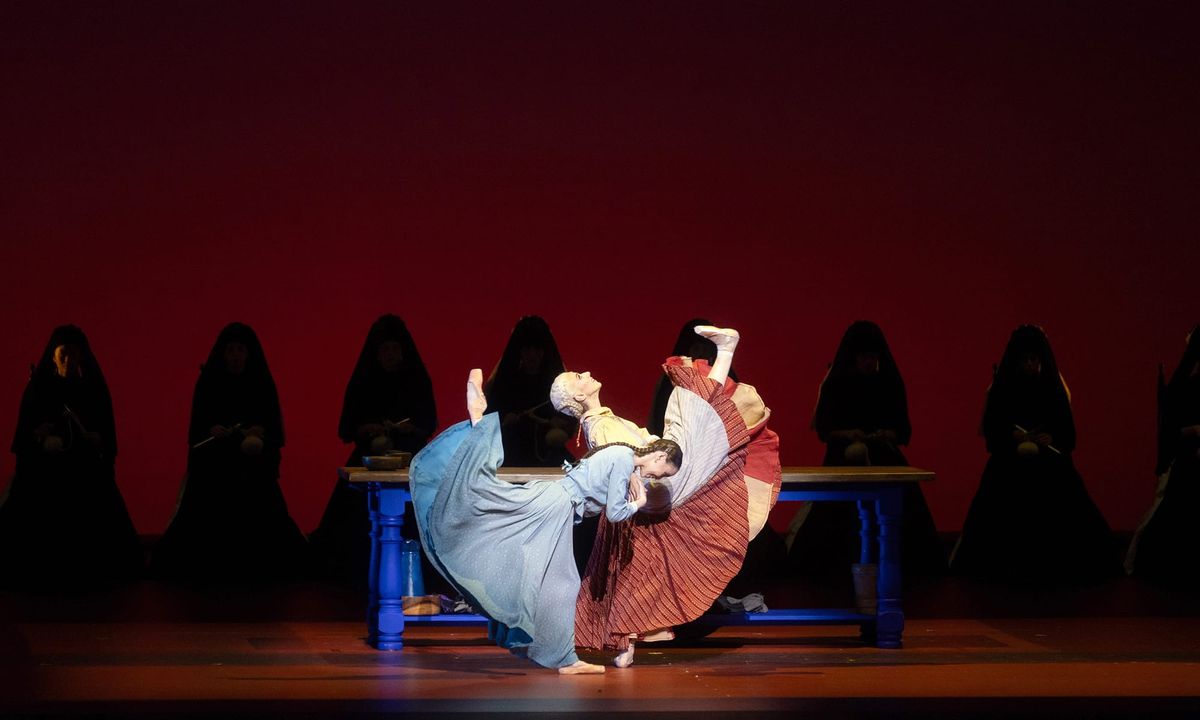
The story mostly revolved around Tita (danced by Skylar Brandt), the youngest of three daughters of a patronizing and later haunting Mama Elena (Christine Shevchenko), and Pedro (Herman Cornejo), Tita’s love interest. Unfortunately for the ballet, it unfolded with many layers and characters, in a labyrinthine way. At the outset, a windowed Mama Elena commanded Tita not to marry and instead take care of her in old age. The move derailed a budding love affair between Tita and Pedro, who proceeded to marry Tita’s sister Rosaura to be closer to Tita and fight for this love. The dancing through these passages had some beautiful steps. There was the bad news moment, with Shevchenko’s hand moving past Chloe Misseldine and Chatherine Hurlin as Rosaura and Gertrudis (the third sister) standing in line and catching Brandt’s wrist, then refusing to let it go as Misseldine and Hurlin joyfully spun away. The courtship scene first had a hopeful moment with Cornejo and Brandt on their knees, a union-symbolizing beautiful blue ribbon wrapping around their hands, only to be pulled through Brandt’s fingers by Shevchenko to entwine around Misseldine’s hands instead.
A slew of food-driven alchemical events ensued. The cake Tita baked for the wedding brought on incredible sadness and sickness for the wedding guests in a body-bending way because it contained Tita’s tears. Later, a quail dish made with petals of a rose given to Tita by Pedro at the wedding fueled desire in the diners and even a rebellious streak in Gertrudis. That was a show-stealing moment for Hurlin, and perhaps the ballet’s singular grandiose dance, full of seductive steps, exquisite extensions that made Hurlin’s legs appear even longer and lankier than usual, and great rebellious power which Hurlin’s character wielded to run off with soldiers atop a mechanic horse.
Amid these scenes, the ballet lost the character of Nacha – the family cook and caretaker of Tita, danced with care and passion by the retiring from the company at the end of the season Luciana Paris. Although Paris was back as a ghost shortly thereafter in the ballet, the tenderness of her exchanges with Brandt and many nurturing moments where the dancers mimicked each other’s steps in signs of solidarity and care, all made that demise feel premature. Paris’s ability to inhabit a role and transport the audience into her world – maternal, caring, and eager to share flavors of food and life with her disciple - was remarkable, and she will be missed as a company dancer.
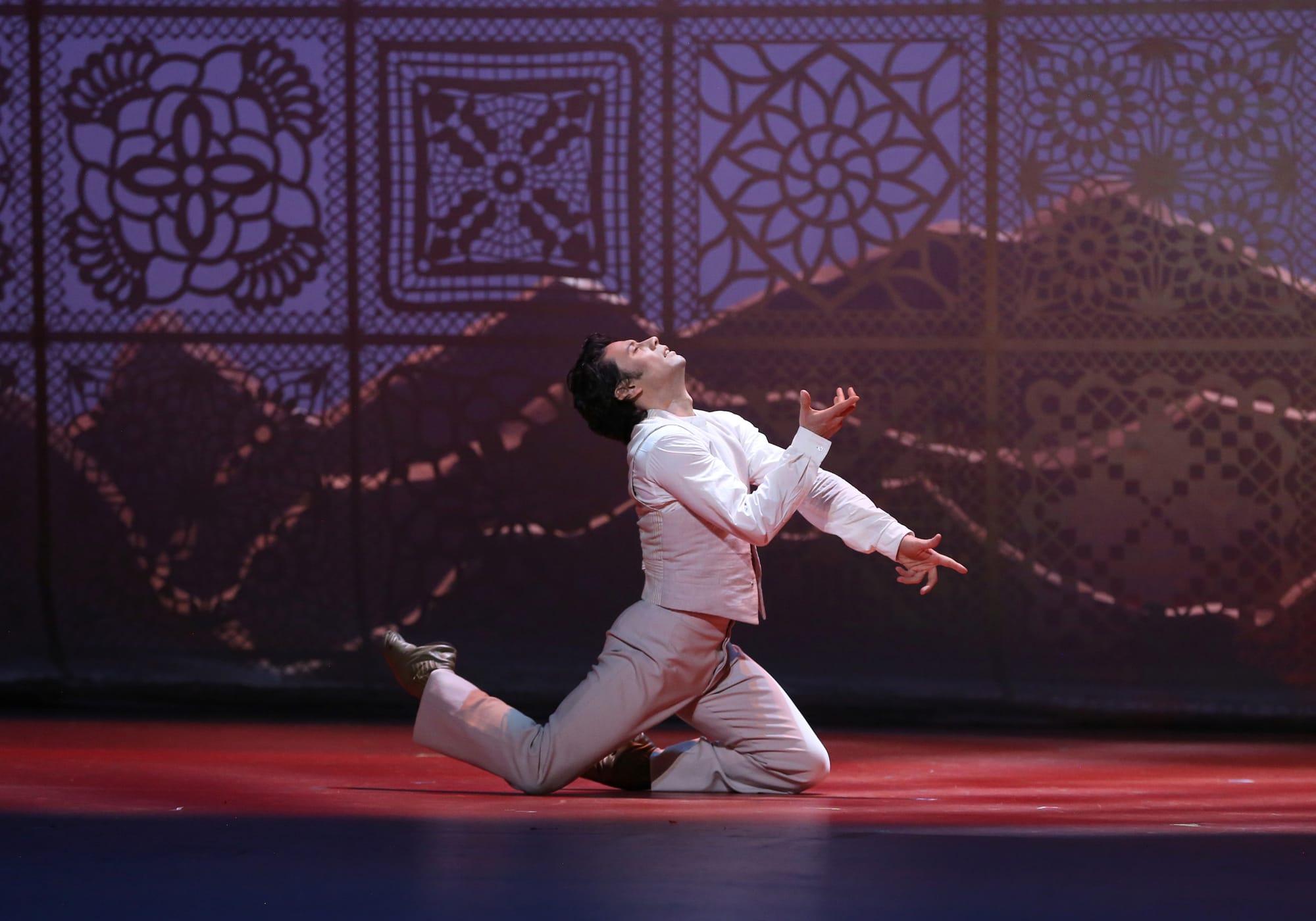
As the ballet meandered through the scenes of giving Gertrudis and Pedro a baby boy and killing him off, physical assault by Mama Elena on Tita and Tita’s nervous breakdown and convalescence in Texas, followed by a new romance with a Dr. John (played by the dashing Thomas Forster), there were many opportunities to make the drama stick. Almost all of them were missed, most disappointingly by Brandt and Cornejo in a romantic and very sensual duet in the second act, upon Tita’s return home after Mama Elena’s death. Here, and elsewhere, Brandt tried, but while the acting was all there, she lacked spotlight-quality presence and couldn't deliver the character with the necessary impact to contrast the subdued music by Joby Talbot and sparse decorations by Bob Crowley.
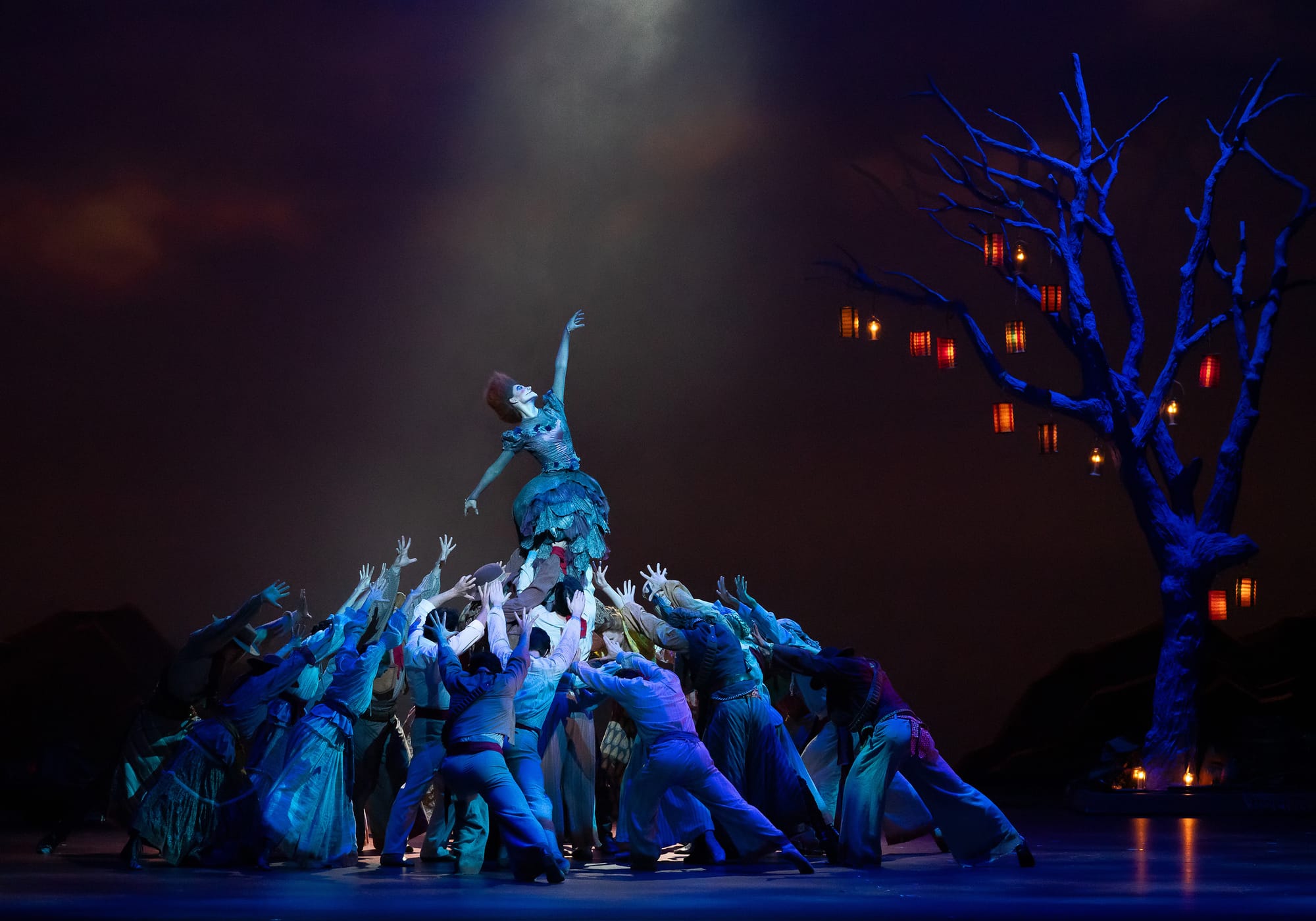
Moving through more scenes – the return of a now-revolutionary commander Gertrudis and Tita’s discovery of Mama Elena’s journal, a drearily danced out story of Mama Elena’s own crushed youthful romantic dreams, and even a haunting of the characters by Mama Elena’s ghost – the overall flavor remained bland. The rare artistic refuge could be found in Misseldine and her character’s transformation. Though given a lesser role, her dancing was elegant and piquant in the first act and evolved from there. The newly promoted Principal ballerina showed a full range of emotion from joy to familial serenity, to suspicion of Tita and Perdo, to ultimate despair at her baby’s death and her husband’s infidelity. As her character descended into madness, taking out her rage on her new daughter Esperanza before dying, Misseldine provided every shade of emotion through these phases.
The ballet’s happy ending, with Tita and Pedro married, began with a very Wheeldon-esque, stripped down duet. Romantic and lingering, it was the kind of choreography Wheeldon excels at with plenty of unique moments. Elegant hand gestures reciprocally weaving over the partner's head, a gorgeous passage with a lifted Brandt making a running movement but barely touching the ground before ending up on Cornejo's shoulder, a penché by Brandt with Cornejo lifting her parallel to the floor above his head – it all demonstrated that less focus on the story, and more on the emotions underpinning it, could have been more impactful.
As it was, with much bending and folding, and little pantomime or rousing technique, this Wheeldon work kept kneading into itself, and never rising as what it could have been given the magic of the underlying novel. In culinary terms, it was mostly water, with ingredients galore but few of them flavorful enough to make one long for seconds.
copyright © 2024 by Marianne Adams



