Keeping it Simple
"The Nutcracker"
New York City Ballet
David H. Koch Theater
Lincoln Center
New York, New York
November 29, 2024
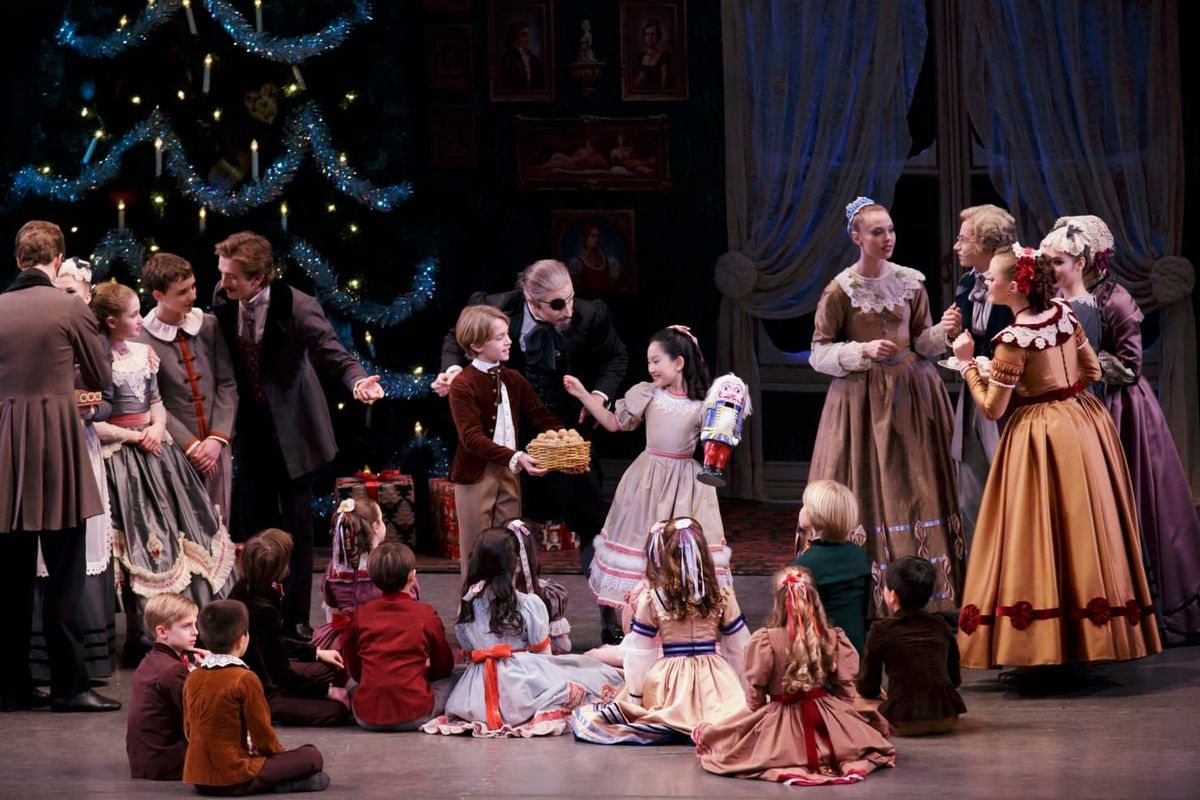
New York City Ballet’s version of “The Nutcracker” is a straightforward, uncomplicated story which eschews any subtext about good and evil; it is a timeless and magical recreation of the childhood most of us dreamed about having, with parties, presents, and good cheer. And of course, good dancing, especially in the second act, and the opening night was no exception. Megan Fairchild was a sparkling Sugar Plum Fairy, supported by Joseph Gordon in his welcome return from an injury. But it is Act I, with its warmth, exuberant children, and magical stage effects, that give this version its power.
The children were, as usual, very well rehearsed; the little girls very properly girly, with their tea party and their dolls, and the boys rampaging with their military maneuvers and their drums. Gilbert Bolden III was a particularly warm and involved father, greeting his guests, helping the older couple, and playing with the boys without ever stealing their spotlight. The veteran Robert La Fosse returned to guest as Herr Drosselmeier. His detailed and imaginative portrayal was an absolute joy; he had the courtly manners of an eighteenth century gentleman who never gave up wearing his old-fashioned breeches or his snuff. Just watching him bow was a wonderful acting lesson. Despite his love for mechanical dolls, his Drosselmeier was not related to the monomaniacal Dr. Coppélius, and there was nothing ominous or odd about the old man; his gentleness when he snuck back in to fix the broken Nutcracker was entrancing. His wild hair and gestures as he sat on the clock during the transformation scene were so exaggerated that it was clear that this was really Marie’s dream.
The magical transformation, inspired by Balanchine’s memory of the original Maryinsky production, has a brilliant simplicity, letting the soaring music and the giant Christmas tree captivate the audience without any extraneous dancing to get in the way. This belief in the power of the music and in the sheer beauty of the stage design created one of the most powerful moments in ballet, a moment that never gets old.
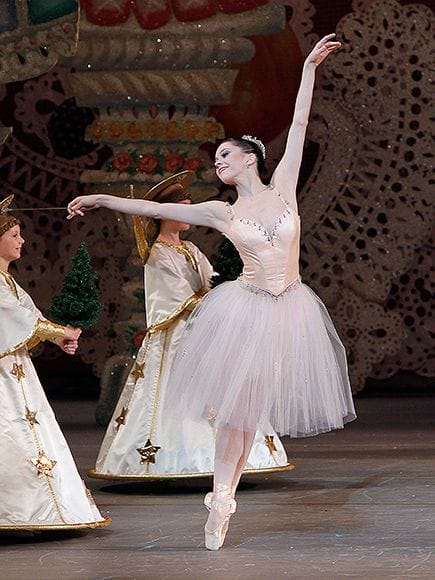
Nor do the little floating angels on the opening scene of Act II, where the twelve earnest little girls parade their little trees. The adults take over when Sugar Plum arrives; Fairchild had a gentle authority and a warm presence—she looked at each little angel so protectively. Her solo had an easy flow, soft but precise, without strain or exaggeration. Her soft little jumps seemed to hover in the air and she landed like she was dancing on snow. Her unnamed consort has less to do and adds little to the story, but Gordon gave his brief solo an understated elegance. His cabrioles seemed to float down with no effort, and his turns a la seconde were thrilling. The pas de deux, with its throbbing, restless, slightly melancholy music has always seemed a bit out of place in delicate spun sugar atmosphere, and many productions try to finesse the incongruity by making Marie (also knows as Clara) an adolescent trembling on the brink of an adult love affair, or by trying to involve Drosselmeier as some sort of weird uncle. Balanchine just took the music as it is and the pas de deux seems a bit like a smokey pearl which has turned up in a package of brightly cut jewels.
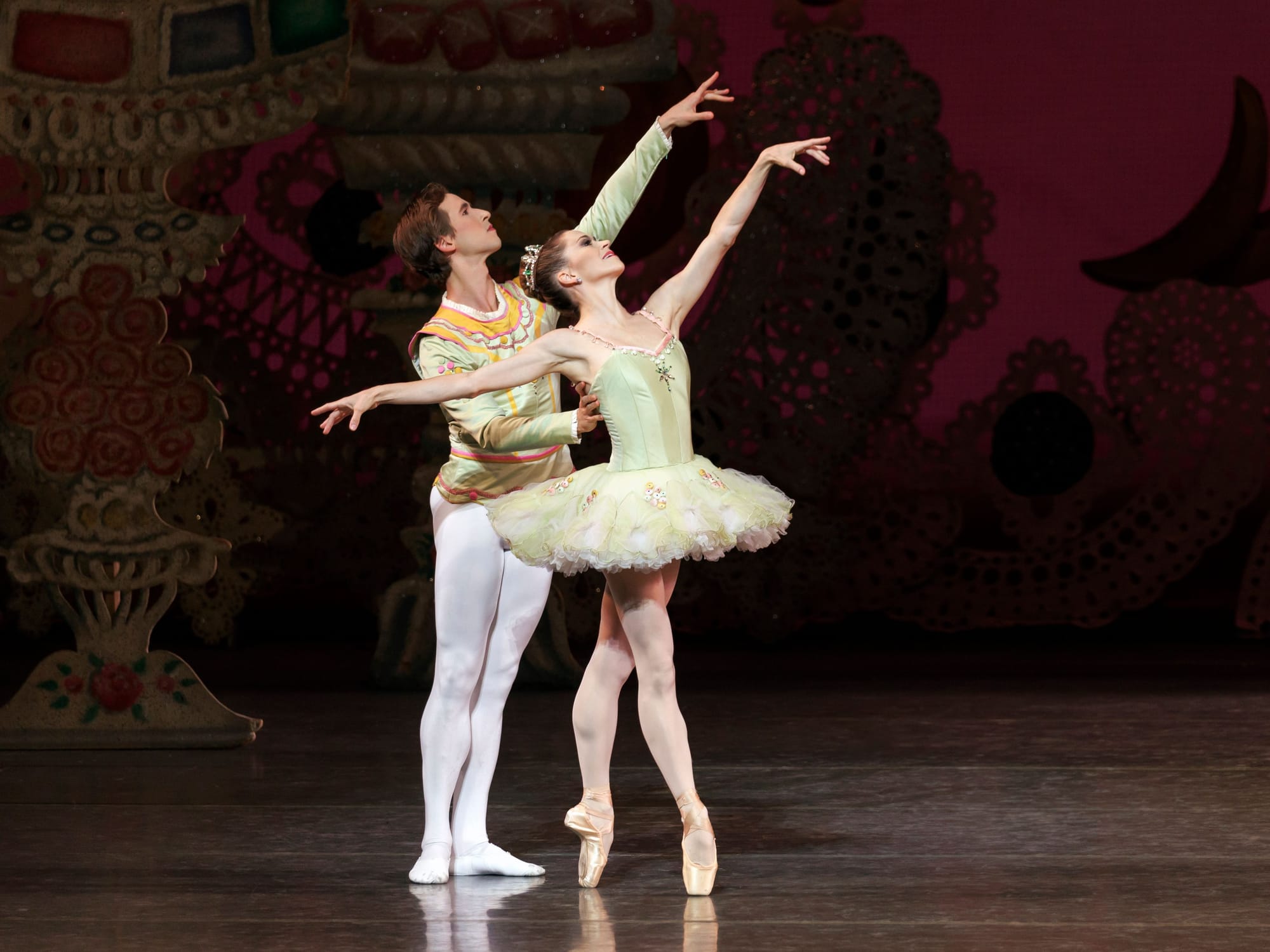
Gordon partnered Fairchild in the pas de deux with a stately, differential elegance, eyes glued to his partner as if she were the most wonderful thing in the world. The tricky running shoulder lifts were both daring and smooth, a vision of complete confidence. Yes, the pas de deux, with its throbbing, restless, slightly melancholy music has always seemed a bit out of place in delicate spun sugar atmosphere (many productions try to finesse the incongruity by making Marie (also knows as Clara) an adolescent trembling on the brink of an adult love affair, or by trying to involve Drosselmeier as some sort of weird uncle) but Balanchine just choreographed the music he had and it gleams like a smokey pearl which has turned up in a package of brightly cut jewels.
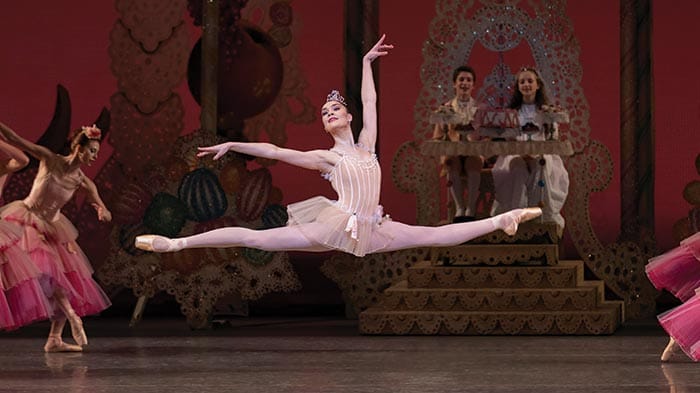
There are many shining jewels in the second act, and none shone more brightly than Mira Nadon’s radiant Dewdrop, full of sparkling turns and powerful jumps. There was nothing cute or coy about her dancing as she sailed triumphantly on the music with solidly controlled pirouettes; her control over her astoundingly long legs seemed superhuman, and she gave a bracing, thrilling performance. Sara Adams as the lead Marzipan, too, gave a fine, piquant performance, with sharp, clear legs tracing those joyful circles.
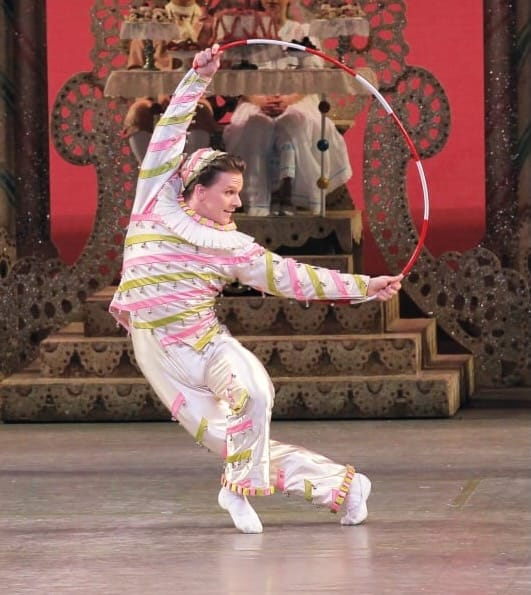
Daniel Ulbricht has been dancing Candy Cane for a long time, but his performance had a wonderful freshness. He has lost little of his power (he still can double his jumps through the hoop as if it was the most natural move in the world) and danced with a confident charm. His easy, soft sideways jumps just floated. KJ Takahashi as Tea was equally energetic, though I do miss the little character accents the dance used to have. Fortunately Hot Chocolate still has plenty of Spanish flair and Davide Riccardo looked like he was channelling Basilio, dancing with an elegant snap and an especially fluid upper body. Coffee, too, still has its old-fashioned character air, and Alexa Maxwell caught the languid mystery of that haunting melody which Tchaikovsky based on an Armenian lullaby. She avoided the overly hoochie coochie approach and seemed to be dancing in her own private world, giving the audience a hint of a story. Like the ballet itself, her dancing had a radiant simplicity.
© 2024 Mary Cargill



