Keeping It Beautiful
“Sleeping Beauty”
New York City Ballet
David H. Koch Theater
New York, NY
February 9, 2017
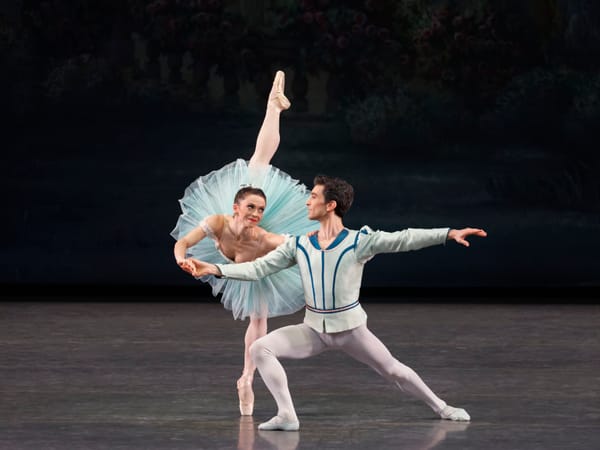
NYCB’s “Sleeping Beauty” remains a beautiful production, and the smartly chosen cast of veterans and debutants gave the season’s early performance a good balance of stability and risk. Not all went smoothly, but the high points of the evening, particularly Sara Mearns’s debut as Fairy Carabosse, struck a memorable chord.
Dancing alongside Megan Fairchild as Aurora, Joaquin De Luz as Prince Désiré and Teresa Reichlen as the Lilac Fairy, Mearns’s Carabosse, first of all, fit in. Unlike other Carabosses, this one was just as attractive and regal as the other fairies and royals and certainly looked like she belonged in the regal environs of the story. What set her apart was a carefully concealed and mysterious evil that Mearns only let out in full, powerful force when expressing her character’s rage. In those moments, her gaze would shift from mysteriously sparkling to piercing, her shoulders would angle, her hands would shake and her entire body would move with the power of her anger and desire to harm. In very many ways Mearns’s treatment of the role also resembled Angelina Jolie’s portrayal of the character in Disney’s “Maleficent,” and it was interesting to see that adapted to the ballet stage.
The other debuts, in the many solo roles of the ballet, were a mixed bag. In the fairy variations, as the Fairy of Generosity Megan Johnson seemed a little too cautious, and could have given her role more by relaxing her back, and Alexa Maxwell’s Courage could have benefited from softer hands. At the same time, Alston MacGill’s Vivacity had power and attack in the steps, and Sarah Villwock as Eloquence gave the variation a lot of life with the impressive speed of movement and emphasized upper body positioning. Non-debutant Emily Gerrity, as the Fairy of Tenderness, moved too quickly, and but for one arabesque, her dancing could’ve used more fluidity and control.
It was the same story with the debutants of the second act roles. Claire Von Enck made an impressive first appearance as the White Cat by accentuating her movements and at times almost overdoing it, but with that she remarkably ended up not only looking like a cat but also giving her character a very cat-like personality. The new jesters Harrison Ball and Joseph Gordon joined Troy Schumacher and danced with such precision that they left an impression as a crop of the company’s stellar new male technicians. But in the Jewels section Anthony Huxley’s debut as Gold was too cautious, and Ashley Hod danced Diamond for the first time plainly, without making the variation look like anything other than a collection of steps. Beside them, Sara Adams’s Emerald looked like a precisely cut gem, with perfectly crisp entrechats and passés, and Ashley Laracey’s Ruby was charming, even if at times the dancing didn’t have enough range and volume of movement for the music.
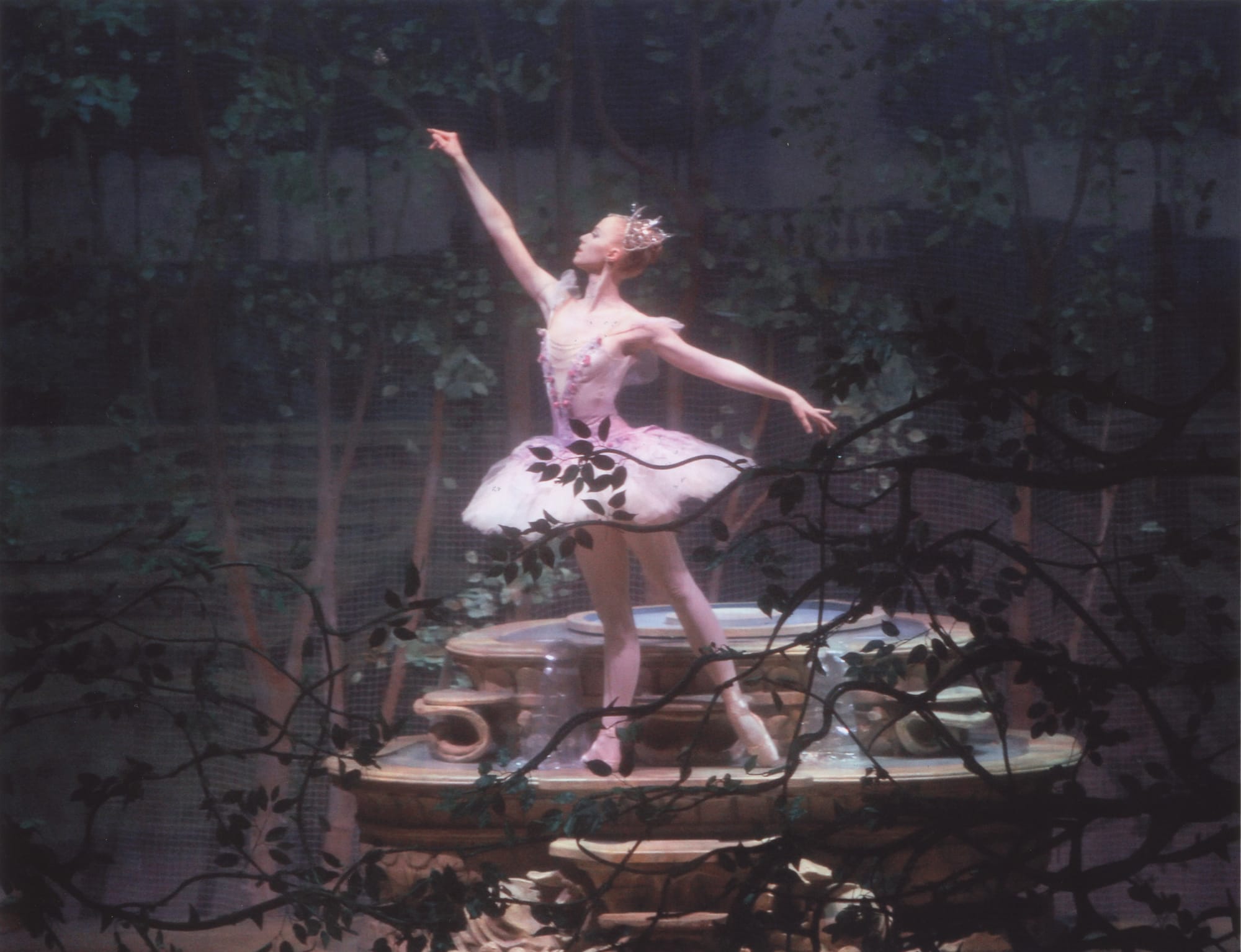
Of the principal leads, Reichlen pleasantly surprised with a very confident and lyrical performance as the Lilac Fairy. Her variation was full of sweeping, broad movement, with great line in every grand rond de jambe, arabesque and allongé, and her dancing elsewhere in the ballet was distinguished and soft. Even her scene with Mearns, where she tempers Carabosse’s curse, was measured and confident, and her calm denial of the evil fairy’s predictions reacted with Mearns’s energy in a pleasantly diffusive and assuring way.
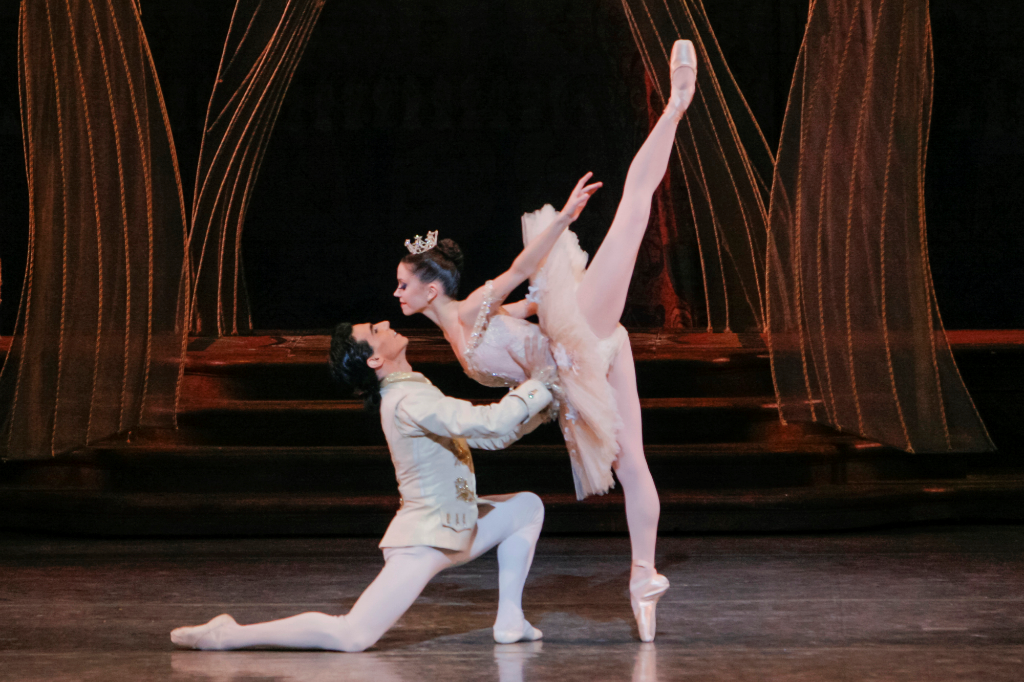
Fairchild and De Luz danced equally well, even though the first entrance by Fairchild was somewhat shy, without the full joy that the music calls for, and the beginning of the Rose Adage a little too uncertain. She got the role back on track with the first variation, however, giving the steps a lot of control and the ports de bras impressive fluidity. Where she really dazzled was in the coda, and really in every section of the ballet where Aurora gets to move fast. For this speed-expert of a ballerina, those technical sections were clearly more in her comfort zone. De Luz’s performance was measured and clean throughout, and he looked princely next to both Reichlen and Fairchild. His careful partnering of the Wedding Pas De Deux, despite the lead couple’s cautious approach to the fish dives, helped move the ballet to a very lovely finale, rounding out this “Sleeping Beauty” as an altogether strong and charming performance.
copyright © 2017 by Marianne Adams