Joint Venture
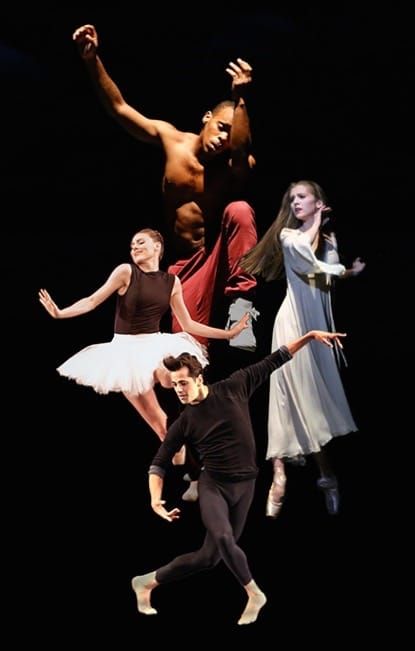
"Apollo", "Leaves are Fading pax de deux", "Lamentations", "Fandango", "Lil Buck @ City Center: a Jookin' Jam Session"
Vail Dance Festival: ReMixNYC
New York City Center
New York, NY
November 4, 2016.
Damian Woetzel, a former NYCB dancer of explosive energy, has directed the summer dance festival in Vail, Colorado for the last ten years and he brought his eclectic, imaginative, and thoughtfully curated approach to New York's City Center for a brief visit. The dances ranged from Balanchine's 1928 "Apollo" to contemporary Memphis jookin', with Woetzel's brief, personal explanations for each choice gracing the program. The dancers too came from several sources, and it was a pleasure to see NYCB and ABT dancers in works that may have been new to them.
"Apollo" is not new to Robert Fairchild but Woetzel's staging was based on an older version which New York City Ballet no longer dances, with the Expressionistic birth scene and the staircase apotheosis. Woetzel wanted to do the older version, the program notes explained, since that was the one the original City Center audiences saw and he certainly made a case that Balanchine's second thoughts are not always better than his first ones. The older version has Apollo emerging from his swaddling cloths and made his development from an awkward boy, barely able to walk, to fun-loving adolescent to, finally, the god of music so much clearer than the current one. The City Center's more intimate stage, too, helped highlight the dramatic details. Woetzel's respect for detail even appeared in Apollo's costume, as he wore white tights opening night and black ones on Friday -- black and white were worn at various times at City Center and Woetzel wanted to show them both.
I saw the black ones, which I think work best for this version, giving Apollo weight and a bit of grit -- this Apollo was not a perfect marble statue. Soccer, dancing on hot coals, and Piccadilly Circus at night are the metaphors often used to describe the action, and Fairchild captured the more human demi–caractère feel. He was especially compelling in the final call to Olympus, as he responded with a slightly uneasy look, as if he weren't sure he was ready to put away childish things, then growing steadily more secure as he climbed the stair.
Tiler Peck, also from New York City Ballet, was his Terpsichore and gave a smooth, serene performance, warm without being flirtatious; the pas de deux was a conversation not a romance, and she made it clear she was guiding him. Isabella Boylston and Devon Teuscher, both from ABT, were the junior muses, Calliope and Polyhymnia. Boylston's somewhat idiosyncratic upper body didn't always harmonize with the other dancers but her dramatic intensity as she tried to express herself suited the more vivid approach of the older version. She danced with a jazzy freedom, letting her body, not her face, do the acting. The tall and stately Teuscher had an unusual fierceness of Polyhymnia and she sailed through those difficult off-balance turns.
There is little off-center in Antony Tudor's "The Leaves are Fading" though its communal romanticism and wispy pink chiffon whisper "1970s". Woetzel matched Tiler Peck's luscious musicality with ABT's Cory Sterns, a pillar of romantic elegance, even when wearing a pink neckerchief. Tudor's dramatic intensity and controlled gestures (even in the uncharacteristically Robbins-like work) are unfamiliar territory for most NYCB dancers and I missed the slightly dangerous edge that Gelsey Kirkland--as few others--gave the pas de deux, but the dancers gave it a fine, floating quality, capturing the delicately shifting emotions.
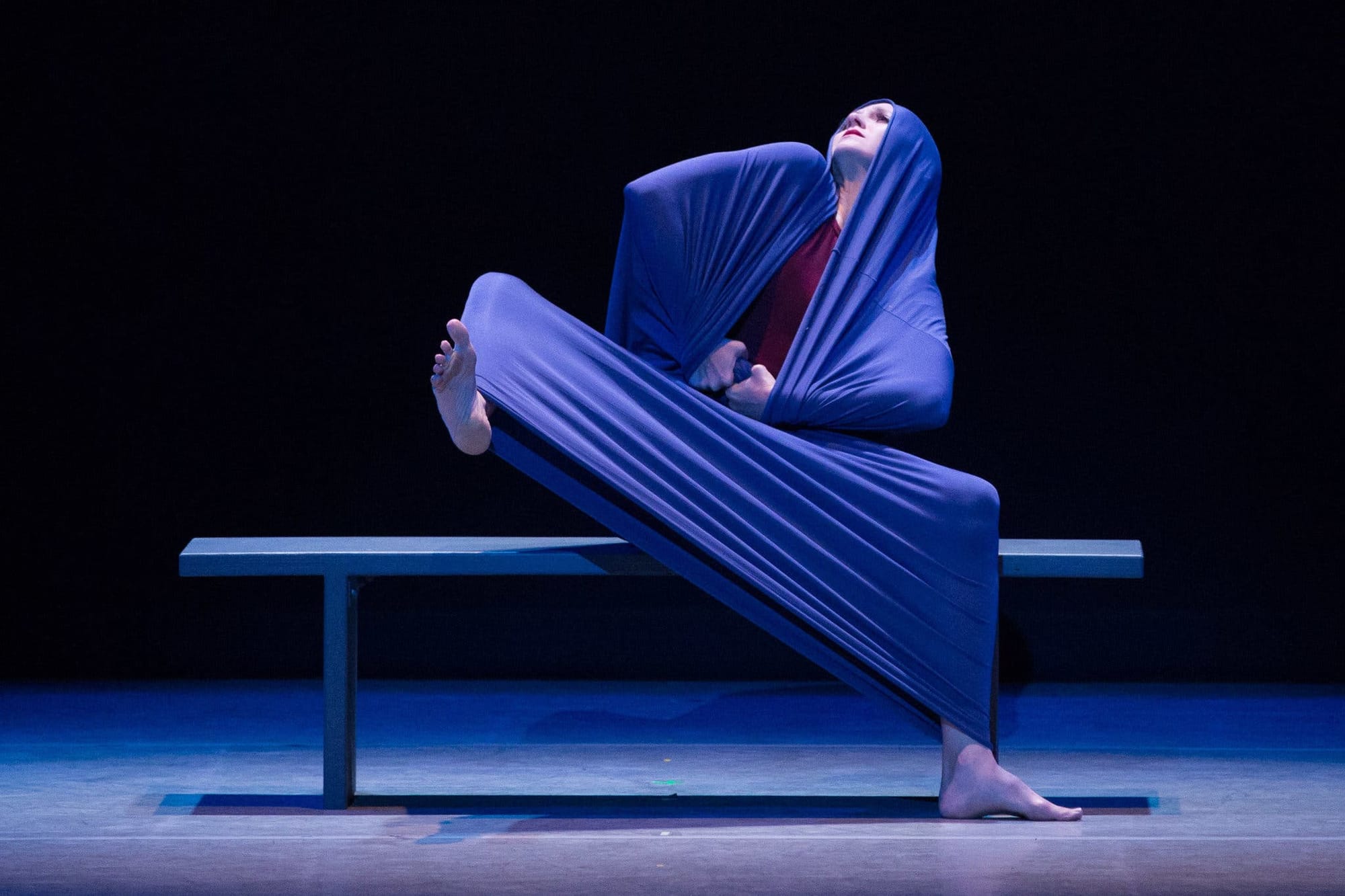
There were no shifting emotions in "Lamentations", Martha Graham's powerful study of grief. Carla Körbes, the former much missed NYCB dancer who moved to the Pacific Northwest Ballet, has officially retired. But thanks to Woetzel ("I have loved Carla's dancing since I first saw her and wasn't about to let her actually stop!" he wrote) she returned to perform at Vail. Martha Graham's 1930 solo was one dance she learned there. Performed sitting on a bench, covered in a stretchy fabric cocoon and a monument to loss, Körbes' pale, haunted face resembled the Saint-Gaudens' statue "Grief". She moved with a calm but powerful inevitability, without anger or rebellion, too broken to do anything but mourn. It was timeless and haunting.
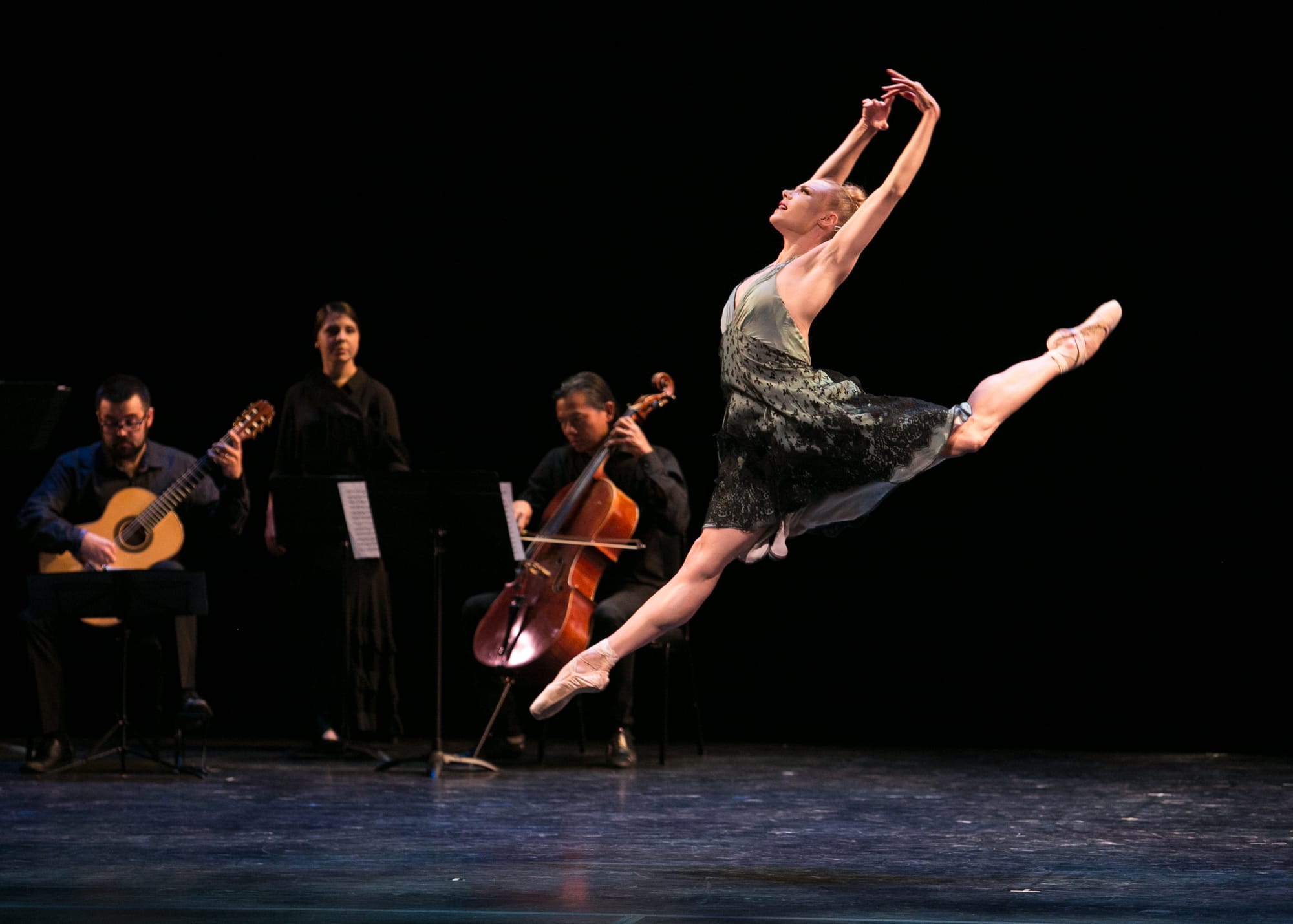
Sara Mearns, the fierce, forceful, and compelling NYCB dancer, also got a solo, Alexei Ratmansky's Boccherini-inspired "Fandango". It honored both the dancer and the on-stage musicians (the Flux Quartet augmented by a guitar and castanets). Mearns sauntered on, pausing to listen and nod to the musicians before bursting into a seemingly impromptu dance that exalted freedom, felinity, and the most eloquent back since Virginia Zucchi captivated Russia. She seemed to be performing the dance that Robbins' Woman in Green was remembering.
Music, all kinds of it, was at the center of the finale, featuring the jookin' of Lil Buck and Ron "Prime Tyme" Myles. The various musicians sat casually on the stage seeming to toss ideas around, playing music ranging from Bach to Chinese songs, while the dancers watched and listened, jumping up to swim in the sound. The mournful drone of a gaita (a Spanish bagpipe-like instrument) mingled with a sheng, a high-pitched Chinese reed instrument, while the dancers, who seemed to have ball-bearings for ankles, burst into a short of a jig, throwing an imaginary ball back and forth. It was a joyful, musical excursion which merged into a Bach violin partita.
Unlike so many dances yoking Bach to modern music (see Kylián, Elo, etc.) this didn't seem artificial or forced. The choreography (credited to Lil Buck, Prime Tyme, and Woetzel) found underlying and surprising similarities in the music, stressing the rhythms and the excitement and pure joy of moving.
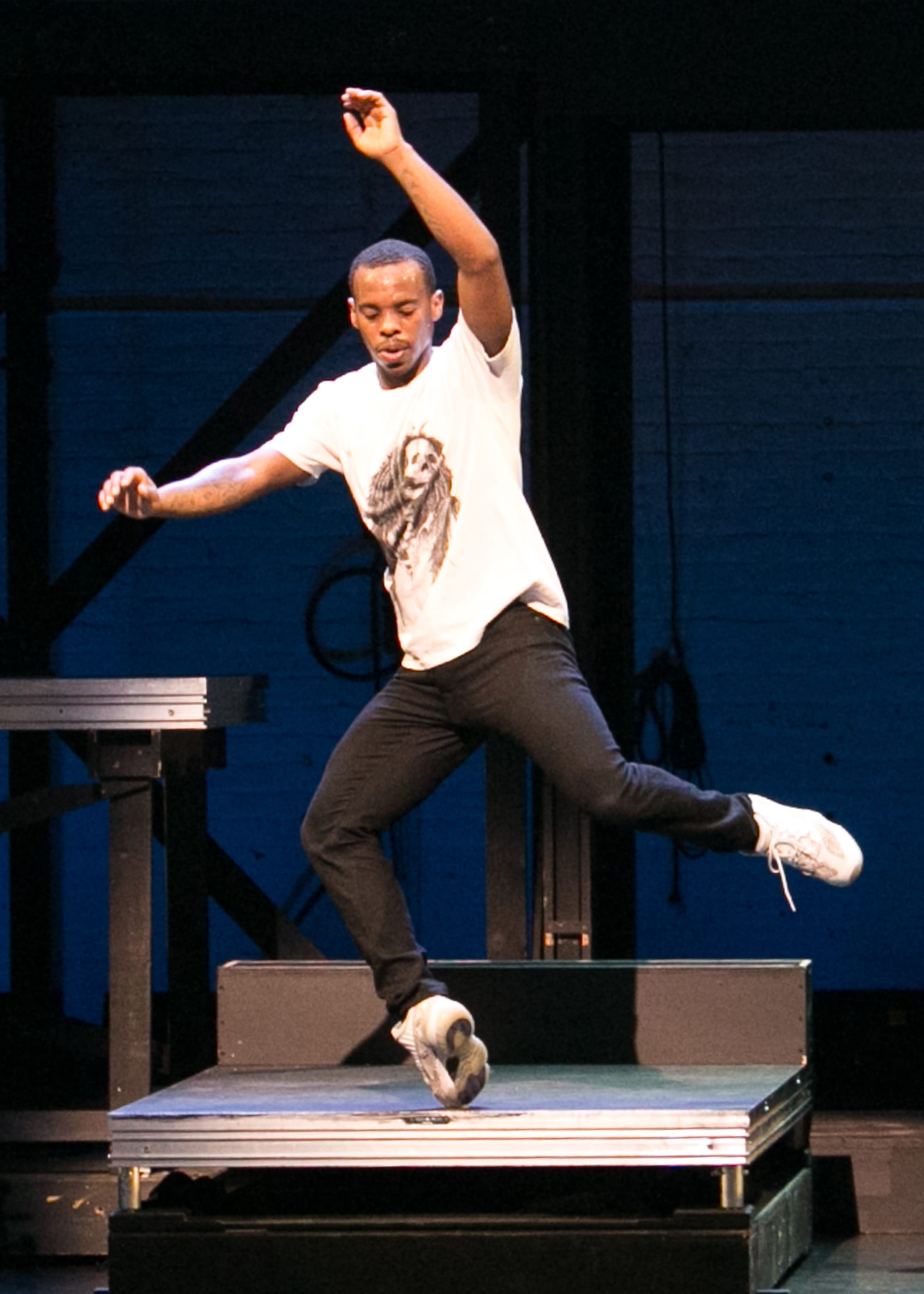
It wasn't all joy –Prime Tyme stretched through a mournful cello solo playing a Kazakh folksong, and his stylized movements seemed to float over the sound. There is something almost inhuman about the dance style which made it seem as if the dancer was an abstract distillation of emotions. The concentrated abstraction also helped make Lil Buck's "Dying Swan", to the familiar Saint-Saëns music, so magical. The dancers perked up for the final dance, though, encouraging the audience to clap along. Lil Buck is one of those rare performers who can look out at an audience and make each person fell as if he has received a personal invitation and I expect I'm not the only one thinking Vail is a fine place to visit.
Copyright © 2016 by Mary Cargill



