It's the Music
"Mozartiana", "Monumentum pro Gesualdo", "Movements for Piano and Orchestra", "Concerto DSCH"
New York City Ballet
David H. Koch Theater
Lincoln Center
New York, New York
October 4, 2024
The four ballets, three by Balanchine and one by Alexei Ratmansky, on this program were all abstract, yet each one had a distinctive flavor and emotional resonance; plotless yet nuanced, they all echoed and amplified their scores. Any story or even hint of narrative was up to the viewer to provide, yet each ballet gave the dancers room to explore.
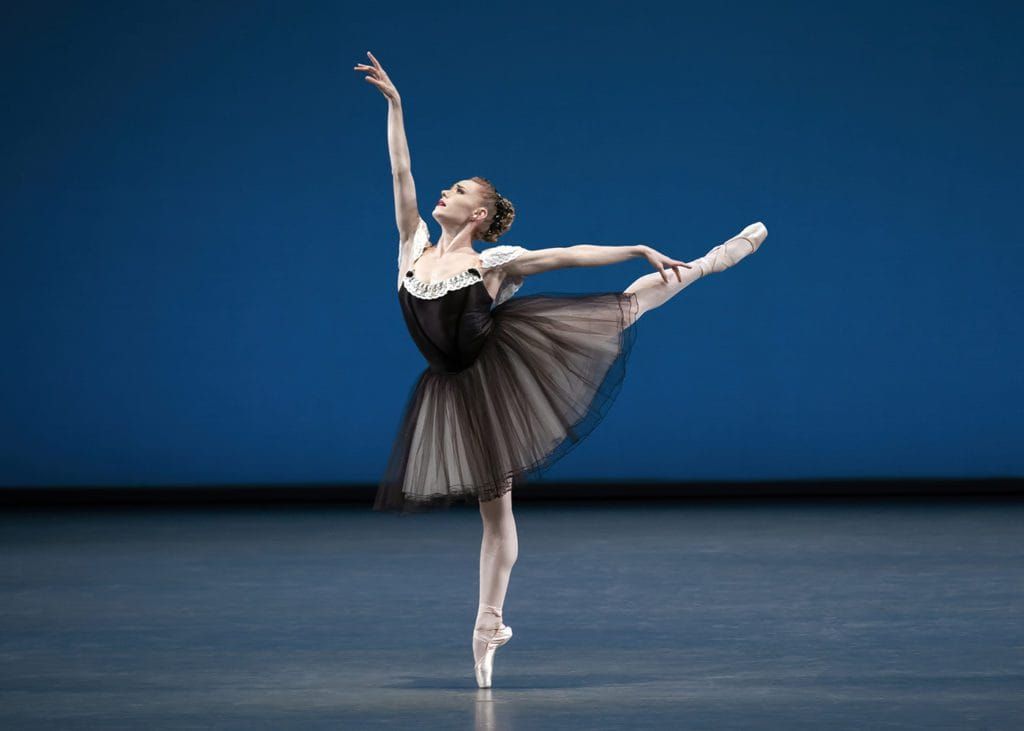
Balanchine choreographed “Mozartiana” to the orchestral suite by Tchaikovsky in 1981 for Suzanne Farrell; it was his last major work. He was perhaps looking backwards, as he had used the music in 1933 for the short lived French company Les Ballets 1933. The opening "Preghiera'', with its soulful dancer (Sara Mearns in this performance) is a hymn or a prayer to the past perhaps, or to the future, in the shape of the four little girls. Mearns was uncharacteristically subdued, dancing with a melancholy and a lack of urgency that did seem to feel like an extended farewell.
The heaviness carried over to the variations, and I missed the sharp, vivacious wit of the little steps; she was a bit muddy, her jumps often labored, and her arms an afterthought. But even Mearns at half mast is gripping, and she was able to create an atmosphere, even if it was rather dark and interior. She seemed to be dancing for herself alone and seemed barely aware of her partner, Peter Walker.
Walker is a tall and rather lanky dancer, very different from the sprightly, Danish trained Ib Andersen, the original consort. He and Farrell gave the impression of two individuals having a conversation, tossing ideas and witty remarks with ease. Walker concentrated on the steps, and his beats were impressive, but his long legs had a hard time getting around the intricate choreography.
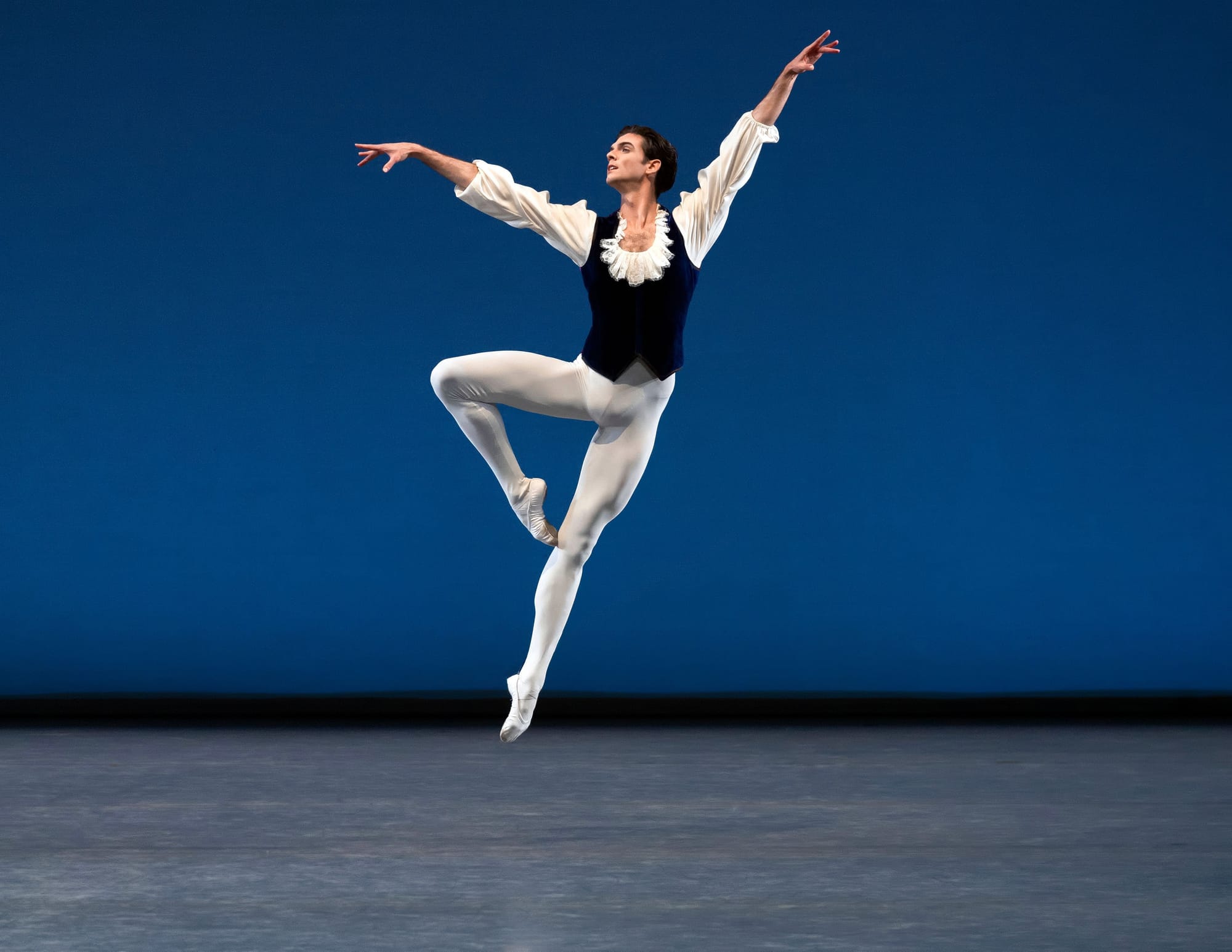
Daniel Ulbricht, who danced the gigue, had no trouble with intricate choreography, sailing through his solo with a calm upper body and flashing feet. He didn’t overplay the jokey arm movements, and it seemed as if they emerged from the music. But, for me, his persona was almost more impressive than his dancing. He seemed to be creating that world of elegance and wit through his arms, gesturing to the four tall girls of the minuet as if he were summoning them out of his imagination, bowing reverently to them, and acting as a generous master of ceremonies during the finale; he really could have been Tchaikovsky’s homage to Mozart reveling in his creations.
“Monumentum pro Gesualdo” is another salute from one composer to another; Stravinsky wrote the eight minute piece in 1960 to celebrate the 400th anniversary of of the birth of Don Carlo Gesualdo, a composer, Stravinsky wrote, who was “one of the most personal and original musicians ever born to my art". There is nothing overtly biographical in the brief ballet that Balanchine choreographed soon after its composition, but stately calm and odd, off-center moves seem to nod to the past and the present, to both the 16th and the 20th centuries.
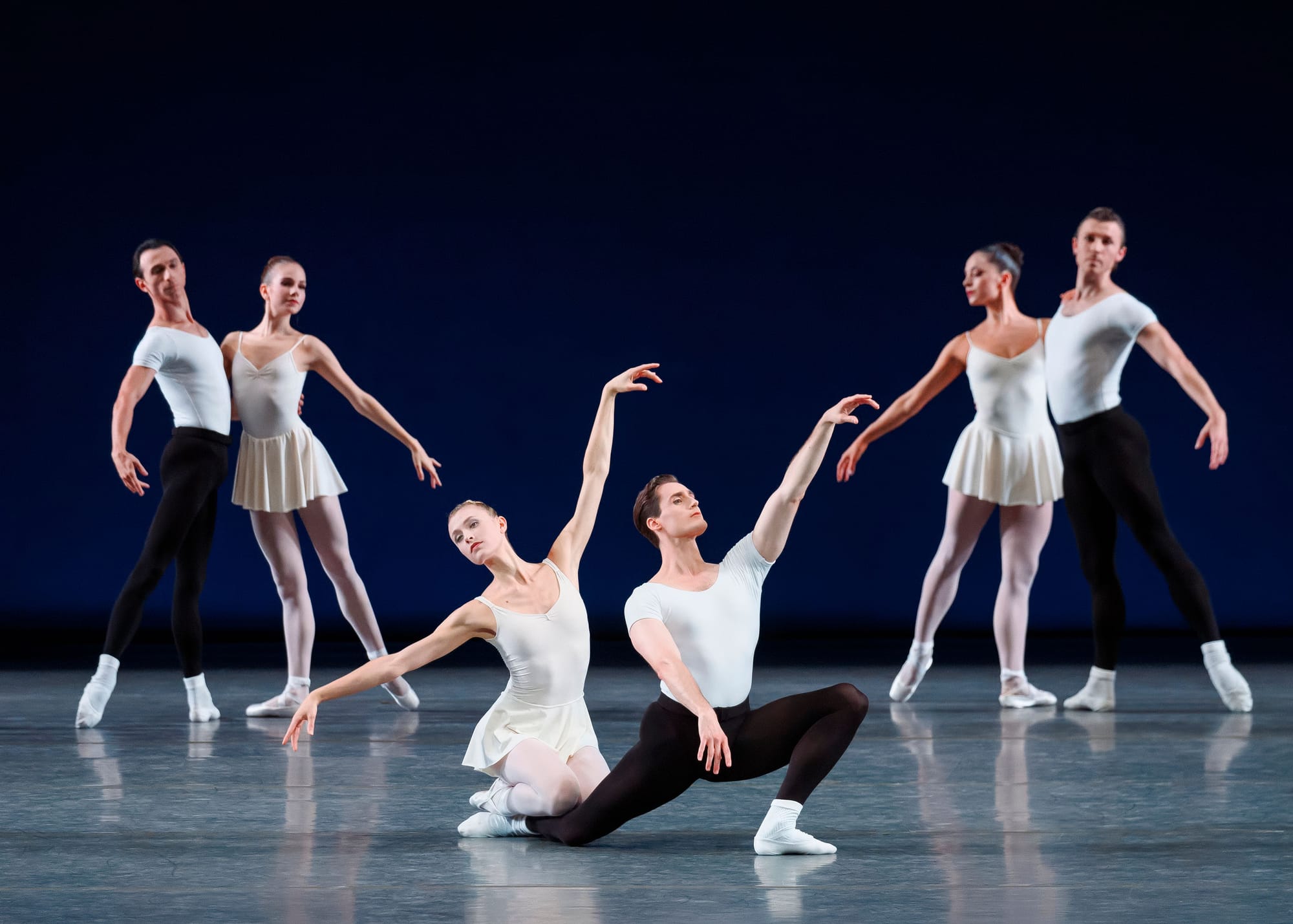
Miriam Miller and Aarón Sanz made their joint debuts as the lead couple. Miller, a tall and luminous blonde, was commanding, impassive but warm and seemingly lost in the music which oozed from her willowy arms. Sanz was a gracious, deferential partner, moving with a deliberate concentration through the shards of courtly dancing, a very modern courtier. It was an immensely impressive performance.
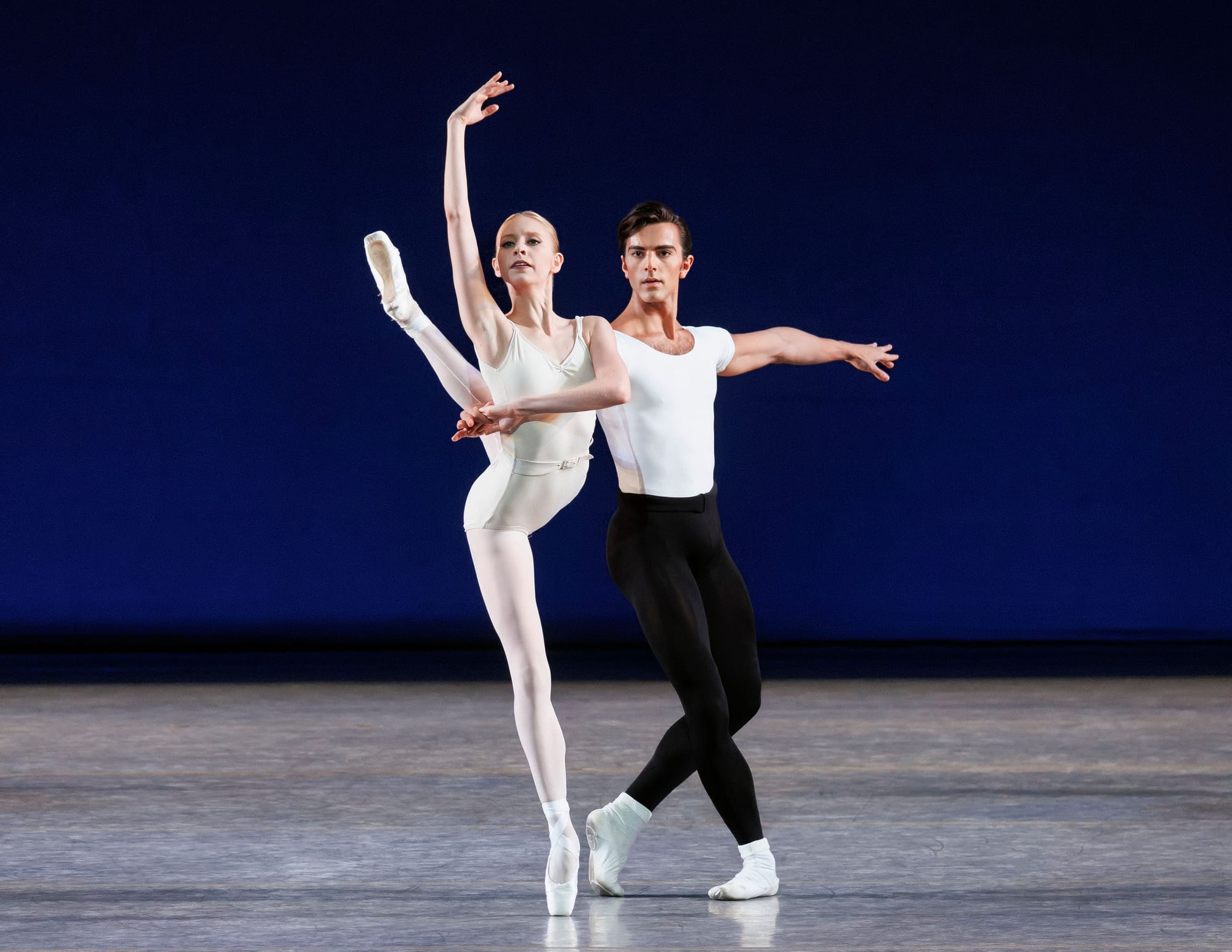
So too were the joint debuts of Dominika Afanasenkov and Davide Riccardo in the companion piece “Movements for Piano and Orchestra”, a brief, twelve-tone composition Stravinsky composed in 1959. Though Balanchine choreographed them separately for different dancers (“Monumentum” in 1960 and “Movements” in 1963), they are usually performed together and danced by the same couple, so it was interesting to see the two very different dancers in the very different parts. Afanasenkov is a vivid dancer, somewhat reminscent of Janie Taylor, and moved through the spiky choreography with nonchalance of a steel butterfly, flicking a limb out at one time, or collapsing like a rag doll at another. She gave the impression of experimenting with movement, of making it up as she went along simply for her own pleasure. Riccardo grounded her, supporting her every whim (he looks at his partner like she is the only person in the world). His elegant, fluid line and exciting jumps extended those shifting shapes; it was an exciting, hypnotic performance.
Ratmansky’s “Concerto DSCH” to Shostakovich’s “Piano Concerto No. 2”, from 2008, is a very exciting ballet and it got a very exciting performance led by Unity Phelan and Tyler Angle as the lyrical couple in green and Emma von Enck, Harrison Coll, and Sebastián Villarini-Vélez as the energetic trio in blue. Though the ballet is a technical tour de force for the principals and the fourteen corps dancers, with a whirlwind of complicated, fast jumps it has an underlying complexity that is far removed from the circus. Shapes overlap, waves of dancers surge and flow, there are hints of emotion and character; it is like a complex web woven from the music.
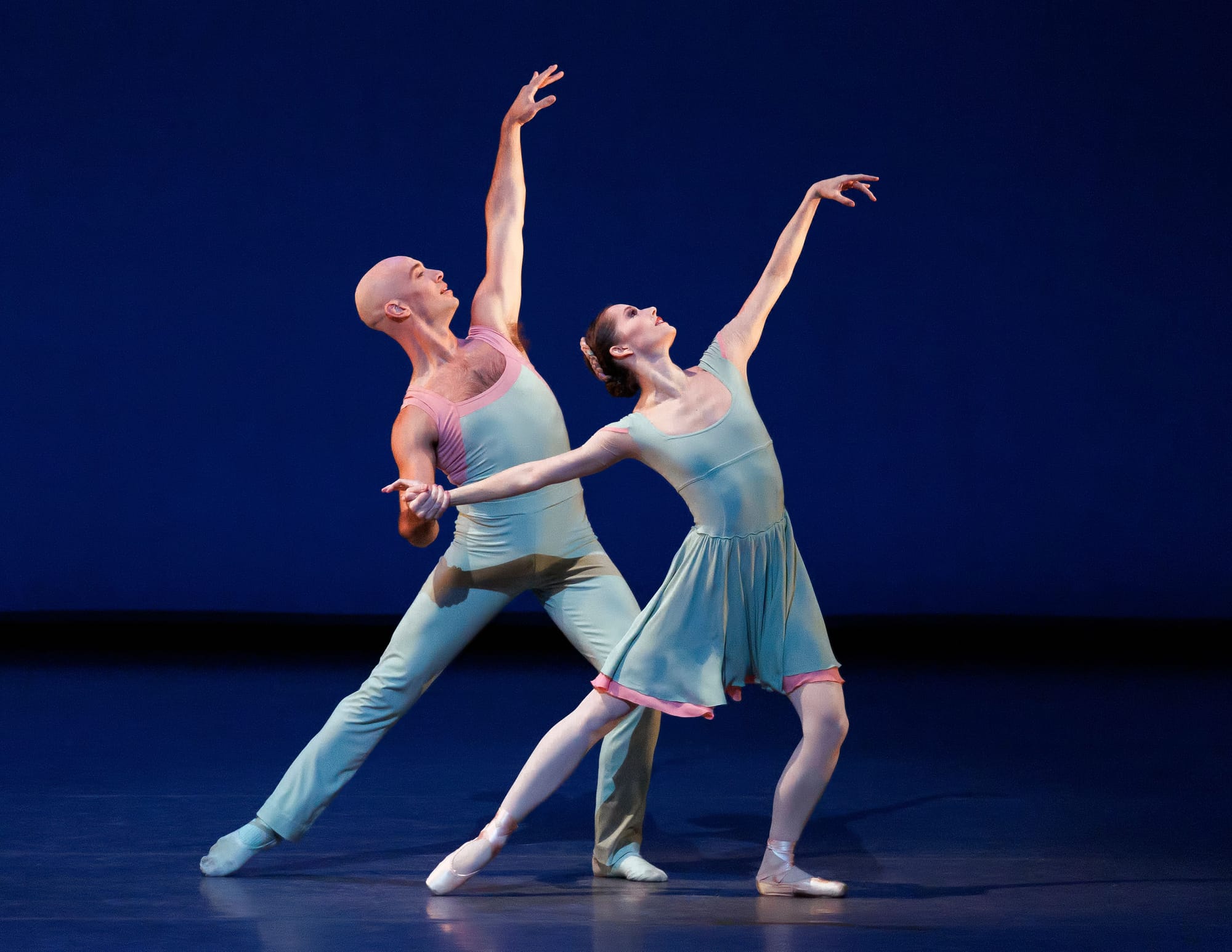
Phelan was its calm, lyrical center, floating through the second movement supported by the gallant Angle. She gave her dancing a mysterious distance, reinforced by the three other couples in the background, by turns watching or dancing in their own private worlds. Von Enck danced the ingenue role as if she were a streak of blue lightening, hurling herself at her partners like an athlete going for the gold. Coll and Villarini-Vélez matched her electric energy with their
© 2024 Mary Cargill



