It's Good to Be Queen
"A Midsummer Night's Dream"
New York City Ballet
David H. Koch Theater
New York, New York
May 29,2016
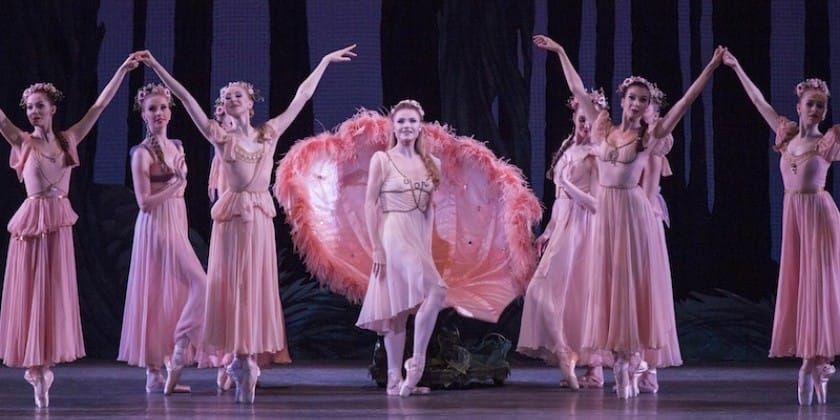
The final "A Midsummer Night's Dream", New York City Ballet's traditional salute to summer, ended the season with a flourish, with two announced debuts, Lauren Lovette in the second act divertissement and Harrison Ball as Puck (though in fact he had made his unscheduled debut earlier in the week). It also featured Sara Mearns and Gonzalo Garcia as the warring couple. Mearns was a regal and expansive Titania, combining pride and voluptuousness with a vivid stage presence. (I don't think I have ever seen a Titania who watched her handmaidens with such interest.)
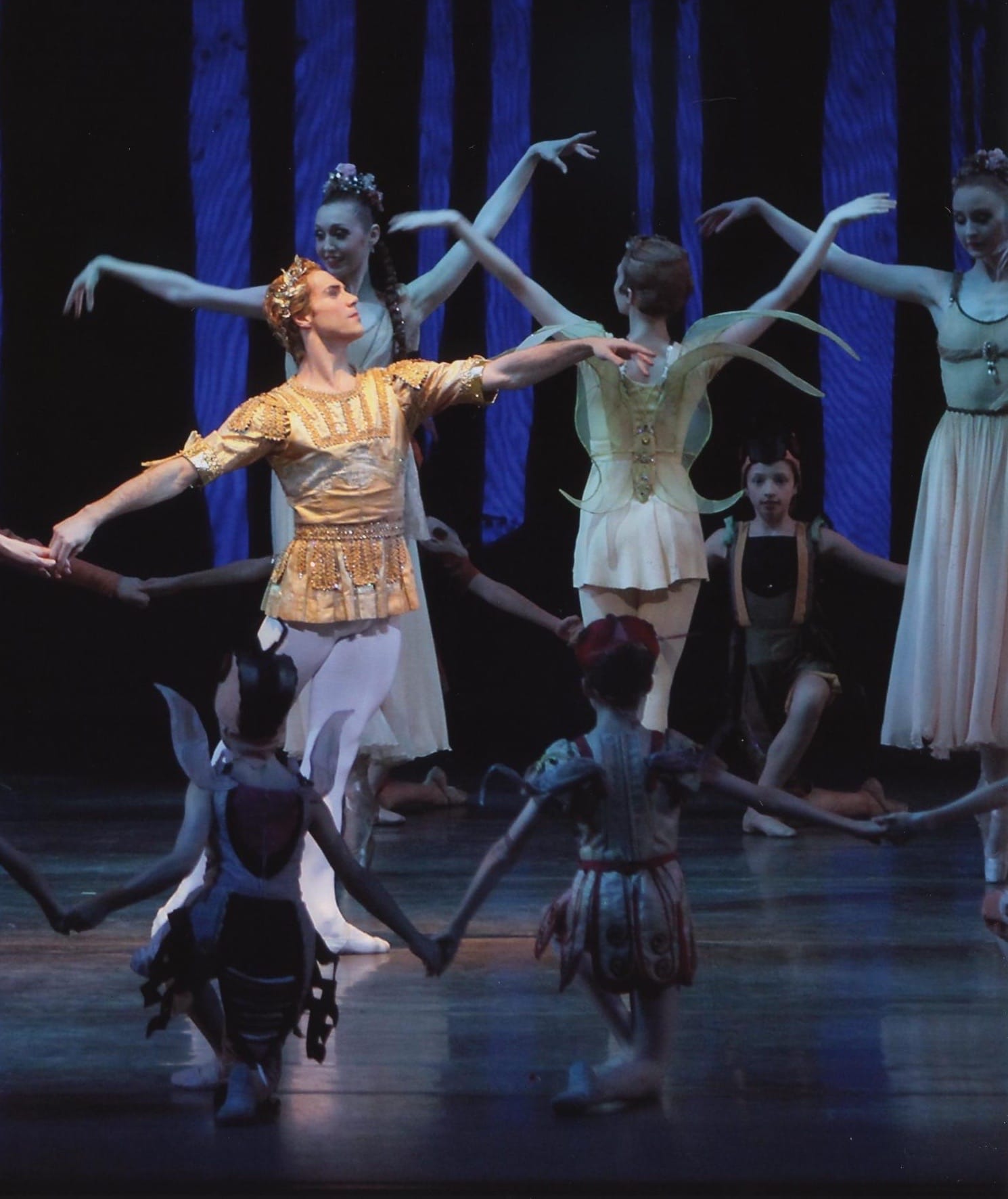
Garcia was a regal Oberon, with a beautifully articulated upper body. I loved the deliberate quality he gave his arms as he told the extremely well-rehearsed little bugs to keep on dancing. His beats, though, while clear, were not as incisive or sharp as some other monarchs, and his jumps a bit underpowered, which gave his dancing an unusual smoothness; it worked with his characterization though it was not as sparkly a performance as it could be.
There were plenty of sparks in Ball's Puck, as he seemed to fly through the air. He was a creature, mischievous rather than malicious, but slightly dangerous and a bit fierce while rearranging the mortals. Poor Bottom never had a chance. Taylor Stanley was the enchanted donkey who really preferred grass to girls. Stanley, with his impressively liquid movement quality, was a very funny Bottom, using his hands so expressively, fluttering with excitement as the sight of Titania and his body seemed to go limp with joy. His deluded imitation of a cavalier during the pas de deux was both ridiculous and touching.
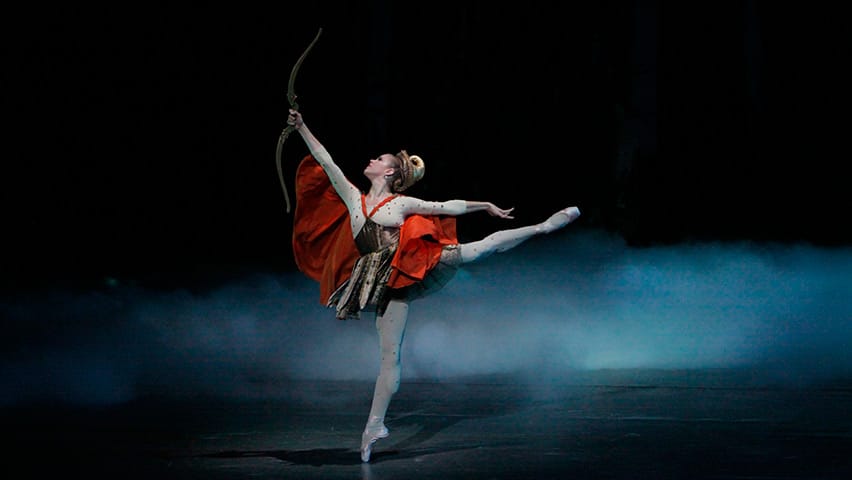
There was nothing deluded about Savannah Lowery's Hippolyta as she powered through the role. Her technique has improved markedly over the past few years, as her seemingly effortless fouettés (many double) proved. Her straightforward manner suits the role and she was vigorous and exciting. The lovers all had distinct personalities; the men (Jared Angle as Lysander and Amar Ramasar as Demetrius) were not just a couple of dolts. Ramasar had a brusque, direct approach which was a very funny contrast to Angle's milquetoast and the duel had an intensity that avoided slapstick. Abi Stafford's fatuously sweet Hermia had an uncomprehending despair that was very effective and Lauren King made Helena's walk through the forest magical, as she was watched by those invisible creatures.
The second act, which is one very well crafted but long divertissement, which only by the most rhetorical of efforts can be tied to the story, does have one magical moment, the transcendent pas de deux, danced by Lauren Lovette (a debut) and Chase Finlay. The very simplicity of the steps, mainly walking and melting arabesques which should create a mood of hushed and exalted rapture, make it difficult, as the audience must be swept up by emotion, not by technique. Lovette and Finlay were gracious, but there was no real feeling of whispered secrets. There were many beautifully shaped moments, especially the long, slow, final fall backwards, but as yet Lovette is a princess, not a queen.
Copyright © 2016 by Mary Cargill



