In Memorium
"Aureole", "Troilus and Cressida (reduced)", "Last Look", "Beloved Renegade"
Paul Taylor American Modern Dance
David H. Koch Theater
Lincoln Center
New York, New York
November 5, 2019
The second Paul Taylor Memorial Performance (the free event was given twice) included an impressive range of Taylor's works, from the sublime "Aureole", the silly "Troilus and Cressida (reduced)", the harrowing "Last Look", and ended with the new Artistic Director Michael Novak's farewell performance in "Beloved Renegade". He received a shower of flowers and a rousing ovation, as the audience seemed to unite in thanking him and the company. The final moments had the company congregating on the stage, backs to the audience, as they applauded a picture of Taylor while the curtain slowly lowered, a warm and oddly private salute to their own renegade.
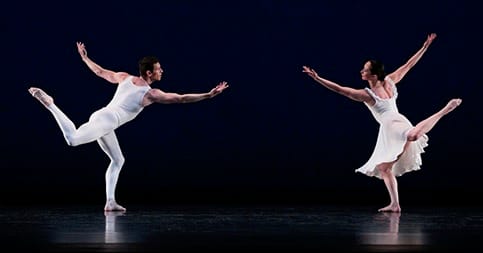
The celestially playful "Aureole" was quite controversial in the modern dance world of 1962, set at is was to the "old-fashioned" Handel, but its timeless beauty and bounding joy have outlasted the outrage. Sean Mahoney danced the male solo, originally danced by Taylor. Mahoney's long arms and loping quality gave it a low key, improvisational feel and his rock hard balances and secure turns were seamless. He danced with an impressive and quirky serenity.
Alex Clayton, new to the company and already an audience favorite, had a musical, smooth, and weighted quality in the fiendishly difficult role with the squatting jumps. He looked like he was swimming in the air, as if in that rarified place gravity didn't exist. Madelyn Ho was both playful and sensuous swinging through the music. The taller Christina Lynch Markham (serene in the pas de deux) and Kristen Draucker were equally at home in that glorious work.
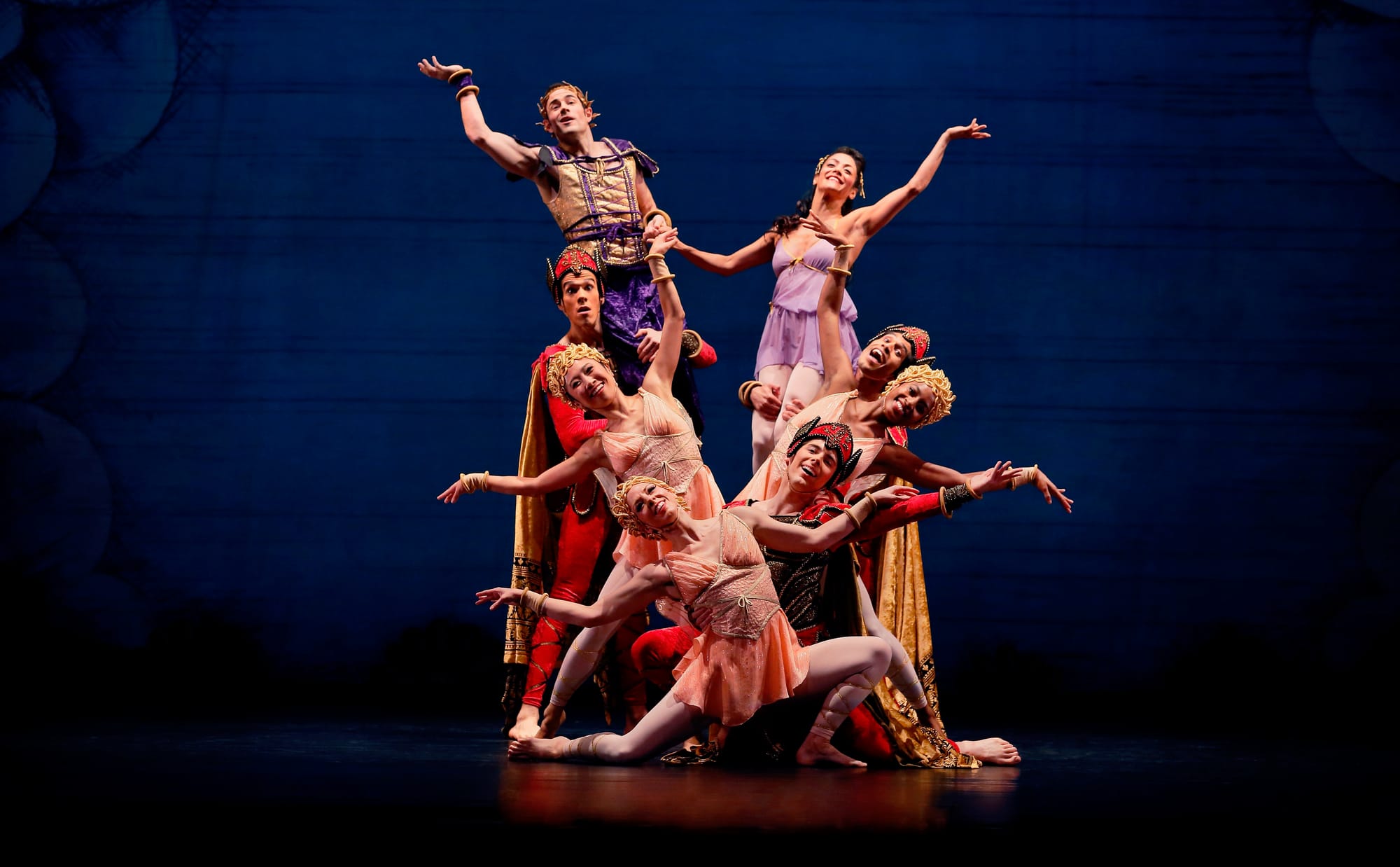
The 2006 "Troilus and Cressida (reduced)" is based, very loosely, on Shakespeare's play, based even more loosely on the Trojan War. It is set to the fluffy, melodic, and overly familiar ballet music from Ponchielli's opera "La Gioconda" (and known to those of us of a certain age as "Hello Muddah, Hello Faddah"). It is a semi-affectionate satire of nineteenth century ballet conventions, with perky little Cupids, a heroine with a habit of getting kidnapped (Parisa Khobdeh), a dim-witted hero (Robert Kleinendorst) -- both Trojans, and some energetic masked villains, called Greeks.
It is one of Taylor's raucous, slapstick pieces (the hero keeps loosing his pants). The story, such as it is, is clear and the dancing musical; the audience enjoyed themselves but it lacks the wit of some of his more sophisticated comedies.
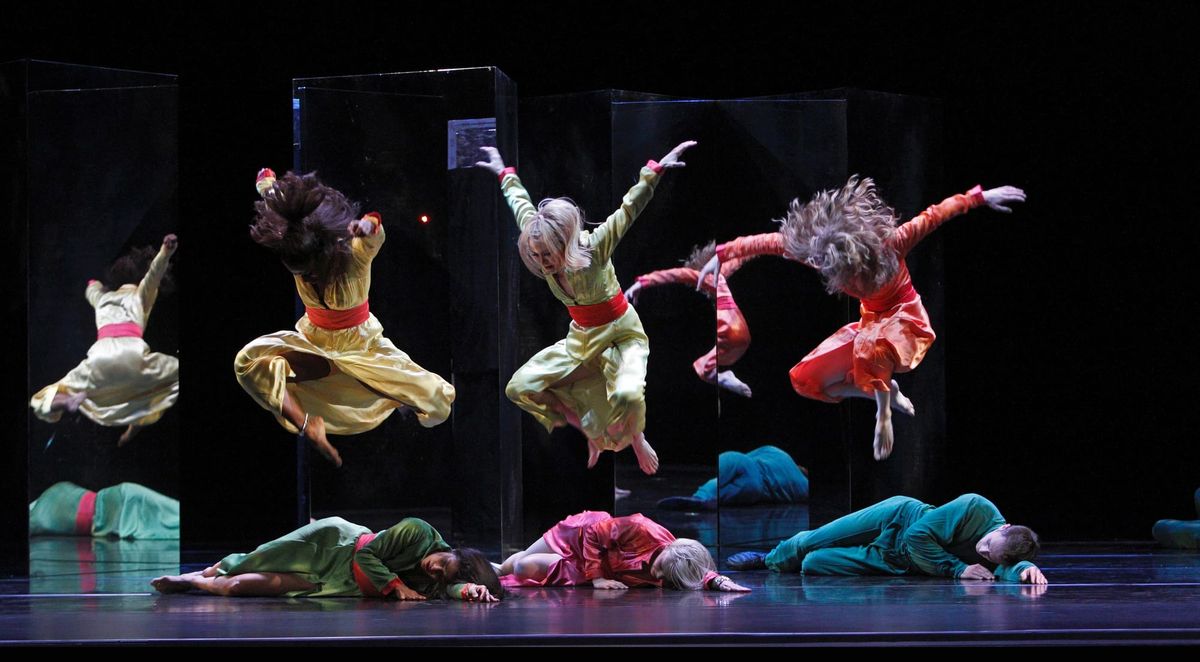
"Last Look" is Taylor at his bleakest, a vision of a colony of survivors of some unknown calamity who are barely human – tragedy has not ennobled them. Led by Kleinendorst at his powerful best, the men seemed to turn into ape-like animals, pawing the ground with a helpless frenzy. The women, though not as animalistic, were damaged as well, both victims and aggressors, as they fought among each other. Taylor gave this brutal mass brief hints of humanity, as they struggled to see themselves one last time in the dark, mirrored set, before returning to their helpless pile, with Khobdeh's arm dropped limply from the top, one last little flutter before life went out.
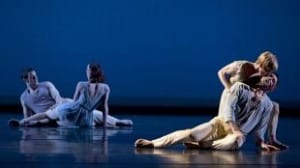
"Beloved Renegade" from 2008 is a more serene take on life and death, as Taylor, like Balanchine (with Schumann) and Ashton (with Elgar), turned near the end of his choreographic career, to contemplate an artist's life and fate. Poetry rather than music was Taylor's inspiration, and the program identified each section of Poulenc's "Gloria" with a quotation from Walt Whitman. Though the music is the "Gloria" section of the Roman Catholic mass, the work is not specifically religious and Taylor does not mimic or embroider the text. There is a sparkling dance in the fourth section ("Come children, come my boys and girls" is the Whitman quotation Taylor associates with it) as the group of five played childish games, but for most of the work, the music soared in the background as the dancers moved slowly and deliberately, as if performing a stately masque of haunting and spiritual beauty.
An isolated man in white who seemed to be Whitman or his ghost (Michael Novak, moving with a quiet and haunting dignity) wandered through the music, observing and occasionally joining the dancers. He was led by Maria Ambrose wearing a silver body stocking, whose frequent classically pure and radiant poses in attitude seemed to be modeled on the famous statue of Mercury, the messenger god, speaking of peace and resignation as she led the artist away to his final rest.
copyright © 2019 by Mary Cargill



