In Balanchine's Shadow
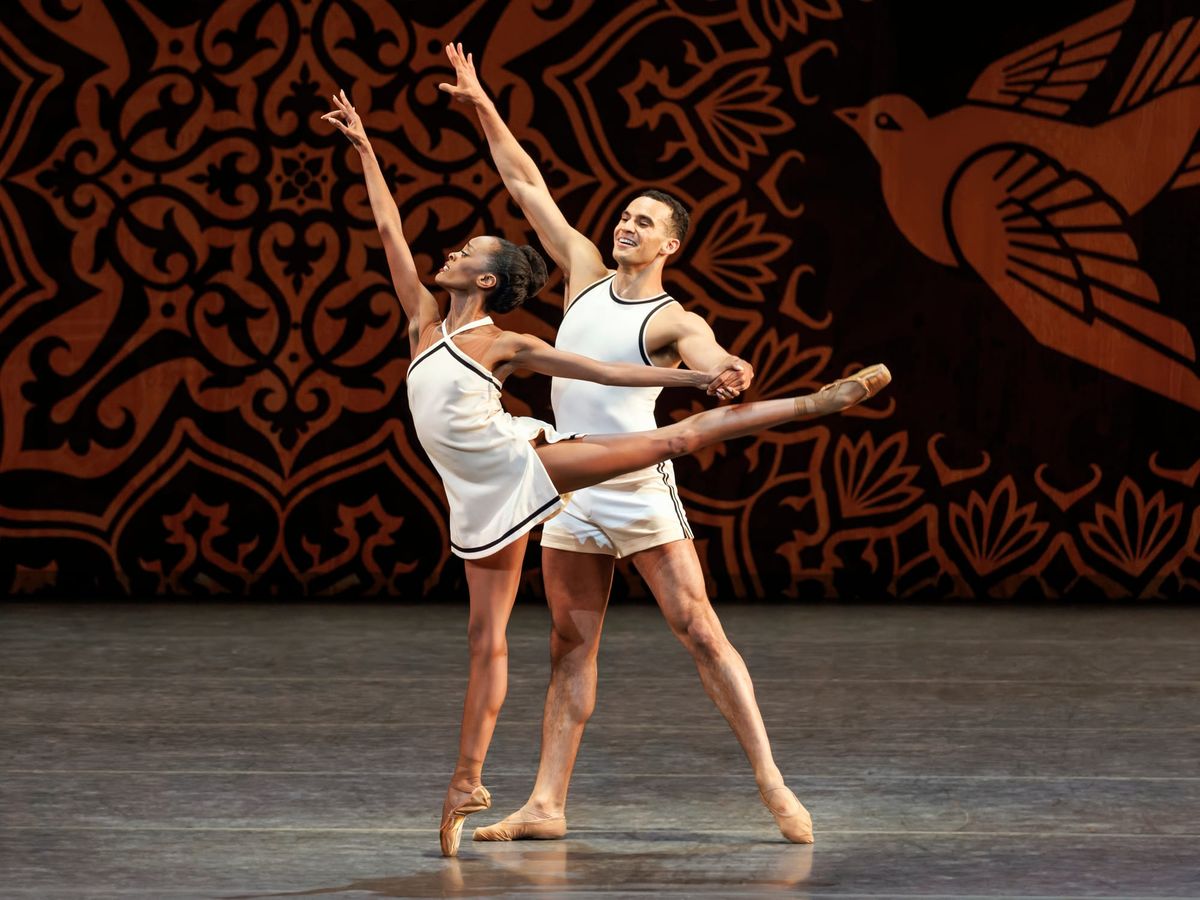
"Divertimento No. 15,” “Zakouski,” “Composer’s Holiday,” “Heatscape”
New York City Ballet
David H. Koch Theater
New York, NY
May 26, 2026
If nothing else, a program that started with George Balanchine's enthralling "Divertimento No. 15" and ended with Justin Peck's "Heatscape" showed how far away from its foundation the company has traveled with its repertory. The distance was thrown into sharp relief by what came between: Peter Martins's "Zakouski," which felt experimental by comparison, and Gianna Reisen's "Composer's Holiday," which read like little more than a playful exercise designed to showcase a particular ballerina.
The Balanchine ballet unsurprisingly stood in a class of its own, though some marked unevenness in both performance and ballerina stature kept it from full glory. Emily Kikta, replacing Emilie Gerrity in the Fourth Variation, towered over the more petite cast, and her dancing aimed larger in movement and poses – a contrast that made the distinctions between the variations all the more vivid. Against her scale, the nimble musicality of Ashley Laracey in the Third Variation, Olivia MacKinnon's feminine Second, and the sublime softness of Indiana Woodward in the dancing leading up to her Sixth felt like three different arguments for the same exquisite language. Woodward's solo in particular was a thing apart: footwork like refined pearls, the upper body lilting and soft. Of the men, Chun Wai Chan in the Fifth Variation was predictably precise, and Jules Mabie danced with calculated accenting and princely demeanor.
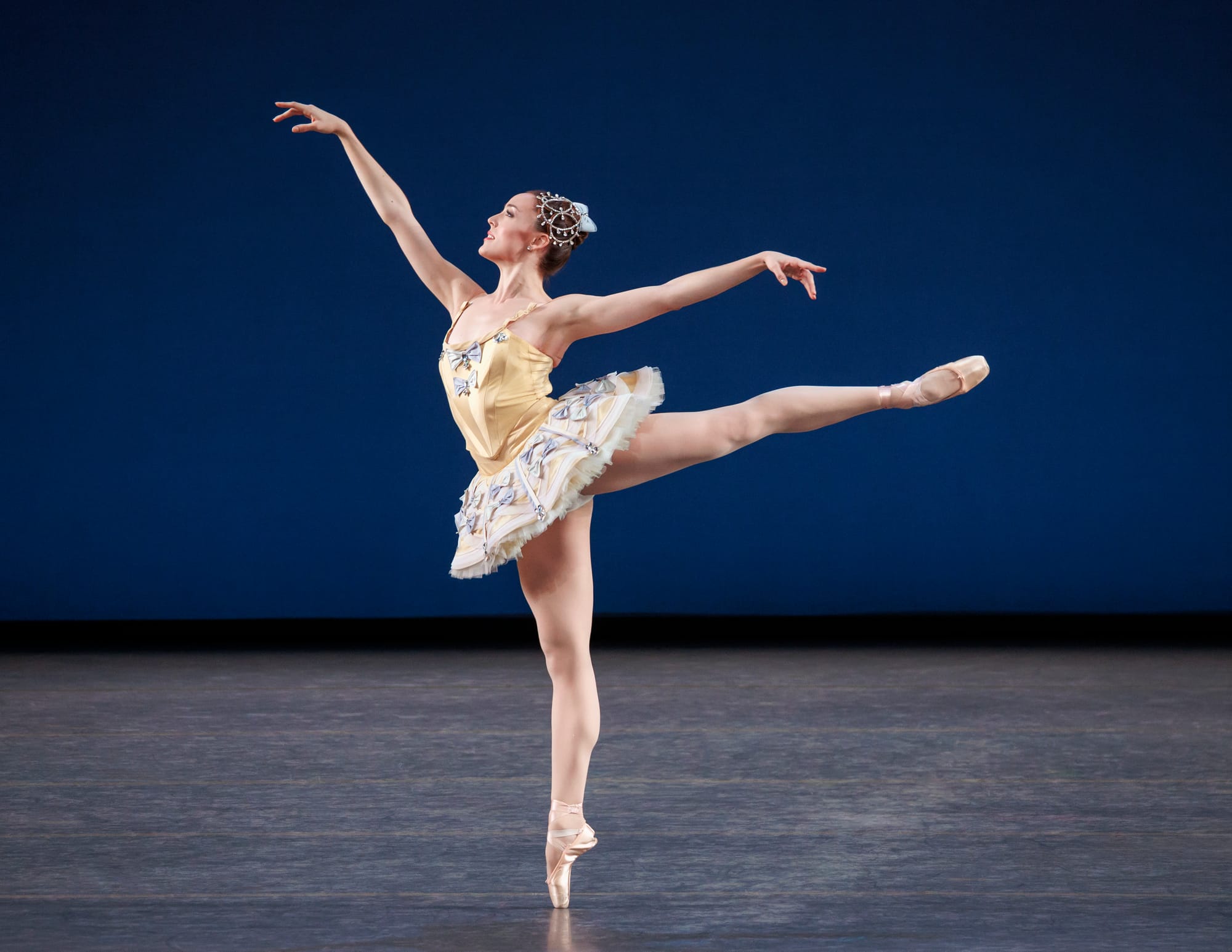
After intermission, "Zakouski" just didn't feel that appetizing. Tiler Peck danced with Joseph Gordon, and neither quite found their footing. The first movement didn't seem like a good fit for Peck, and as the work went on she lacked that Russian openness of the music and spirit. Her slaps of the leg felt violent rather than abandon-laced, though the jumps landing in plié on pointe were interesting – she executed them with a kind of curiosity about her own steps. Gordon's sense of the music was similarly flawed. His solo lacked ethnic character, though by the time the choreography afforded him turns, he came alive.
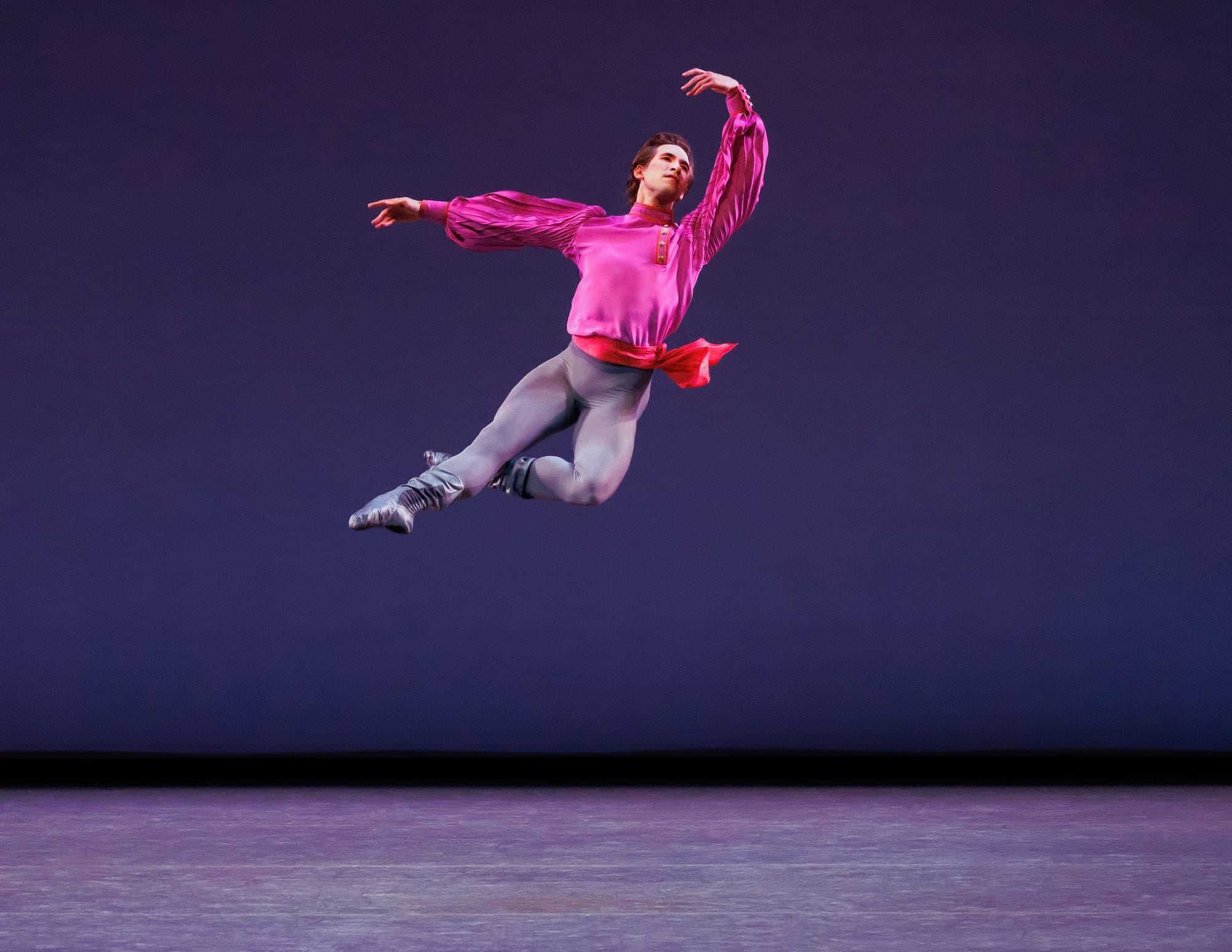
"Composer's Holiday," on repeat viewings, feels increasingly like a vehicle for Mia Williams – apparent from the very moment it opens with her dramatically suspended by three men. The steps aren't overly demanding, but what Reisen set for Williams allows just the right mix of emotional expression without requiring the ballerina to challenge herself by design. Around her, Ava Sautter was elegant in the other female role, with long penchés, and KJ Takahashi dazzled with technique among the men, easily overshadowing the far less remarkable dancing of Kennard Henson.
"Heatscape" closed the evening, and in it the leads and the corps are nearly indistinguishable – in part thanks to the fairly uniform costuming, and in part because Peck has so many of the leads dancing within the broader group for so much of the time. The effect brings a real sense of community to the dance, though that communal feeling recedes during the solos, when individuality is briefly asked to assert itself. In the First Movement, India Bradley and Ryan Tomash danced with such propulsive energy that she seemed almost too light for the ballet.
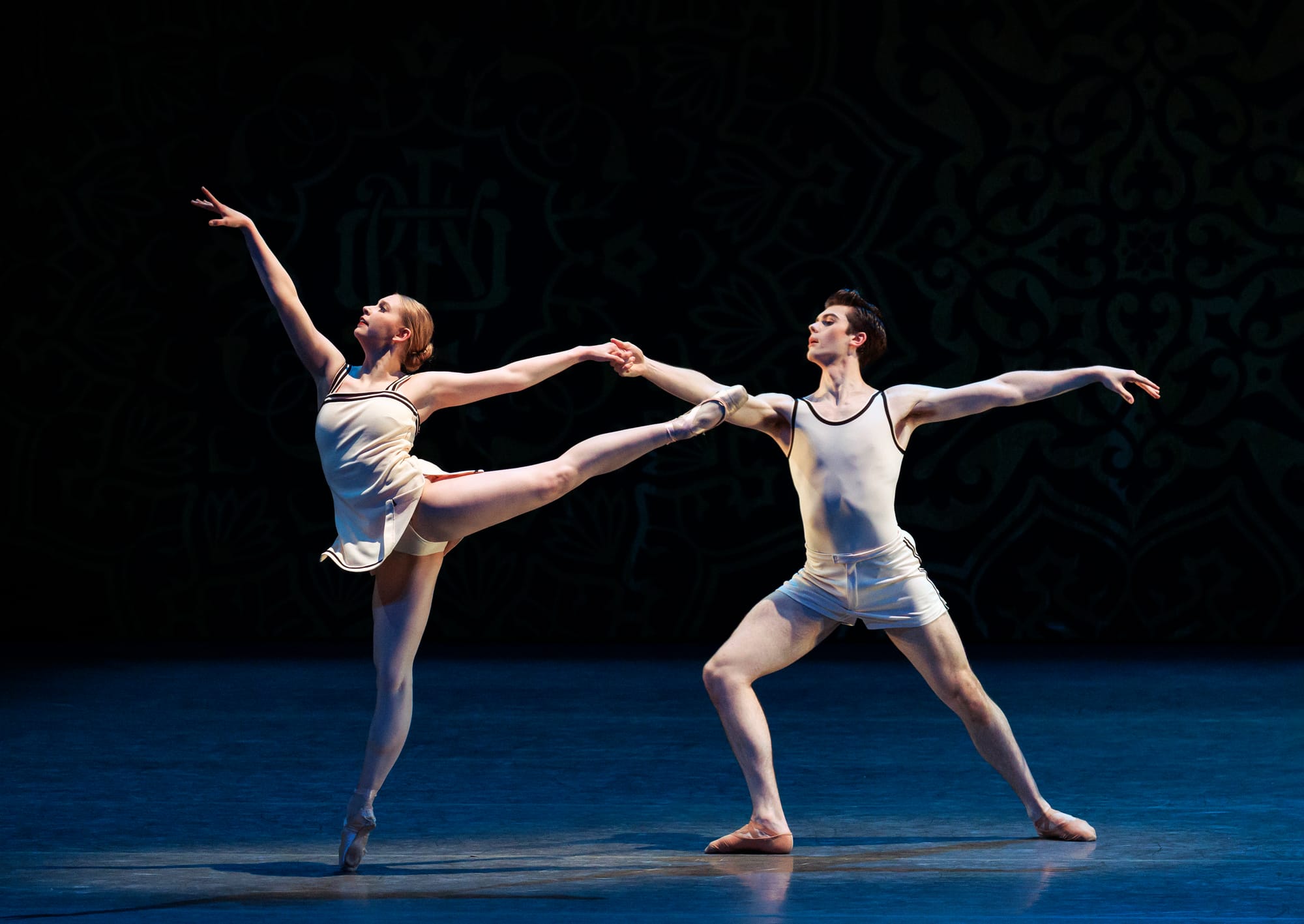
The Second Movement was noteworthy in a different way: Dominika Afanasenkov danced cleanly, reaching for the lyrical expansiveness so typical of her, but her evolving silhouette is starting to raise concerns that go beyond aesthetics – concerns made harder to ignore when Owen Flacke looked visibly strained in some of his supports. Something about this duet is unsettling either way: the connection between the dancers is interrupted by a sense of not wanting to be discovered, particularly when the dancers lie down and then periodically sit up, as if responding to a sound. In the final movement, Naomi Corti, David Gabriel, and Mabie got the dancing just right – playful and light where the dancing called for it. It could have been enough, but Balanchine cast the longest shadow of the evening – and everything that followed had to dance in it.
copyright © 2026 by Marianne Adams



