Improvising With Fire
“Improvisao”
Farruquito
New York City Center
New York, NY
March 10, 2016
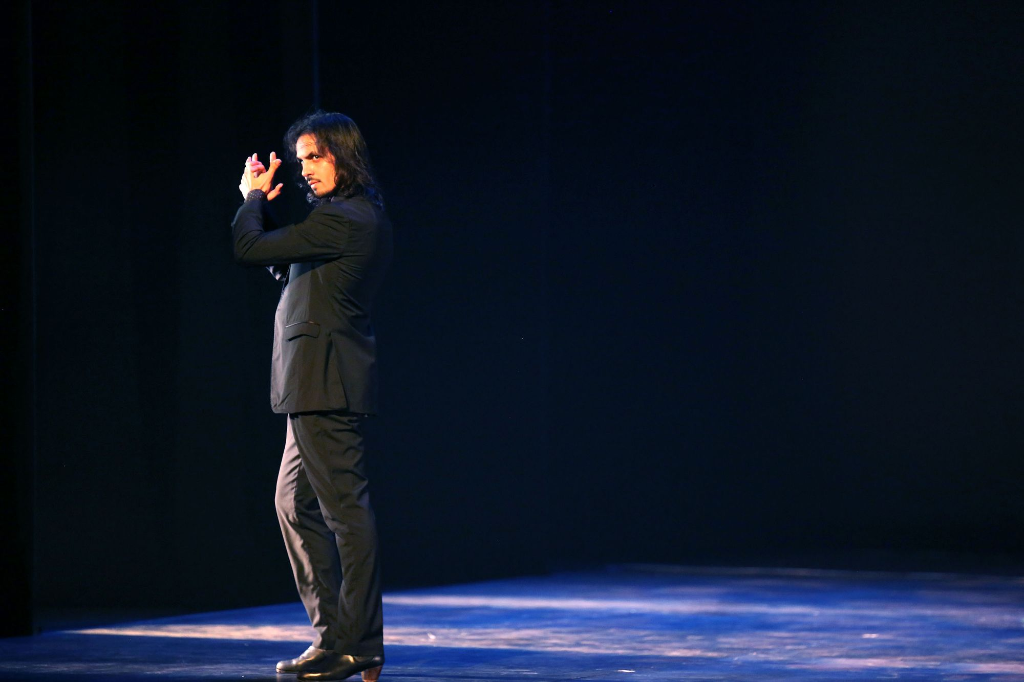
The New York audience hasn’t seen him in 13 years, but from the first tap of his foot Farruquito did everything to make those in the hall glad they came to witness his return. His "Improvisao" was purposefully stripped down, designed to present flamenco in its pure, back-to-basics form. There were no sets, storylines or pre-determined choreography to embellish, or encumber, the performance, leaving Farruquito with few theatrics, but plenty of room for fiery drama.
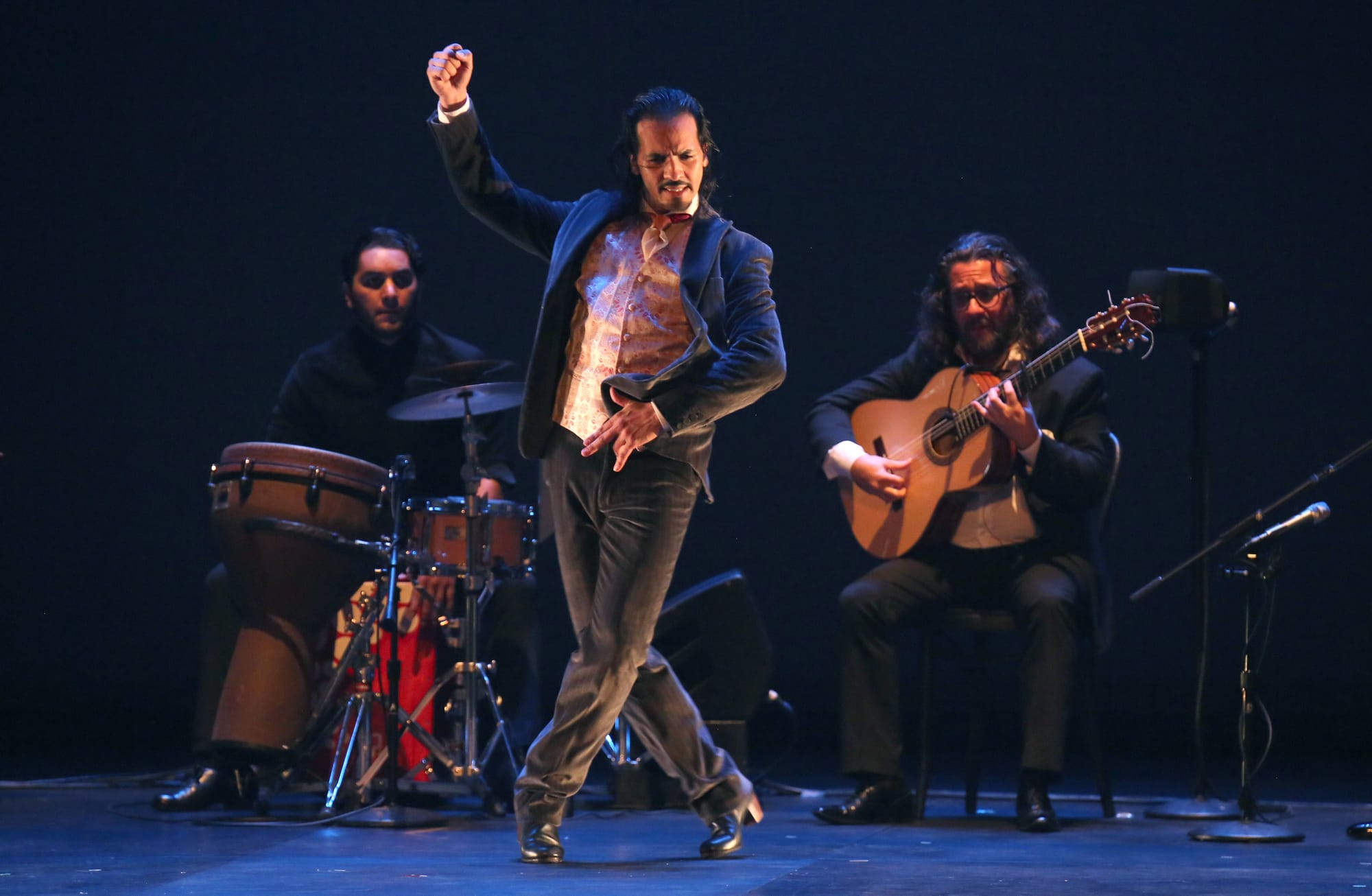
The complex intensity of his dancing was ushered in by the 3 musicians (Jose Galvez, Roman Vicenti and El Polito) and 4 singers (Encarna Anillo, Pepe de Pura, Mari Vizarraga and Antonio Zuniga) who shared the stage with him for most of the night and set the tone for the experience. One by one they appeared in a spotlight along the stage back, as though near a camp fire in the night. They lead off with the thrumming flamenco melody of the guitar and toque, then percussions, then vocals, weaving the fabrics of these sonic elements to a radiating crescendo to which Farruquito blazed into motion from the bottom of the stage.
From the outset there was wildness in his interactions with the singers as he measured them, assessing his responses to their voices, echoing and interacting with their music. Farruquito's steps were raw, unabashed and unannounced – he moved from feeling to feeling in his introduction and the rest of the semi-improvised show. His dancing was fiery, moody, temperamental, at times restrained and pensive, at others unexpectedly eruptive and flamboyant. Amid all that, he maintained a firm and expertly grasp of flamenco rhythm, maneuvering this core feature of the dance form in just the right way to give his expression the temperature he desired.
In many ways, Farruquito’s excellence wasn’t surprising. He comes from a long line of Gypsy dancers, and has been viewed as the heir to that tradition, and particularly his legendary grandfather, the great El Farruco, since the times he appeared on stage with him at the age of 5. Now 33, the dancer has paved his own path and continues to earn himself many commending epithets – Charging Bull, Eagle, Gypsy King – but his fierce style, and much of his dancing philosophy, stems from the tradition of his distinguished bloodline.
Heritage, along with a range of complex personal experiences, also plays a role in his mastery of duende – the non-physical building block of flamenco that gives the dancing an emotional charge. Flamenco purists believe duende to be the embodiment of soul that performers channel to convey the pride, passion and suffering deeply embedded in their lineage. It is the cumulated whole of past experiences that gives the dancing its intensity, if the performer could tap into it as Farruquito does so well. Whether what fuels his dancing are the experiences of suffering when he lost his father, and, in grief, stopped dancing, or the infamous hit-and-run manslaughter conviction that in 2006 landed him in Spanish jail and away from the stage, or something more mystical and deeply embedded, the effect was sweeping.
With each time he took the stage, slow, subdued taps exploded into eruptive movements, with legs swinging, arms flailing, uncontained. The freedom in his dancing was remarkable, and almost tricked the eye. The way he held his back upright read not as traditional flamenco prescription that demands that stance, but as yet another form of expression – of his dignity, fortitude and sense of self-worth – it was counterbalanced by the untamed movement in his feet which he allowed to flow freely upon the stage, giving the audience a full picture of himself, an insight into his character. He stopped often, sometimes to call on and soak up the audience’s applause, at other times to feel the next wave of emotional charge he was going to give his audience.
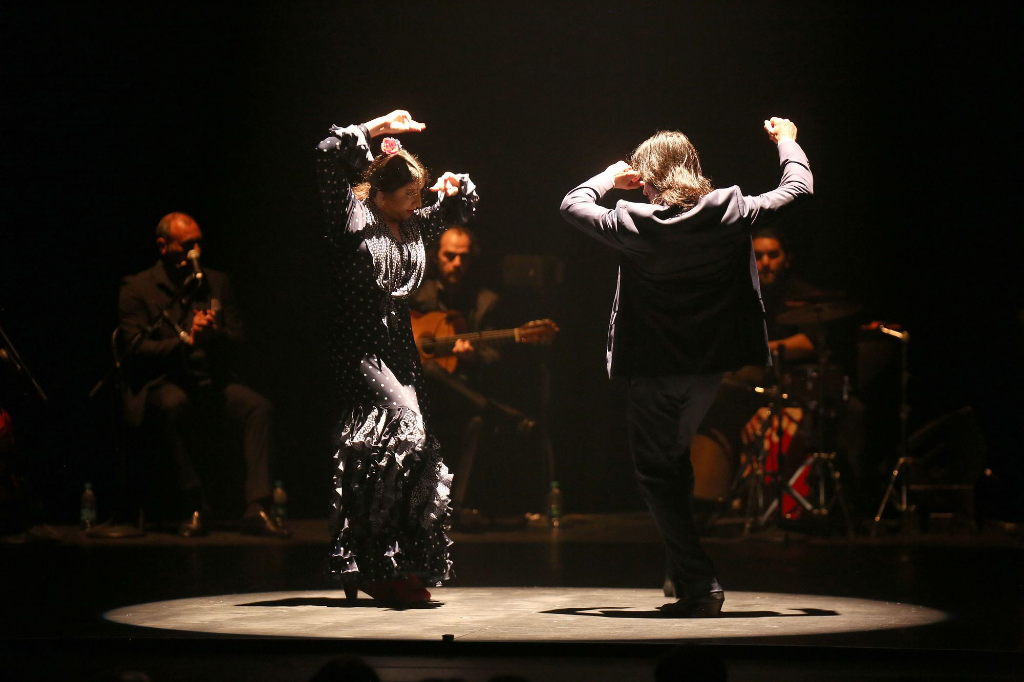
The female guest artist, Gema Moneo, who periodically replaced Farruquito on stage, sought to match the style of his footwork, if not his zeal. But while her dancing had its moments, like the solo toward the end of the program where she was captivating with her slow and subdued footwork, her dancing was at best a simmering fire next to Farruquito’s blazing flame. It was most apparent in a scene where the dancers performed together, reciprocating each other’s steps in a dialogue of similar movement but not necessarily the same story.
The show’s focus on improvisation and simplicity, taking the dance to its roots where the flamenco experience may have been happening around a fire outside, or in a café, gave it a rare quality of authenticity. There was a fierceness, a freedom, uncaptured and untamed on the New York City Center's stage. And why ask for more?
copyright © 2016 by Marianne Adams



