I am Woman
"KaitlynCaitlin", "Take...Taken...Taking", "The Air turned White", "The Book of Esther: The Journey of Queen Vashti and Queen Esther"
Ariel Rivka Dance, with Texture Contemporary Ballet and Trainor Dance
Ailey Citigroup Theatre
New York, NY
Three comparatively new companies shared the Ailey stage in an interesting and varied program, and the cast, with one exception, was all female. "KaitlynCaitlin", choreographed by the modern dancer Caitlin Trainor for herself and the ballet dancer Kaitlyn Gilliland, opened the program. I enjoyed this when I saw it at Riverside Church last November, and it looked even better on the well-lit and more intimate Ailey stage. It is an interesting compare and contrast piece, with Gilliland, formerly a City Ballet dancer, floating more lyrically through the same moves done by the more forceful and grounded Trainor. The piece had a dead pan, improvisational humor, as each dancer stayed in her own world, apparently oblivious of the other. There was no winner or loser; this was not a competition, but rather a free and easy exploration of different types of movement.
Trainor's "The Air Turned White" was a solo for the choreographer, or rather a dance for her and shards of her filmed image projected on a shimmering white backdrop. At times there seemed to be a third element, and she used her long thick hair to project a powerful femininity and innocent sensuality; it was a beautiful and unusual piece.
Alan Obuzor's "Take...Taken...Taking...", for all the passionate commitment of the dancers, was not unusual; it was a somewhat overwrought examination of angst to Philip Glass, as Obuzor and Alexandra Tiso, with three fate-like supporting dancers, did various silent screams, frantic runs, and floor crawling. Obuzor, a very appealing dancer, had a long solo, a tour de force of controlled energy that seemed to say "Oh woe is me" in every possible way.
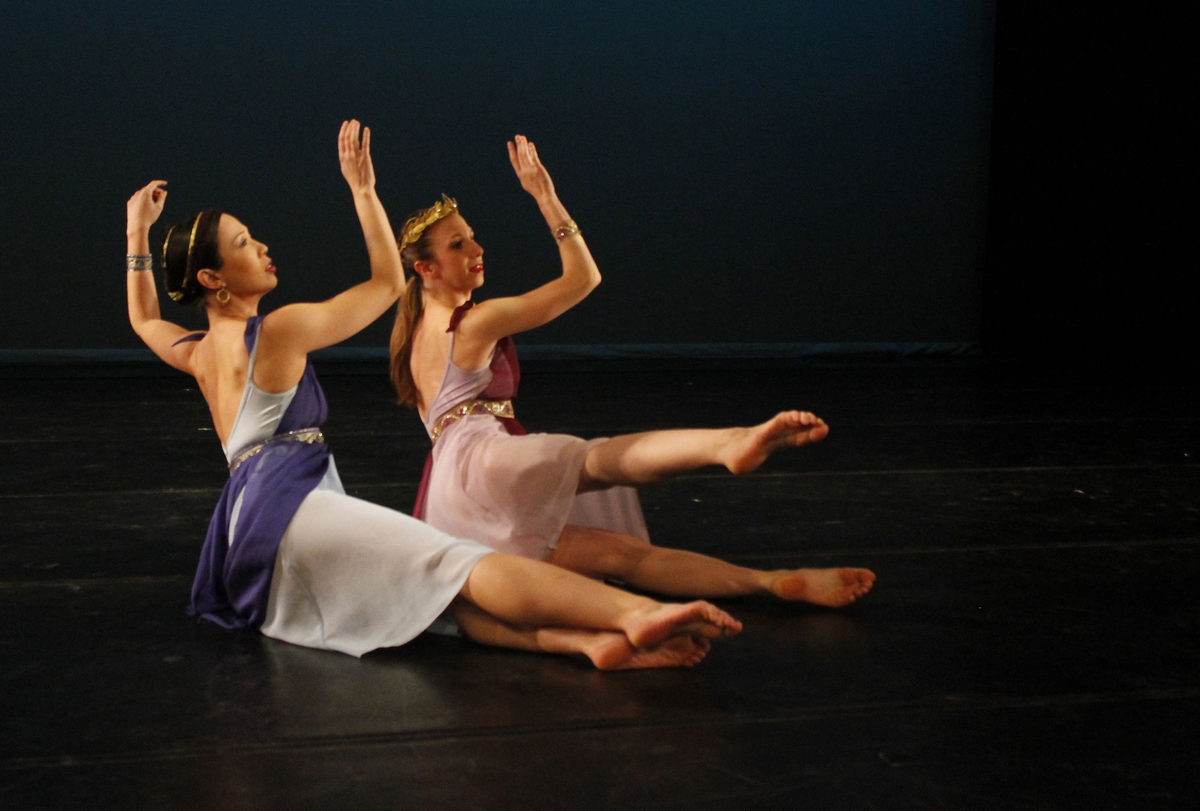
Ariel Grossman's "The Book of Esther" is another examination of woe and struggle; it is an expanded version of her "Vashti", performed a year ago. The choreographer has added a few surtitles for a backdrop, briefly illuminating the story, for those of us not up on our Old Testament. These set the scene, but the restrained and powerful choreography carried the mood. Hana Ginsburg Tirosh again danced the defiant queen with a powerful and concentrated dignity, making the small gestures carry a great weight. Grossman, like Tudor, doesn't force facial expressions, and the meaning and power come from the stylized hints of emotion--no silent screams or extraneous flailing.
I do think the Vashti portion was more effectively told than Esther's story; Esther had more narrative to go through which tended to be a bit literal, and the strength of the opening section was its ability to dig into feelings and reactions. King Ahasuerus doesn't appear, his lecherous and dangerous presence is just indicated by the dancers looking offstage into the light, but Grossman brings on Haman, danced by Danita Shaheen in red knickerbockers. Evil is hard to dance convincingly (as all those silly, prancing von Rothbarts of current "Swan Lakes" prove) and though Shaheen tore through the energetic choreography, glares and jumps were not as frightening as Ahasuerus' unseen presence.
Esther, Claire Cholak, had an unassuming, diffident air, which made her final resolution, where she seemed to expand and grow, all the more powerful. Vashti was there to encourage her, a bit of feminist wishful thinking, I expect, but this added to the final triumph.
The live music, composed for the piece by David Homan (Grossman's husband), was a major contribution to the piece. It was melodic, atmospheric, and varied, with hints of Jewish cadences (echoed by the handmaidens' line dances); the clarinet solo introducing Rachel was especially effective in evoking the sweet, isolated young girl. But Vashti, with her powerful renunciation of the crown, towered over the evening.
copyright © 2014 by Mary Cargill



