Homecoming
"Square Dance", "Prodigal Son", "Stravinsky Violin Concerto"
Pacific Northwest Ballet
New York City Center
New York, NY
February 25, 2016
The Pacific Northwest Ballet returned to City Center with an all-Balanchine program, a vote of confidence, perhaps, by their director, Peter Boal, who obviously believes that his dancers can stand up to comparisons with the home company. This confidence was certainly justified and the company looked well-rehearsed, at ease and dynamic. Boal has inculcated a remarkable style, devoid of mannerisms and artifice, modest and rhythmically acute, all adjectives that applied to his dancing, and the audience, which included a number of current and former City Ballet dancers, applauded warmly.
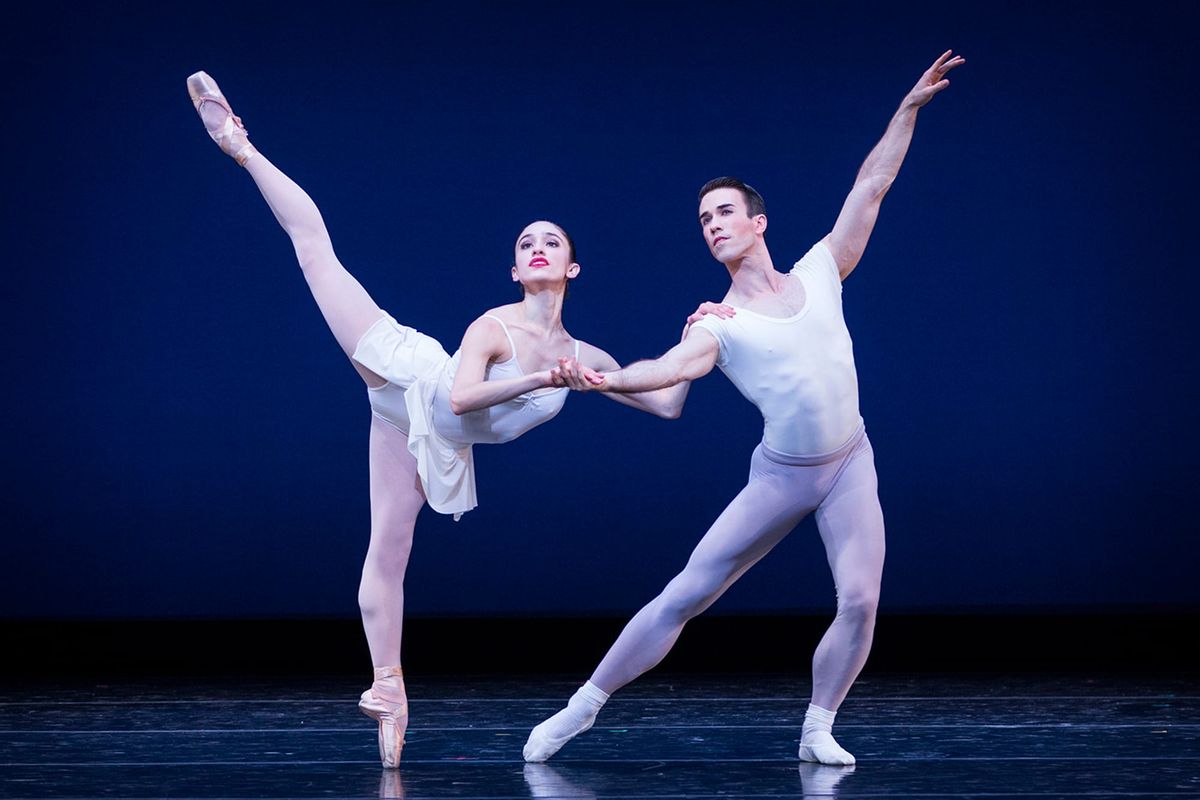
"Square Dance" was originally choreographed for the City Center stage, though the company dances the 1976 version. Staged by Boal, it made a sparkling opening and looked scrupulously rehearsed, precise without being overly careful. The corps really looked at each other and seemed to be a group of friends having a very good time.
The lead couple, Leta Biasucci and Benjamin Griffiths, were equally dynamic. Biasucci is a powerhouse with ankles of steel and an allegro heart. I missed the hints of mystery, of secrets shared in the pas de deux but her dancing was thrilling. Griffiths showed a luxurious plastique combined with an understated graciousness. His solo was a bit more stop and start that we usually see, making it appear to be a collection of impromptu thoughts and urges rather than a smooth elegiac memory; I found it very moving.
Boal also set "Prodigal Son". James Moore was beleaguered upon hero. I interviewed Boal several years ago and he described being coached in the role by Jerome Robbins (Balanchine had revived the 1929 ballet for Robbins in 1950). So, though "Prodigal Son" is 85 years old, Moore is only two stops removed from the choreographer, a remarkable chain. Boal said that Robbins stressed the need for simplicity and directness, especially in the final crawl home, lessons which Moore has clearly absorbed. Every gesture resonated, and he had a stylized naturalism that let each distinct emotion, from rebellion to curiosity, despair, and redemption, show clearly without extraneous flourishes. It was both individual and timeless.
His Siren, Lesley Rausch, used her long legs to maneuver through that treacherous cape, but she couldn't quite muster the cold, soulless rapaciousness of that one-dimensional but hypnotic creature. Her arms were a bit shapeless and lacked the feeling of two snakes moving on their own which helps give the role its exotic sensuality; she was too innocent and too human.
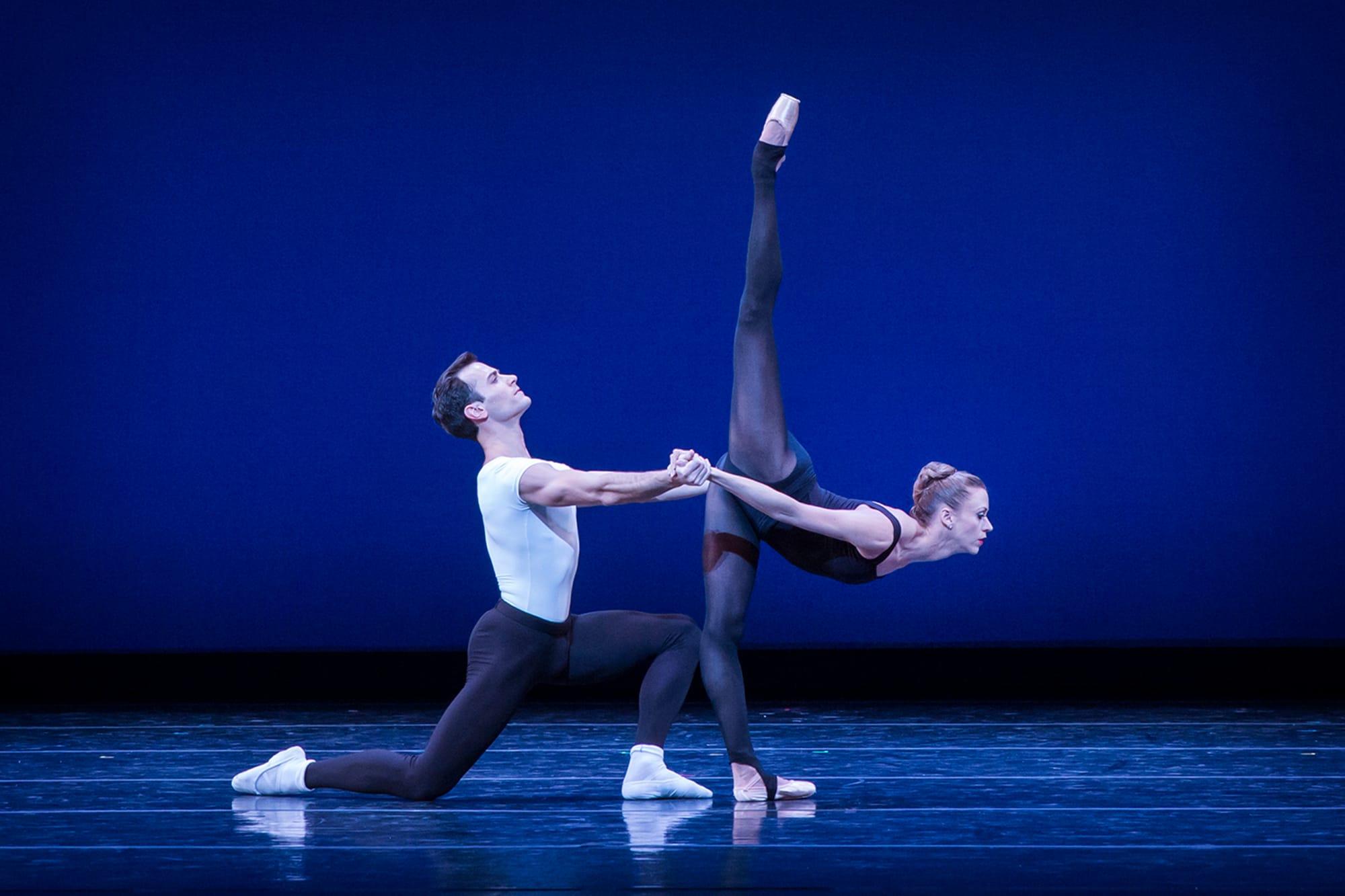
This same warmth, though, helped illuminate "Stravinsky Violin Concerto" staged by Paul Boos and Colleen Neary) where she could luxuriate in her airy, effortless jump and rhythmic sensitivity. She, with the elegant Jerome Tisserand, danced the first pas de deux. She made the movement mysterious rather than gymnastic and oozed through those odd shapes as if she were searching for something.
Noelani Pantastico, with Seth Orza (looking as strong and noble as he did in his City Ballet days) danced the second pas de deux and she too found her own way into the role. She used her strength to close herself off, almost resisting her partner, and the final backbend looked resigned rather than submissive, as if she were giving something up. It was an imaginative, individual and thoroughly engrossing performance.
The folky finale was a burst of joy. Everyone danced to the hilt, especially the corps men in the synchronized, full-blooded, fearless pas de chats vole. Unlike "Square Dance", "Stravinsky Violin Concerto" was choreographed for a larger stage but this performance proved that there are many details that gleam when seen up close, and the company made it seem like so much fun.
Copyright © 2016 by Mary Cargill



