Homage to the Queen
"Allegro Brillante", "Swan Lake", "The Four Temperaments"
New York City Ballet
David H. Koch Theater
New York, NY
January 31, 2017
The well-balanced, all-Balanchine program wasn't given a name by the marketing department, but it could have been called "Salute to Maria Tallchief", since both "Allegro Brillante" and "Swan Lake" were choreographed for her and Sanguinic in "The Four Temperaments" was one of her important roles. Tallchief was a dancer of power and majesty, characteristics which, in their own ways, the evening's dancers understood. There was fine dancing, a notable debut (Sterling Hyltin in "Swan Lake") and a few misses.
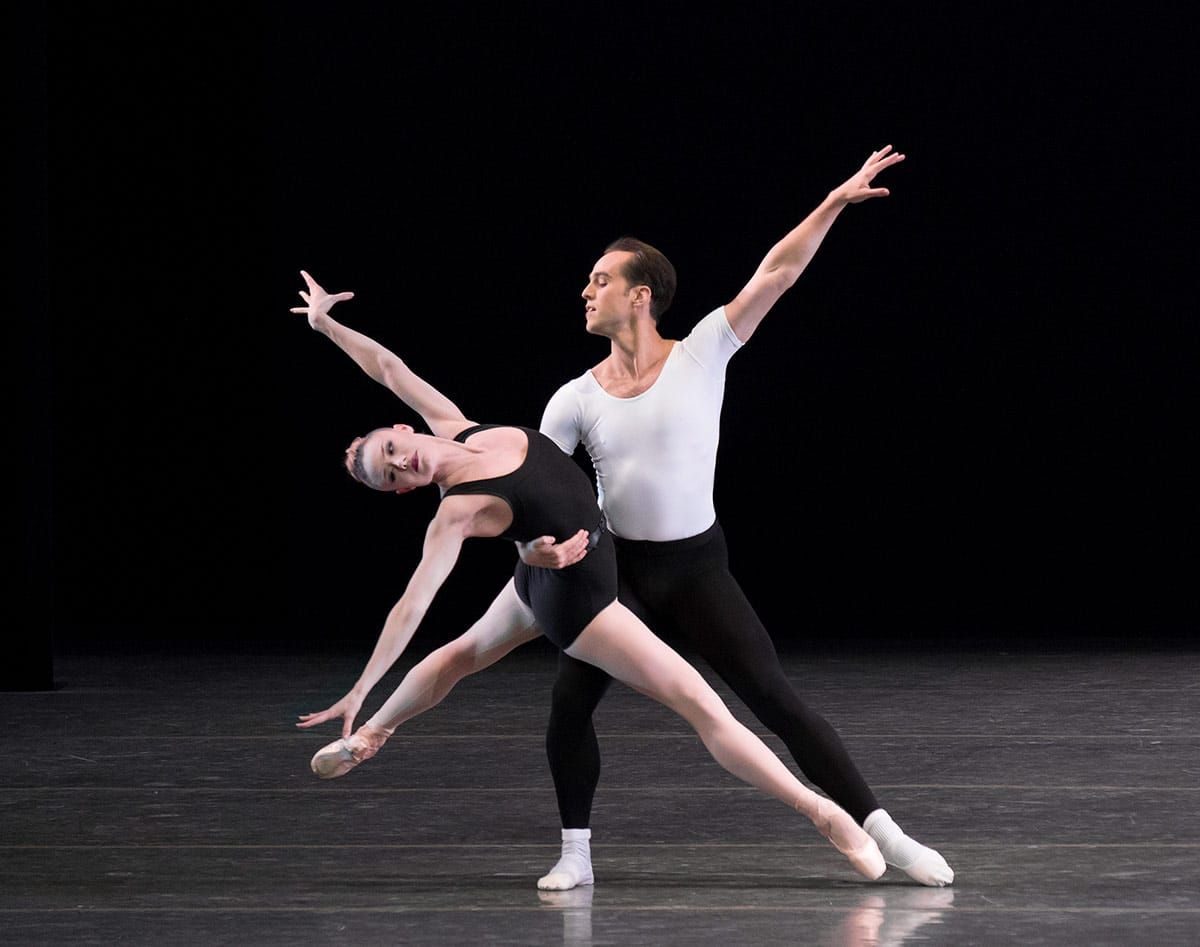
Megan Fairchild and Amar Ramasar danced "Allegro Brillante", the effervescent curtain-raiser. Fairchild is petite, more of a princess than a queen, and though her foot-work was impeccable, she didn't dominate the diamond-sharp finale. She was gracious and expansive, though, in the more lyrical opening, leaning back into the music and playing confidently with the rhythm. Her solo had a glorious windswept quality with hints of drama, as she kept reaching towards her partner.
Ramasar swept through the dancing and was a gallant consort, reacting to Fairchild. It seemed as if they were having a private conversation, secrets beyond words. He was especially effective in the brief vision scene, yearning for Fairchild yet supporting the corps dancers; it was a mini-drama without extraneous frills.
Balanchine was famously averse to stories, but Tchaikovsky's music for "Swan Lake", even when stripped of the narrative, is irresistibly dramatic. Tyler Angle and Sterling Hyltin danced the tragic couple. Angle is an instinctively romantic dancer with clear dramatic instincts and his Siegfried was both passionate and commanding. He was emphatic ordering his retinue to leave him alone to hunt and formidable when ordering them not to shoot the swans; his imperious authority gave his awed gentleness during the pas de deux a special resonance.
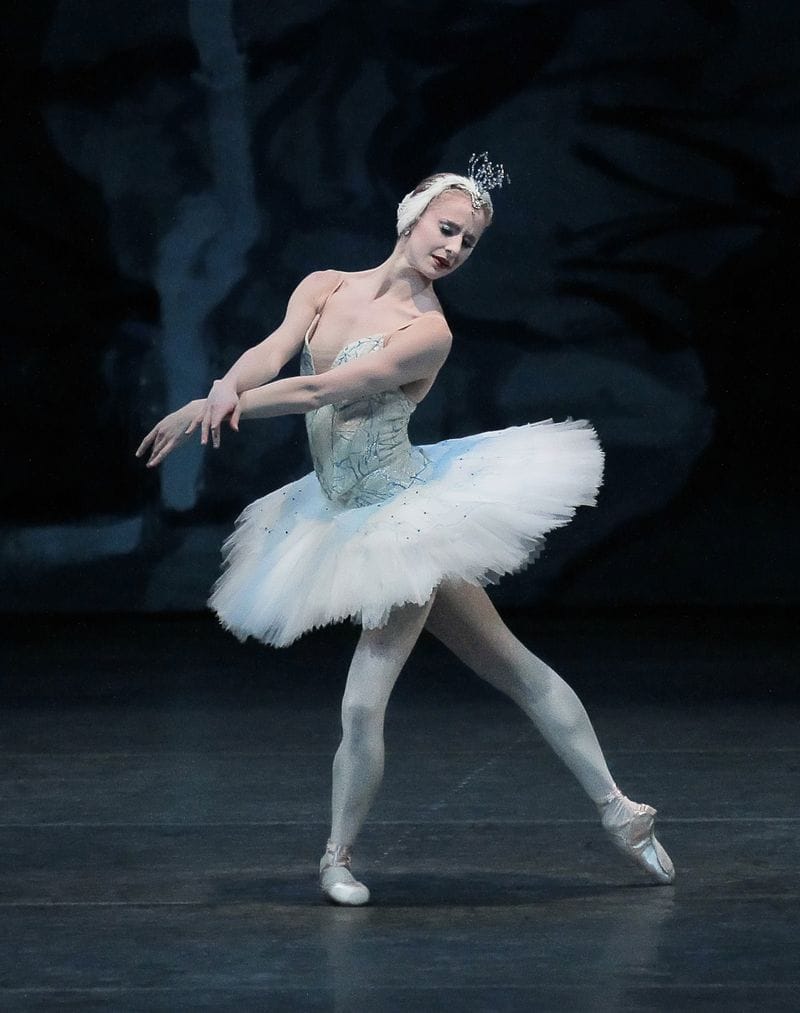
Hyltin was a fragile, fearful Odette with a luminous warmth and a welcome lack of flapping; she used stillness and her flowing arms to convey Odette's nature. A little flutter to shake off the water was so much more touching than the "See, I am a swan!" approach. It was a shame, though, that she couldn't use her fluid arms to really tell her story (as she proved in "La Sylphide" she is a touching and convincing mime).
Both Ashley Laracey, leading the Pas de Neuf and Lauren King, heading the Valse Bluette, gave their dancing a tinge of melancholy, as if they were reveling in a freedom they knew couldn't last. It is hard, though, to make sense of Balanchine's ending, where the swans suddenly turn on Siegfried to keep him from Odette (maybe he should have let the hunters shoot them, but perhaps the moral of this version is that no good deed goes unpunished). But the power of Tchaikovsky's music and the beauty of the dancing overwhelms logic, and this was a hauntingly beautiful performance.
"The Four Temperaments" is a bracing counterpoint to "Swan Lake's" emotional blowout and the clear, sharp logic of the steps and music is a constant marvel. Megan LeCrone and Aaron Sanz in the third theme were especially vivid, with their long, controlled limps and war but impersonal presence. Their dancing was both chaste and sensuous.
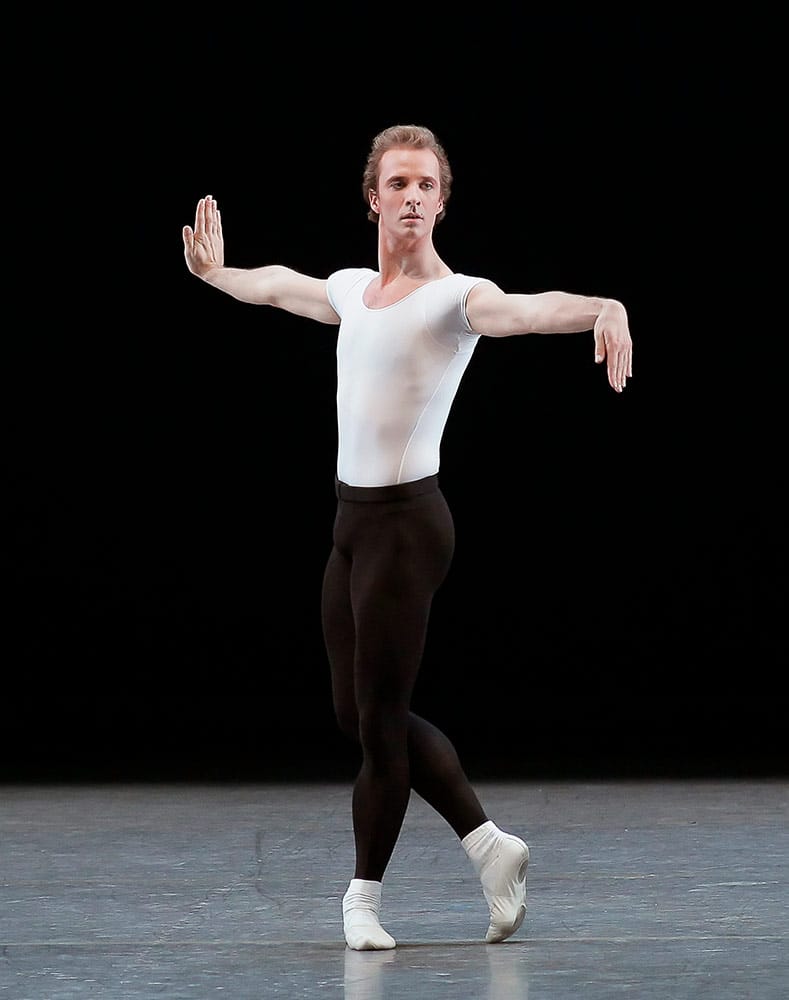
Sean Suozzi's Melancholic, though, was disappointing. He didn't have the weight or the power to embody the feeling of universal despair. He seemed to be pushing his dancing, and emphasized his jumps; he does have a fluid back but wasn't really able to make the audience feel his pain. Sara Mearns, not surprisingly, approached Sanguinic as if it were a dramatic journey. Her dancing was a bit fuzzy around the edges, strong but not always clear, and she seemed to be struggling against an invisible force until the final, transcendent lifts. Peace, it seemed, was something that had to be worked for. This may have been unconventional but Mearns made it compelling. Jared Angle provided a welcome ballast. Ask la Cour and Ashley Bouder as Phlegmatic and Choleric gave conventional interpretations, la Cour floppy and Bouder fierce, and both impeccably musical; a fine homage to a great work.
Copyright © 2017 by Mary Cargill



