High Energy
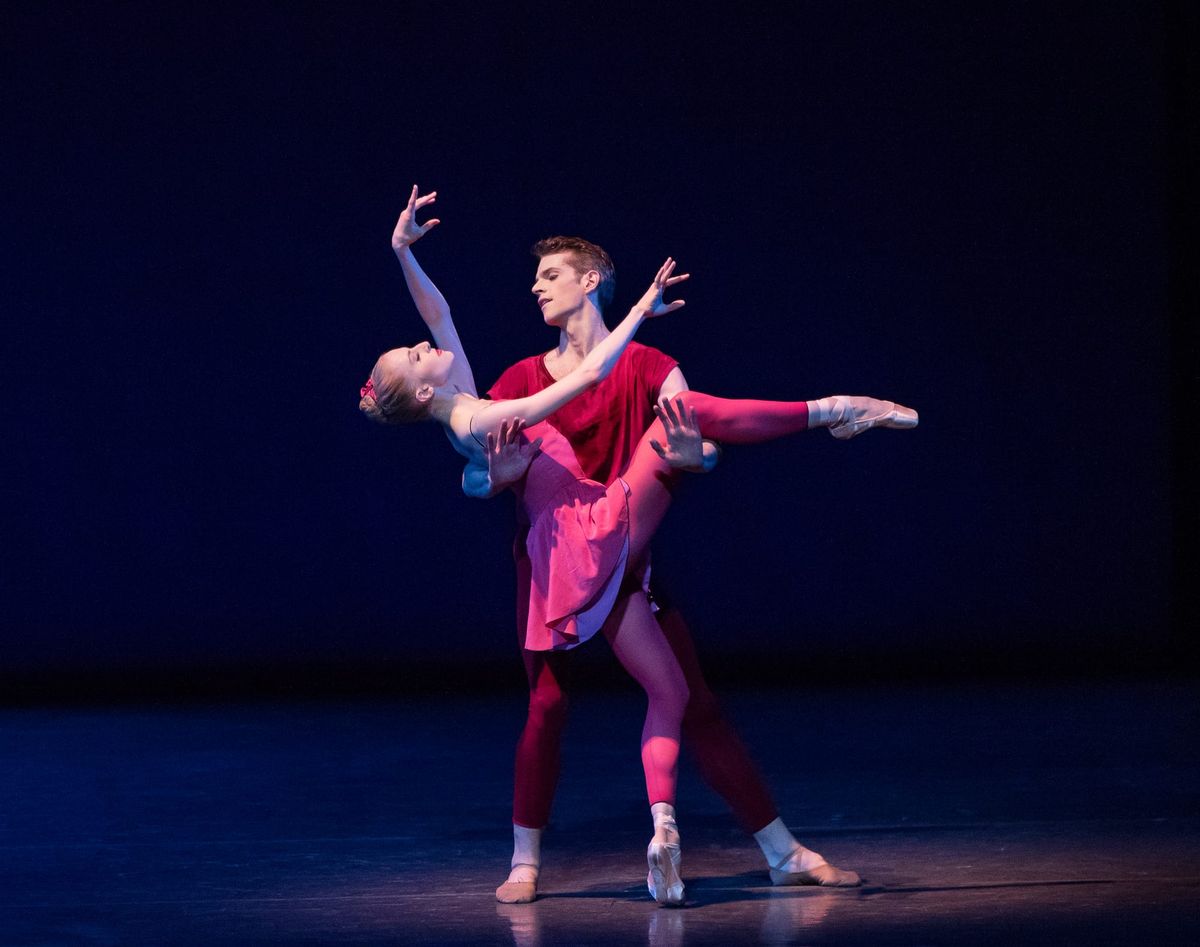
"Fearful Symmetries", "The Shimmering Asphalt", "The Times are Racing"
New York City Ballet
David H. Koch Theater
New York, NY
January 26, 2017
For the past several years New York City Ballet has celebrated Balanchine with at least one new work under the rubric of "New Combina- tions", honoring Balanchine's statement "There are no new steps, only new combinations". This year the two premieres, by Pontus Lidberg and Justin Peck, showed that new combinations are hard to come by, as each work, dynamic though the dancers were, had a whiff of been there, seen that. The evening opened with Peter Martins' 1990 "Fearful Symmetries", a shot of propulsive dancing to John Adams' propulsive score. The cast, led by Claire Kretzschmar with Russell Janzen, Ashly Isaacs with Zachary Catazaro, and Alston Macgill with Harrison Ball, all making debuts, danced at the top of their voices, but the repetitive, finicky, and rushed choreography hid their distinctive personalities under a mass of steps and blank stares. Though Janzen and Catazaro switched partners half-way through, all four couples did the same steps (lots of swinging bent-kneed arabesques for the women and split jumps for the men) to little emotional effect.
Macgill, with her piquant charm and Ball with his dynamic warmth, however, were able to give their pas de deux an engaging wit; the choreography let them react to one another as they hurled through it. All in all, though the piece was like watching the inner workings of a watch which was wound too tightly and all the dancers deserved more rewarding combinations.
Pontus Lidberg's "The Shimmering Asphalt" did not give it to them. Set to pleasant but bland music by David Lang which meanders in the background, it is another dark work with harsh overhead lighting which gave the dancers a haggard look. They were not helped by the some of the most unflattering costumes that have every rolled on the floor (designed by Rachel Quarmby-Spadaccini). The women wore high-necked grey tunics which made them look like turtles pulling in their heads, and the men had deconstructed tonnelets and bare chests and legs, which the lighting turned pasty white. The dancers, some of the most outstanding the City Ballet has on tap (including Tiler Peck, Sterling Hyltin, Taylor Stanley, and Gonzalo Garcia--all distinctive and striking personalities) faded into a grey mass; even when couples emerged, they would reform and dance the same anonymous steps while staring impassively at the audience.
Sara Mearns was the one exception, as she often stood alone. She had a moody and expansive solo, performed with her usual dramatic intensity; she can make a simple walk forward unforgettable. The work seemed to revolve around her (at one point four men lifted her as she extended her arms out crucifix-style) and it ended with her silhouetted against a dark starry sky, but it was effect without content.
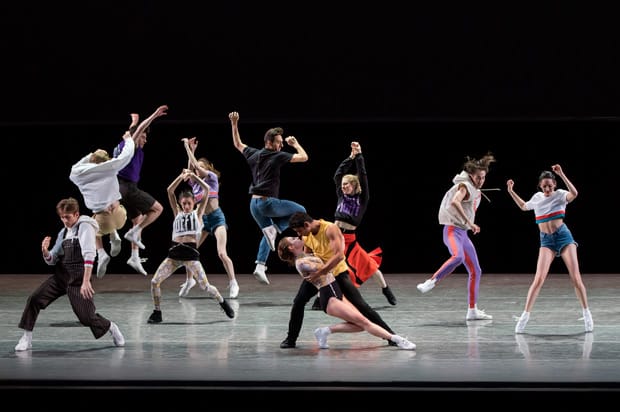
Justin Peck's "The Times are Racing" was more colorful, with bright, casual streetwear by Humberto Leon. It was set to (very loud) recorded electronic music by Dan Deacon, from his album "America"; Peck has said that his work owes its feel to the recent election, and Deacon has said of his composition "you could really despise every aspect of what you think American culture is"; clearly the new ballet is a protest. At the same time, Leon has announced that the spring 2017 Opening Ceremony (Leon's company) collection "inspired by" Leon and Peck's collaboration will hit stores the following day (after the premiere). One eye may be on the prize but it seems the other one is on the cash register.
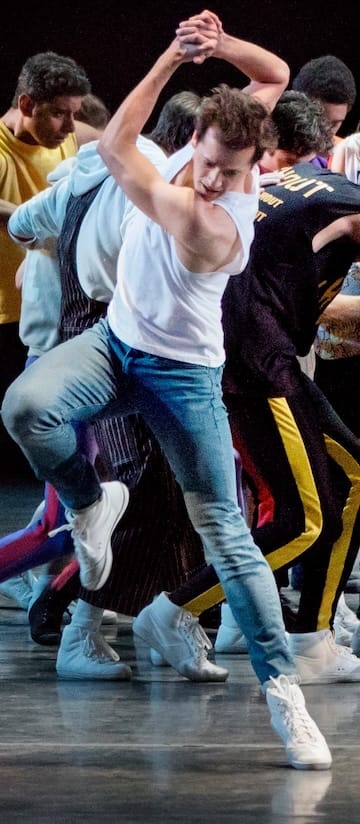
The choreography, performed in sneakers, owed a great deal to Jerome Robbins, with some more modern touches. It mixed a slouching, model's strut for the women with watered down hip-hops moves for the men. The most impressive episode was a tap duo (in sneakers) for Robert Fairchild and the choreographer himself, where the dancers, with a Shark vs. a Jet wariness, floated around the stage with a loose-limbed, juicy rhythm. The finale had all of the dancers on stage moving to an infectious rock beat with an earnest and charming energy; it was like watching a high school group who really really believed that performing "Hair" could change the world. But pop music and protest are a very old combination.
Copyright © 2017 by Mary Cargill



