Her True Character
“Giselle”
American Ballet Theatre
Metropolitan Opera House
New York, NY
May 27, 2015, evening
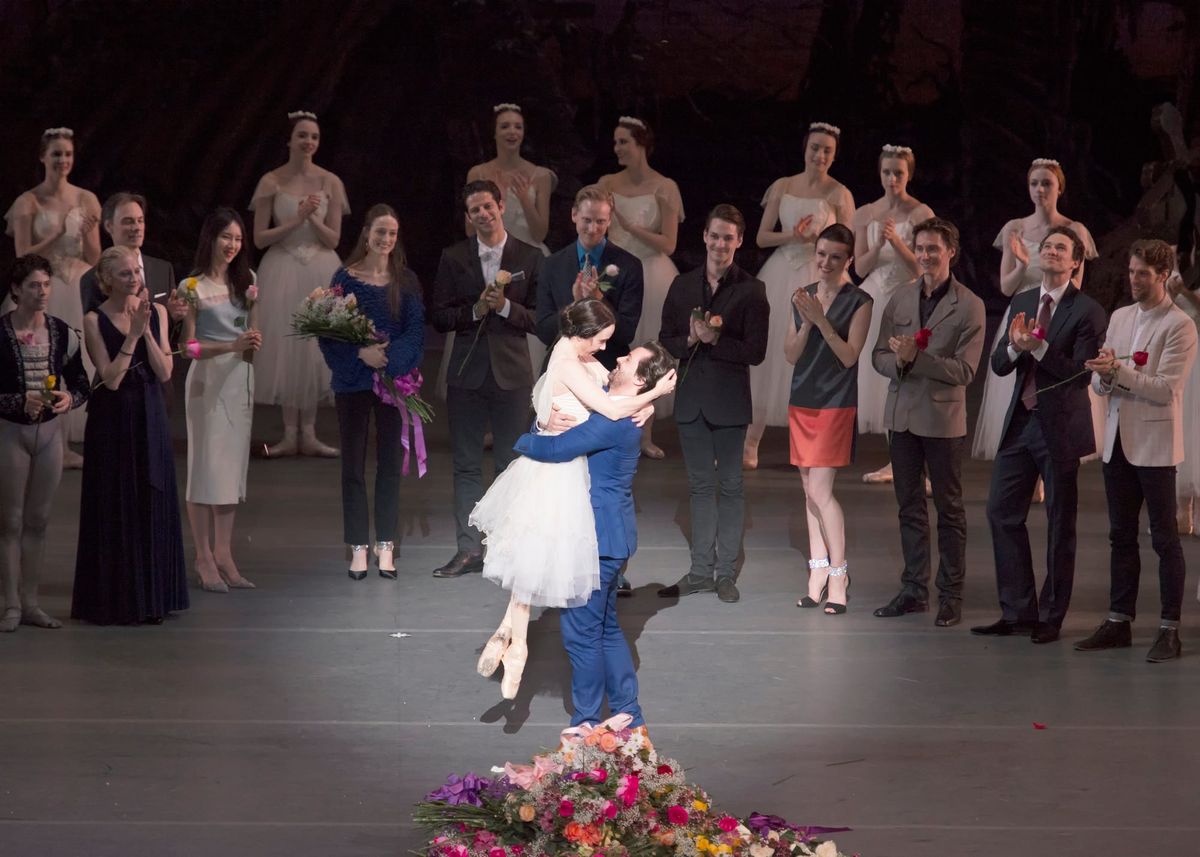
Xiomara Reyes, like Paloma Herrera, bade farewell to ABT in a beautifully danced "Giselle". Reyes, with her Cuban training, has always been a moving and accomplished Giselle and needed to make no concession to time in her dancing; she looked strong and confident hopping through her first act solo. But her Giselle was so much more than technique, fine though her dancing was. She was a rather heedless, happy girl in the first act, teasing her mother and reveling in her innocent joy. There was no sense that some performers give of dancing the first act with one foot in the grave preparing for her lithograph. It was a completely natural and unmannered performance.
Her mad scene began quietly, as if she needed time to realize what had happened and then she exploded in a frenzy of grief. Her dancing in the second act emphasized speed rather than height which ironically made her seem more airborne as her feet seemed to disappear in the blur of white. The contrast between her innocent, happy and energetic first act and the serene determination of Act 2 helped show that Giselle, like Albrecht, grows up, as she changed from a cheerful girl into a woman of defiant courage who could disobey Myrta's commands.
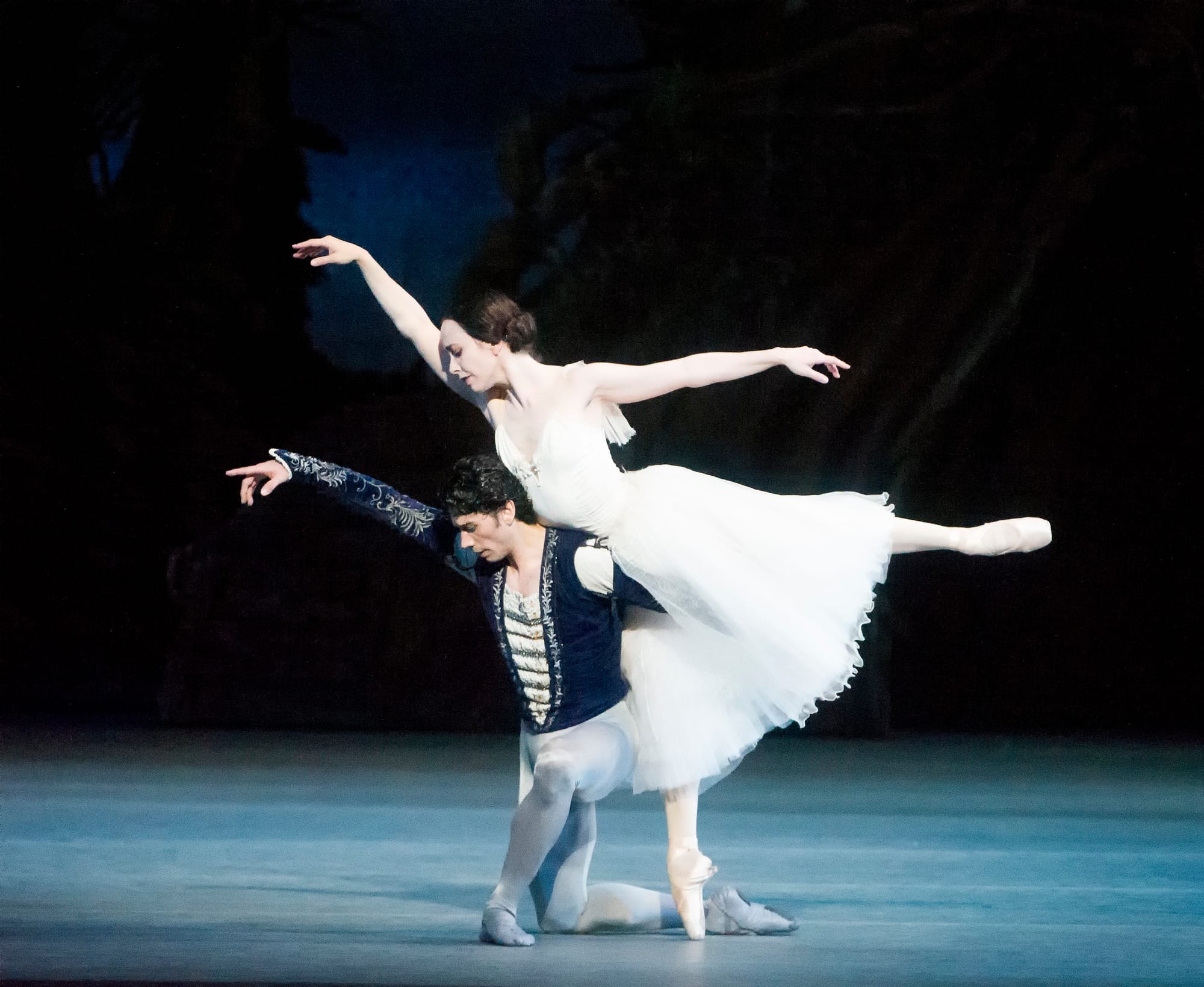
Albrecht, Herman Cornejo, began as a slightly unsympa- thetic and callow flirt who couldn't understand what Wilfred was going on about. He had a brief smirk when Giselle first told him she loved him but the real concern when she had her fainting spell showed his feelings beginning to change. He still thought he could bluff his way out of things by laughing at his peasant costume but crumbled when he realized that Giselle was dead. His partnering in the second act was especially effective as he slowly raised Giselle up for the overhead lifts and just as slowly lowered her, emphasizing the movement and not just the post. He made her seem to float. Reyes substituted a red flower for her final gift instead of the usual white one and he took it like she was giving him her heart's blood, walking away almost humbly, as if he were determined to be a better man.
There was nothing humble about Stella Abrera's Myrta. She was proud of her powers and of her control over the forest. She could also have been proud of her bourrées and of her controlled and smooth solo. Though the partnering (especially in the supported pirouettes) was not always smooth, the peasant pas de deux (Sarah Lane and Joseph Gorak) was lively, full of soaring jumps. It was also dramatically appropriate as the couple included the whole village in the dance, acknowledging the royal court and each other; it didn't come across as a commercial interruption.
Dramatic details were so typical of Reyes's career. Though she was an excellent technician able to whip off fouettés with the best of them, she excelled at creating characters, both comic and tragic. She was a delightful Swanilda and a warm-hearted Kitri; like Herrera she could make "Don Quixote" a true, if lighthearted, love story. Her Lise, in Ashton's "La Fille Mal Gardée," was warm and sunny but she was also able to catch the emotional richness of that great work and I can still see that final lift as she opened her arms to the audience wishing each of us all the happiness in the world.
She also caught the undertones of sadness as the forlorn little cowgirl in "Rodeo", striking out at the men she wanted to impress in a tongue-tied, embarrassed rage. She was a fine Juliet, small and overwhelmed but with a powerful inner strength. But I think I will miss her most as the Ballerina in "Petrushka". She moved with a bobbing wooden gait and an expressionless face, but those blank dark eyes had a hollow depth that was almost terrifying. No only did the Ballerina have no heart, she had no soul. Reyes had both a heart and a soul and the farewell ovation showed that the audience will miss both.
Photos:
Top: Xiomara Reyes's farewell © Gene Schiavone.
Middle: Xiomara Reyes and Herman Cornejo © Gene Schiavone.
Bottom: Xiomara Reyes and Angel Corella in " "La Fille Mal Gardée" © Marty Sohl
copyright © 2015 by Mary Cargill



