Hello and Goodbye
"Concerto Barocco", "Agon", "The Four Temperaments"
New York City Ballet
David H. Koch Theater
Lincoln Center
New York, New York
June 3, 2018
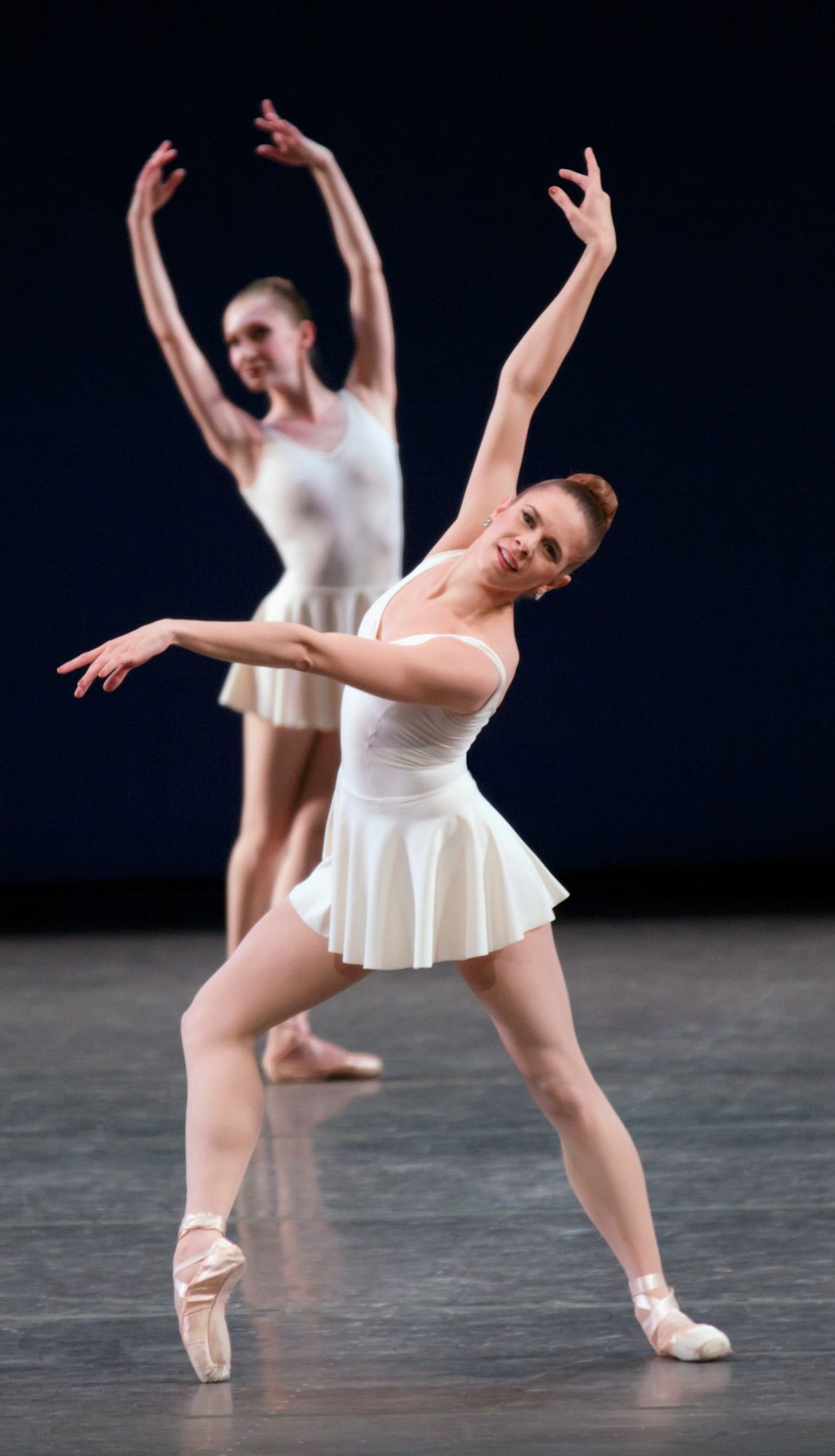
The final performance of New York City Ballet's spring season had several debut and farewell performances, and in the case of corps member Cameron Dieck's role in "Agon", both happened at once. Long-time soloist Savannah Lowery said goodbye dancing the second violin in "Concerto Barocco" and the Bransle Gay in "Agon"; it is rare that soloists, much less corps members', departures are acknowledged so this was a generous and welcome way for the audience to say thank you.
Lowery received a lot of applause during "Concerto Barocco", though her forthright and muscular dancing, while exciting, did not really mesh with Ashley Laracey's in her debut as the first violin. Laracey, a tall, fair dancer with a mysterious and slightly remote air, was well-matched by the towering Silas Farley, who was also making his debut. His gracious, generous partnering made the pas de deux into a long, continuous thread which unspooled smoothly and effortlessly. They had a courtly, formal air, as if they were dancing only for each other in some exalted place that the audience was privileged to visit for a short while.
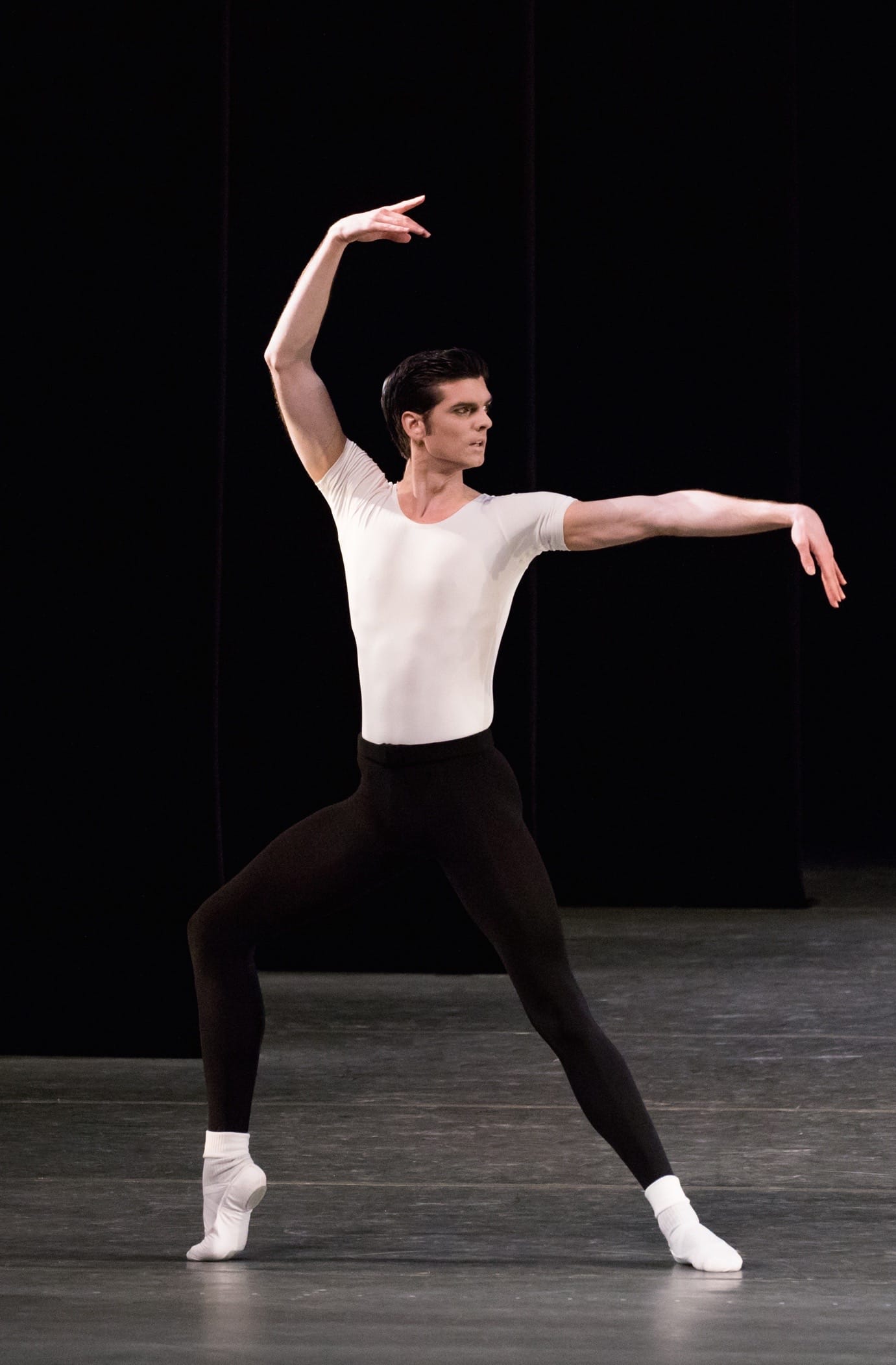
The corps danced with a gratifying uniformity, and though the opening was a bit stolid, the jazzy glints eventually shone through. "Agon", too, looked scrupulously rehearsed and the opening male quartet (Tyler Angle, Peter Walker, Cameron Dieck, and Daniel Applebaum) moved confidently and fearlessly through the complicated rhythms. Walker's Sarabande had a quirky charm, as he used his lanky form to alternate between off-center balances and hints of classical poses. The role was made on modern dancer Todd Bolender (who also originated "The Four Temperament's" Phlegmatic), and Walker seemed to get the connection with his fine, individual approach. His two sidekicks, Lauren King and Unity Phelan, also gave a witty edge to their dancing, with their elegantly timed little chugs and charming smiles, so much more lively than the "Oh, I am dancing a masterpiece" stares.
Miriam Miller, who danced the pas de deux with the always stylish Tyler Angle, also gave that familiar work a fresh spontaneity, using her long legs, patrician beauty, and calm demeanor to create a cool, passive mystery of complex, ever-shifting shapes, which, to me, is so much more intriguing than the over-heated, modern-day-Black Swan approach so often seen.
Some of the dancers in "The Four Temperaments" did have a necessary edge to their dancing, and Olivia Boisson's first theme, with its over-accented thrusts, looked like an audition for Choleric. Emilie Gerrity's Sanguinic, too, was a little strident, with grasping hands and high kicks, which worked against Zachary Catanzaro's calm elegance. Sebastian Villarini-Velez's debut in Melancholic, on the other hand, was a bit too calm. His light, clear, and very elegant jumps didn't have enough weight to give a sense of struggle and urgency. It was clean, clear performance, but more about shapes than feeling.
Ask la Cour (Phlegmatic) and Megan LeCrone (Choleric) have danced these roles many times, and used their experience to shape their dancing. La Cour was a deadpan stoic with killer balances and LeCrone sharp and in control. And it was bittersweet to see Dieck in the third theme (with Unity Phelan) as he gave it a rare, personal touch, dancing with and for his partner; it was a fine farewell.
Copyright © 2018 by Mary Cargill



