Heart Trouble
"Giselle"
American Ballet Theatre
Metropolitan Opera House
New York, New York
June 17, 2014
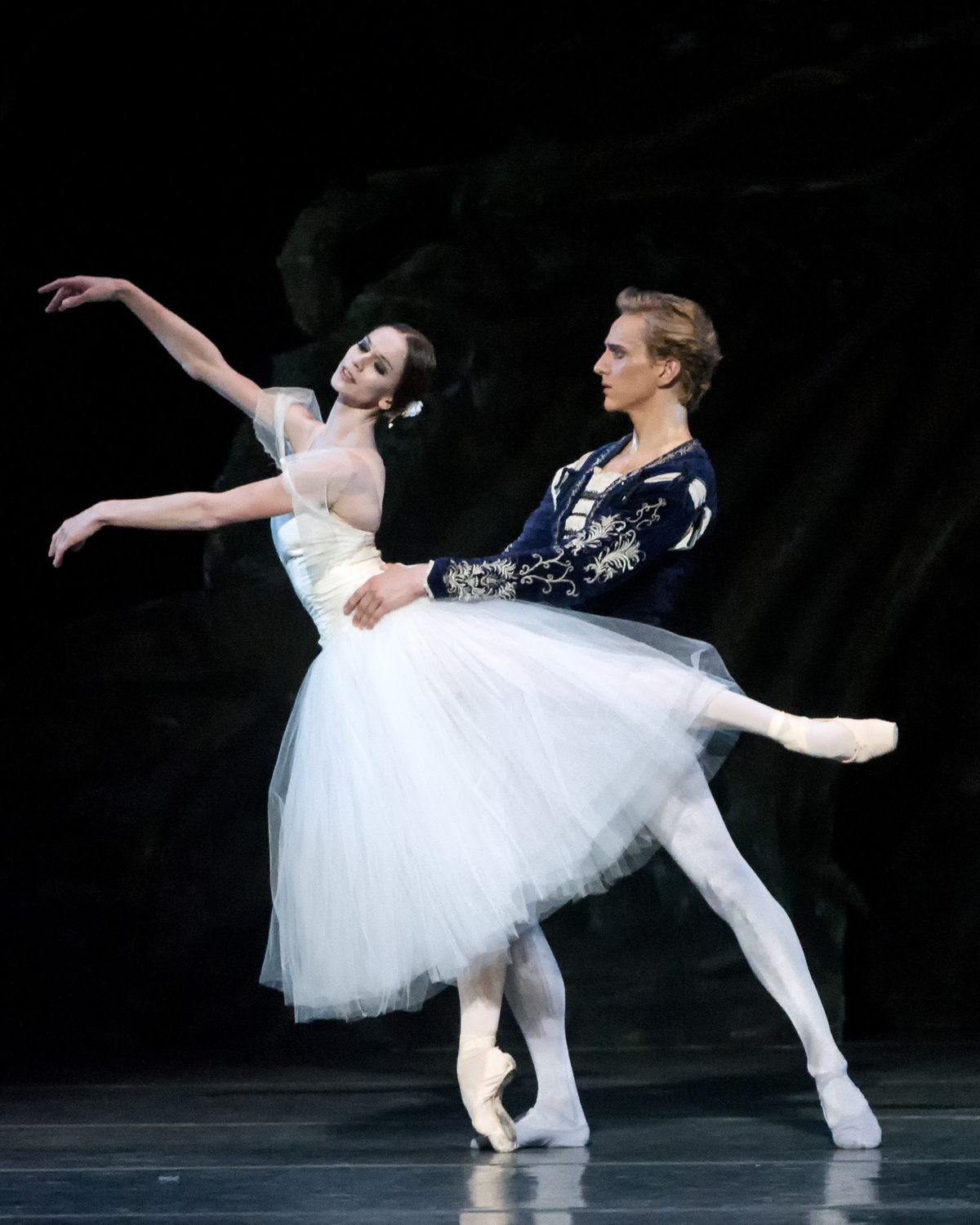
"Wonderful! Wonderful!" the man behind me shouted after almost every variation during the Polina Semionova/David Hallberg performance of "Giselle". He certainly had a point. Seminova is a tall, long-limbed dancer, not a typical Giselle, but she controlled her extremes to present a fully developed character; a ballerina, it seems, is someone who can do anything but has the taste not to. Her first act Giselle was a shy, happy girl surrounding a spine of steel. She was devoted to Albrecht, throwing herself in front of Hilarion to protect her lover without the gentle sympathy for the rejected suitor that some Giselles have. Albrecht was her whole world, and everything she did was for him. I loved the little impetuous gesture she gave her friends to clear the way so she could dance while he was watching, and the desperate concern she showed when her weak heart might make Albrecht unhappy. This complete devotion made her mad scene so understandable, since she clearly couldn't live without him. She had a quiet but intense breakdown, still and broken and could barely lift her arms to pluck the imaginary daisy.
She gave her dancing a Romantic softness, bending her arms and slightly tilting her body forward, but didn't exaggerate or overly stylize her movements, and her dancing had a soft control and a joyful lilt. The little hops on point were fearlessly done, but since her eyes were on Albrecht they seemed to be conversation by other means.
David Hallberg's Albrecht, too, was finely calibrated. He was arrogant and weak, but truly in love. He used little details so well--I don't remember anyone dropping his cloak so carelessly at his entrance, which made it clear that he was used to people picking up after him. His arrogance towards the loyal Wilfred hid his weakness, and he looked desperately at his servant for advice as the nobles were summoned; he even thought of leaving with them before the awful reality of Giselle's death hit, and then he exploded in anger at Hilarion, at himself, and at everyone around him.
His elegiac entrance in the second act was more than a photo op, he made it clear by his posture that he had changed, as the tall, confident, arrogant boy of Act 1 walked hesitantly and humbly towards Giselle's grave, as if he were ashamed to approach her. Their first pas de deux, when he senses her but can only see the flowers she gives him, was breathtaking and Semionova's mime as she asked "Why are you crying?" was potent. Their perfect control meant that their feet made absolutely no sound landing from their jumps, as if they were really dancing on moss. It was one of the most magical moments I have seen. The music was played at a slightly faster clip than some dancers seem to request, so the drama was pushed forward, and Semionva never gave the feeling that she had ivy dripping from her arms. The horizontal lift, though, seemed slightly mistimed, as he swirled her around rather than holding her horizontally, though it did look smooth and effortless. Hallberg's dancing, as always, was incisive and fluid, but he has added a passionate conviction. His brisés, which he did instead of the flashier but less dramatically compelling entrechats, seemed as if he were being pulled to Myrtha against his will.
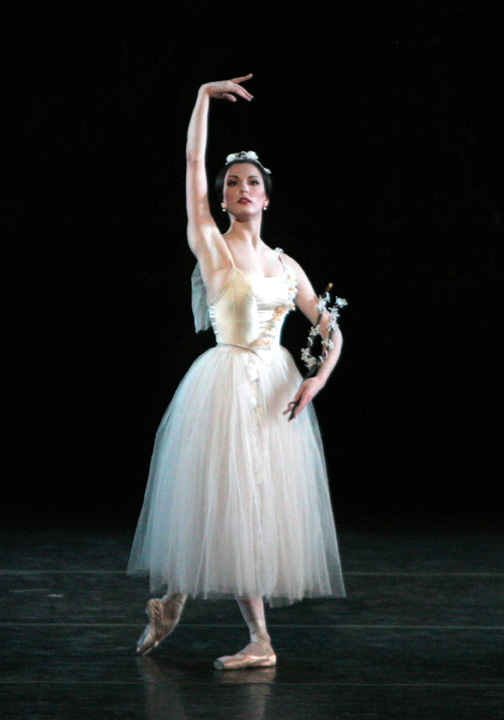
Veronika Part was an imperious, powerful Myrtha, dancing with a coldness that made it seem that she didn't even have hatred to warm her. The supporting roles were very well danced. Yuriko Kajiya and Craig Salstein danced the peasant pas de deux. Kajiya's finely boned finesse is suited more for Giselle herself, and the hearty contrast between the happy peasants and the doomed Romantic heroine was missing but her musicality and control were thrilling; she seemed to float her leg down from attitude. Salstein was a gracious partner. Thomas Forster was a sympathetic Hilarion, and had an energetic death. Melanie Hamrick and Stephanie Williams as Moyna and Zulma looked like Myrthas in training, and Williams' dancing had a remarkable control. Nancy Raffa gave Berthe an unusual dignity, dismissing Albrecht with a stern gesture, and serving the nobles graciously, but with the knowledge that they were her guests, not her masters. The corps in the Act 2 got almost as much applause as the corps in "Bayadere" and their dances are one of the high points in what is a very strong production.
copyright © 2014 by Mary Cargill