Happy Anniversary
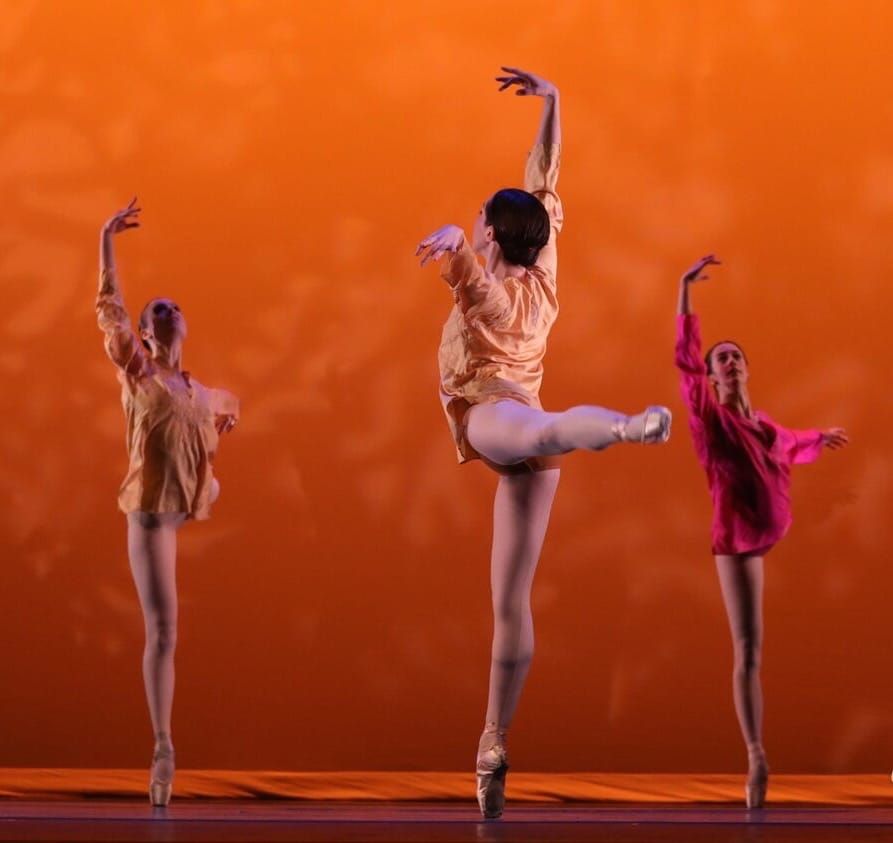
"Charm", "Rapid Oxidation", "Shanti"
Tom Gold Dance
The Kay Playhouse at Hunter College
New York, New York
April 10, 2018
Tom Gold, a former soloist with the New York City Ballet, celebrated the tenth year of his chamber company with a brief New York season showing three of his works, including one premiere, "Rapid Oxidation". As a dancer, Gold was noted for his outgoing, engaging personality and his scrupulous but never flashy technique and he has brought these gifts, along with a sure sense of structure, to his choreography. The three works, danced without an intermission, were all abstract, emphasizing shapes and movement, but musically varied and, if not profound, eminently watchable.
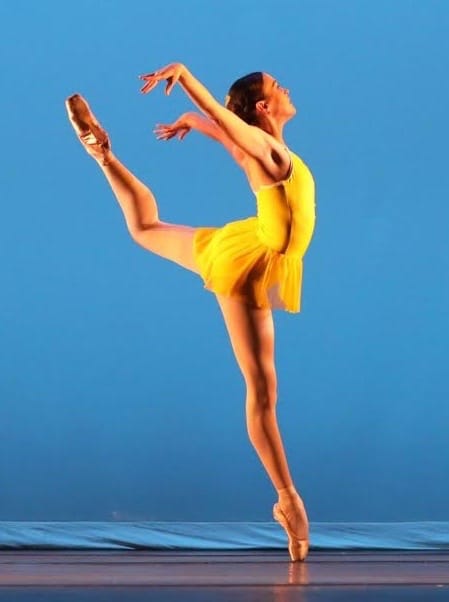
The 2017 "Charm" (a noun, according to the press release, describing a flock of finches) was danced to selections from Elena Kats-Chernin's piano music "Unsent Love Letters: Meditations on Erik Satie", played live by Joseph Liccardo. The uncredited lighting and costume designs for the four dancers (Marria Cosentino, Mary Elizabeth Sell, Stephanie Williams, and James Shee) helped illuminate the dancing, as the bright yellow for the women (the man was more subdued) shimmered against the rich Prussian blue background.
The women had darting little steps and playful, fluttering arms. Williams and Shee had a sweet and languorous pas de deux, while Shee's unexaggerated dancing, full of turns and soft jumps, had a delicate power. The frisky finale brought all four dancers together with playful turns and backward little jumps, suggesting but never just imitating those cheerful little finches.
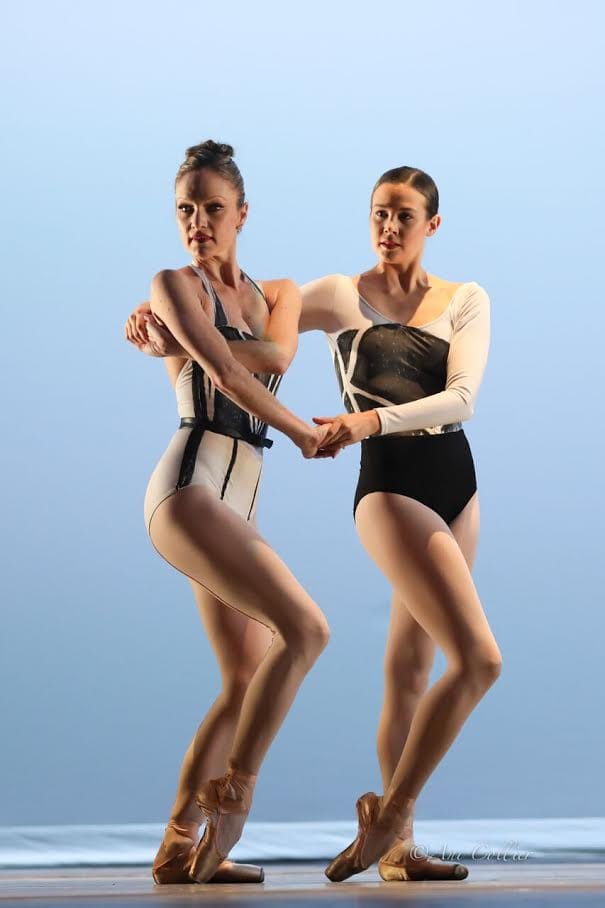
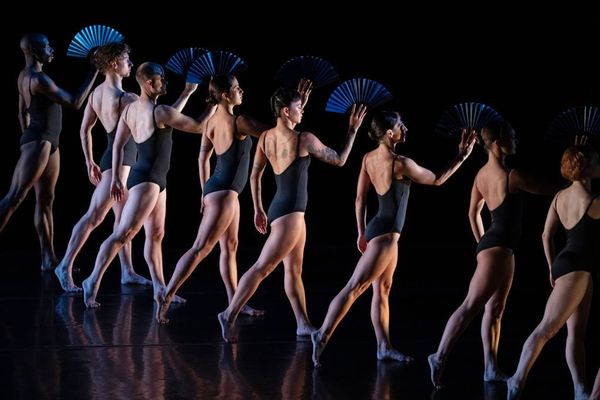
"Rabid Oxidation" also had vivid lighting (a silvery grey illuminated the backdrop) and creative costumes (black and white leotards designed by Marlene Olson Hamm). The two dancers, Allynne Noelle and Stephanie Williams, substituting for the injured Sebastian Villarini-Velez, turned and twisted to the rhythmic percussive music by Donald Knaack (aka The Junkman). The switch from a male/female pas de deux to a dance for two women came after the program was printed, and obviously the dynamic would have been different with the original cast, but the two women, with their distinctive styles, gave the piece a witty, nonchalant swagger.
Noelle, her blond hair in an elegant French twist, was a leggy sophisticate, striking an imaginary match on her shoe to light an imaginary cigarette while wearing imaginary gloves. Her choreography had rapid-fire changes of direction, freezing into unexpected and elegant poses. Williams' dances were more casual, occasionally shuffling around with outstretched arms. It was a playful and very musical exploration of the music, though not quite conveying the press release's "passion of two individuals who ignite one another’s creative flame".
"Shanti", from 2002, is a creative flame, with its burst of bright, vivid pinks and yellows. It seamlessly combined the music of John Zorn from the Masada Project with hints of Bollywood, as the dancers' hands flickered occasionally into a stylized Indian shape. The blazing orange backdrop with the barest hints of leaves, set the mood, and the dancers in their pink and yellow tunics looked as enticing as a collection of cocktail umbrellas floating around a giant margarita.
The seven dancers (six women and one man) skittered through the music with a cheerful abandon, one (Shoshana Rosenfield) pausing to toss off a set of impeccable fouettés, stopping just short of a circus. The finale, with the dancers lit by a soft green spot as the spun around, was a cheerful and upbeat explosion of color.
Though all three dances were lighthearted and exuberant, Gold showed a sophisticated understanding of the classical vocabulary, making the non-stop dancing look deceptively easy. His sense of structure, his imaginative musicality, ad most of all his ability to make his dancers look individual, cohesive, and radiant was a true anniversary present to the audience.
Copyright © 2018 by Mary Cargill