Group Dynamics
"After You", "Company B", "Piano Concerto #1"
American Ballet Theatre
David H. Koch Theater
New York, NY
October 29 2015
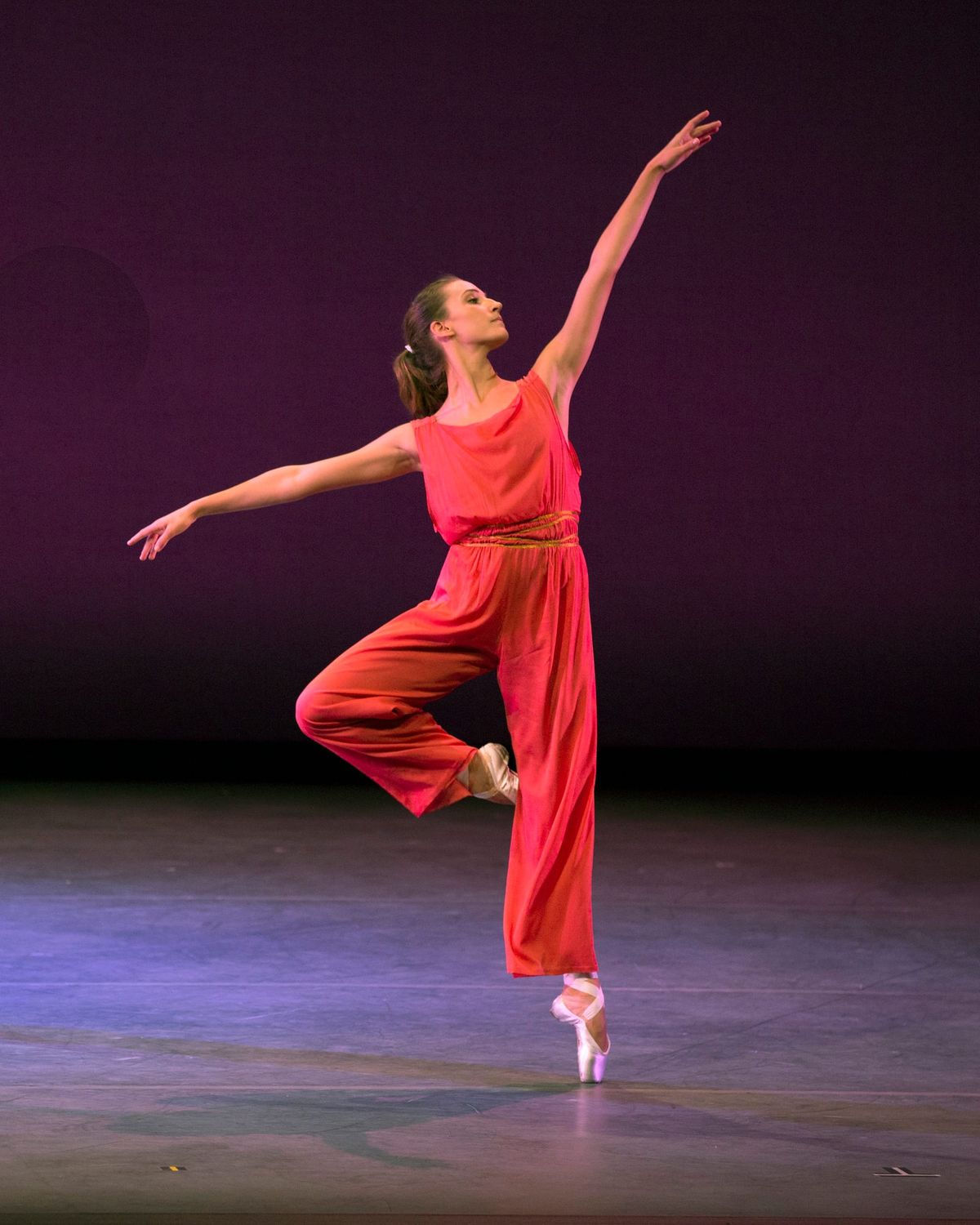
ABT's two-week Fall season featured no tutus and lots of opportunities for the dancers to shine. The Thursday night program was especially rich, showing off three choreographers exploring different types of groups; none of them used ballet's traditional hierarchies. Mark Morris' "After You" looks richer at each viewing. The dancers moved gently through the music with open chests and a generous demeanor, politely acknowledging each other with constant movement and variety.
The bits of drama emerged from the dancers' personalities--Isabella Boylston moved with a quirky lyricism and Devon Teuscher with a reserved dignity. Herman Cornejo emerged as the group's leader but he withdrew gracefully to let the others have their moments. Individuals emerged and then were reabsorbed into that harmonious, low-key, idyllic group.
The dancers in Paul Taylor's "Company B" formed a group too, but while it offered comfort and support, it didn't offer protection; men die and women mourn and the group lives on through the dancers' memories. Taylor weaves those memories through the bright, happy Andrews Sister's songs. Elina Miettinen and Conner Holloway were an especially youthful couple romping through the "Pennsylvania Polka". Their exuberance had a slightly desperate edge, as if they were trying to blot out the reality of their fallen friends behind them.
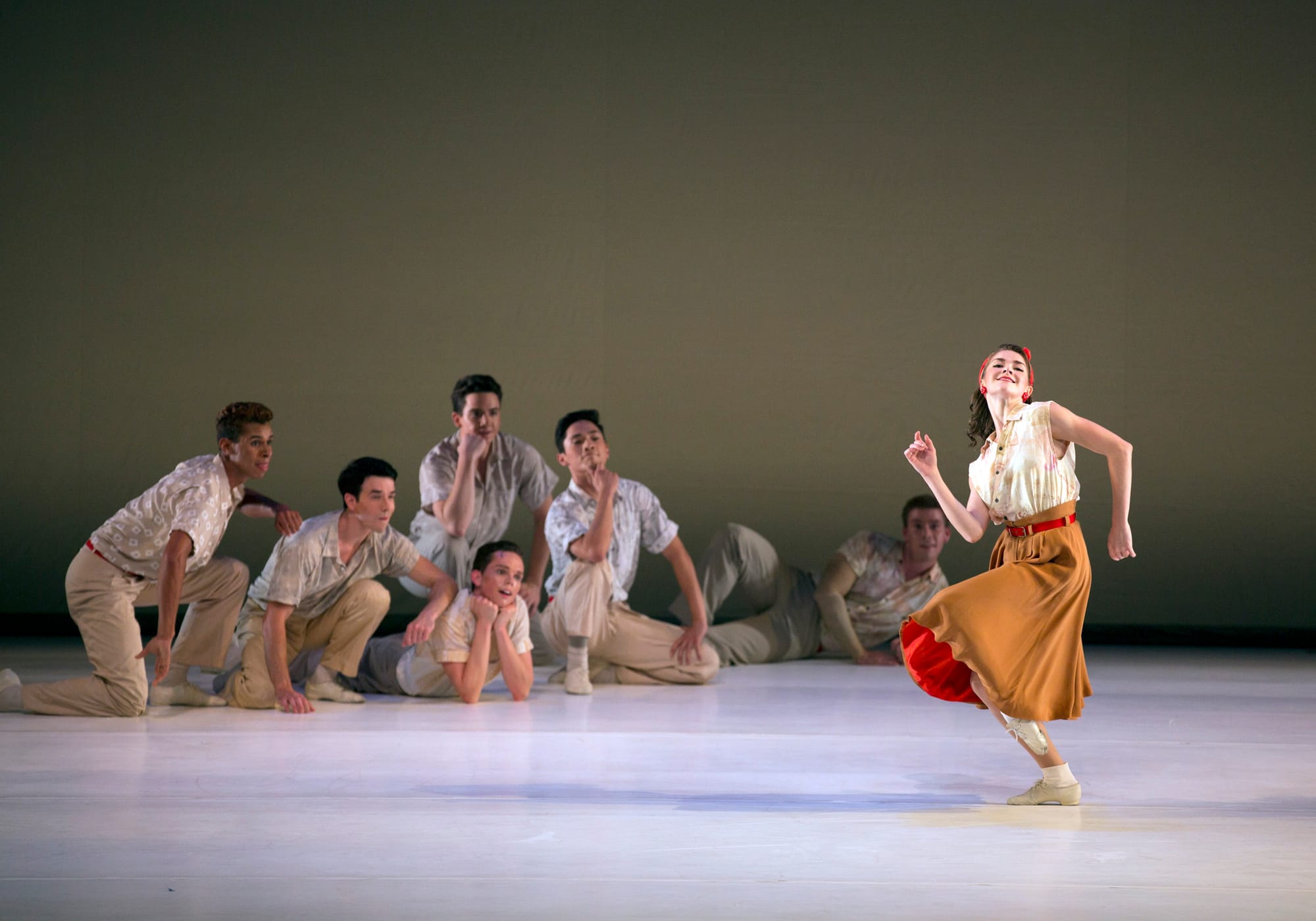
Ironically, the only song not invaded by ghosts is the slightly sour "Rum and Coca-Cola". Taylor ignores the undertones of "mother and daughter working for the Yankee dollar" to show young soldiers, far from home and likely to be shipped off to war at any moment, grasping at whatever fun they can. Taylor is not one to "make mock of uniforms that guard you while you sleep." Cassandra Trenary as the girl, however, with her mop of curls, was a bit too fresh-faced for the luxuriously sensuous choreography.
Gabe Stone Shayer, in "Tico-Tico" gave his solo a tinge of desperation, dancing with a vulnerable bravado, as if he knew he wouldn't last long. Jeffrey Cirio, as the Bugle Boy, lasted long enough to finish his solo, surely one of the most exhausting male dances around. He smoothed out some of the swaggering details but managed to make it look like fun. He also made the final snap of his fingers as the curtain fell both defiant and triumphant; despite everything, life would continue.
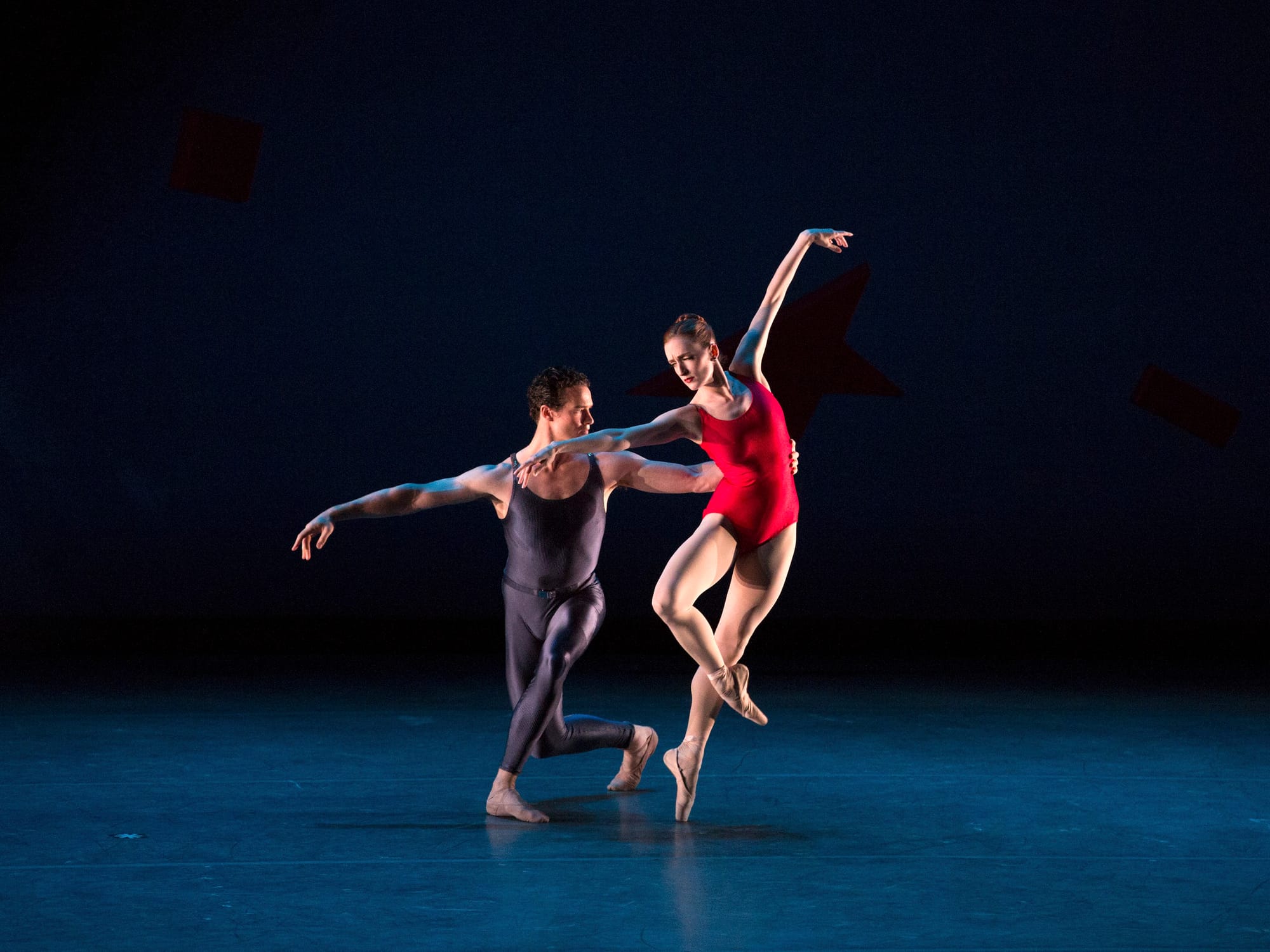
Alexi Ratmansky's "Piano Concerto #1" had a more ambiguous attitude toward the group. The grey and red backdrop was full chopped-up Communist symbols and the corps, in shifting asymmetrical formations, was variously heroic, muscular, and overwhelming. The main couple (Gillian Murphy and Cory Stearns) emerged from the corps, though there was no pat "triumph of the individual" feel; there was a sense of power in the group but no sense of struggle. Murphy ripped through the air and Stearns moved with a weighted and fluid intensity.
They were joined by Maria Kochetkova and Daniil Simkin, whose smaller stature made it look as if they were Murphy's and Stearns' younger selves; the past, Ratmansky seemed to say, if always present. Simkin flew through the choreography with flair and flash, but he didn't always combine movement with meaning. I found his haunted look as he sat alone watching the group before crawling off into the wings much more haunting and memorable than his jumping. Kochetkova is a clear, precise dancer, though she was a bit uninflected. Even the quiet moment when cradled by Murphy who seemed to be trying to shield her from harm didn't generate an expression as she seemed to be thinking of her next steps. There is certainly more to this complex examination of group power than just steps.
copyright © 2015 by Mary Cargill



