Greeks Bearing Gifts
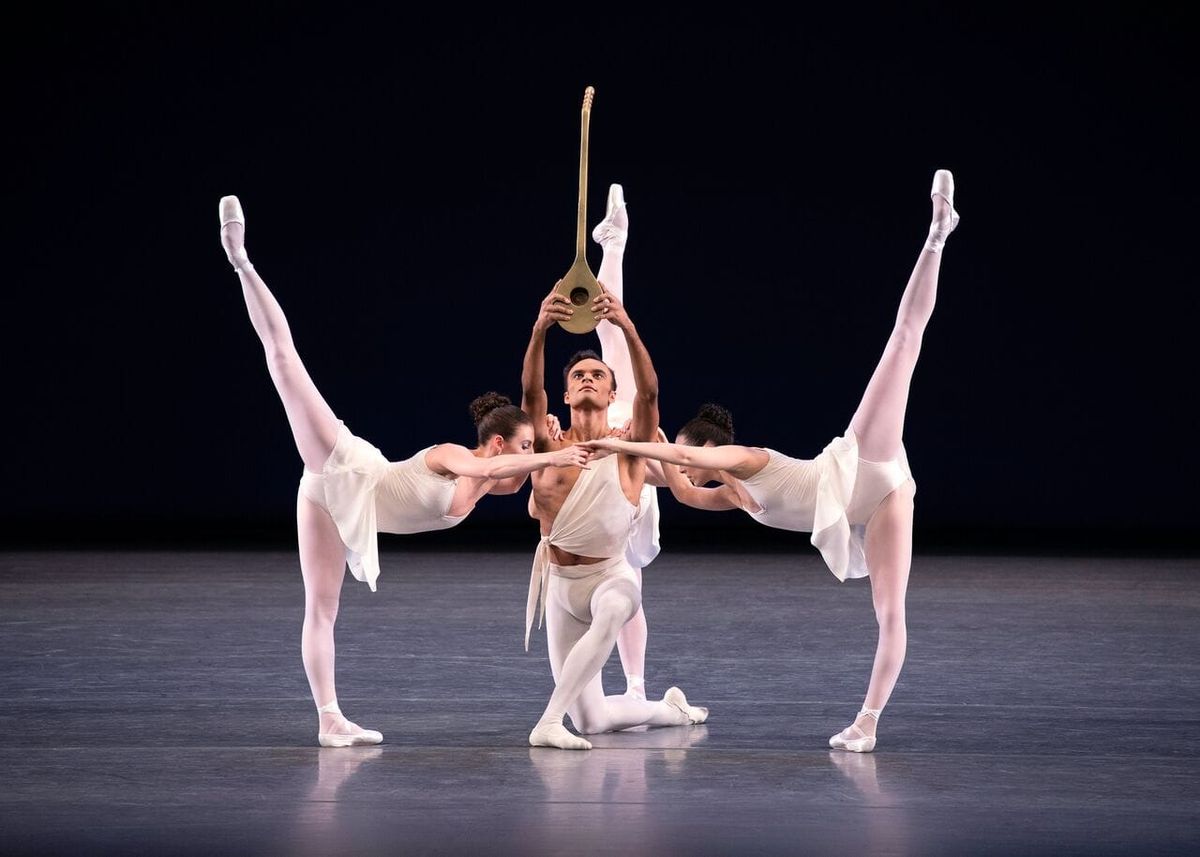
"Apollo", "Orpheus", "Agon"
New York City Ballet
David H. Koch Theater
Lincoln Center
New York, New York
January 22, 2019
The whims of the calendar decreed that New York City Ballet's winter season opened on Balanchine's birthday and the company honored him by dancing three of his most significant works, the so-called Greek trilogy. "Apollo" is the oldest of his ballets currently being performed, the theatrical "Orpheus" is the ballet that inspired Morton Baum to invite the young company to become part of City Center in 1948, and "Agon" is Balanchine and Stravinsky at their black and whitest. Maria Kowroski and Tyler Angle welcomed the audience with a casual camaraderie, Kowroski reminiscing about the joys of working with Arthur Mitchell on "Agon" a few months before he died and Angle talking about giving his all as the third rock in his first "Orpheus", as well as saluting his dressing room mate Taylor Stanley's upcoming debut in "Apollo".
Stanley is one of the most striking of New York City Ballet's current dancers, with fluid, easy extensions and concentrated control, but his "Apollo" was still sketchy, as he went from pose to pose with ease but often little force. He gave the throwaway little chugs on his heals more force than the soccer kicks, and the tentative but eager stumbles of the fledgling god were so controlled that they looked like statuesque balances. Stanley's dancing has a soft, secure, almost feline quality which is stunning in more modern roles but this first attempt missed much of Apollo's latent power and majesty.
Tiler Peck's Terpsichore was also beautifully controlled though somewhat muted; she met her Apollo as an equal, not as a teacher, and the hushed, exalted mystery of their pas de deux seemed diluted. Indiana Woodward's Calliope was exceptionally musical and had a fine dramatic power as she struggled to convey her thoughts to the young Apollo.
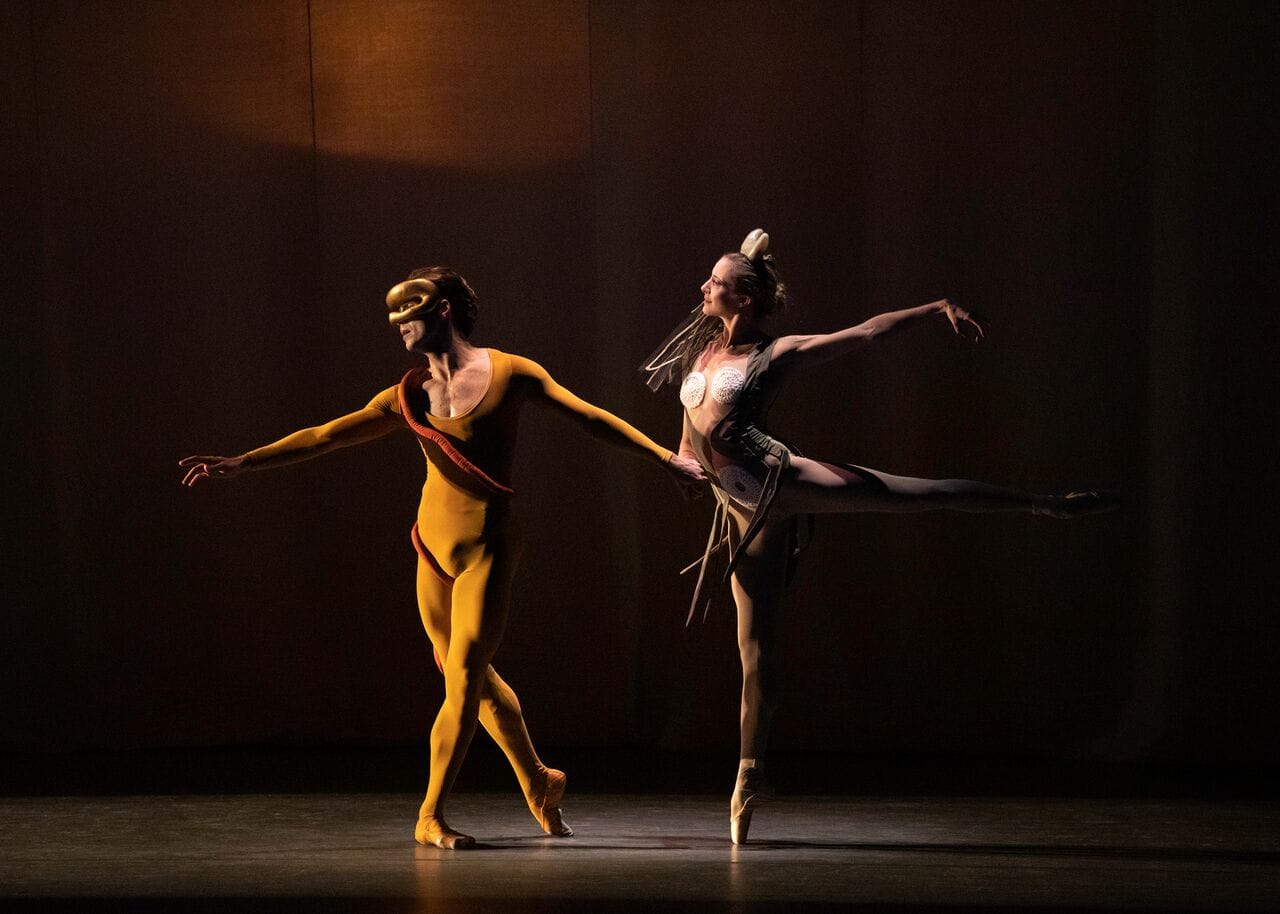
Apparently she succeeded on some level, for according some versions of Greek mythology, Orpheus was the son of Calliope and Apollo. His genealogy is not part of Balanchine's 1948 "Orpheus", but the work is seeped in mythological references. It is also decked out with Isamu Noguchi's sets and costumes, and though they look a bit fussy and dated to modern eyes, Noguchi's artistic boulders and bulging ornaments along with the graphic though often unflattering costumes, do grab the audience's attention. The ceremonial pacing of the story, so at odds with today's hyperkinetic moves and plotless ambiance, take some getting used to and it has never become a City Ballet standard (all of the dancers were making debuts). It does have moments of rare beauty and Gonzalo Garcia was a lyrically powerful Orpheus as he opened the work with his back to the audience mourning for Eurydice with all the concentrated stillness of a Greek statue. His slumped shoulders and tilted head creating a hauntingly beautiful picture of stylized and timeless grief.
Sterling Hyltin gave Eurydice a sweet-natured urgency, pleading for Orpheus to look at her. The fateful moment when Orpheus turned and ripped off his blindfold could have used a bit more despairing inevitability, as he couldn't help but doom Eurydice for one final glimpse of her face.
Unfortunately, these powerful theatrical moments were undercut by the Furies, who twirled decorously wearing some truly ridiculous costumes and the Bacchantes, in equally pathetic outfits, who tentatively and ineffectively tore Orpheus to pieces. Those magnificent Greek playwrights had their murders occur offstage with someone describing the horror, since violence imagined is more terrible than violence portrayed, but that would be hard to do in a ballet, and Orpheus' tragic death is somewhat inexplicable anyway (it isn't easy to make it clear via gestures that Orpheus made the followers of Bacchus angry when he ignored them so they became crazed and tore him apart).
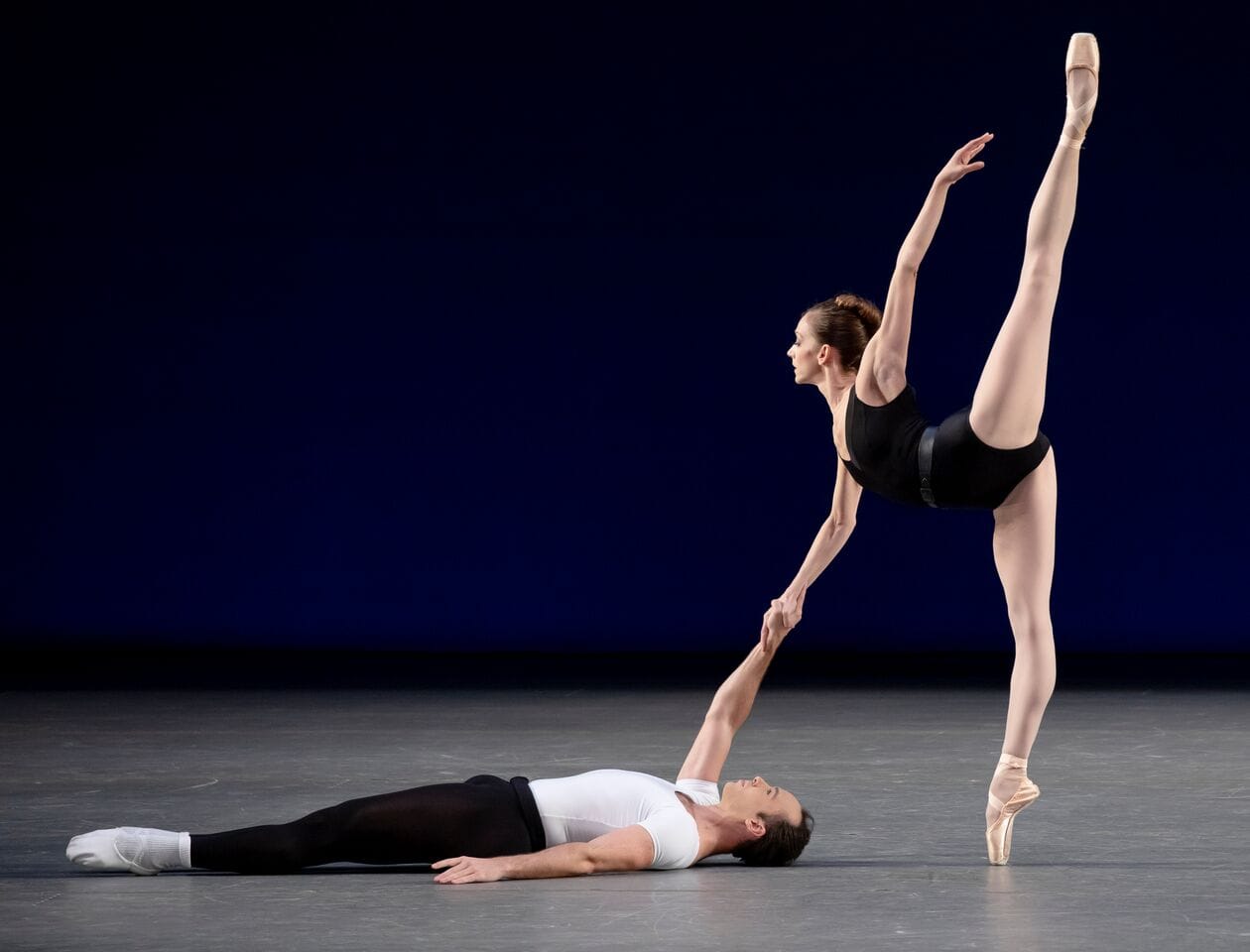
Unlike "Orpheus", "Agon" is performed often and it can sometimes seem routine as the shock of its immaculate musicality and daring simplicity wears off. However, possibly because of Arthur Mitchell's contributions, this performance seemed fresh and daring. Anthony Huxley's Sarabande had an easy flow, with clear and unexpected changes in direction. Megan LeCrone's Bransle Gay was astoundingly strong and she balanced with a confident fierceness, but I missed the musical wit that some dancers have; she didn't seem to be having any fun.
Maria Kowroski and Tyler Angle gave the pas de deux a mysterious and rather cool restraint, backing off from the overheated drama of some recent interpretations. Kowroski didn't underline her extravagant extensions with determined pauses or insistent stares as the audience but let the moves flow continuously and apparently without effort, which gave her dancing an unearthly, abstract flow, as if it were being danced in one continuous breath. It was a very welcome gift to the audience.
Copyright © 2019 by Mary Cargill



