Gods and Mortals
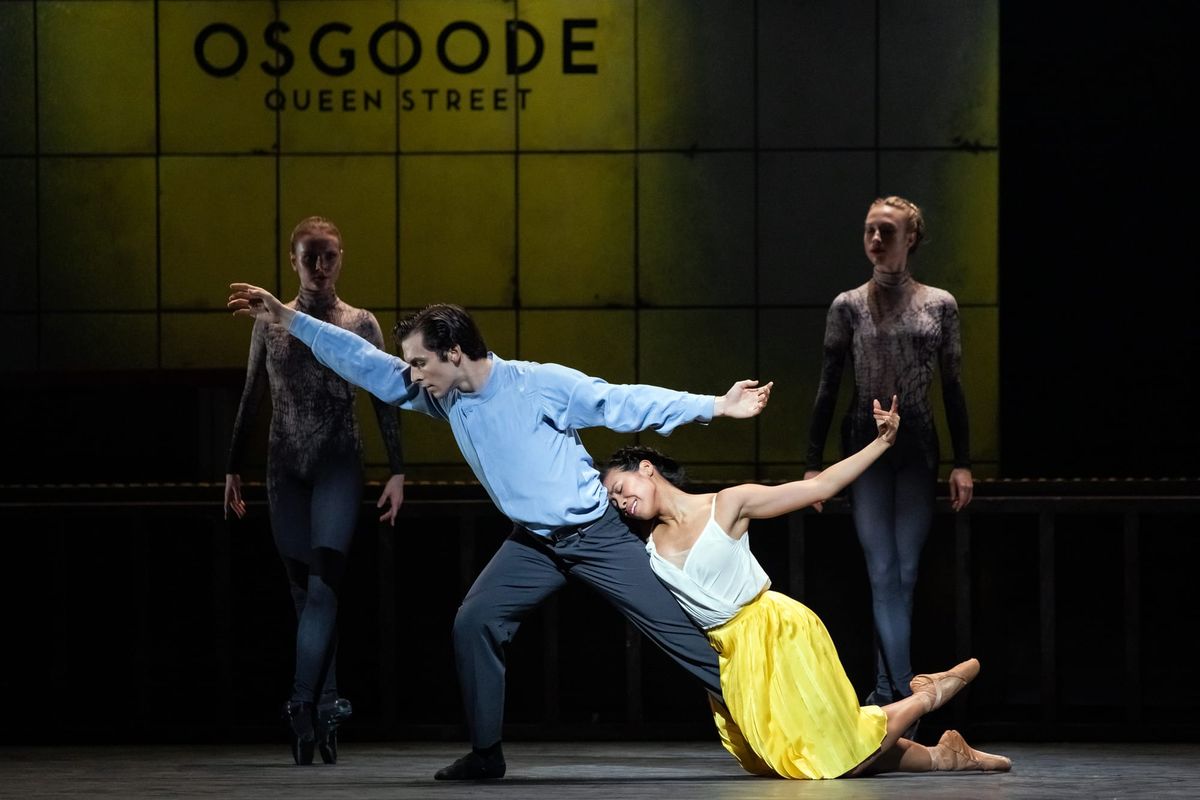
"Orpheus Alive", "Chaconne"
The National Ballet of Canada
Four Seasons Centre for the Performing Arts
Toronto, Canada
November 15, 2019
The Greek myth of Orpheus and Eurydice has inspired countless creative works over the years. The National Ballet of Canada's choreographic associate, Robert Binet, is the latest dancemaker to interpret this classic love story with his ballet "Orpheus Alive". It is a sweeping, large-scale work with a cast of 45 dancers and a running time of 73 minutes. Rather than a literal re-telling of the myth, Binet modernizes the narrative, setting it in present-day Toronto (and the Underworld). The dark, tragic tale is simultaneously infused with witticisms and the repeated breaking of the fourth wall. Sometimes it works, but often it does not. The overall feel of this risk-taking work is half-baked. There are rich ideas and interesting dance sequences, but if not for the elaborate sets and special effects, "Orpheus Alive" feels more suited to a choreographic workshop or fringe festival. It does not (yet) have the cohesion or polish of a finished mainstage production.
"Orpheus Alive" opens with a distorted arrangement of Gluck's "Orfeo ed Euridice" with dark lighting by Thomas Visser, setting a somber tone. The curtain opens to reveal mourners, dressed in black, moving painfully slowly. The effect is stirring. In a jarring 180 degree switch of tone, a phone rings and fluorescent lights switch on revealing a counter staffed by "Sharon, the Three Headed Monster" (Rebekah Rimsay, Alejandra Perez-Gomez and Tiffany Mosher is a wheeled office chair). An automated recording answers the phone in a chipper voice, "Gates to the Underworld, wait time – forever!" Here is a huge waiting room where grieving survivors hope for a chance to tell their story and bring back their lost loved ones. It is turned into a comedy, as mourners are subjected to taking a number, like at the deli. An overhead display (a screen usually used for opera surtitles) displays a comically long number.
Among the mourners is Orpheus, here a role for a woman, Jenna Savella. When it is her turn, she takes the microphone and appeals to the audience to let her share her story of woe, but asks for longer than the standard 5 minutes allotted to each person. "I don't like to talk", she explains. This Orpheus is a dancer, not a musician. She has an elaborate production up her sleeve to try to sway the gods to bring back her lover, Eurydice. The jury of gods is played by us, the audience, to whom she speaks directly from centre stage. As she begins, the ballet takes on a cinematic tone with film-style opening credits projected on the screen. In a tongue-in-cheek maneuver, the evening's cast is displayed ("Spencer Hack as Eurydice.."), ending with "Orpheus as Orpheus". Without a doubt, this is her interpretation of events, embellished at times to elicit sympathy. Her play within a play features the tagline "the saddest and truest story ever told", with several more lines of fluffy descriptors. Ironically, it ends with "and not too long," although it most certainly is.
What follows is a reenactment of Orpheus and Eurydice's first meeting on a subway platform. Hyemi Shin's designs perfectly mimic a Toronto station. In this self-referential work, of course it is Osgoode, the station above which this performance takes place. Savella and Hack dance a tender pas de deux. A gaggle of unitard clad furies appear, followed by foreboding apparitions. In case the gender play of having a female Orpheus and male Eurydice did not register, a series of pas de deux for the apparitions hammers it in. There is a pas de deux for a cis-gender coupling of a man and a woman. Then there is a similar duet, but with the man wearing a skirt and the woman in pants. Next, a pas de deux for two men followed by -- wait for it -- a pas de deux for two women. Perhaps Binet's ballet is too long because ideas are repeated so many times, as he does not trust the viewer to fill in the blanks. Finally, Euridice dies by suicide. Sonia Rodriguez plays his grieving mother. A screen projection of water fills the stage as Eurydice crosses the River Styx to Hades. The rest of the story is familiar.
The play is interrupted as Rodriguez picks up the microphone and addresses the audience directly. She questions her role and complains about her being cast in the production simply as a pathetic character. Both Rodriguez and Savella have extended monologues that are at times abrupt and do not add to the narrative. They are brilliant dancers, but not trained actors, and these spoken text passages by playwright Rosamund Small are stiff and awkward.
"Orpheus Alive" continues in the trend of new productions at the NBoC which rely on gimmicky stage effects and high tech screen projections. While impressive, these production components should compliment but not replace actual choreography. Perhaps in an attempt to appeal to the Broadway musical-going crowd, these ballets totally alienate many ballet-goers who come to the theatre primarily to see dance. For all its 73 minutes, there were only brief spurts of dancing. There were some interesting movement motifs and partnering, but it was frustratingly choppy to watch. Meanwhile, worthwhile explorations of loss, survivor guilt and the creative process were not truly fleshed out.
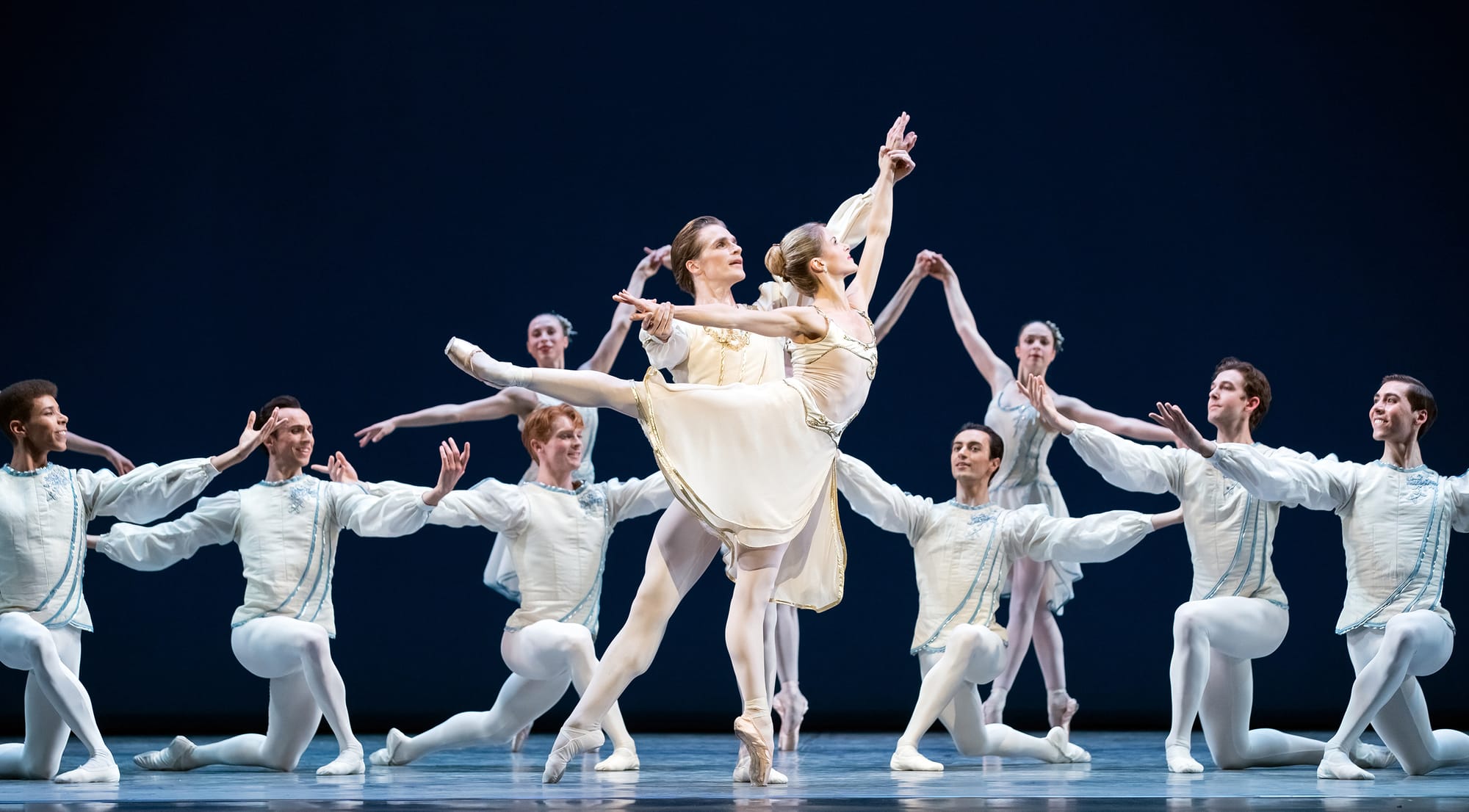
The evening opened with the company premiere of George Balanchine's "Chaconne". The music, Gluck's "Orfeo ed Euridice", ties it to "Orpheus Alive", but it is a pure dance work that does not literally interpret the Greek myth. It is a ballet with expressive and musical choreography for both soloists and the corps de ballet, spanning the celestial opening to the regal and ceremonial close. As Diana White once aptly described these sections, they are "different planes of heaven." Heather Ogden and Harrison James were serene with a hint of melancholy in the "Dance of the Blessed Spirits" pas de deux. Off-centre promenades and positions with the supporting leg in plié en pointe, with James' secure partnering, created the appearance of floating. Chelsey Meiss, Jenna Savella and Spencer Hack were radiant in the folksy pas de trois. The petite Jordana Daumec and Skylar Campbell were lively and playful in the second pas de deux. Campbell, in particular, breezed through the fiendishly difficult male variation. The craft of Balanchine's choreography can easily stand alone. There are no sets, and its 1976 premiere was danced in practice clothes. What a reminder that a ballet must rely on movement, first and foremost, to tell a story or evoke a feeling.
copyright © 2019 by Denise Sum



