Godot and Warhol in New York
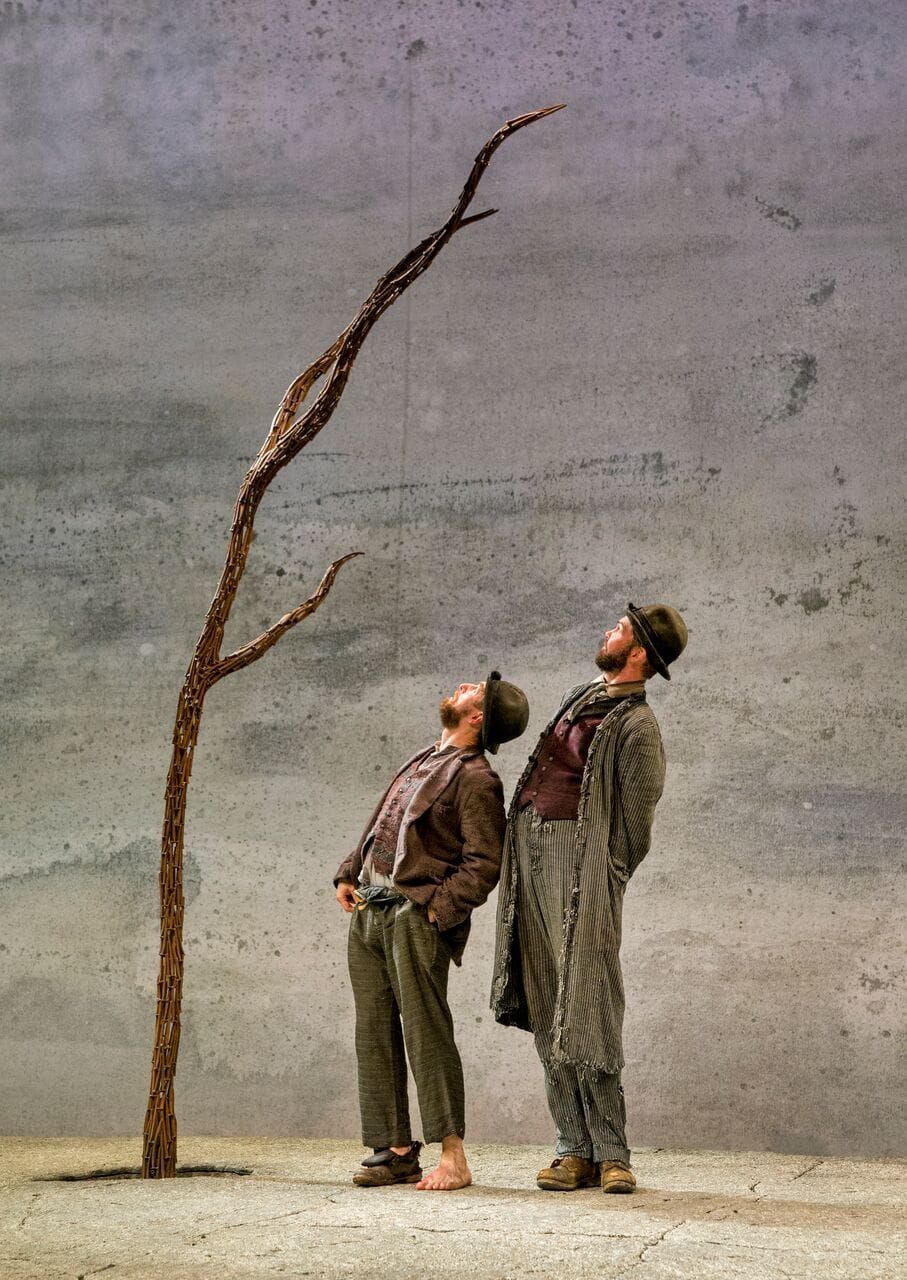
"Waiting for Godot"
By Samuel Beckett, directed by Garry Hynes
Gerald W. Lynch Theater, Lincoln Center, New York
November 5, 2018
"Andy Warhol – From A to B and Back Again"
Whitney Museum of American Art, New York
Opening November 12, 2018
In the mid-20th century, Samuel Beckett’s “Waiting for Godot” seemed like an end game. Two vagabonds meet daily by a tree, and hope for a deliverance that never comes. In Act One they decide to hang themselves, but can’t decide on the best method:
ESTRAGON: Use your intelligence, can't you?
Vladimir puts hand to head, uses his intelligence.
VLADIMIR: (finally) I remain in the dark.
Diversion arrives in the form of a master and slave, but they seem to be regressing towards doom. Pozzo oppresses his lackey Lucky, who babbles theology on demand. Pozzo goes blind as they exit in Act Two. Vladimir and Estragon remain waiting, but Godot never shows.
Ifeland’s Druid Theater plays “Godot” in a stylized comic manner, calling upon the traditions of Commedia Dell’arte, operetta, circus and ballet. This cool rendition makes for plenty of laughs, and also leaves room for a wide range of interpretations. Looking at it through American eyes in the 21st Century, it is possible to see “Godot” not just as a philosophical cul-de-sac, but as the experience of a historical epoch. Beckett worked on it in Paris in 1948-49, with European imperial civilization in ruins, and America the new leader of the Free World, powered by a burgeoning bourgeoisie. Europe had become the client of a former colony, and one with little history or culture. Vladimir and Estragon are stranded -- a pair of muddle-crass thinkers unable to make sense of anything without guidance from above, guidance which has gone missing, never to return. "We have kept our appointment," notes Vladimir proudly. But waiting for Godot is like waiting for enlightenment from Eisenhower.
Beckett was a natural Irish aristocrat, a vagabond in Paris, shocked to his toenails by the new world order. His vision resonated with intellectuals on both sides of the pond, and justified their pessimism. But this was not the only vision of the post-war world.
Here in America, a young man from Pittsburgh found a job in New York, drawing shoes for advertisements. He looked at the supposed cultural wasteland and saw the first fruits of a new culture, one that would reshape the world in its image.
In artifacts of consumer culture and images from mass media, Andy Warhol located the signs, symbols and desires of our new lives, and in his prolific work showed us the contents of our own minds – often surprising us with their revelatory beauty. In a coke bottle, a soup can, a tabloid newspaper headline, he captured both the creativity and conformity of American culture, the contradictory forces that are always with us and which shape the political battlefield today.
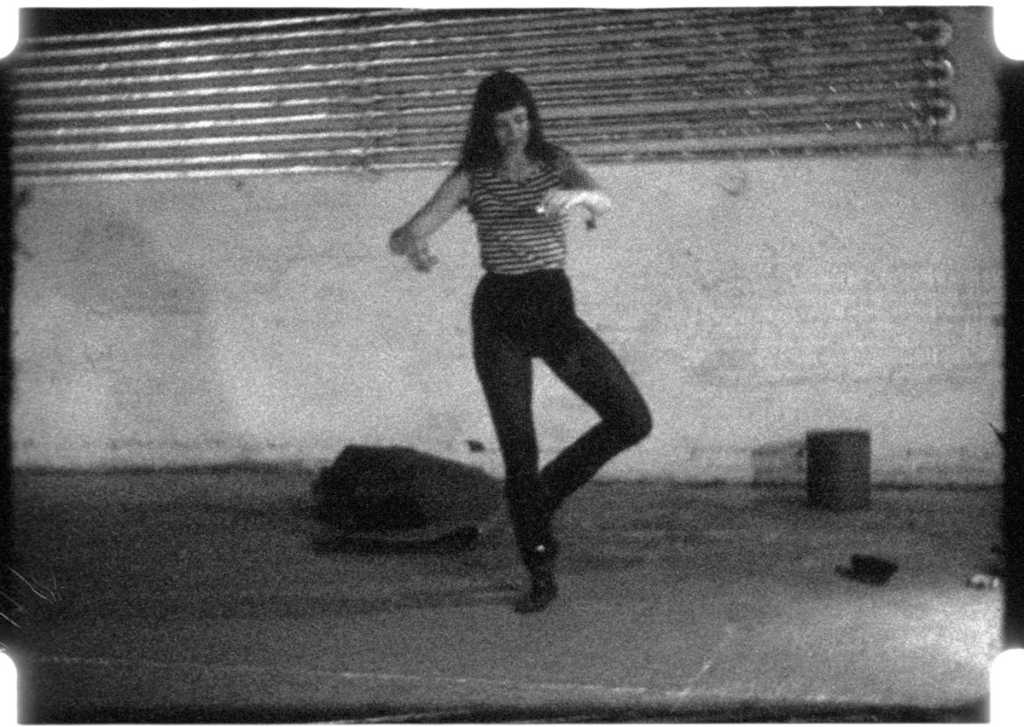
The Whitney Museum has filled three floors of its ample space with these artifacts and images, drawn not just from mass culture but also Warhol's more esoteric interests, one of which was dance. One of the selections on view in the third-floor movie theater is a 45-minute sequence of six silent, black-and-white dance films from the Sixties. Three are studies of dancer-choreographer Lucinda Childs. In the first she looks directly at the camera for four and a half minutes, a display of steely presence and beauty in repose. In the second she is somewhat restless, looking slightly off-camera at something of interest. The third shows only her shoulder, collarbone, upper left arm and partial chest, barely moving as she breathes. The last two films feature Jill Johnston, feminist revolutionary and dance critic for the Village Voice, dancing full-out on the border of self-expression and self-parody. In the 22-minute finale, Johnston performs a pas de deux with a wet mop and an armload of household objects, then climbs a wall to balance on a toilet tank, dangling one long leg toward the bowl as the camera runs out of film – the traditional ending for Warhol movies. The scene somehow recalled Pozzo's chilling line in "Godot" – "we are born astride the grave."
"Waiting for Godot" runs through November 12 as part of Lincoln Center's White Light Festival. "Andy Warhol -- From A to B and Back Again" will be at the Whitney Museum until March 31, 2019.
-- Copyright 2018 by Tom Phillips



