Girls' Night Out
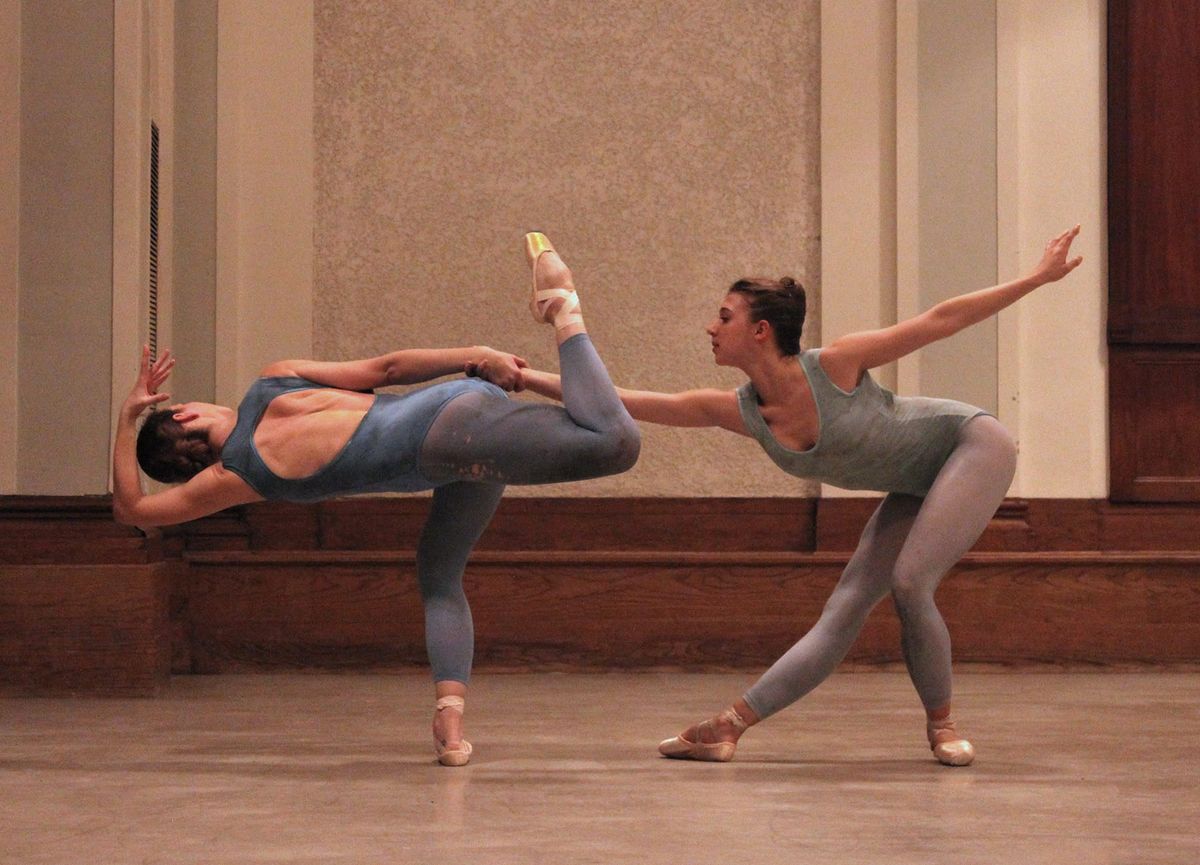
"Gravity", "The Other Woman", "Voicelessness", "Friction", "Mozart Trio"
New Chamber Ballet
City Center, Studio 5
New York, NY
November 20, 2015
Miro Magloire's New Chamber Ballet, a group of six female dancers and two musicians, performed five works (two premieres) in City Center's intimate Studio 5. The space is untheatrical--no curtain, no wings and no lighting, with the audience sharing the space sitting on folding chairs. But this just goes to show that any performance space can draw an audience in, and the evening had a casual elegance, as if the audience members were guests at a private party. The dancers, all ballet trained, though Magloire rarely uses classical steps, move with a combination of fluidity and strength; the choreographer uses complex partnering, which, without men, creates an equal push and pull dynamic.
"Gravity", a premiere, used violin pieces by Friedrich Cerna, played by Doori Na. Magloire explained in his brief introduction (he introduced each work, reinforcing the house-party ambiance of the evening) that Cerna is best known for finishing the orchestration of Alban Berg's opera "Lulu", and the solo had a piercing, a-tonal quality. The three dancers (Elizabeth Brown, Cassidy Hall and Tracy Finch) carried themselves with a restrained nobility and flowing arms, which gave an intriguing counterpoint to the spiky music.
"Gravity" played with shapes as the three dancers formed and reformed groups of two and one, falling and being supported as their bodies merged and melded with an astringent lyricism.
"The Other Woman", from 2013, set to a Bach violin sonata, is also astringent, with a dramatic undertone. The title was not a metaphor; the program described the work as a "minimalist look at a ménage-a-trois", and the formal richness of the Bach music gave the work a feel of timeless ritual while the dancers themselves (Elizabeth Brown and Holly Curran competing for Sarah Atkins) gave a piercingly personal tinge to the choreography. Atkins, in a snappy fedora, got a preening little solo, full of finicky steps, but there were also hints of regret and a true love for the other woman. The gender-bending aspects were not emphasized as Magloire was more interested in the universal emotions of attraction, betrayal and loss than melodrama.
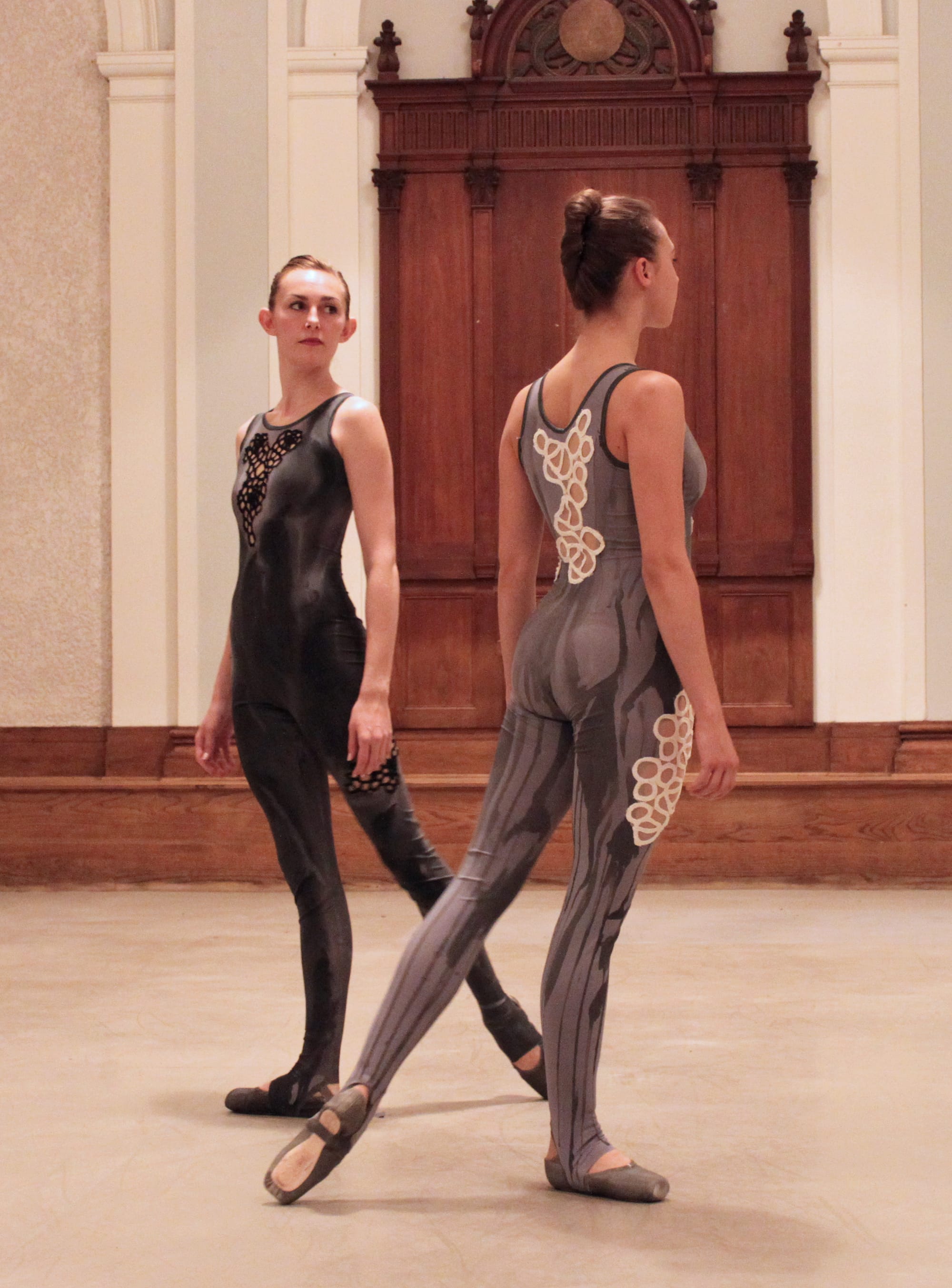
"Voicelessness", a premiere, was an abstract pas de deux for Cassidy Hall and Amber Neff set to a piano solo by Beat Furrer. It was a cool and dispassionate examination of shapes, full of complex lifts, as the dancers wrapped themselves around each other. The dancers moved with a deliberate yet intense calm, showing no strain yet attuned to every move, as if they were being pulled by some outside force. Magloire's confident use of space and the dancers' concentration drew the audience in and it had a hypnotic fascination.
"Friction", to a violin solo by Richard Carrick, was somewhat similar: a pas de deux for Holly Curran and Amber Neff which explored shapes with a push and pull between the dancers. It was spikier than "Voicelessness" but the two did tend to merge into each other. Both showed off Neff's long, flowing arms and immaculate control.
"Mozart Trio", choreographed by Constantine Baecher, who was appointed the company's resident choreographer in 2014, was a playful attempt to bring the audience into the performers' feelings by emphasizing, Magloire explained, "beginnings and endings". Traci Finch was our guide, describing the movements of Sarah Atkins and Elizabeth Brown was they whirled with enthusiasm and apparent spontaneity through sections of several Mozart sonatas. The narration ranged from the somewhat twee ("I'm at the end of Sarah's toes") to the breathily pretentious ("Life is a line. Maybe there is no happiness.") But the overall effect was spirited and it was invigorating to spend time with these dancers and the choreographers who clearly enjoy showing them off.
copyright © 2015 by Mary Cargill



