Full Force
"Playing with Angels", "When We Rise", "Tower", "Introducing Mrs. Stephen P. Baxter", "Criminal Commoners"
Mazzini Dance Collective
Ailey Citigroup Theater
Joan Weill Center for Dance
New York, NY
September 6, 2014
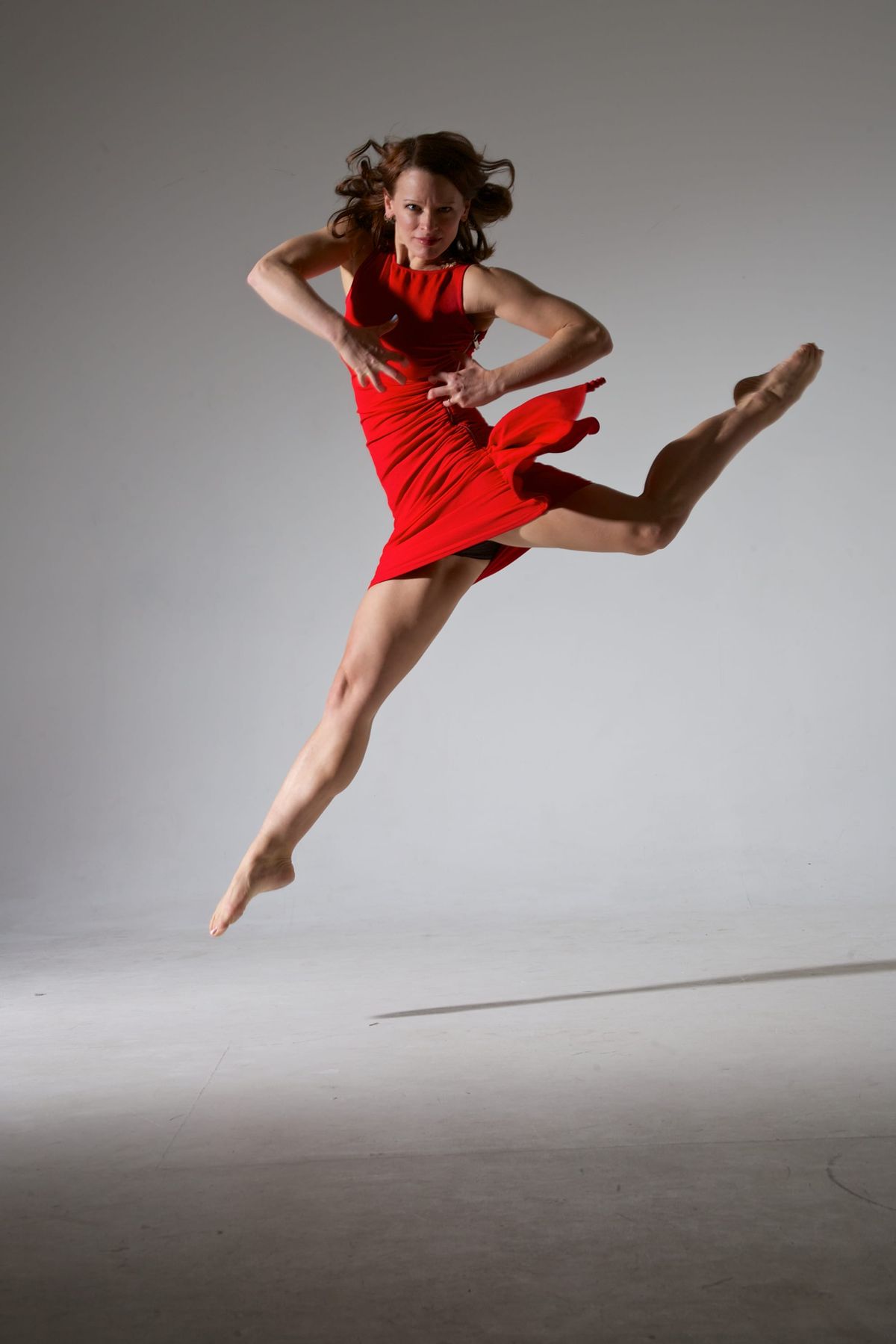
Annmaria Mazzini, formerly with Paul Taylor, has established a small company showcasing her own choreography; its New York season also featured two works by another Taylor alumnus, Orion Duckstein. Her choreography, like her dancing, is dynamic, incisive, luxuriantly feminine, and full of contradictions--woman as comforter, as seeker, and as avenging angel, danced with a blazing individuality.
The program opened with the premiere of Mazzini's "Playing With Angels", to live music (a piano and two bassoons) by Robert Paterson, and unusual and lilting combination. It began with a male dancer, Andy Jacobs, surrounded by four women wearing light, floaty dresses with Bertha collars that echoed and reinforced the wave-like moves. (Taylor dancer Aileen Roehl designed them.) The gentle opening gradually built as the music became more intense; there were hints of drama but no distinct story, letting the audience submerge itself in the flowing, shifting, ever-changing patterns. The dancers (Jacobs, with Audra Bailey, Elizabeth Bragg, Sara Mulry, and Samantha Silvers) looked terrific, individual yet cohesive, and they all had the radiant individuality that Mazzini always showed.
"When We Rise", a pas de deux by Duckstein, saluted his partnership with Mazzini--they had worked together from their first years in Taylor 2. The percussive electronic music (by Zoe Keating) surrounded the dancers as they seemed to find its calm center. Duckstein celebrated Mazzini's full-blooded dancing, as she carved out shapes in the air. This was a free woman. The final moment was stunning, as Duckstein bent over and straightened his legs with Mazzini standing triumphantly and unsupported on his back.
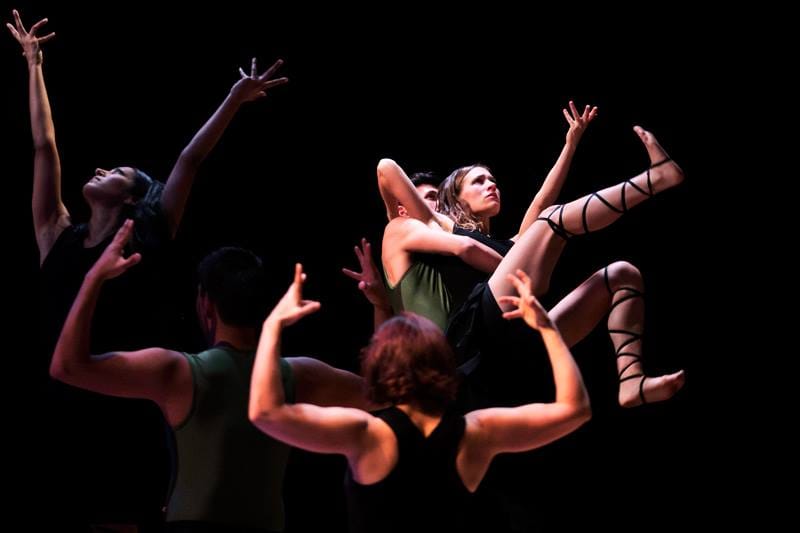
Mazzini's 2013 "Tower" is another atmospheric work, full of slightly menacing moves. The four women wore dark shifts with black strips on their legs, hinting at a "Rite of Spring" primitivism, reinforced by the claw-like hands and sideways poses. Like other Mazzini works, the constantly shifting shapes flowed seamlessly, and the dancing was fierce and fine; Audra Bailey, a blonde-haired beauty, was especially striking.
Orion Duckstein's "Introducing Mrs. Stephen P. Baxter" was another take on sisterhood. Originally choreographed in 2013 for the Dance Division of Adelphi University, it is an affectionate and slightly wry salute to women of the 1950's, with three completely oblivious men (all called Steve). "What are you studying" one asks. "Neuroscience". "Oh good--nursing". Mrs. Baxter, Rachel Jones, led the nine women, wearing colorful Donna Reed-style dresses with pearls and pasted on smiles, in a tightly constructed theme and variations romp through Les Baxter's cocktail lounge music. Occasionally some of the women would hint at rebellion, dancing with a quiet desperation, but the piece was not strident and there was a real, if humorous, affection for these women who ironed shirts and made cookies. The audience even got to sample some.
Mazzini's new "Criminal Commoners" was a harsher take on female nature, featuring Mazzini as a red-clad force of nature, dancing a fierce push-pull pas de deux with Francisco Graciano (a guest from the Paul Taylor Company) as a slightly sullen, shirtless macho-man. Mazzini danced with a hard-edged, slightly desperate sensuality, neither victim nor aggressor. Graciano finally swaggered off and Robert Kleinendorst (another Taylor guest) appeared, accompanied by Andy Jacobs and Johnny Vorsteg, as more gentle, nerdy guys in glasses and ties. But Mazzini still hankered after bad-boy Graciano, and danced with a blazing independence; the choice may have been wrong but it was hers alone.
The ending, a bit too literal, echoed the title of the Goldfrapp song "Monster Love", as Mazzini (now wearing a flowing white dress) danced into eternity with a man in a gorilla suit, literally embracing the animal in all of us. The audience embraced the company with well-deserved applause.
copyright © 2014 by Mary Cargill



