Fresh Faces
"Valse-Fantaisie", Kammermusik No. 2", "Union Jack"
New York City Ballet
David H. Koch Theater
Lincoln Center
New York, New York
October 1, 2019
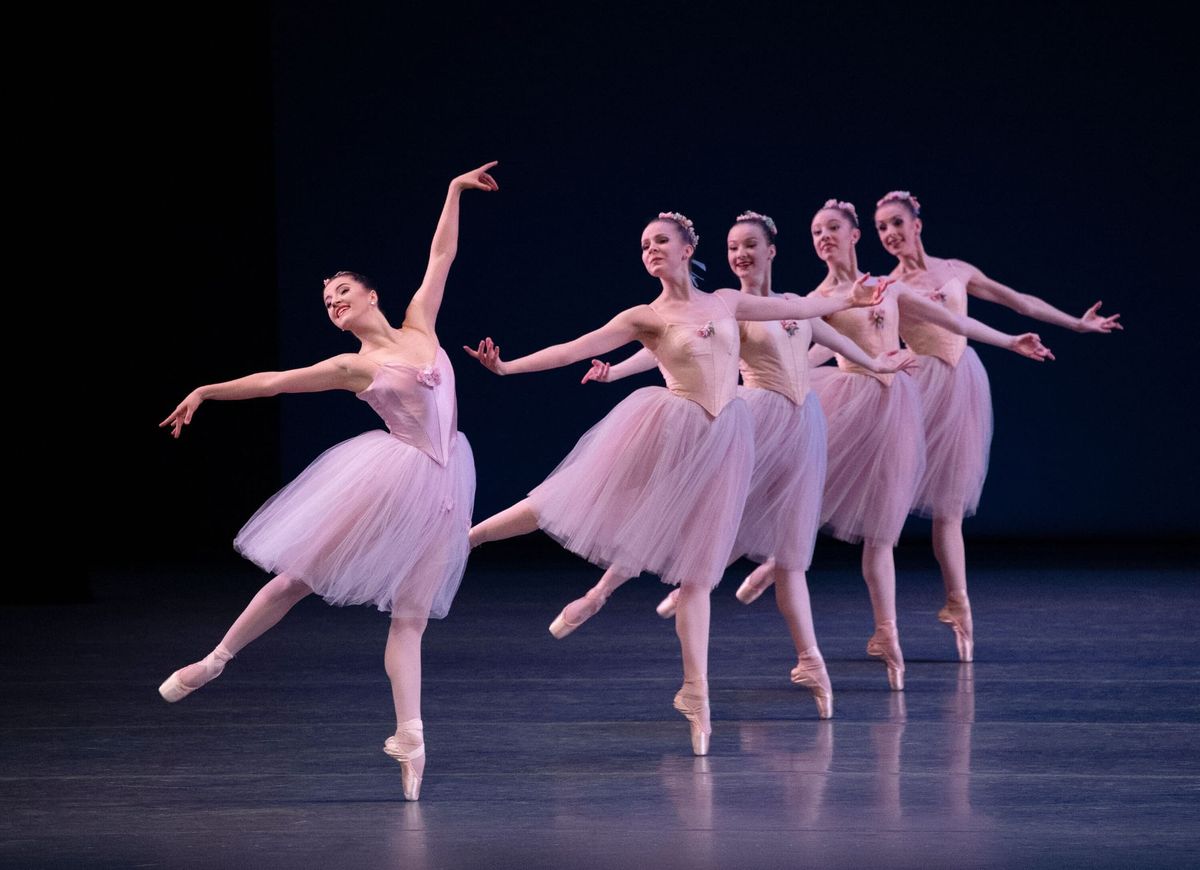
This Balanchine triple bill showed a breathtaking variety of styles, as well as an impressive number of fearless, accomplished debuts, especially in the exacting "Union Jack" with its phalanxes of precision marchers. There was no marching in "Valse-Fantaisie", Balanchine's 1967 spun sugar valentine set to Glinka's lilting, sweeping melodies. This extended pas de deux, augmented by four elegant sprites (the dancers do have to breathe) is an exercise in delicate allegro, full of little jumps and changes of direction.
In "Valse-Fantaisie", Indiana Woodward and, in his debut, Roman Mejia both danced with stylish and controlled abandon. Mejia's partnering was particularly impressive, as he unobtrusively lifted and lowered Woodward, letting her float through the positions. Mejia has a powerful jump, which he modulated so he seemed to soar without effort. But his dancing was not just about moving, he was able to dig into the music, and in an especially memorable moment, knelt to the floor and swept his arm up in a slow, romantic salute to his partner (the same move shows up "Emeralds" also from 1967). Woodward, with her luminous face and luscious upper body, seemed to ooze perfume, dancing with an open hearted joy, devoid of artifice.
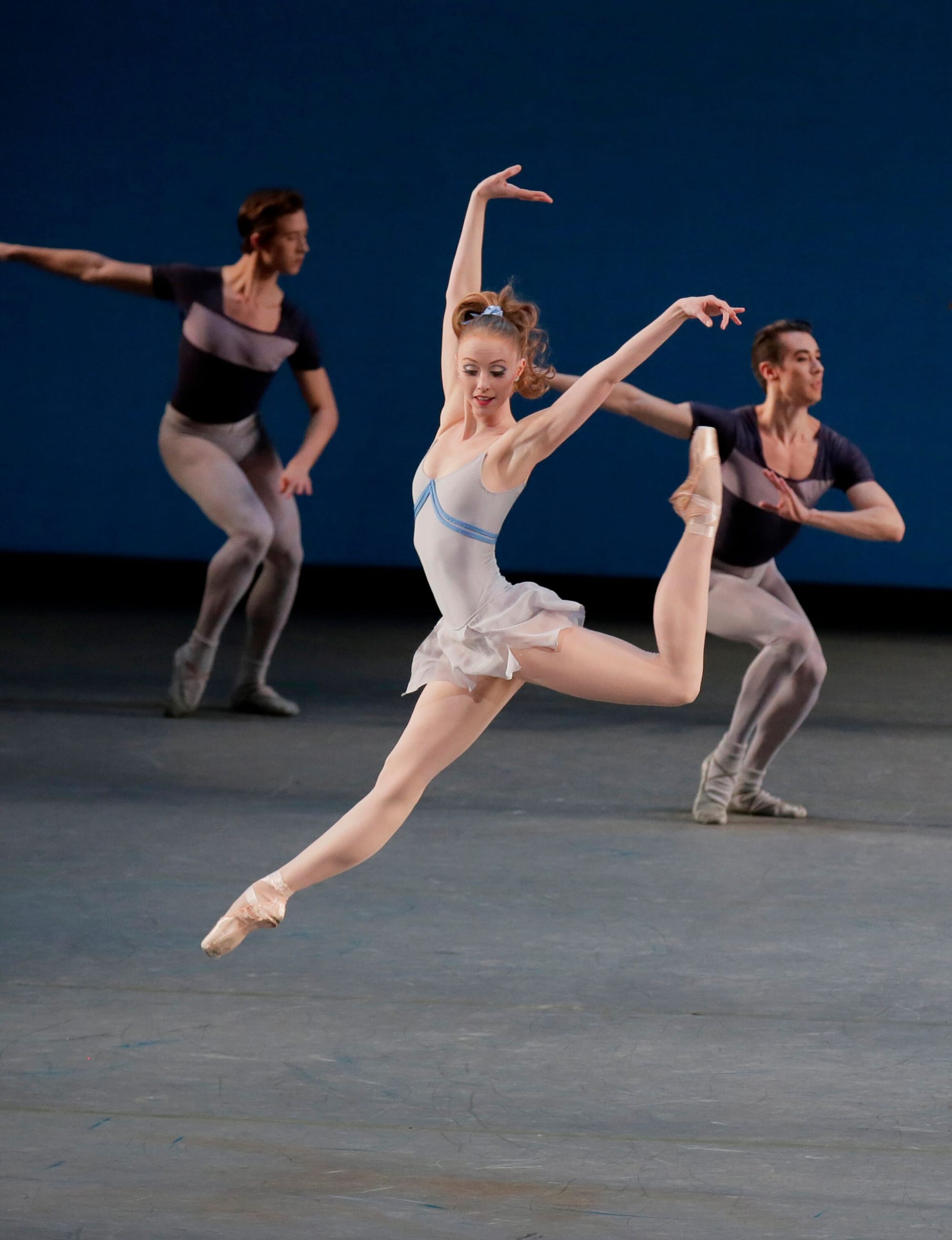
"Kammermusik No. 2" did not float, as the eight corps members and two couples (Teresa Reichlen with Joseph Gordon and Abi Stafford with Russell Janzen, all except Reichlen making their New York debuts) chugged through the percussive, energetic music. The performance, though, has lost some of the original sharpness and was danced with an almost lighthearted quirkiness. This had its own charm, and Stafford's delicate mystery as she hid her eyes was especially intriguing, but she did not pair well with Reichlen's passive coolness.
Gordon danced with a smooth elegance which tended to flatten the distinctive shapes. Janzen, on the other hand, moved with an angular ferocity. A number of years ago I heard a discussion by an original cast member who said that Balanchine stressed that he didn't want the dances to be pretty, and Janzen, like a coiled spring, was powerful and intense and thankfully not pretty.
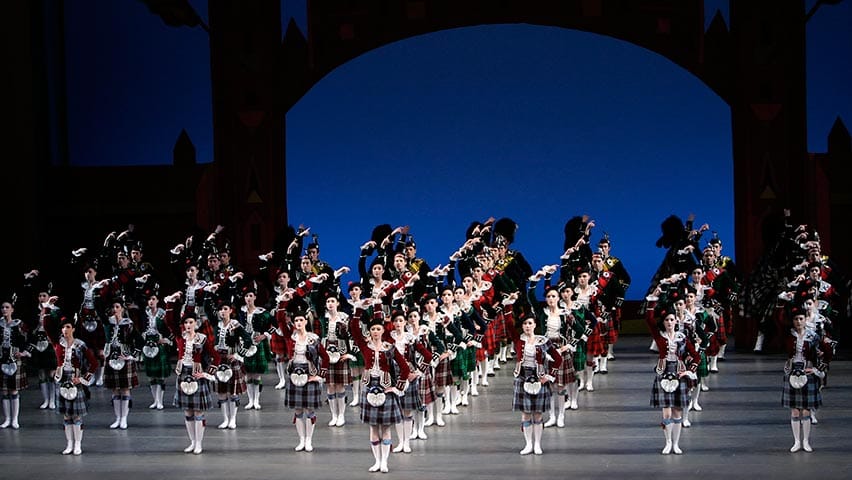
"Union Jack" has a powerful intensity as well, especially the opening, as the various clans march in with an elemental and thrilling percussive rhythm, filling the stage. The unfamiliar style, requiring a quiet upper body with a steady, grounded walk, came and went. Lauren King's "Green Montgomerie" debut was a joy, as she bounded with generous ease through the folk melodies. (Yes, the women were wearing kilts, which are men's costumes, but Balanchine was making a theatrical work, not an ethnographic one.) Unity Phelan's debut as the leader of the MacDonalds, though, was a bit light and frisky, a bit too balletic, but the overall impression of the slow, unified processions as they departed to "Amazing Grace", was haunting.
Lauren Lovette and Daniel Ulbricht made their debuts in the Costermonger pas de deux, the sprightly entr'acte between the set changes. It is a salute to the cheeky Cockneys of the old music-halls and, like all comedy, is difficult to get right. Lovette and Ulbricht made an enthusiastic attempt, but were a bit labored. Lovette looked lovely in her feathered hat and danced with gusto, though she remained a ballerina pretending to be slumming. Ulbricht was a bit too knowing, dancing with an eager push that seemed to hint at Youtube rather than the cramped, smokey, and intimate working class music-halls.
The third section, though had all the hornpipe flair it called for, with the soloists (all debuts except for Andrew Veyette and Ashley Bouder) dancing like a particularly high spirited crew of the H.M.S. Pinafore. Veyette swaggered through his solo with a loose-limbed and charming exuberance. The trio – Ralph Ippolito, Unity Phelan, and Lars Nelson– flew through their fleet, complicated footwork and Ask la Cour gave his solo a quirky individuality.
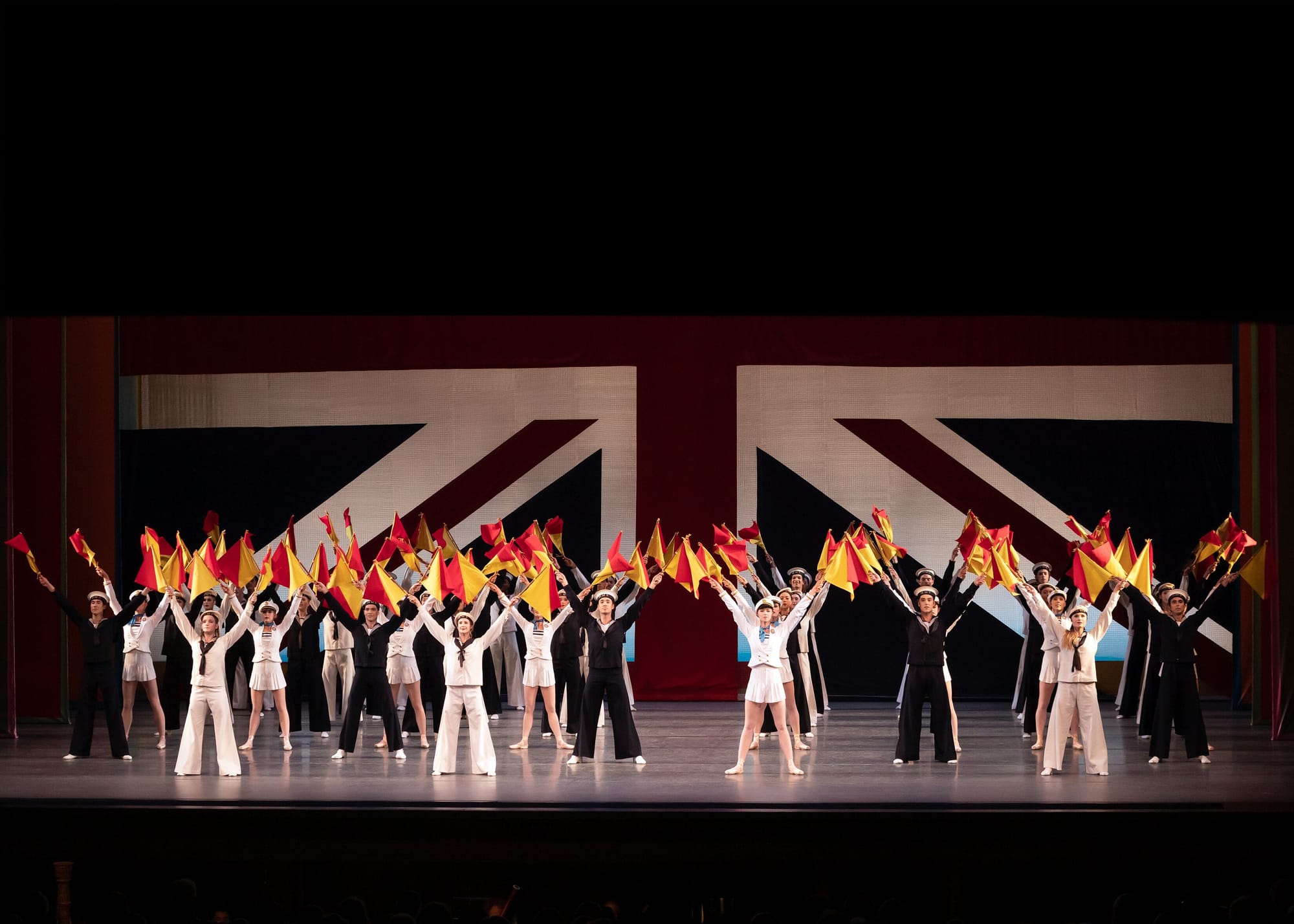
Bouder, as the leader of the WRENS, danced with a confident and winning power, but the role really does need long legs, and her jumps, while strong, couldn't really soar. She did, though, with the rest of the cast, give the final semaphore a fine military clip. It may be old fashioned, but there is something truly moving about a rousing patriotic song (complete with cannons), and I suspect that I was not the only one to walk out a little taller, and "never, never shall be slaves."
Copyright © 2019 by Mary Cargill



