Freezing in Miami
Miami City Ballet: "The Fairy's Kiss" by Alexei Ratmansky
Works & Process
Peter B. Lewis Theater
Guggenheim Museum
New York, NY
January 29, 2017, afternoon
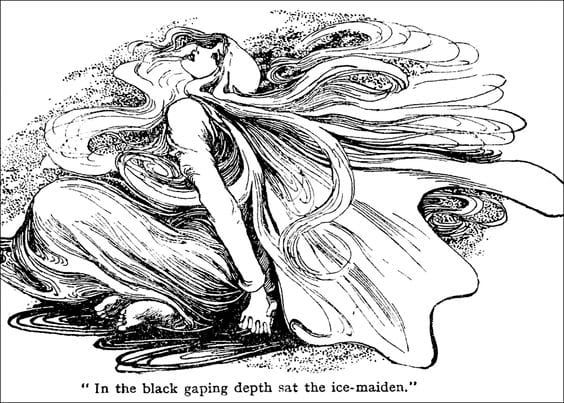
The Miami City Ballet is premiering Alexei Ratmansky's "The Fairy's Kiss" in February, set to Stravinsky's "Le Baiser de la Fée". Stravinsky's music was inspired by both a Hans Christian Andersen story and the life and music of Tchaikovsky. The original tale, "The Ice Maiden," is a dark and complex story of an orphan boy claimed by the dangerous ice maiden, another "man challenges nature and loses" saga. Stravinsky, who had been commissioned by Ida Rubinstein in 1927, changed the focus to man meets artistic destiny. He honored Tchaikovsky on the 35th anniversary of his death by reworking his musical ideas and themes. (This was a fairly radical idea in the 1920s, when Tchaikovsky was considered completely passé by the art world.) He developed a scenario telling of a young man whose mother died in a snowstorm, and who, at his betrothal to a charming peasant girl, is claimed by the ice maiden (in the guise of a gypsy) who leads him away from his settled life and on to his artistic destiny; the artist as the eternal outsider.
Illustration by Helen Stratton.
Many choreographers have been attracted to the story and the music, including three twentieth century giants, though none of these versions have had staying power. Bronislava Nijinska choreographed the original 1928 version and Frederick Ashton (who had been with Rubinstein in 1928) tried in 1935. Balanchine told the story several times, beginning in 1937, but only his abstract version of 1972, set to the suite and ignoring the story, has had staying power. The ingenious Works & Process hosted Alexei Ratmansky, Lourdes Lopez (the director of the Miami City Ballet) and Wendall Harrington, the designer, and they were interviewed by dance historian and gracious host Doug Fullington.
Lopez and Ratmansky discussed the reasons for his new version. Lopez began by explaining that when she saw his "Symphonic Dances", which her predecessor Edward Villella had commissioned, she was so impressed that a guest choreographer could draw out individual and unique qualities from the dancers, and had always hoped to get him back. Ratmansky added that he had found the company incredibly musically sophisticated and that he loved working with then. Lopez had asked for a story ballet of about 45 minutes, and she and Ratmansky had discussed various Russian-themed ideas, from Pushkin to Russian fairy tales. For Ratmansky, though, there was one problem -- all the great music had already been made into stories; Lopez was wary of a commissioning a new score. Ratmansky had suggested "The Fairy's Kiss" which she thought perfect; he then explained to the audience his history with the score. As a Bolshoi student in the late 1980s, he had purchased the score; even as a student he knew he wanted to choreograph. Russian was still Communist and Stravinsky, as a refugee, was still somewhat suspect, but eight years later he used the score in a choreographic competition. Four years later he was asked to do a ballet for the then-Kirov Ballet and he revised his choreography. (Lopatkina was the fairy.) He said that Gergiev had wanted to revive it, but Ratmansky thought it still needed work, so was delighted to get a chance to do another version; the Miami ballet, though it sticks to the story, has new choreography.
The audience got to see Ratmansky coaching some of the dancers. Renan Cedeiro as the groom danced his pre-betrothal solo, and Ratmansky stressed the emotions behind the moves, bending and turning the torso, breathing to give buoyancy, shading the steps to build excitement. Simone Messmer danced the fairy's solo which was full of quick steps and bending shapes. Ratmansky explained that there is a bit of Aurora's vision scene there; when his reconstructed "Sleeping Beauty" was performed in Paris, Pierre Lacotte had shown him a phrase from Kschessinskaya's version; there is an incomplete notation of her dance in the Harvard collection, and Ratmansky said the phrase fit the floor pattern perfectly. It also fit Stravinsky's music in the fairy's solo so she dances it -- Petipa and Tchaikovsky, together again.
One of the issues with the earlier versions, Ratmansky felt, was the ending; how can a choreographer show an artist striving to reach his destiny? Balanchine famously had his fairy and her captive climbing up a net curtain. Ratmansky said that the video technology Wendall Harrington is using for the scenery will allow his ending to quote from iconic ballet apotheosizes, "Apollo", "Swan Lake", and others. "I just wish there was more music", he said. And I just wish the Miami City Ballet can bring this work to New York.
Copyright © 2017 by Mary Cargill



