For Maria
"Scotch Symphony", "Sylvia: Pas de Deux", "Firebird"
New York City Ballet
David H. Koch Theater
Lincoln Center
New York, New York
February 5, 2025
In her gracious introductory speech to the evening’s program, Wendy Whelan honored Maria Tallchief, born 100 years ago. Balanchine choreographed the three ballets performed, “Scotch Symphony”, “ “Sylvia Pas de Deux”, and “Firebird”, for her. These works showed her impressive range, from the lyrical “Scotch Symphony”, the rigorously classical “Sylvia”, to the dramatic “Firebird” and all three received magnificent performances. Both “Scotch Symphony” and “Firebird” are rooted in earlier ballets, and, to be honest, have somewhat muddied story telling, unlike the originals. “Scotch Symphony” is a meditation on the Romantic tradition, especially Bournonville’s “La Sylphide”, which was also set in the exotic Highlands. Balanchine’s sylph seems to wander between misty unavailability and bourgeois happiness, between being threatened or being protected by the ominous Highlanders. The Mendelssohn music (the last three movements of his “Scottish Symphony”) and the sets and costumes evoke a definite place, and this specificity, for me, calls for characters telling a story, while “Scotch Symphony” ricochets between moods at the drop of a tartan. The ballet works best, I think, if watched as if it were a dream, with a dream’s lack of logic; just enjoy the luscious choreography.
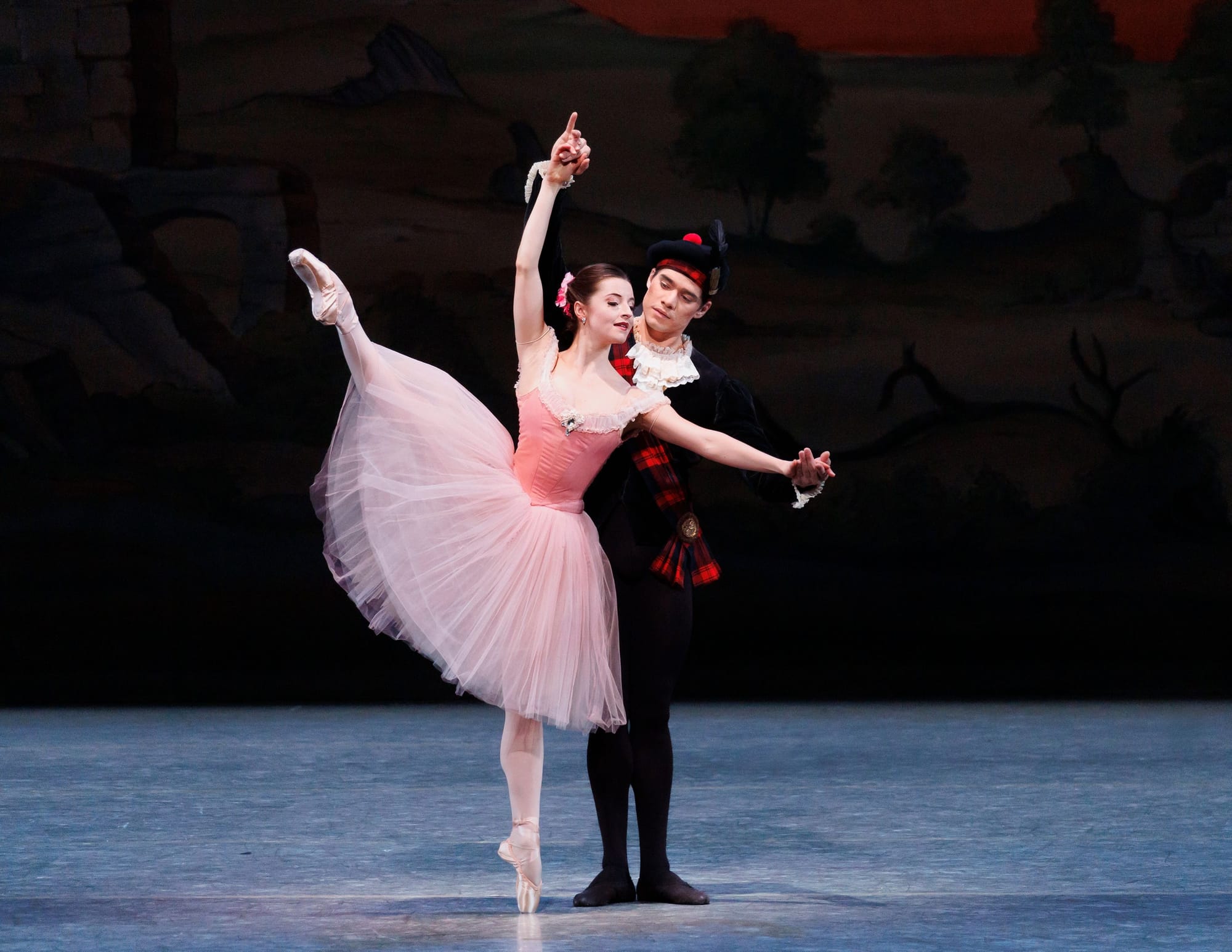
Indiana Woodward, in her debut, with Jovani Furlan, danced the anonymous couple. In 2016, Woodward, still in the corps, made an impressive and moving debut in Peter Martins’ solid, if rather plain, version of Bournonville’s famous ballet, and this nuanced interpretation seemed to inform her Balanchine-inflected sylph. She was gentle, enticing, and magical when first meeting the man formerly known as James, with her smooth upper body subtly hinting at the famous sylphide poses as she softly leant towards him. Her dancing was gloriously smooth—those elegant, unexaggerated arabesques were so beautiful, and her sweeping turns and delicate jumps did make it seem like she was floating above the stage.
She was admirably supported by Furlan, who gave the role an understated melancholy, another hero reaching for one of those unavailable dreams. In the rather jarring finale, though, the sylph does materialize and all ends happily with a conventional marriage and a safe, bucolic future.
There is nothing safe or bucolic about “Sylvia”, which Balanchine, using the music from the full-length Delibes ballet, choreographed for Tallchief in 1950. It was last danced at City Ballet in 1994, during the Balanchine celebration, with an impeccably magnificent Kyra Nichols, and then it inexplicably disappeared. (All the choreography didn’t vanish though, for Balanchine did reuse the male solo in his “Coppelia”.) It is a light, airy salute to the Second Empire, full of charm and grace—the partnering is often done with the fingertips as the dancers are arm length apart. It is also full of technical challenges, with myriad hops of point and tricky balances, all of which must look natural and easy. Megan Fairchild and Joseph Gordon were absolutely astounding. The negotiated the technical challenges with a gracious lilt without a hint of extraneous bravura and seemed to be dancing for pure joy.
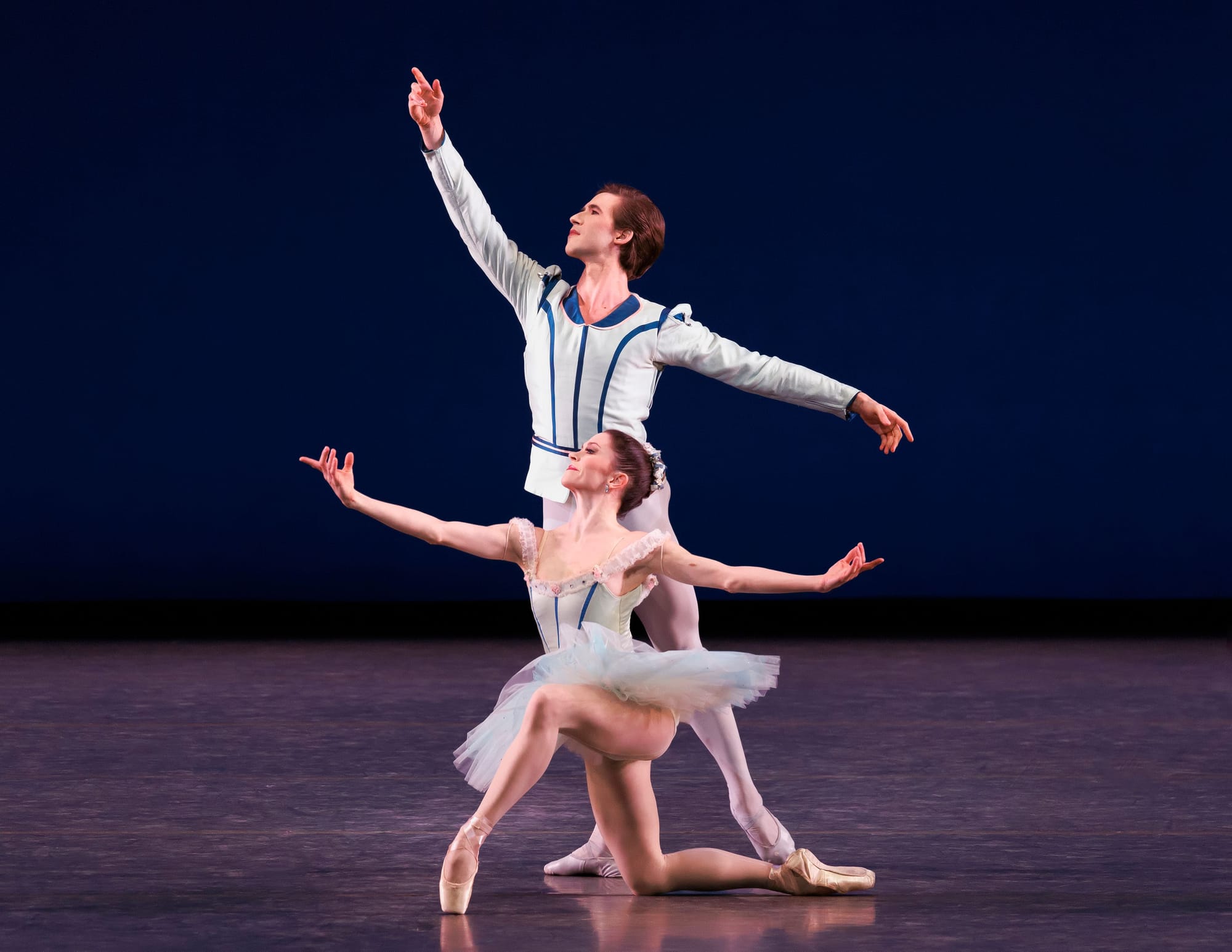
Fairchild has always been a fine and precise dancer but here she added an expansive and gracious ease; her balances seemed to be supported by the music, not her muscles and she seemed to float through the adagio. Her solo, to the famous Pizzicato, was full of hops on point which were both crisp and musical; her ankles, it seemed, were made of steel while her upper body was pure chiffon. Gordon danced with a quiet dignity, floating through his airy cabrioles in the solo, building up to some amazing turns in the coda, where he alternated turns a la seconde with tight, controlled pirouettes which left the audience gasping. I just hope the piece doesn’t disappear for another 30 years.
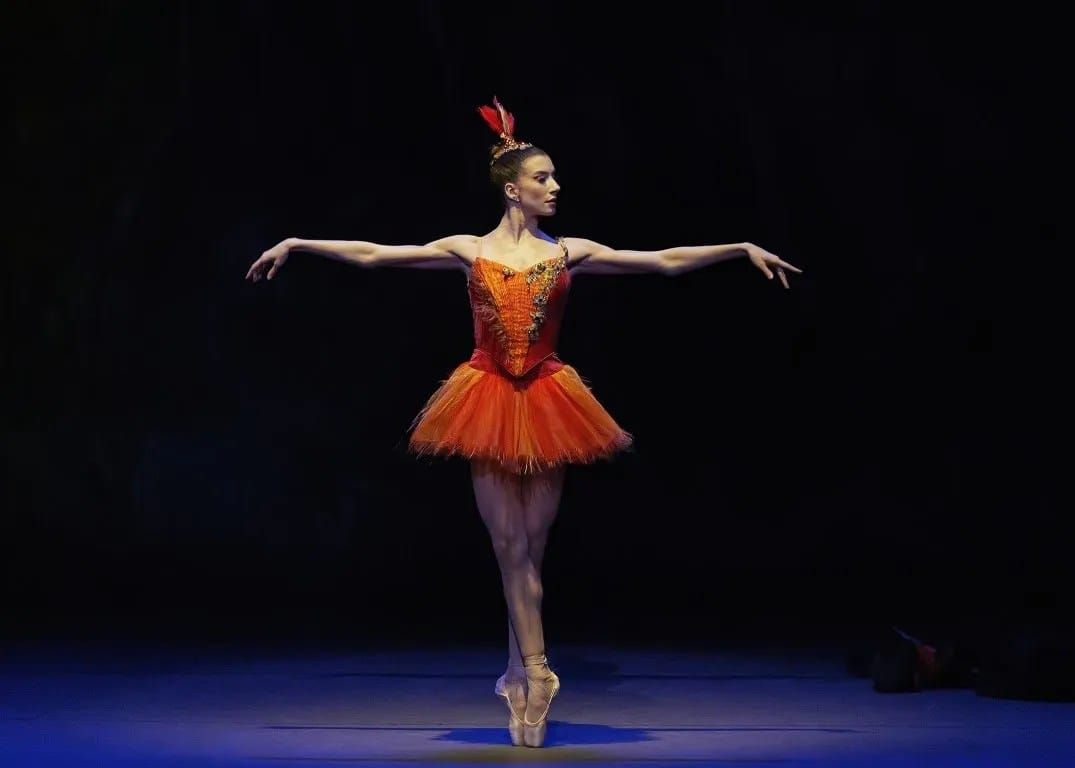
“Firebird” isn’t about to disappear, the bird’s choreography is so magnificent that the stylistic issues are secondary, though the neon monsters do seem to be getting sillier, and evoked some audible giggles. Ashley Hod was a fierce and feral bird with wing-like arms and a strong, sky scraping split jump. Her opening dance with the Prince was enthralling, though I do miss the original Fokine choreography where she pleads so eloquently for freedom; it makes it clear that she gives him the magic feather as a bribe to let her fly away. She was hypnotic in the berceuse, with powerful, rippling arms; the choreography is so potent that the odd placement (why does she need to put the castle to sleep after Kastchei has been defeated and the Prince and Princess have fled?).
Andrew Veyette was the Prince. He had little actual dancing, but Veyette was compelling, setting the atmosphere from the beginning as he crept warily and stealthily behind the scrim and his tense body and awed expression brought the magic forest alive. Miriam Miller gave the enchanted Princess a sweet-natured stylized reserve, a perfect fairy-tale creature, and her radiance gave the triumphant ending a fine exclamation point. So too did the conducting by Emmanuel Plasson whose vivid rhythms gave the dancers a fine support. The evening was a grand tribute to both Tallchief, Balanchine, the dancers, and not least, the audience.
2025 Mary Cargill



