Fluent Dancing
“Dance Me,” “Blanc,” “The Running Show,” “Chronicle”
Fall For Dance Festival - Program 5
Les Ballets Jazz de Montreal, Sara Mearns & Taylor Stanley, Monica Bill Barnes & Company, Martha Graham Dance Company
New York City Center
New York, NY
October 13, 2019
The most welcome part about the somewhat somber fifth program of the Fall for Dance Festival was that it was best absorbed as an experience, rather than as a source of deep meanings. The world premiere of the specially commissioned drama-ballet “Blanc,” by Kim Brandstrup, the soft launch of Monica Bill Barnes’s “The Running Show,” and Martha Graham’s time-tested “Chronicle,” all offered accessible and gratifying art. The best though, was the opening work – Les Ballets Jazz de Montreal’s poignantly moving “Dance Me,” to a selection of songs by Leonard Cohen, which set the tone for the program and left a soft echo even as the other works offered their delights.
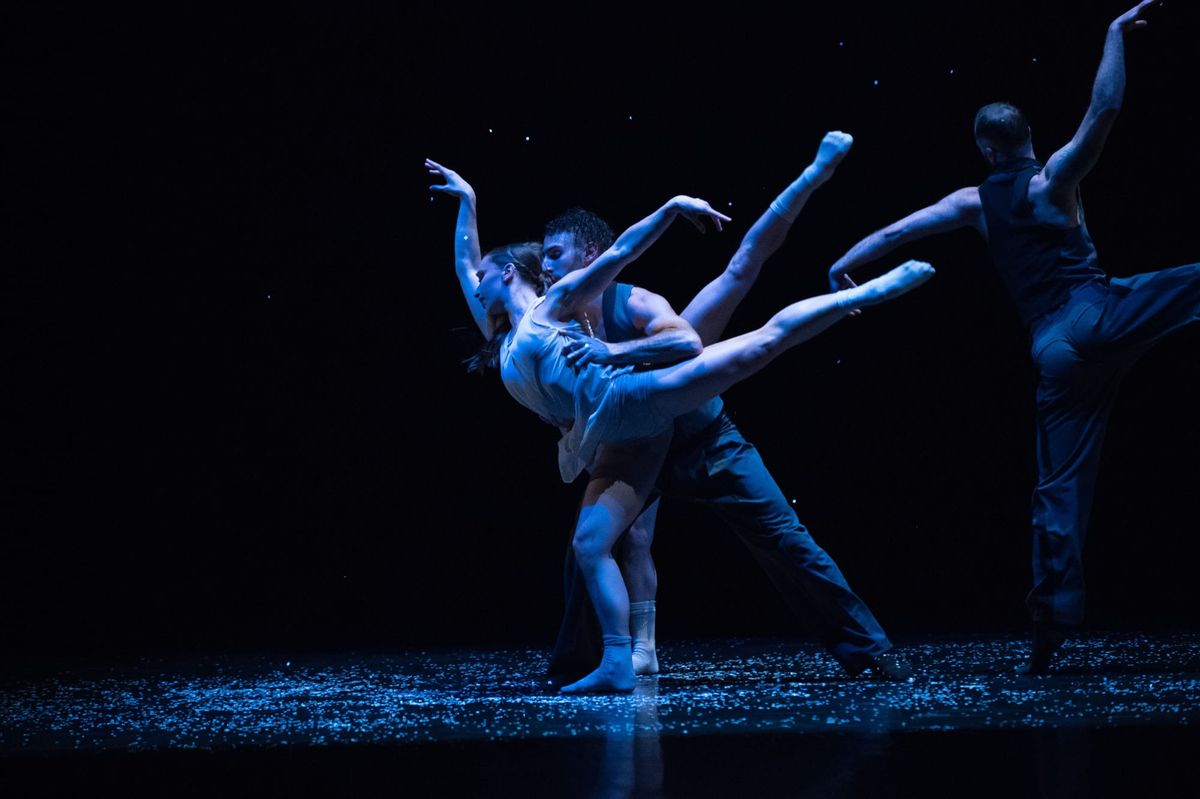
Of course, Cohen is like cashmere – you can hardly go wrong with the selection. The broader work, a seventeen-song tribute by multiple choreographers to the musical legend titled “Leonard Cohen’s Dance Me,” spans Cohen’s career, and was approved by Cohen before his passing. For the Festival, the company presented just three excerpts set to “Suzanne,” “Famous Blue Raincoat,” and “Nevermind.” There were no statements being made, the dancing seeming an extension of Cohen’s songs into a more physical existence, but it was clear that the tribute was special to the company, and the choreographers avoided taking the easy route of falling back and letting the music do the work.
Each dance had an individual flavor and take on the accompanying song. “Suzanne,” created by Ihsan Rustem, a duet with the woman’s feet never touching the ground, crafted the female role as a reflection of the song’s ‘Suzanne’– the dancer was just as elusive, just as intriguing. In “Famous Blue Raincoat” by Adonis Foniadakis, the steps brought forward the enveloping softness of the song. Combined with the lighting by Cedric Delorme-Bouchar and Simon Beetschen, the falling “rain” made of paper, which sometimes looked like snow and maybe rose petals, it all created a visual effect to match the warm, soft, but pained acceptance and forgiveness of Cohen’s complex lyrics and moving melody. There was a male duet at first then a woman was introduced into the physical narrative, the fast movements to the slow song, adding energy to the vocal pace. The last section, also by Foniadakis and set to “Nevermind,” was an ensemble piece of edgier movement with dancers in partially stripped-down business suits, their movements uniform, resigned, but also defiant. Though the lyrics suggest a single person perspective, the work extended that to a more plural experience. Once again, whether intentional or not, extending the song; once again, a worthy tribute.
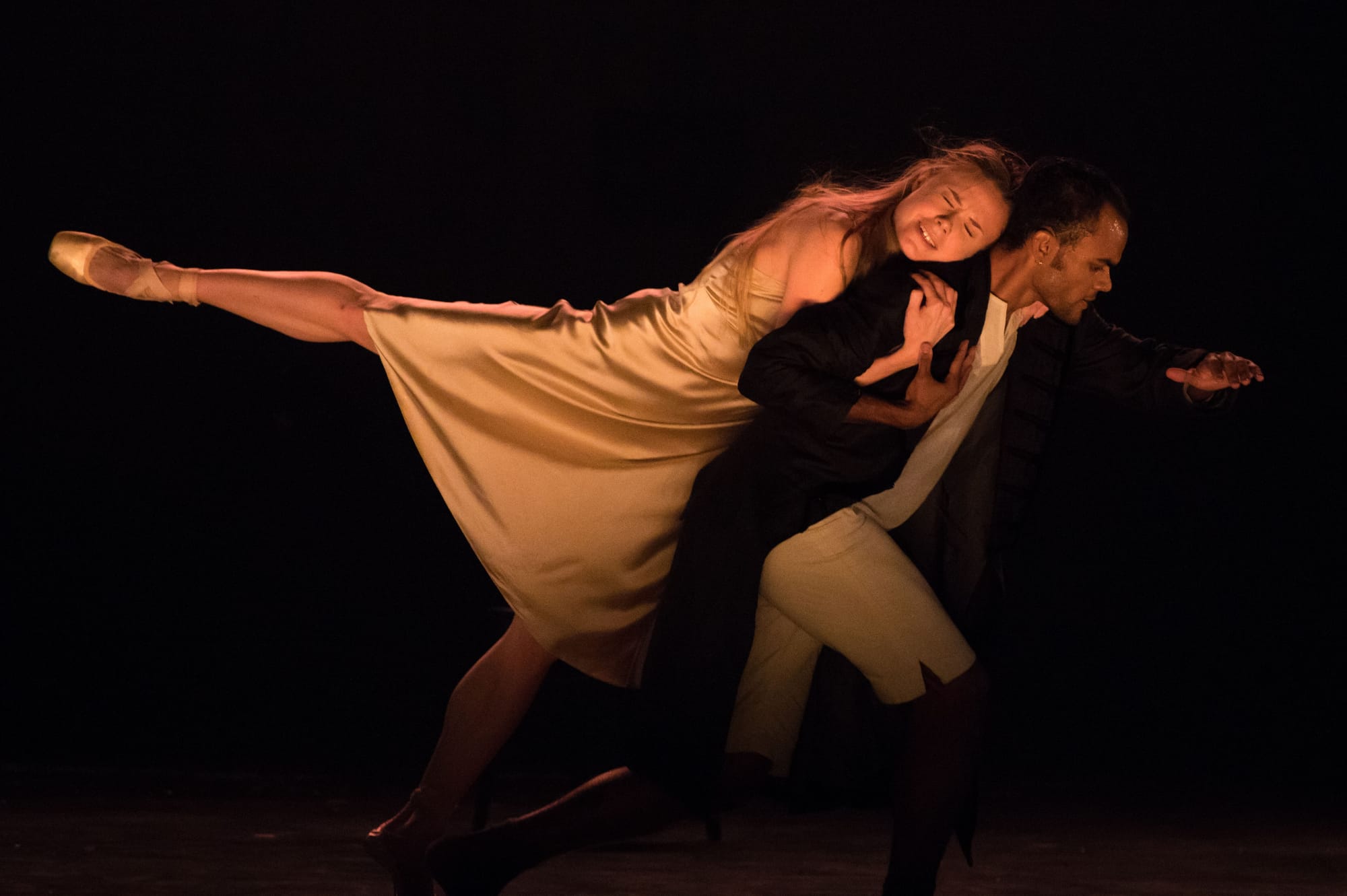
The lofty and theatrical “Blanc” seemed to have grander goals, and after reciting all possible meaning of the word “blanc” in the bill, including various ghostly understandings, settled on trying to show “the empty space that the elusive apparition attempts to fill – and the devastating void it leaves behind after it has departed.” Brandstrup’s use of Sara Mearns and Taylor Stanley promised to deliver at least great drama (from her) and athleticism (from him), and having thoroughly enjoyed watching Mearns in “Jeux” created by Brandstrup for New York City Ballet a couple of years ago, I was eager to see more from her in such genre.
Unfortunately, the work either reached too high, or perhaps there was just no there there in that space, no matter how much Brandstrup wanted to fill it. The whole thing can be summed up thus: Stanley appeared, moved about the stage as if haunted by something, then receded to the background, and was replaced by Mearns, then they danced together and apart. Those who gave up on seeing anything more were in luck, as they could simply enjoy the ballerina’s beautiful scaling of emotions as the music of Ludwig Beethoven, Robert Schumann and Hamlet Gonashvili played on. She walked across the stage, grasped her head, searched for something, presenting all the shades of emotional gray. Those who might have wanted to spot some meaning, would probably be left disappointed after more and more of the same. Indeed, too much more of it.
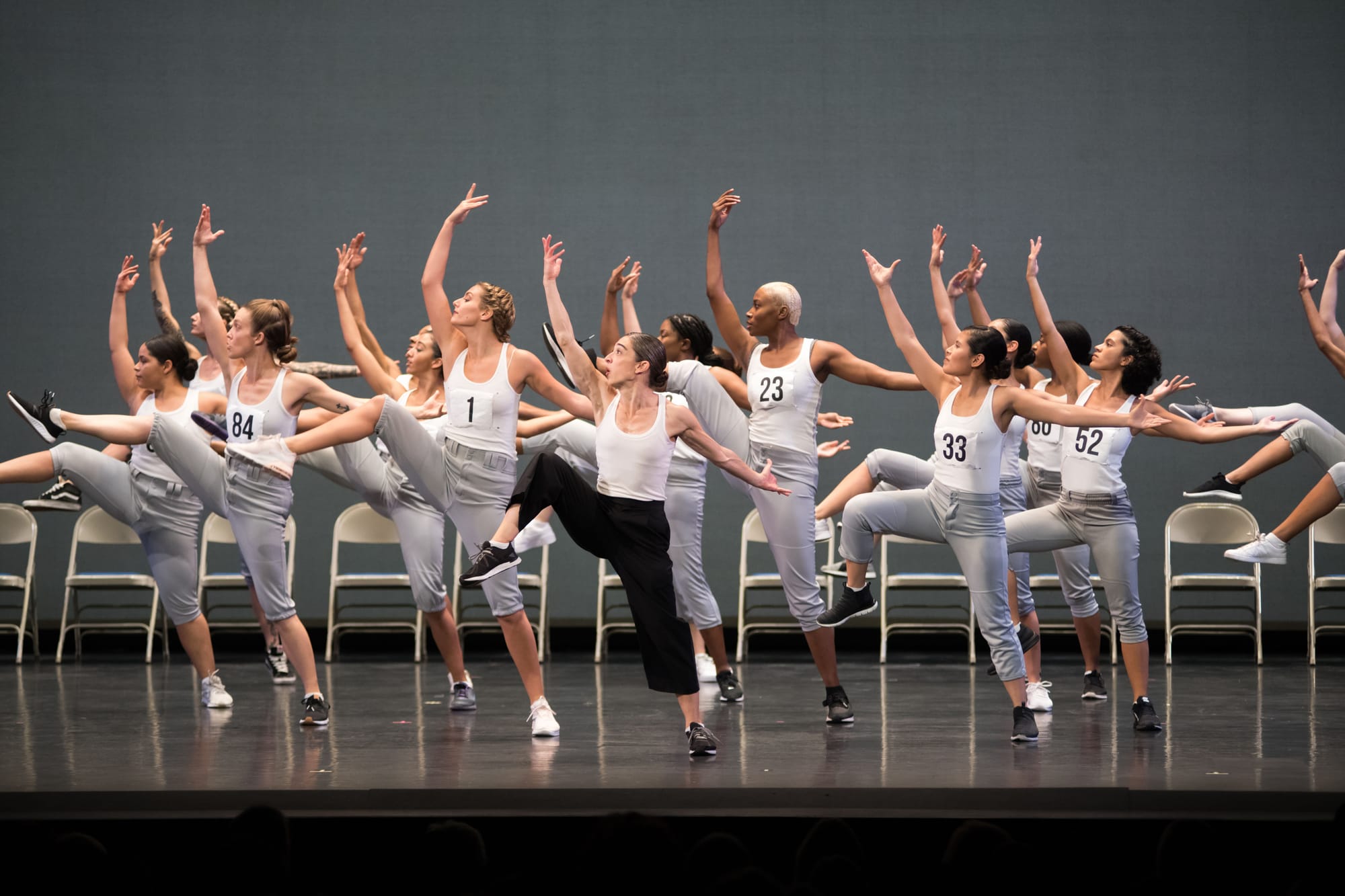
But then there was “The Running Show.” The full work is set to premiere in the Spring or Summer of 2020, and was adapted for Fall For Dance. In its finished form, it will document the life of a dancer and will be a touring piece, adapted and recreated in the various cities it will visit, using local dancers and their stories during performance. This time, the dancers were students from Hunter College, and the work started with a sports-reporting treatment of dance, with the dancers all wearing numbers, and complete with an announcer in the form of Robbie Saenz de Viteri located at the bottom of stage left, narrating the athletic feats of “finger snapping,” and “spinning” and other repetitions. What could’ve seemed gimmicky quickly acquired shape. Dance, after all, is athletic. It is not a sport when it is presented on stage, but it is that, and so much more, when the curtain is down. The choreography here was simple, but the tribute and celebration of dance was unique and revealing, and it’s easy to see it succeed as it “kicks off” and goes on tour next year.
Finally, anticipations were high for Martha Graham’s “Chronicle,” which closed the program and the Festival, but alas it failed to deliver. There is carrying the choreography and there is having the choreography carry you, and here the company opted for the latter. The dancing was not as dramatic, not as angular, not as punchy as this choreography requires and deserves, and while the ballet still looked good, it was just that – great choreography, simply delivered.
copyright © 2019 by Marianne Adams



