Flavors of American Cool
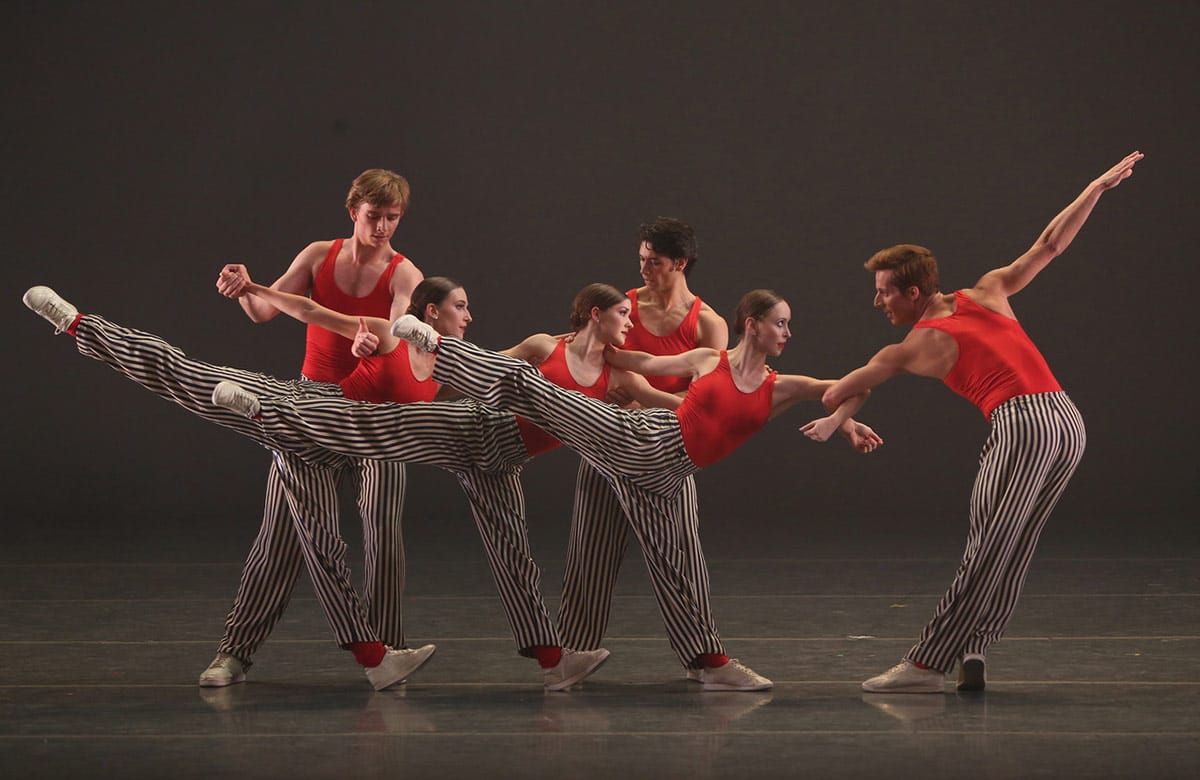
“The Brahms-Haydn Variations,” “Deuce Coupe,” “In the Upper Room”
American Ballet Theatre
The Metropolitan Opera House
New York, NY
May 31, 2019
ABT’s Tharp Trio program was in some ways all about the once-new ways of looking at dance, and in others an unequivocal way to underscore the “American” in American Ballet Theatre. The three Twyla Tharp works – the crowd-pleasing modern “In the Upper Room,” the neo-classical “Brahms-Haydn Variations,” and the completely new to the company, blended-styled “Deuce Coupe” – showed an American approach to classicism and a very American way of blending forms of dance, innovating, and integrating freedom into musical movement.
Of the three works, the 1973 “Deuce Coupe” showed those qualities the most, contrasting the cast’s groovy moves in slacks and heels to the songs by Beach Boys with the single classical dancer, Christine Shevchenko, going through a series of rigidly constrained in academics classical steps. For the work, the dancers had to really let their hair down both literally and figuratively and embrace a free approach to movement. In other words, it wasn’t the kind of dancing that would characterize just another day at the company.
Still, even though at times the dancers’ concerted effort to step away from classicism was evident, there were some great discoveries in the cast. Catherine Hurlin, for one, was a clear standout, dipping low for the heel-first steps, and unafraid to let her torso bend and red hair fly. She could have easily fooled an unsuspecting viewer and passed as a modern dancer, even despite her very classical build. Shevchenko, as the “ballerina” in the work, was classically exquisite – her lines and extensions were more evident here than in the company’s other repertory, and this gave her a real chance to shine, despite the role not being the most fun in the ballet. It was also good casting, as Shevchenko’s qualities really helped highlight the contrast of classical purism and free-spirited pop culture fun.
The other modern dance on the bill, the 1986 “In the Upper Room,” was predictably cool and engaging, but also oddly felt a bit raw. The work is a guaranteed hit with its ranging Philip Glass electronic score and high-powered steps of stomps, jumps, jogs, and more, but it takes commitment to really do it justice. Unlike in “Deuce,” there’s far less room for playfulness and playful saves here, and at this performance I kept wishing for heavier accents, more powerful leg kicks, more deliberate pauses. The running sequences for the group of six (danced by Skylar Brandt, Devon Teuscher, Cassandra Trenary, Aran Bell, Duncan Lyle and Blaine Hoven) lacked the sharp angles in the readjusted directions of those runs, and blurred some of the precision in the patterns that really works to give structure to Glass music in a visual way. Similarly, the stylish sophistications for the cast on pointe ranged from under-delivered to overemphasized, particularly from Isabella Boylston who somehow overshot her accents both in spacing and delivery.
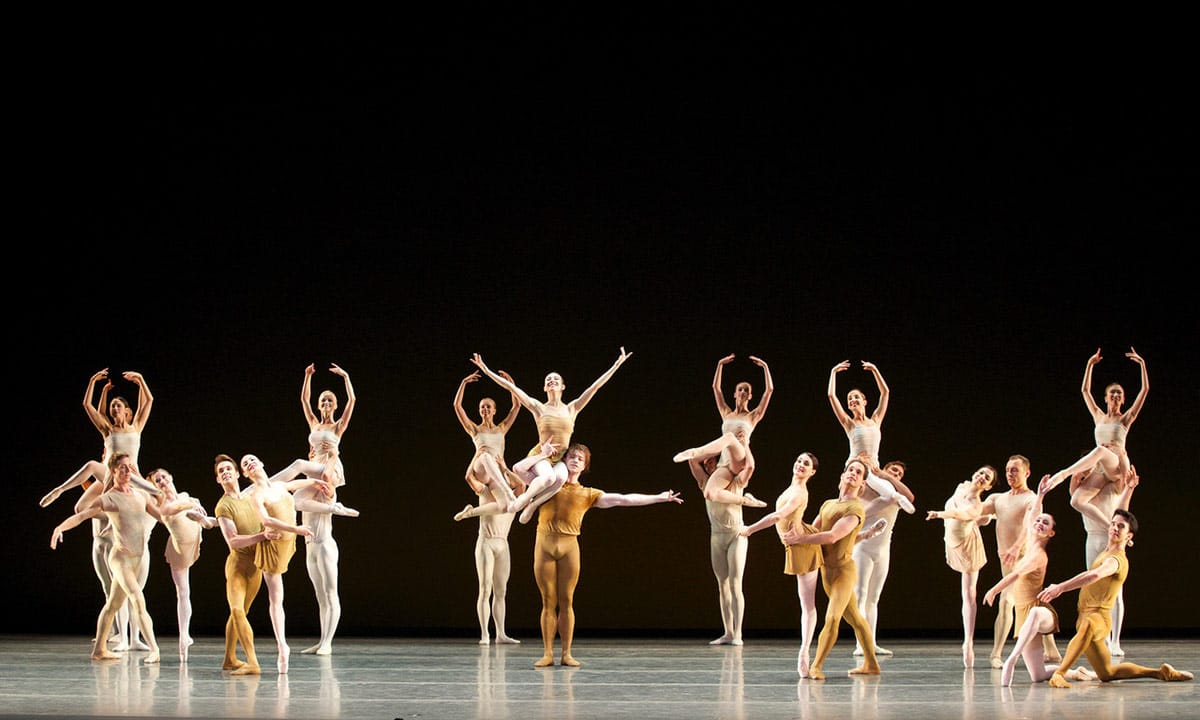
“The Brahms-Haydn Variations,” which was the closest work to the balletic go-to interpretation for the company, was probably the safest bet on the bill and it was certainly the cleanest in its performance. It was to the dancers’ and the work’s advantage, as the cast seemed to have relaxed into its lovely moments, like the ripples of arabesque lifts, and that comfort with the steps made them that much lovelier. The better dancing here came from Sarah Lane, who was positively radiant next to Gary Pogossian, and Brandt and Arron Scott, who looked light and almost surprisingly mature in their sections. But even the less successful approaches, like Misty Copeland’s overly liberal dancing, could be accommodated by the choreography. While to me Copeland’s freewheeling arm throw accents looked too aggressive next to her more composed partner, Joo Won Ahn, it was evident that this more independent dancing too had its audience.
copyright © 2019 by Marianne Adams



