Flamenco, With Cautious Variations
Flamenco, With Cautious Variations
Juan Siddi Flamenco Santa Fe
The Joyce Theater
New York, NY
March 22, 2016
Juan Siddi presented his recently formed company’s New York debut with a statement about his creativity and his skill. The eight works that made up the program interlaced several of Siddi’s main themes: use of classical instruments of piano and cello, interactions of the dance with its music, and a sprinkling of ethnic styles that could have suggested flamenco’s ubiquitous presence, or at least ability to thrive ubiquitously. Alas, while the program showed the seeds of some interesting concepts, the execution didn’t go the length needed to make them flourish.
In the first work, “Sabor Havana” the music accompanied the moves in direct parallel and interplay of dance and song. The singer, Jose Cortes, and dancers played off each other not in a traditional mutually fueling way, but in a dialogue between dance and music that at times interacted, with steps being responded to by a musical phrase, and at others were performed in near-isolation from each other. It was an interesting concept, but one that Siddi didn’t take far enough in its realization. The piece itself was supposed to present a Cuban love story of a dancer and the singer, but amid the vocals and the punctuating footwork there was little narrative or emotion, and not much Havana either. In fact, it was only a small section toward the end of the piece that involved salsa-esque hip movement in the choreography that suggested that geographic placement.
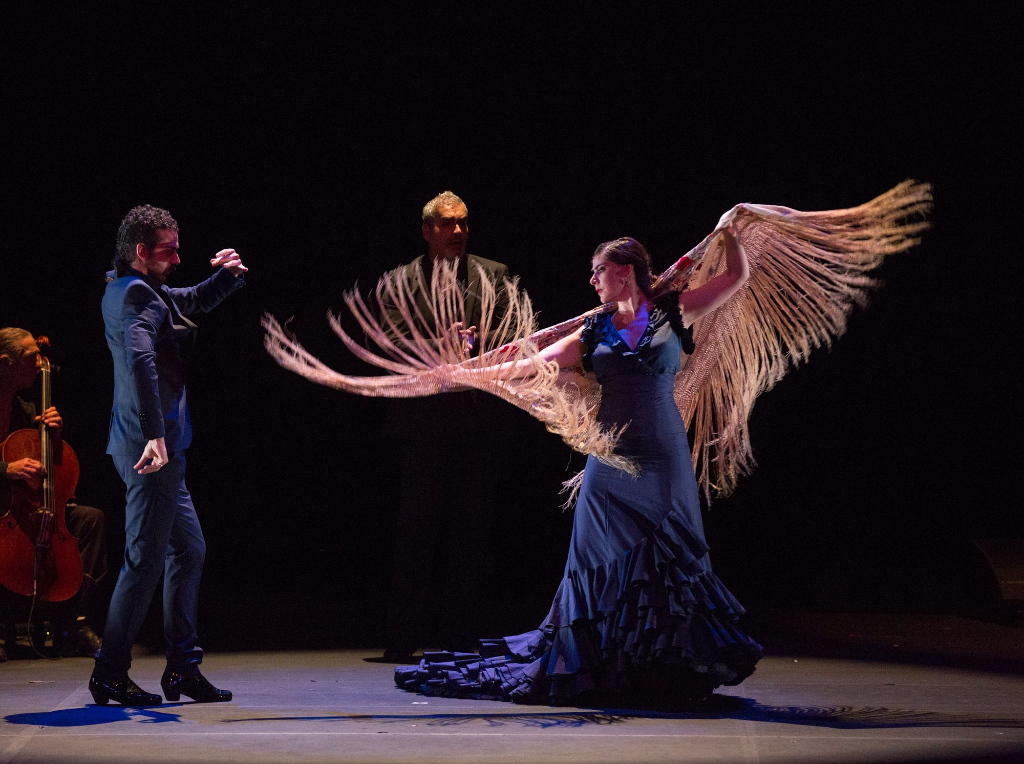
The second work on the bill, a duet called “Re-Encuento,” was different. Throughout the dance Siddi partnered and took turns doing solos sequenced with Carola Zertuche, making the lone prop of a Spanish shawl both a uniting and a dividing centerpiece of the work. At times Siddi would maneuver it as a matador would his cape, at others he would wrap Zertuche in the cloth, solidifying his embrace. She would take turns using it with equal vigor, though with lesser skill, mastery and passion – a few times she even lost her control over her dress’s long train, making the piece look somewhat under-rehearsed. The mishaps aside, this more traditional of the evening’s flamenco numbers was one of the best for its expression of captivating and brewing energy and passion endemic to this dance form.
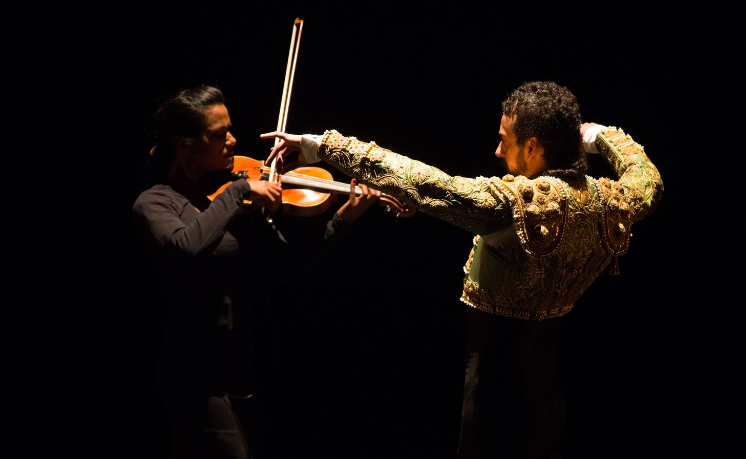
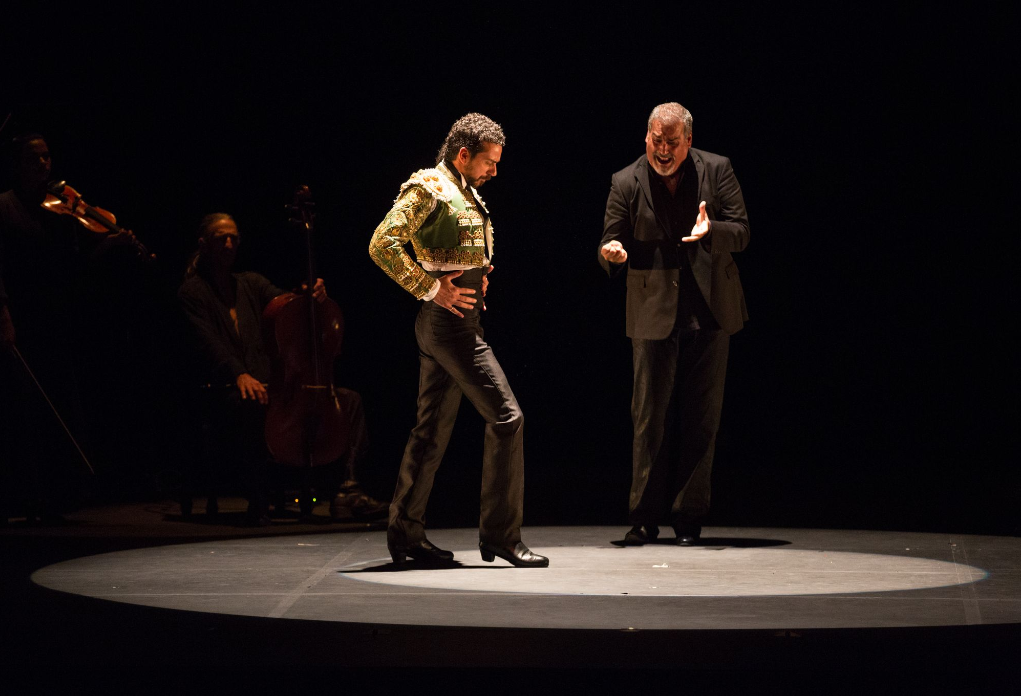
The highlight of the night however was an even more traditional piece presented toward the end of the program called “Soleá” in which Siddi took the stage for an impressively long and stamina-testing solo. Performing in a matador-like costume, he himself often resembled a torero, taunting the rhythm of his dancing, and using it to overpower and tame the music of his traditional and classical musicians. His dancing was powerful, richly laced with varied emotion, and it wasn’t all skill either. There was more embellishment than one would expect from a male dancer, more use of hands and hips. Still, this expressiveness and technique was overshadowed by the sheer stamina of his dancing. I could not recall a flamenco dancer being able to stay on stage and sustain powerful performance for as long as Siddi did in his number, time and time again forcing the question with his dancing: just how much can he extract from the music and the steps? And time and time again answering: so much more.
Still, the program was about the more creative approach to flamenco, and in that the one piece that came close to hitting its mark was “Sigiriya.” The work gave flamenco a modern dance cross-pollination, and started with 6 female dancers taking turns in spotlights on a pitch black stage. Each of them wearing traditional black dresses, they resembled apparitions, with only the intensity of the poses confirming their realness. The piece was geometrical in formations and lighting – the dancers often danced in square light spots on the stage. The movements, too, borrowed from a different performance lexicon, having the women lace their legs back in quick treading passes in one of the more acutely sections.
The other works, like “Nataraj,” which sought to evoke the Indian roots of flamenco with a literal depiction of the divine dance of the Hindu God Shiva by lining up the women one after another and having them raise their arms to different heights, conveyed its placement but felt flat and run-on. More importantly, by merely touching on the thematic element and not giving the choreography enough of that flavor, both “Nataraj” and other works raised questions of precisely how confident Siddi was in the direction of his choreography.
Siddi's ideas are interesting ones, but their execution would be far more impactful with a bolder departure from classical expression and embrace of the new direction.
copyright © 2016 by Marianne Adams



