Flamenco Depths, in Equal Measure
“Equilibrio”
Flamenco Vivo Carlota Santana
The Joyce Theater
New York, NY
June 19, 2024
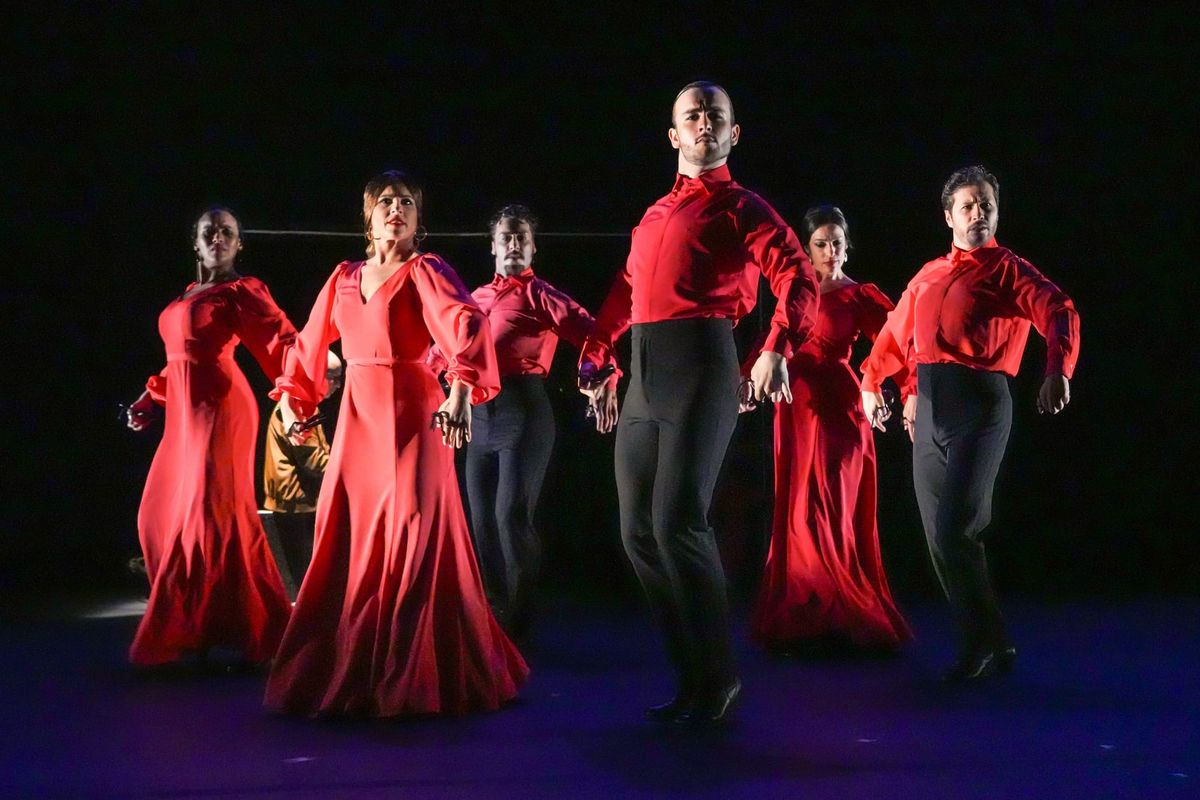
It can be too easy to forget just how many elements make up the tapestry of the flamenco genre, but Flamenco Vivo Carlota Santana company’s performance of Emilio Ochando’s new “Equilibrio” expertly brought the various strands into focus. Conceived originally as a solo performance in 2020, Ochando expanded the COVID-19 pandemic creation to the whole company. Infused with a few modern twists and featuring many props, the evening, accompanied by vocals, and keyboard, guitar and even cello as musical instruments, showcased the many aspects of the art form, and its many ways of telling stories.
The performance opened with a hauntingly beautiful scene: a solitary musician bathed in a single ray of light, striking a few poignant chords on a keyboard. This minimalist introduction set the stage for the emotional depth and intensity that would follow. Soon, the six dancers of the company appeared from the wings, their feet erupting in a rhythm that accented the music. Quickly, their castanets overtook that sound, becoming the focal point, their sharp, staccato having the impression of guiding the dancers' movements. Layering on this introduction, the performance shifted to the soulful Loreto de Diego, who was the singular singer of the evening and whose voice added a new layer of emotion throughout the performance, at times intertwining with the dancers’ portrayals, at others providing emotional transition to the other pieces of storytelling.
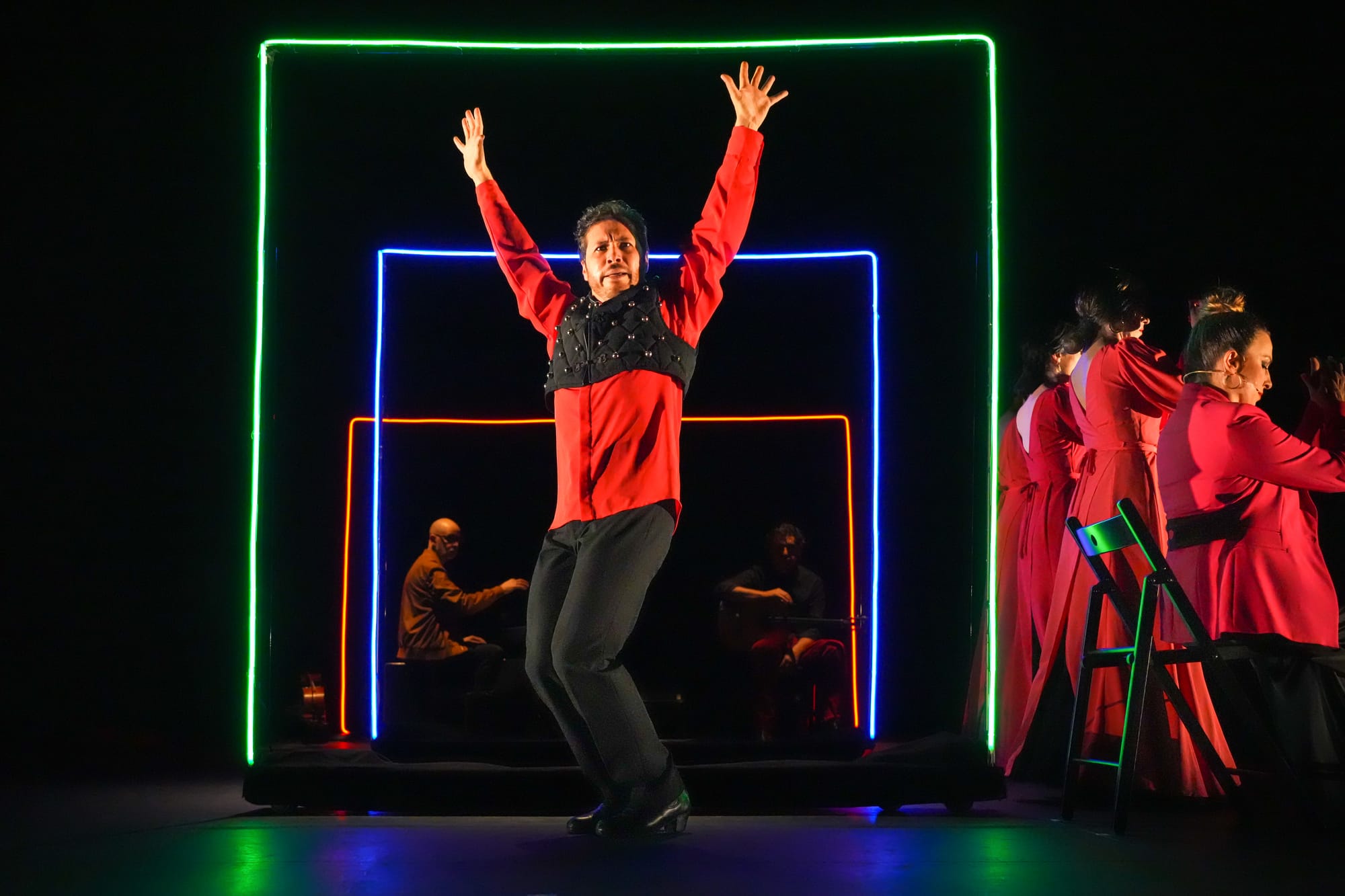
Although not expressly about any particular narrative, the strength of “Equilibrio” was precisely in its ability to show so much in so little time, in large part thanks to the staging and the use of many traditional and novel props. For the set décor, the company utilized three neon-lit frames, which the dancers manipulated to add dimension and help conjure up sceneries, but also frame the dancing. Early in the performance, these frames were positioned with a square effect, making it look like a room where Ochando danced one of the most interesting solos of the evening. Beginning on his back with movement limited to castanet playing, he slowly rose, and the impression was of a man confined in a room (perhaps, during the pandemic’s quarantine), the rhythms his hands produced being the sole form of expression of what was a vibrant range of emotion. In a conversation after the performance Ochando mentioned that this was his take on castanet orchestral performances, where the castanets are the central instrument, but the staging gave it much more meaning.
Other sections were even more ornate, such as the segment that immediately followed where Ochando donned a vest adorned with little bells. While sartorially appealing, the garment was functional. The dancer’s casual hand flicks against them caused the bells to chime, adding an auditory layer to his solo as three women watched him, their claps providing rhythm but also the effect of an applause. That same repurposing of one prop or step to say more pervaded the evening. In a later section with the dancers gathered around a group of chairs, the effect was of tavern gathering, or an evening by a fire pit. The castanets were traded in for spoons as a percussion tool, stretching yet further the display of skills and showcase of the limitless expressive potential in this genre.
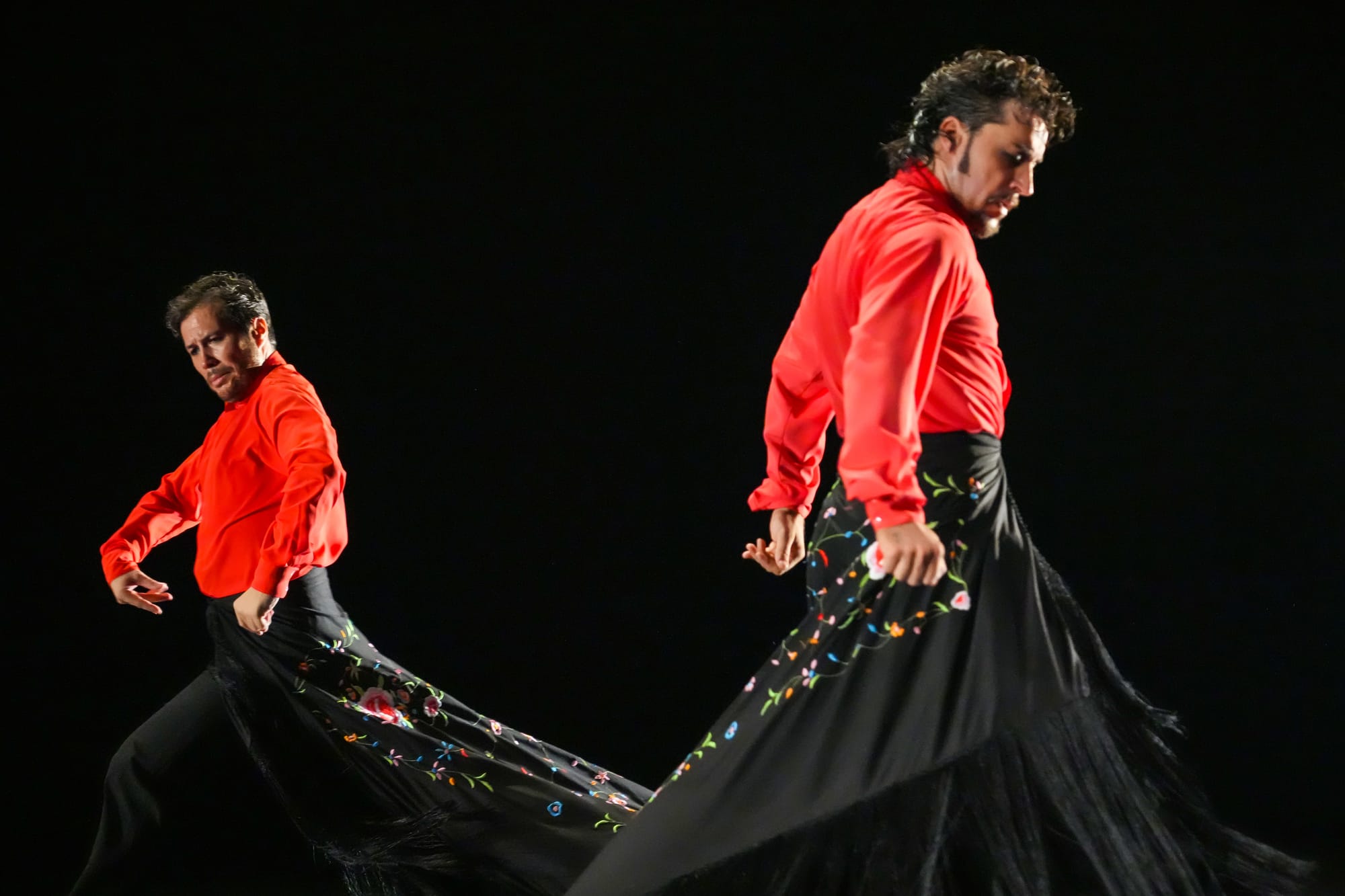
The best of it came at the end, when the dancers and the singer used shawls as clothing, and much more. As props here, the garments took the character of weapons, shields, and bustling flames as the dancers spun them in the air, but also a source of embracing comfort when placed around the shoulders and reimagined clothes when wrapped around the dancers’ waists as skirts. There was a balance between the modern and the traditional, and this flamenco echoed of infinite possibilities.
copyright © 2024 by Marianne Adams



