Father Knows Best
"The Sleeping Beauty"
American Ballet Theatre
Metropolitan Opera House
New York, NY
May 29, 2015
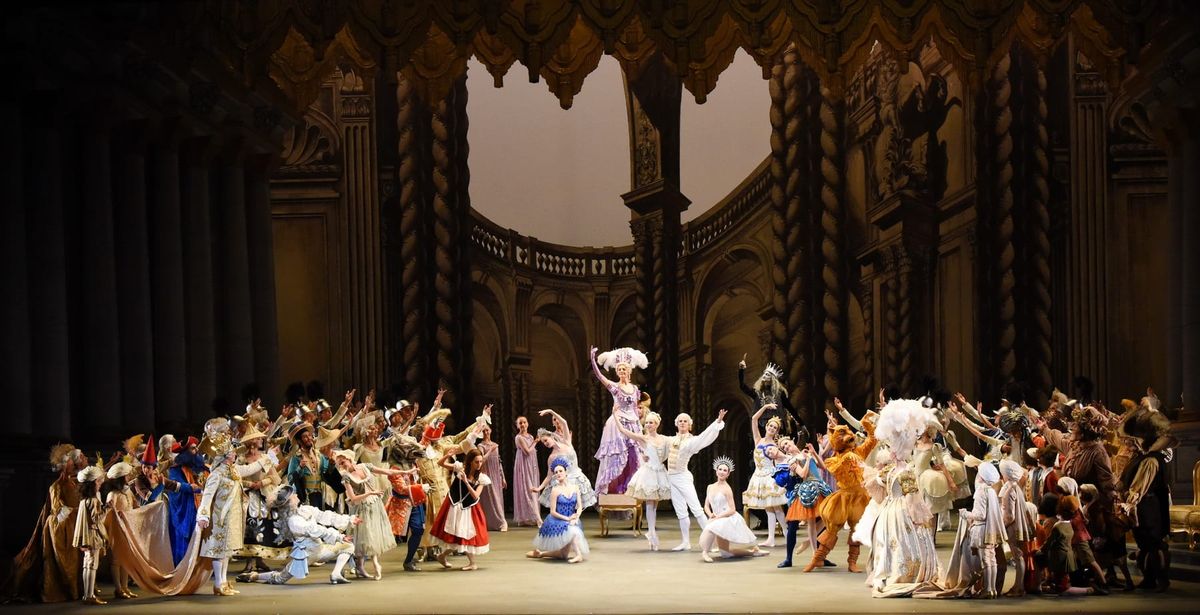
Petipa, the father of classical ballet, choreographed "The Sleeping Beauty" in 1890, and this stupendous work has had a restless history at ABT. It does seem that the fourth time is the charm, and the new Ratmansky/Petipa version revealed some astoundingly beautiful choreography. It would probably take a ballet archeologist/time traveller to unravel all the choreographic layers, and though Ratmansky used the Stepanov notation of the 1905 Maryinsky version and the designs of the 1921 Diaghilev production as his base, this is not a reconstruction by the numbers. For Ratmansky, it seems, the question "Does it work?" is more important than "Is it historically accurate?". He used the 1905 Princes' Act III solo from the notations (a solo not danced by the 40+ Pavel Gerdt in 1890) but did keep the fish dives from the 1921 version, while replacing Nijinska's 1921 choreography for the Three Ivans to the coda music with a proper coda for the happy couple.
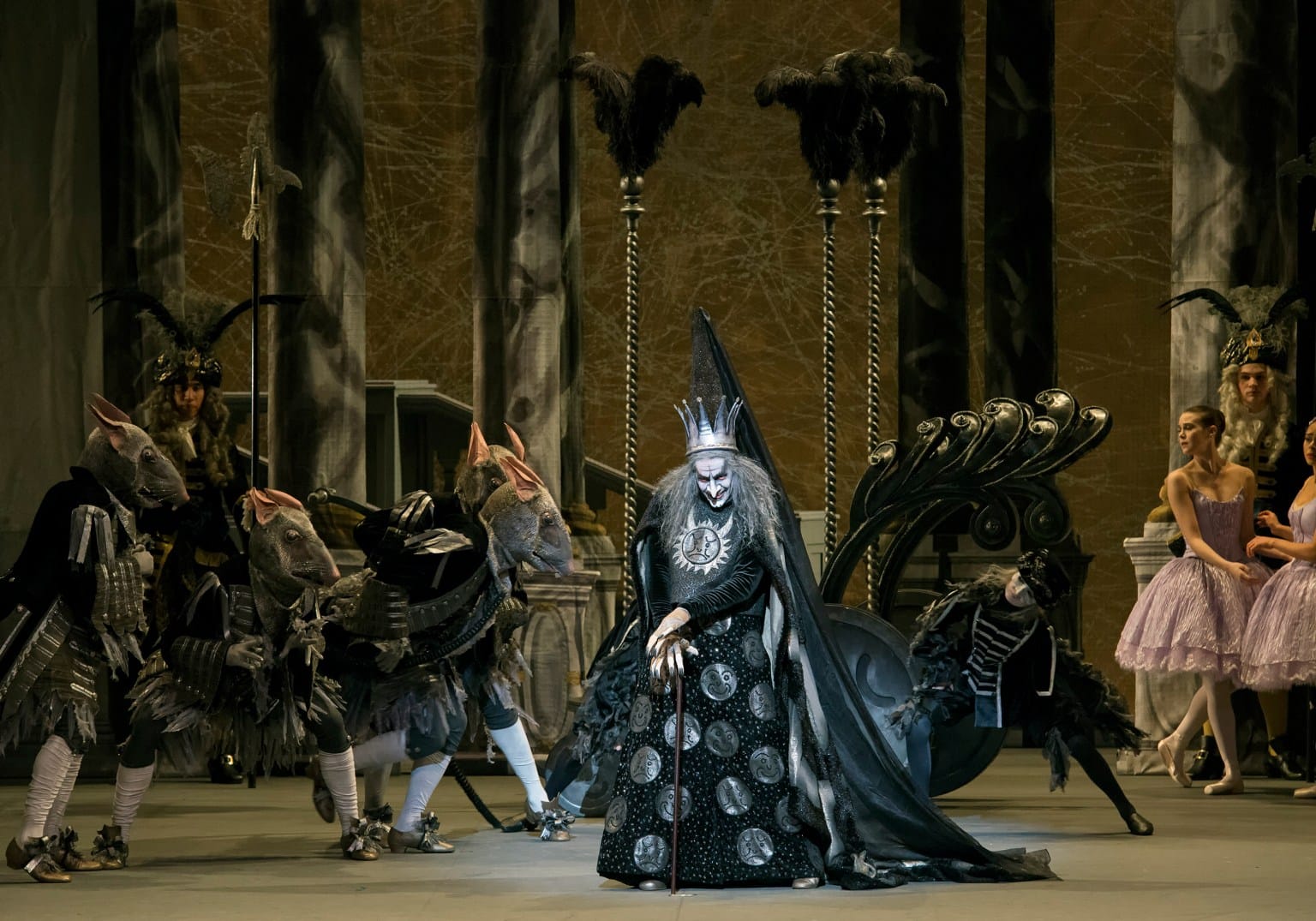
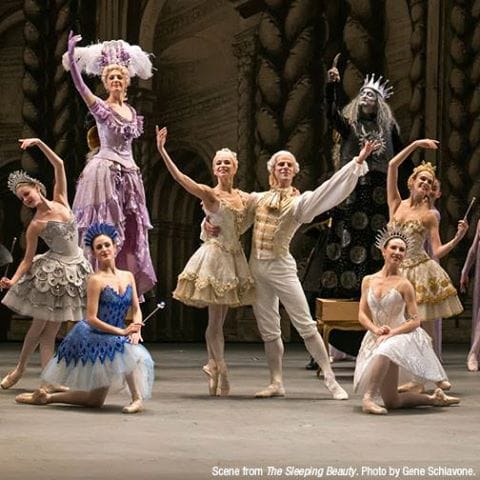
Ratmansky's choices do work, most gloriously in the Prologue which looks like a garden one would expect to find in Heaven. The choreographic outlines are by and large familiar, but Ratmansky has scrubbed away many of the more flamboyant additions and substituted a softer, more intricate and musically sophisticated style. Solos often end with the dancers posed on one leg and the bodies torque in unusual and beautiful curves. Extensions are limited and there is a great deal of demi pointe which allows for more quick little moves. He has also resuscitated the moral seriousness of the ballet. "The Sleeping Beauty" is not really a tale of good destroying evil; it is a much more human illustration of the power of mercy over justice. Carabosse, brilliantly played by Craig Salstein, was a picture of affronted dignity demanding her rights, not von Rothbart's cousin who must be destroyed; she lives to be forgiven and invited to the wedding. The knitting scene, where the king, signifying justice, condemns the miscreants to death and the Queen, representing mercy, begs for their lives is often cut, but it really encapsulates the essence of the ballet, and Ratmansky has given it its proper due.
The designs and costumes, by Richard Hudson, are a bit more problematic. I was lucky enough to see the 1999 Kirov reconstruction of the original production (the dance style, though, remained thoroughly 1999--Russian ballerinas just have to whack their heads with their legs). That production is my gold standard but at four-plus hours and the cast of thousands it is obviously too unwieldy for everyday use. The 1921 designs, by Leon Bakst, are more stylized than the magnificent painted vistas of the original. Instead of the Lilac Fairy (radiantly danced by Stella Abrera) conjuring up a realistic forest, she produced a scrim of lilac and purple stones. I was disappointed at first but then surrendered to the magically abstract beauty of the stage picture.
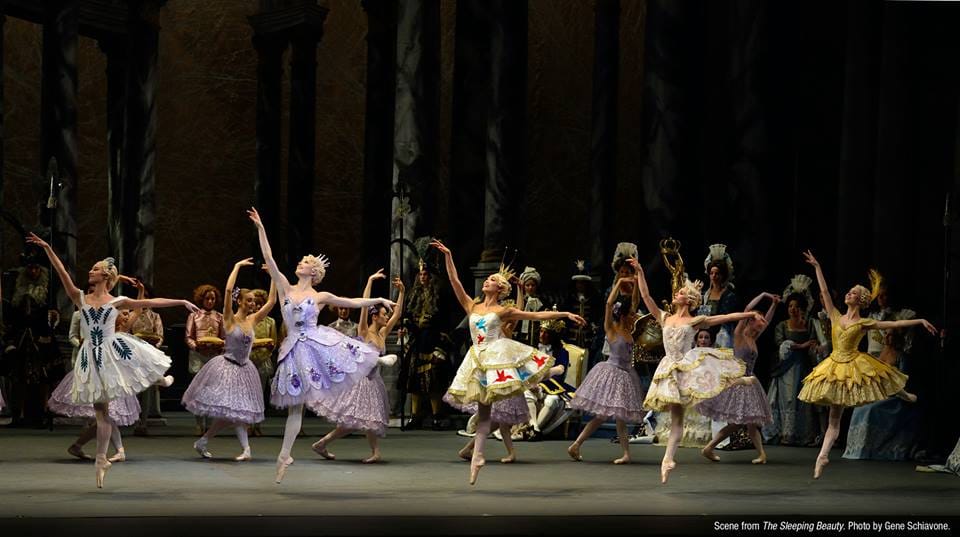
The ubiquitous white wigs are the most controversial aspect and for me they do tend to bleach out the dancers' features. Some of the costumes are a bit fussy. The Fairy Violente's antennae do bop around and no matter how closely they resemble the photographs of Nijinska in that costume, I wish they would go the way of the Three Ivans. The eye-catching Prologue cavaliers are distracting and disturb the serene geometry. The Lilac Fairy doesn't need purple gloves and Aurora really shouldn't show up at her wedding in a sleeveless gown. But most of the costumes are magnificent. The longer, softer tutus move beautifully and the brilliant patches of color create a constantly shifting picture.
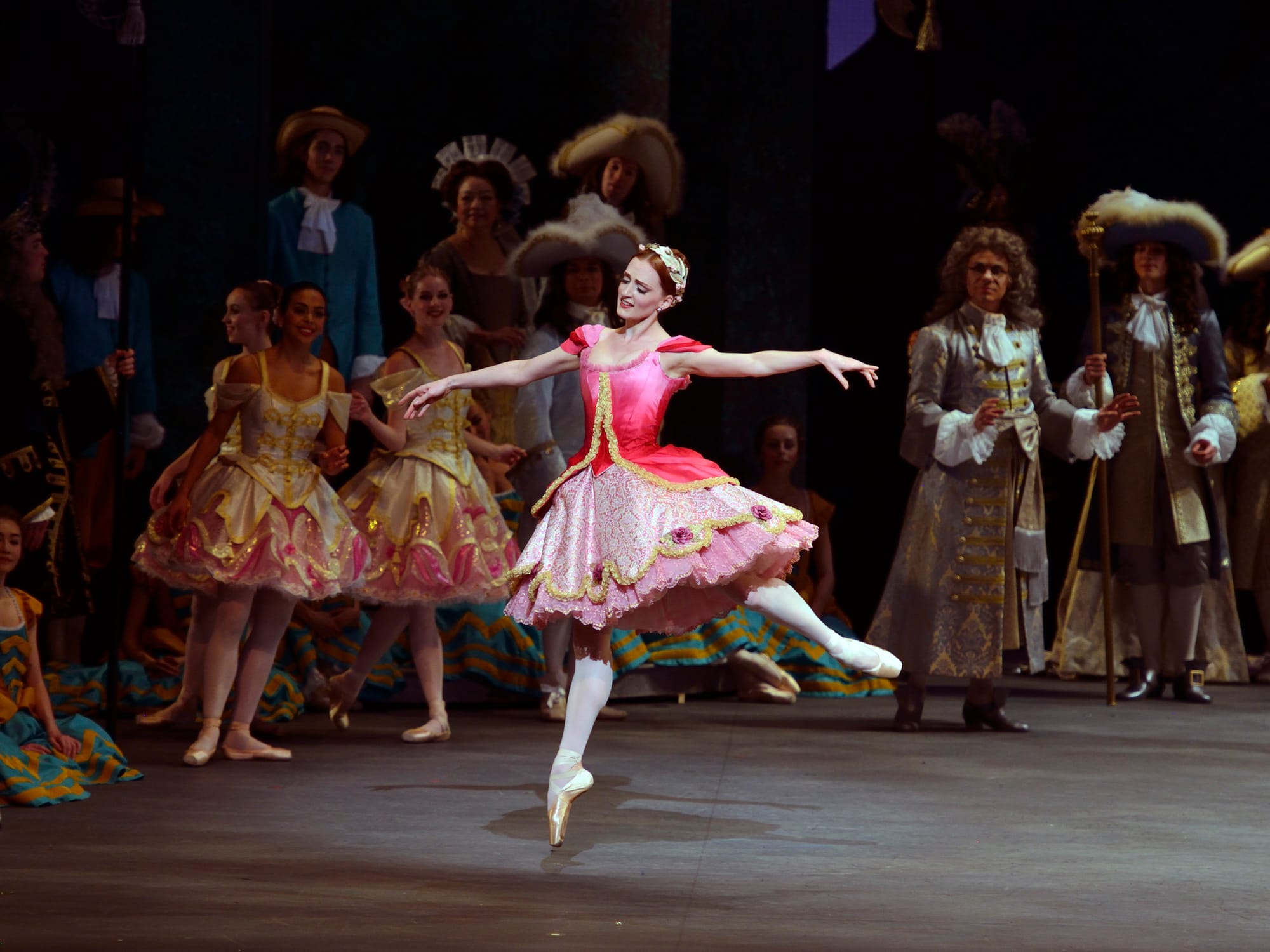
Gillian Murphy and Marcelo Gomes were the opening night couple. Murphy seemed to revel in the softer style, using her head and upper body fluently. She sailed through the Rose Adagio, lifting her hand above her head but not trying for exaggerated balances. The Vision Scene choreography included the wonderful Aurora on the half-shell pose and a soft, beautiful solo, full of mysterious yearning.
Gomes, as the Prince she was yearning for, looked resplendent in his Act II red coat. Ratmansky has honored the tradition of the melancholy prince who doesn't have the heart to jump, and Gomes has to rely on his natural authority to command the stage, which he does triumphantly. His solo in the final pas de deux (the one from 1905) is full of petit batterie, and is noble and elegant. It is also incredibly difficult and Gomes, with his long legs, is probably more comfortable in the familiar Sovietized version. But he is an impeccable performer and in a perfect ballet world he would be our Pavel Gerdt, eventually leaving the heavy lifting to others while he mimes "I love you". I don't think anyone on the stage today can offer his hand to a ballerina the way he can, and this gift is more precious than any number of jumps and turns.
This production offers a number of opportunities for ABT's dancers to shine and this is a production to savor (despite the overabundance of wigs). The smaller roles, both classical and character, stretch and honor the dancers, and the coherent, consistent style honors Petipa. Now if only the Lilac Fairy could get Ratmansky to do the same thing for "Swan Lake".
copyright © 2015 by Mary Cargill



