Fashionistas
"The Exchange", "Judah", "The Runaway"
New York City Ballet
David H. Koch Theater
Lincoln Center
New York, NY
September 27, 2018
New York City Ballet's 2018 fall gala followed a familiar pattern: three new ballets with costumes by three fashion designers preceded by a brief film focusing on some of the issues these designers had working with ballet dancers for the first time. There was one difference; the evening opened with the entire company on the stage listening while principal Teresa Reichlen read a statement (written by Reichlen and fellow principal Adrian Danchig-Waring) affirming the importance of their art and stressing the respect the NYCB dancers have for it and for each other. This quite appropriately got a heartfelt round of applause, and the audience, as it has throughout the season, was eager to show its appreciation for the dancers who have been performing with heroic and inspiring dedication.
This dedication was clear through all three ballets which were danced with an energetic verve. Unfortunately the choreography itself did not always equal the dancing and the somewhat artificial (or perhaps commercial) yoking of ballet and extreme couture produced mixed results.
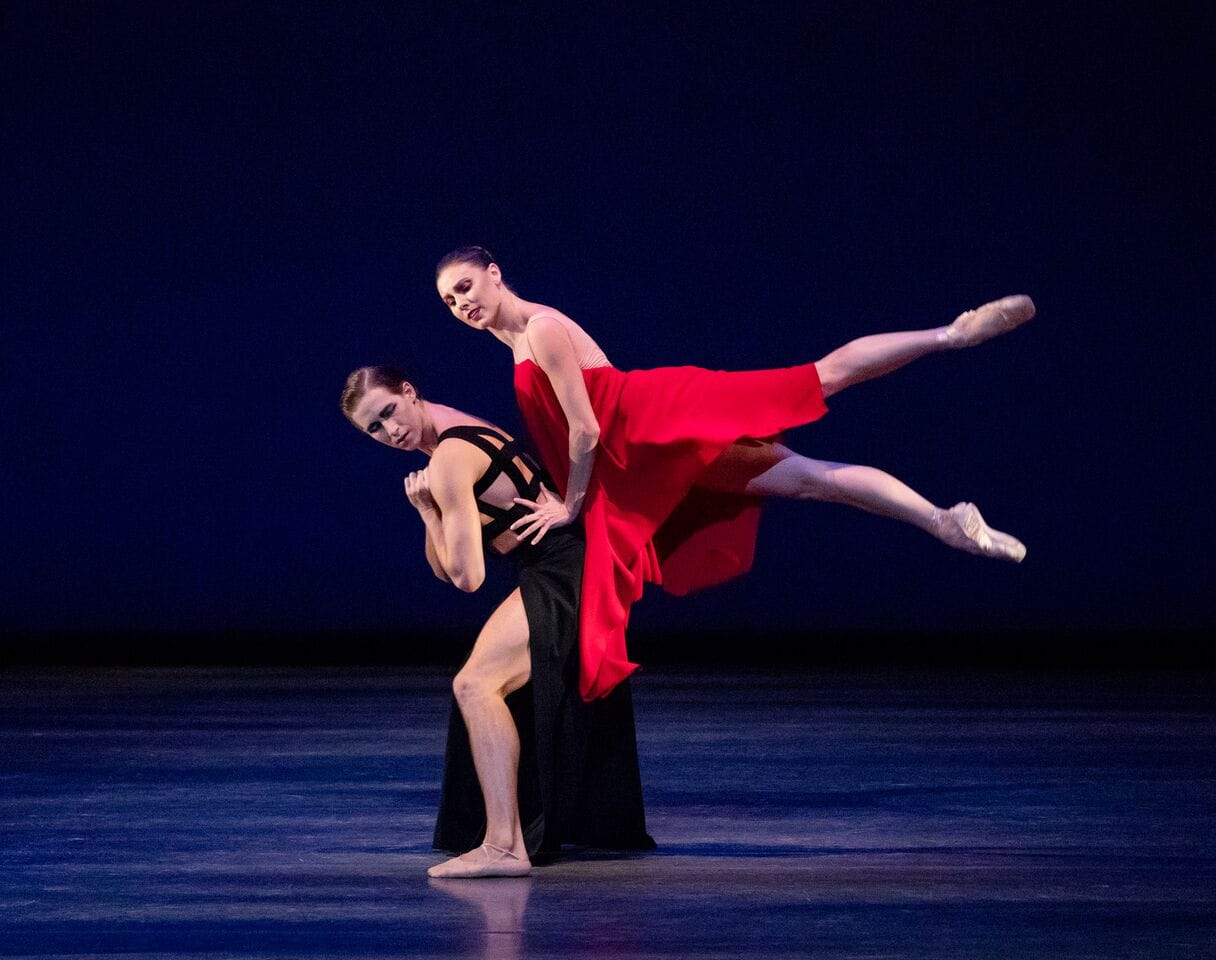
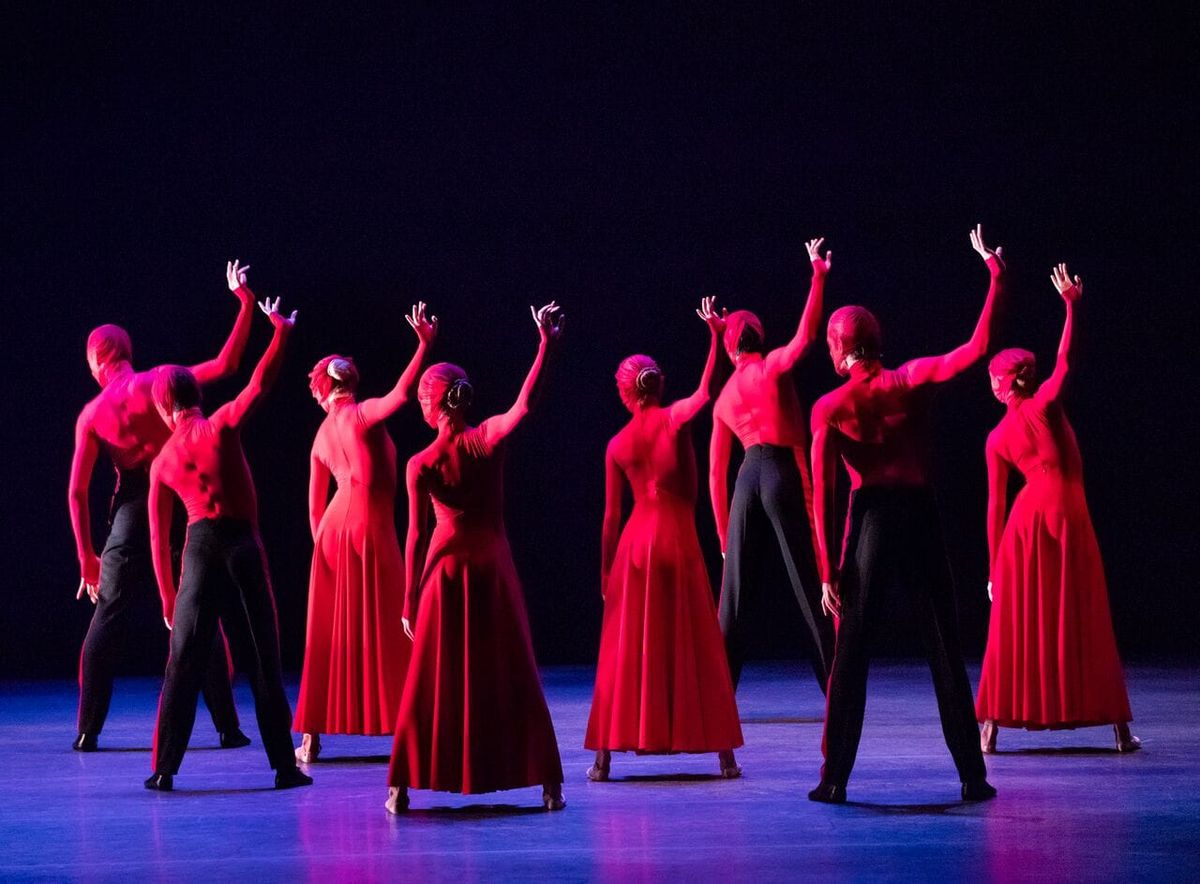
"The Exchange", choreographed by Matthew Neenan, the Choreo- grapher in Residence of the Pennsylvania Ballet, and designed by Gareth Pugh, was danced to music by Antonín Dvořák. The stark red and black costumes and the somewhat opaque dramatic urgency of some of the gestures did not really mesh with the lush music. There were two fairly distinct groups, one of tall red-clad dancers (who for some reason wore red mesh over their faces only to remove the masks midway; no one on stage seemed to notice). These were led by Maria Kowroski and Russell Janzen, and Kowroski got to show off her incredible legs at great length. The shorter group, with the men is black and the women in short red flowing tunics which did not flatter the dancers were led by Tiler Peck and Joseph Gordon.
Keenan moved the groups confidently, and they merged and reformed in a blaze of red fabric, though it was not clear what exactly was being exchanged. At one point the groups lined up on opposite sides of the stage and seemed to play a version of "Red Rover" and there were some recurring gestures of the "oh my aching back" and "giddy-up" variety shared by both groups. The piece was visually striking if dramatically muddled.
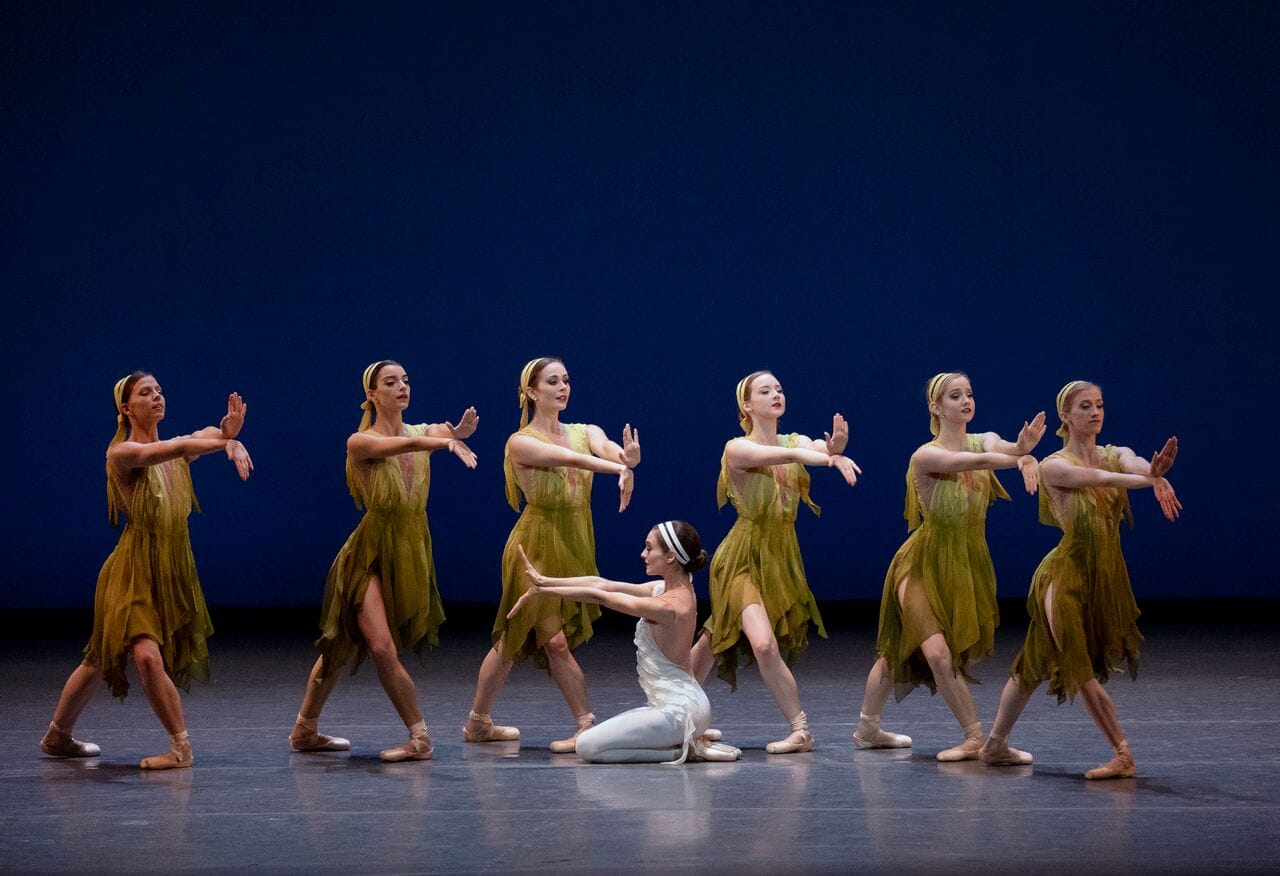
Gianna Reisen's equally obscurely named "Judah", to music by John Adams and costumes by Alberta Ferretti was also visually striking. The women wore fluttering shards fabric in various slightly acidic pastels which made them look like modern day nymphs and dryads who lived, not in sylvan glades or babbling brooks but in neon signs and urban playgrounds.
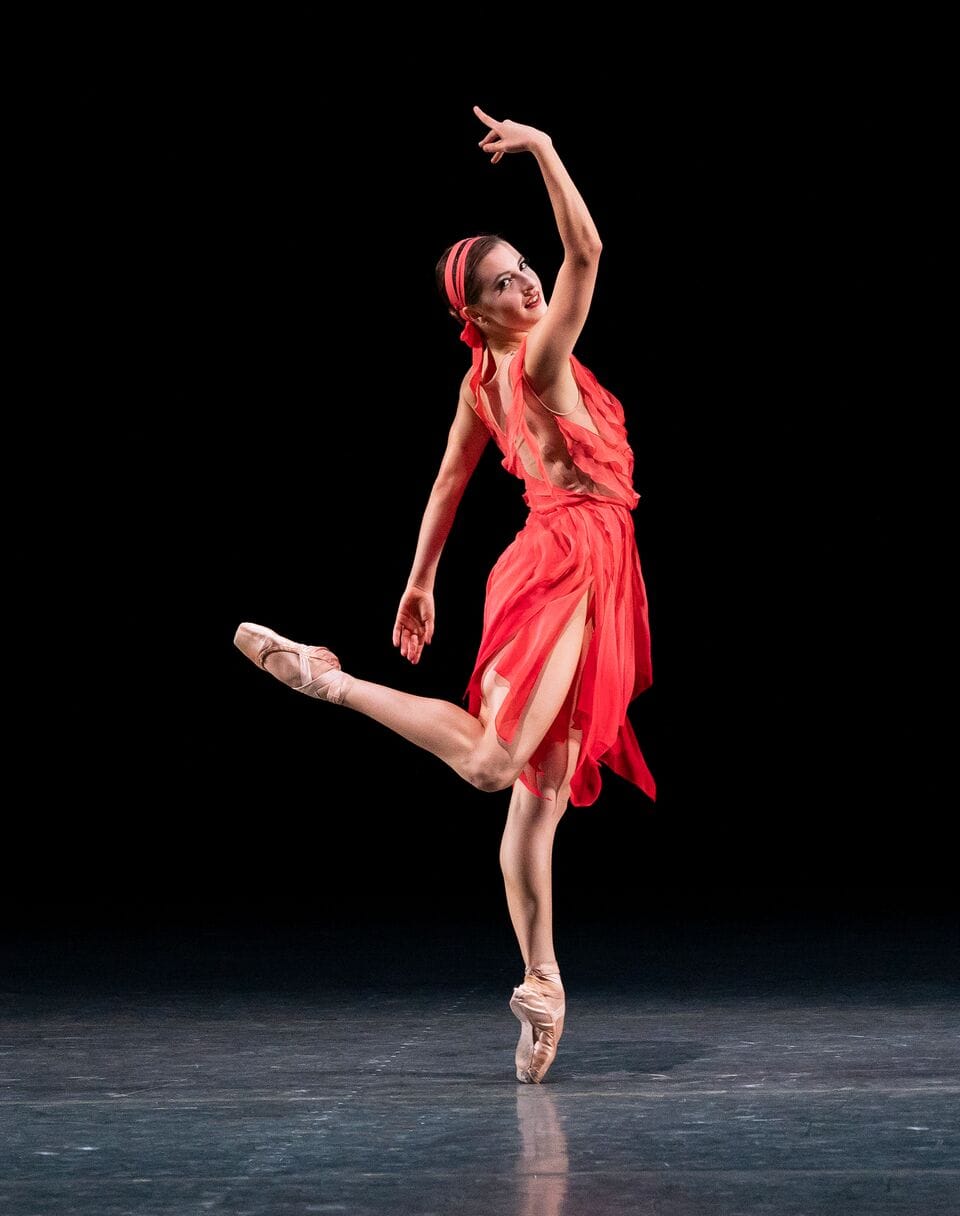
These nymphs, if nymphs they were, were led by three soloists in radiant coral, and each had a distinctive and individual style. Indiana Woodward's solo was all luscious curves, Megan LeCrone had a rangy spikiness, and Sara Adams showed off some sparking jumps. They were led by Lauren Lovette and Preston Chamblee, both in white unitards. Their dances were not as uniquely characterized as those of the three soloists and the partnering was gracious if somewhat generic. Reisen used her dancers were and the work was full of shifting geometric shapes, classical without being rigid. If it broke no new ground, it had real charm.
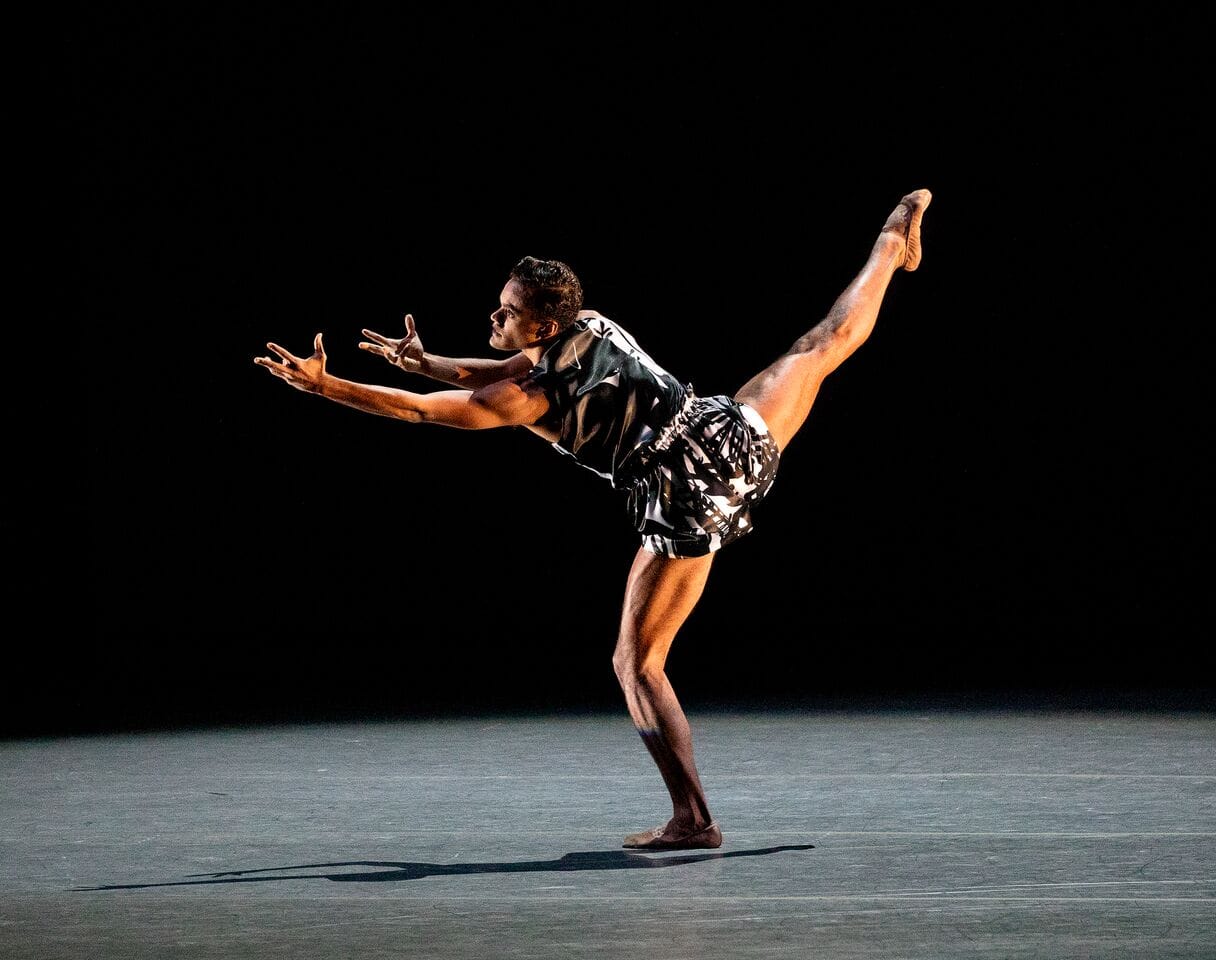
Kyle Abraham's "The Runaway" (another confusing title, as no one was running away) was all about treading new ground, as the modern choreo- grapher was working with a ballet company for the first time. (The choreography was attributed to Abraham "in collaboration with NYCB".) The work, costumed with fantastic abandon by Giles Deacon, opened with a haunting solo for Taylor Stanley. Combining modern and hip hop styles with ballet's turn out and pointed feet, Stanley, rooted to the ground, showed some phenomenal balances as he seemed to be emerging from some sort of a larval state as exploratory shivers rippled through his body. Stanley moved with a fierce, concentrated intensity that hinted as an almost super-human power.
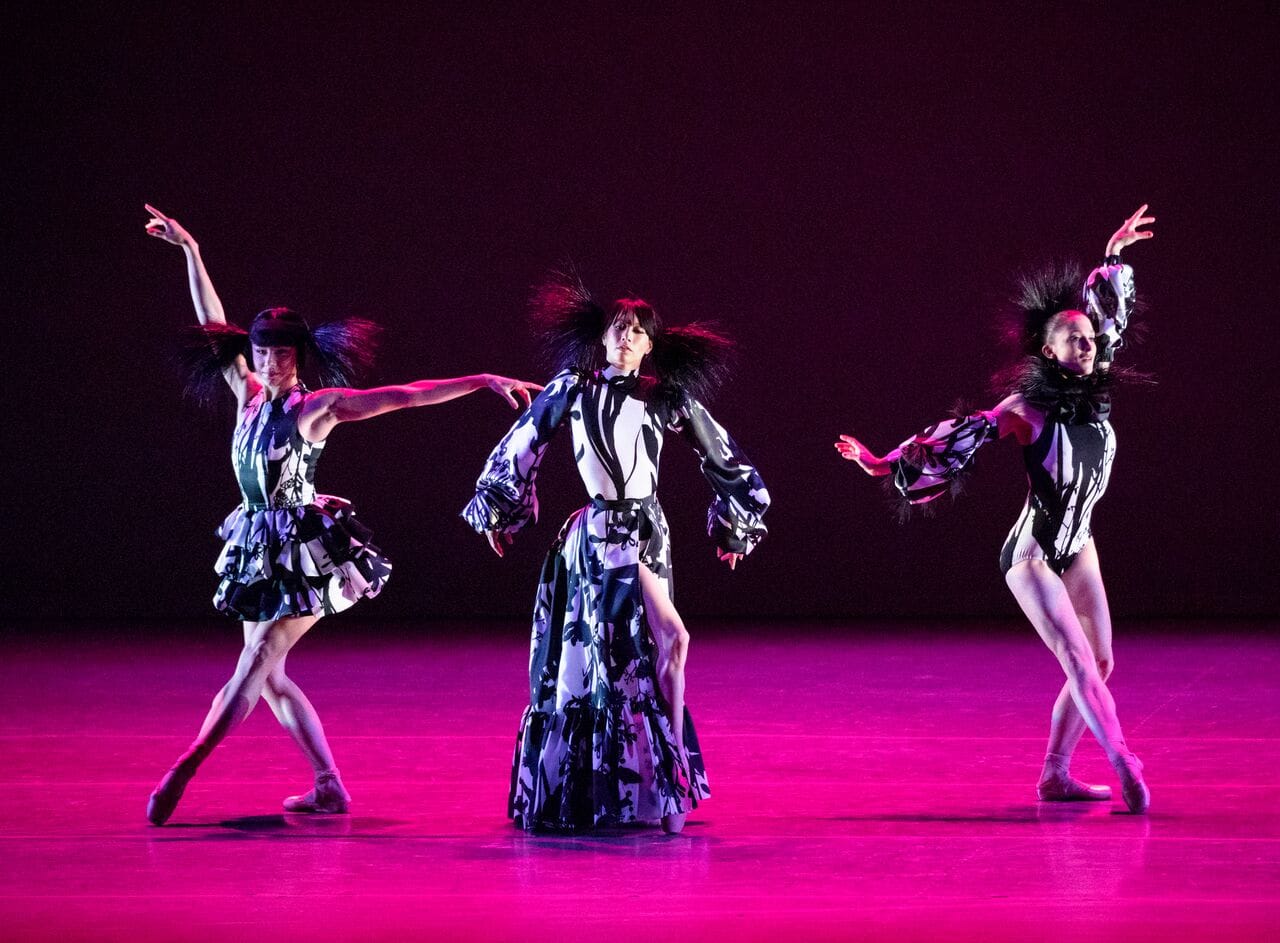
The gripping opening, however, didn't develop and the rest of the work was an episodic, somewhat meandering display of some quirky, bizarre costumes accompanies by a musical mishmash of Nico Muhly and James Blake, augmented by recordings from Kanye West and Jay-Z. Roman Mejia, NYCB's boy wonder, had a fast, elegant solo full of petite batterie (which I suspect was part of the NYCB collaboration). The women, Ashley Bouder, Sara Mearns, and Georgina Pazcoguin, were almost unrecognizable in their headdresses and spent most of the strutting across the stage with an intense self-regard. (One of the rap songs keeps repeating "Everything is about me. I am the most important thing".)
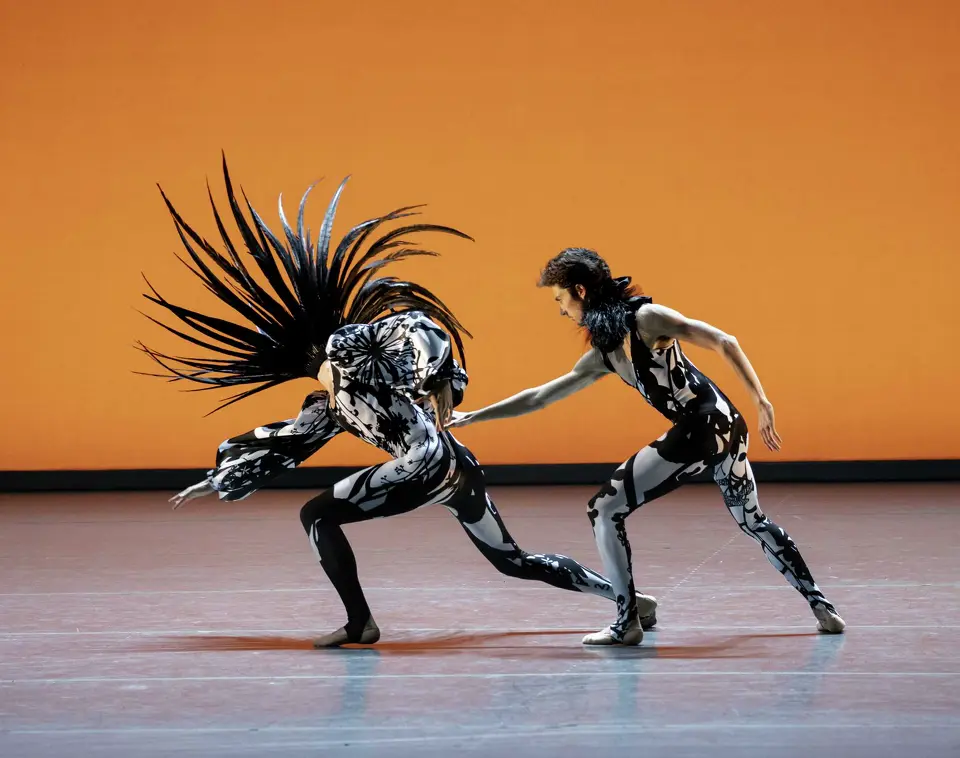
The music, including what the program primly called "Ni**gas in Paris", contained a generous selection of violent, misogynistic lyrics. These may have been used ironically, as Peter Walker, with Jonathan Fahoury, twisted around while blinded with a large feather duster to "Today I seriously thought about killing you. I contemplated premeditated murder and I think about killing myself...". But even if ironic, these lyrics did not complement the dancers' opening credo about beauty and respect for everyone. But then the evening was really about the clothes.
Copyright © 2018 by Mary Cargill



