Fashion Forward
"The Wind Still Brings", "Composer's Holiday", "Not Our Fate", "Pulcinella Variations"
New York City Ballet
Koch Theater
New York, New York
September 27, 2017
New York City Ballet's Fall gala, with its now traditional spotlight on fashion designers, clocked in at an efficient two hours. There was a brief opening film with glimpses of the new designs, no speeches, no intermissions, and four new ballets. The first three shared a distinct family resemblance (opaque titles, young dancers, bare legs, and an energetic lack of structure) while the last one, by the resident choreographer Justin Peck, had a generous sampling of New York City Ballet's magnificent principals in an astringently formal mood.
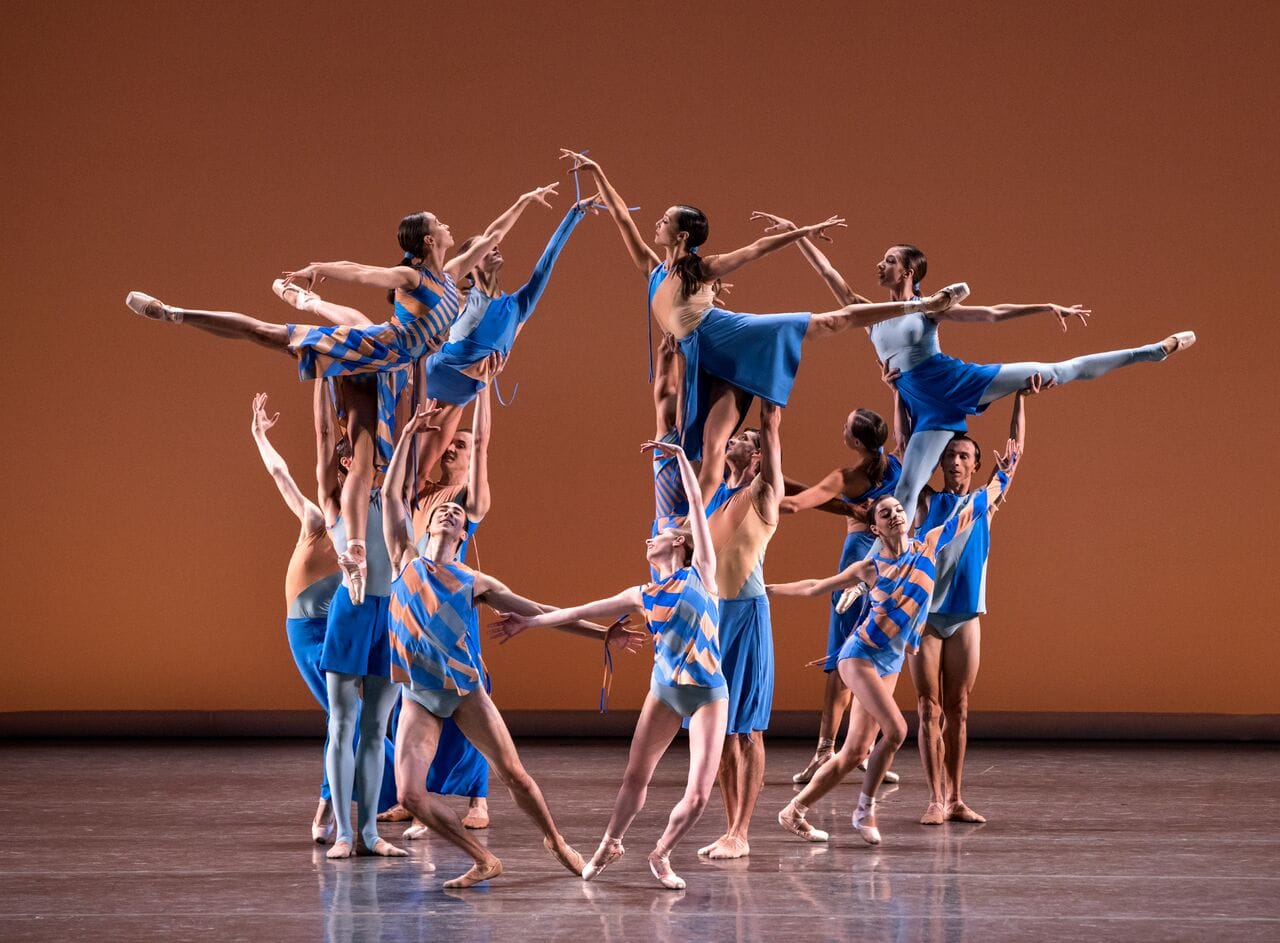
Troy Schumacher set "The Wind Still Brings" to the last three movements of Sir William Walton's "Piano Quartet in D Minor", brightly orchestrated by Robert Miller. The dancers wore Jonathan Saunders' pale peach and Prussian blue outfits, which looked breezy and comfortable, though men's sarongs are not likely to sweep the market. Schumacher has made a number of engaging chamber works for his own company, BalletCollective, which celebrate youthful camaraderie with a casual informality. Walton's music, though, is both astringent and formal, which didn't really support Schumacher's playful "Glass Pieces at the beach" approach. His cast (fourteen corps dancers) raced affably back and forth, pausing during the adagio to lay down on the ground while various women bourréed through the group, presumably looking for love.
The finale, which its rhythmic music and juicy combinations, was vibrant if overlong, but the piece as a whole, so full of youthful enthusiasm, was a bit shapeless and the dancers remained anonymous bodies making various shapes.
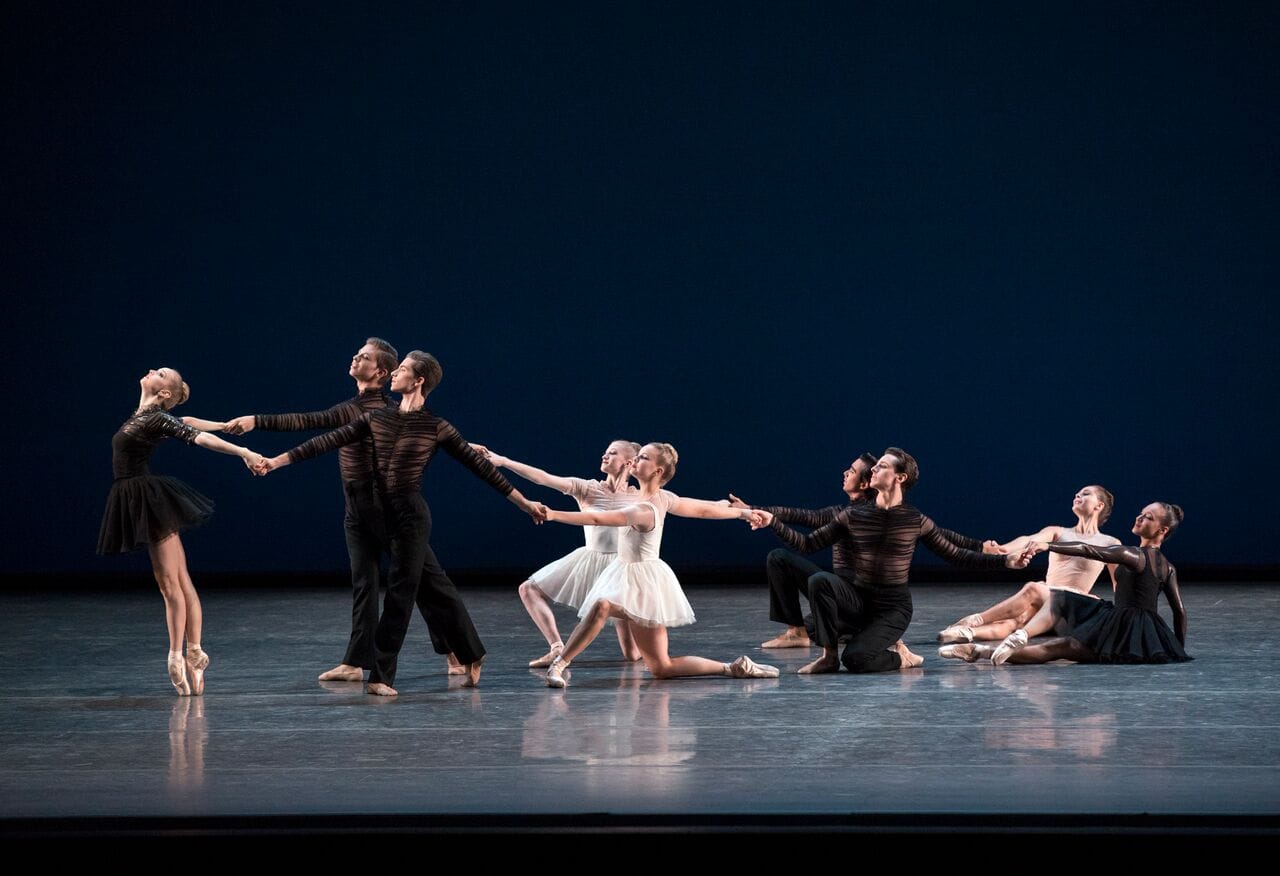
Gianna Reisen, only eighteen, set "Composer's Holiday" to Lucas Foss's "Three American Pieces for Violin and Piano". She had choreo- graphed a few pieces for her fellow SAB students but this was her first public work--a bit of a trial by fire. Virgil Abloh of Off-White dressed the twelve dancers in basic black and white, the men in fancied up leotards and the women in floppy, rather unflattering tutus.
The two main couples (apprentices Gilbert Boldness III and Roman Mejia and young corps dancers Christina Clark and Emma von Enck) joined the eight supporting dancers to form various combinations of bridges and circles, which were competently developed, but somewhat emotionally static. The dancers, though, especially the tall, solid, and dignified Boldness and the fleet Mejia, danced with astounding aplomb.
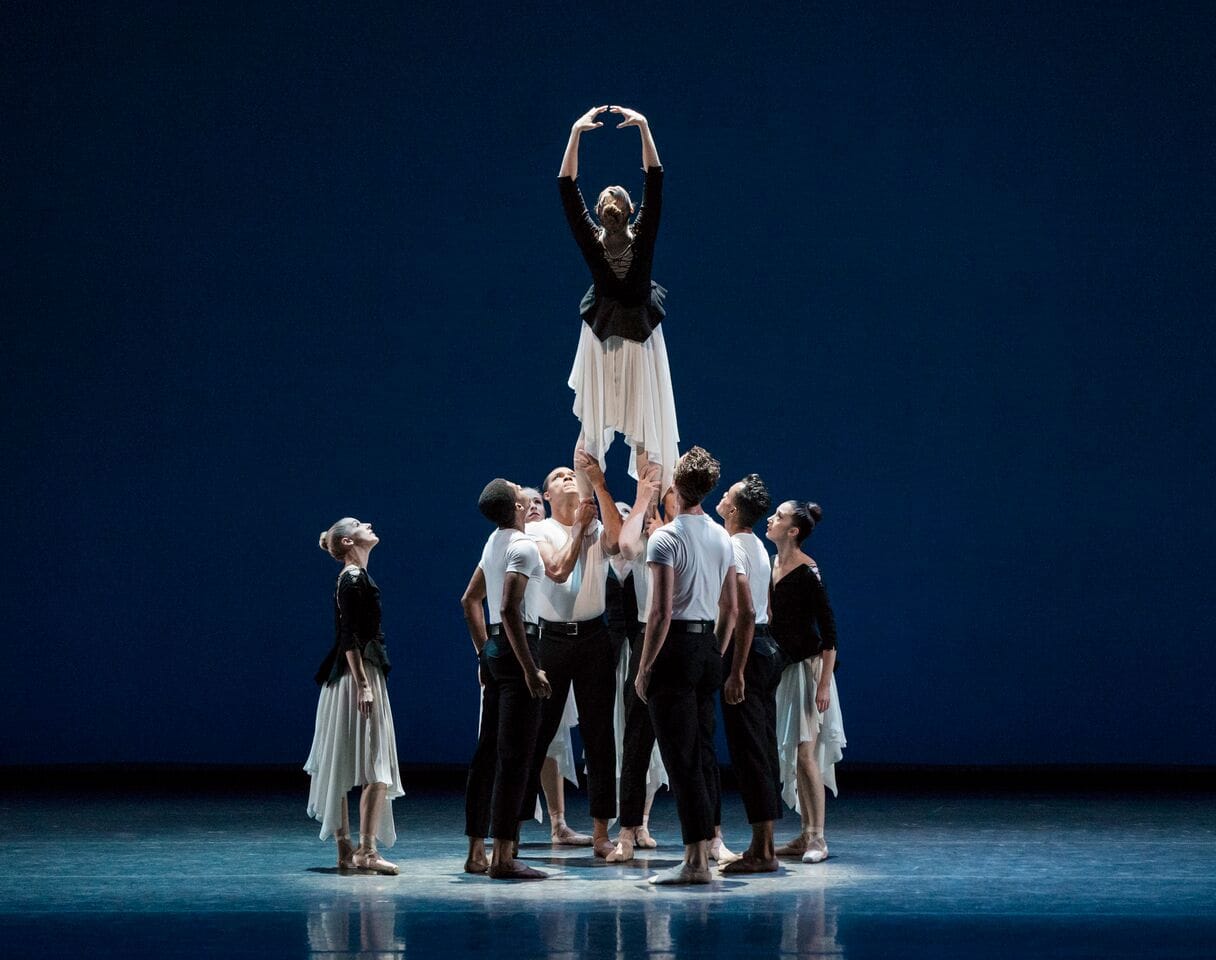
Lauren Lovette"s "Not Our Fate" used minimalist music by Michael Nyman, which throbbed monoto- nously, allowing for little structural or emotional development. The dancers raced back and forth wearing black and white by Fernando Garcia and Laura Kim, the girls' full skirts swirling decoratively but a bit messily.
The choreography, like the title and the accompanying poem by NYCB dancer Mary Elizabeth Sell ("Living trapped, living free/Can we choose how to be?" etc.) was a bit overwrought. Preston Chamblee and Taylor Stanley, both dancing with immaculate smoothness and control, had a pas de deux full of stylized violence with no apparent motivation or resolution. Meaghan Dutton-O'Hara and Ask la Cour were the love interest, with a Tony and Maria at the gym meeting, complete with blackout, followed by a languorous pas de deux which meandered for quite a while ("I am toffee, you are glue" it seemed to say) until the cast of ten joined in a big group dance with more running from side to side. The dancers were uniformly daring, energetic, and engaging, but, like the previous two works, the piece was a bit airless.
The choreography all seemed to develop through an endless loop of bare legs, darting masses, irresolute twitching, and group hugs. I could feel little urgency or form in their worlds as the hard-working dancers panted towards the finish line.
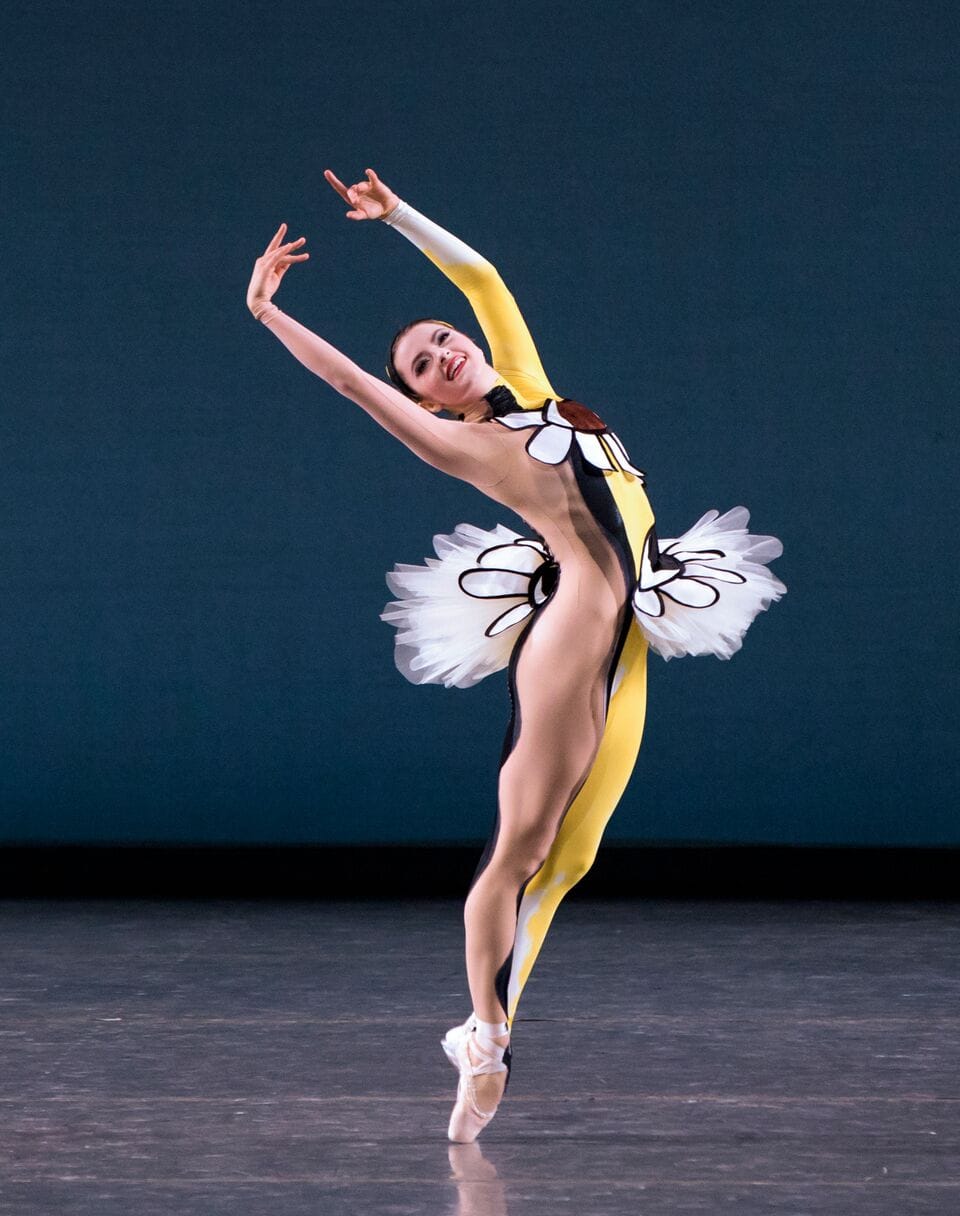
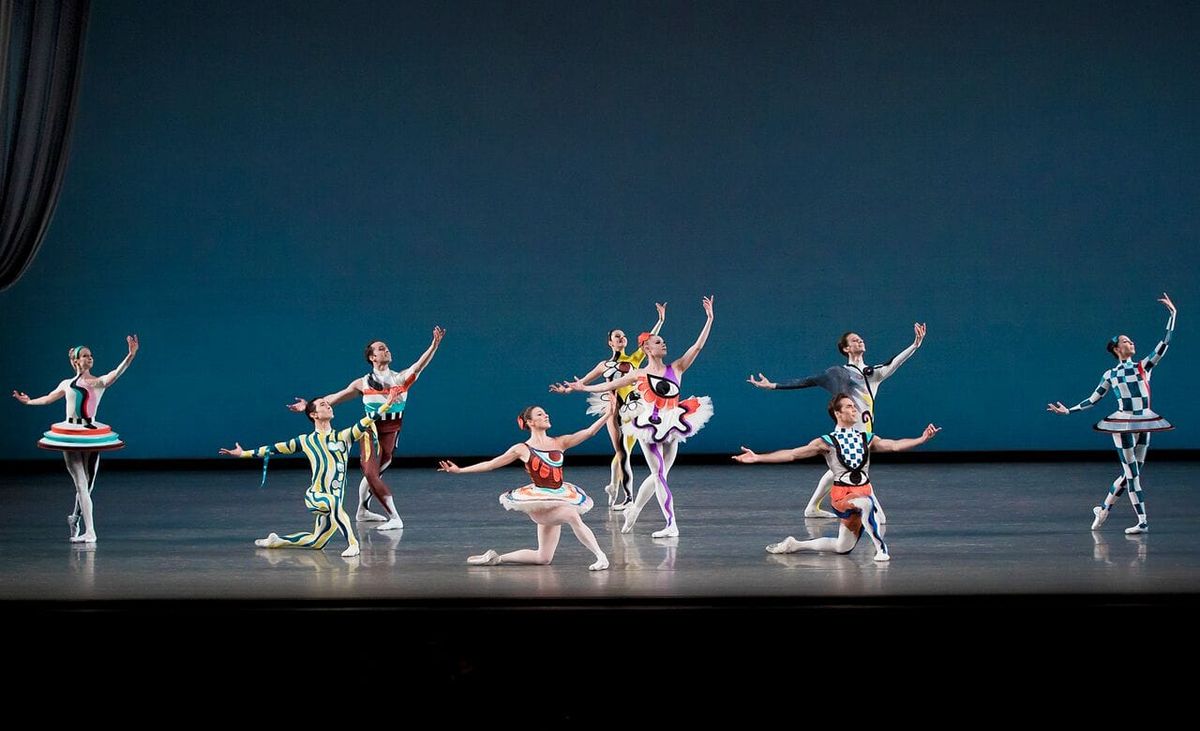
Justin Peck's "Pulchinella Variations", to Stravinsky's "Pulcinella Suite", had a defined structure, as the nine dancers began and ended in crisp patterns, sandwiching separate solos and pas de deux. It is one of Peck's most formal works, bright and elegant. Stravinsky's music is an orchestration of works by Pergolesi and others selected by Diaghilev in the late teens. This was a turning point in Stravinsky's work, "An epiphany" he wrote. "It was a backward look, but it was a look in the mirror". It seems that Peck, too, used the music to look back to a more formal period, seasoned with a wry, modern sensibility. The costumes, by Tsumori Chisato, have a pop surrealist feel and neither she nor Peck directly refer to the commedia dell-arte characters which inspired the Diaghilev/Massine/Stravinsky original and the short-lived Balanchine/Robbins work for the 1972 Stravinsky Festival. I found the costumes, while colorful, a bit self-servingly eye-catching and they missed the hints of grandeur that Peck heard in the music.
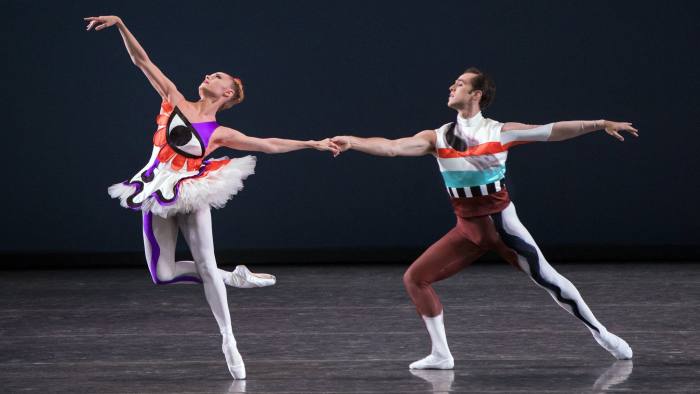
His choreography celebrated his cast with dances that illuminated their strengths. Sara Mearns and Jared Angle danced a slow and mysterious pas de deux, as she kept her eyes turned away from him while her body responded to he partnering--she is a dancer whose internal stories are both secretive and enthralling. I also especially enjoyed Anthony Huxley's dynamic tarantella, full of last, elegant jumps and Indiana Woodward's sunny Allegretto (though her half-tutu was a bit distracting). The dancing just oozed with talent and it may be that the score, at almost 100 years old, has found the ballet it deserves.
Copyright © 2017 by Mary Cargill



